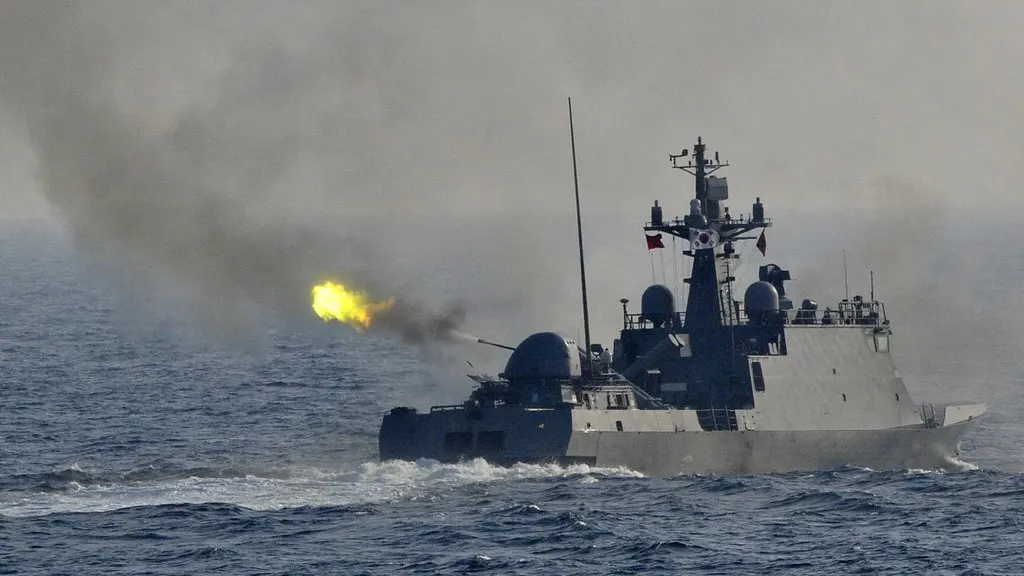
Overview
The Baengnyeong-class fast attack craft (PKX-A) is the Republic of Korea Navy’s latest fast attack vessel, developed to replace the aging Chamsuri-class patrol boats. Designed for coastal defense, it combines high-speed maneuverability with formidable firepower and is particularly optimized for operations along the West Sea NLL (Northern Limit Line) and in coastal waters.
- Key features
- High maneuverability: Designed for high-speed operations, with a top speed of 40 knots
- Heavy armament: Equipped with a 76 mm naval gun, 130 mm guided rockets, and K6 machine guns
- Advanced combat systems: Fitted with modern radar and fire-control systems
- Stealth design: Improved survivability through a reduced radar cross-section (RCS)
Development Background
As its Chamsuri-class fast attack craft grew obsolete, the Republic of Korea Navy determined that it needed a new generation of fast vessels suited to the modern maritime battlefield. This led to the development of the PKX-A (Baengnyeong-class) and PKX-B (Geomdoksuri-B-class) craft, with the Baengnyeong class designed around high firepower and maneuverability.
- Development timeline
- Early 2010s: PKX-A design completed
- 2017: Lead ship Baengnyeong launched
- 2019: Entered service with the Navy
- Present: Additional vessels are being built and deployed operationally
Assessment of Strengths and Weaknesses
🔹 Strengths
✔ Formidable firepower: Armed with a 76 mm naval gun and 130 mm guided rockets ✔ High speed: A top speed of 40 knots (approximately 74 km/h) enables rapid operations ✔ Stealth design: Enhanced ability to evade detection ✔ Optimized for coastal defense: Well suited to operations along the West Sea NLL and in near-shore waters
🔻 Weaknesses
❌ Limited defensive capability: Less capable defensive systems than those found on destroyers ❌ Limited operating range: Optimized for coastal missions and less suitable for blue-water operations ❌ Limited endurance: Requires maintenance during extended deployments
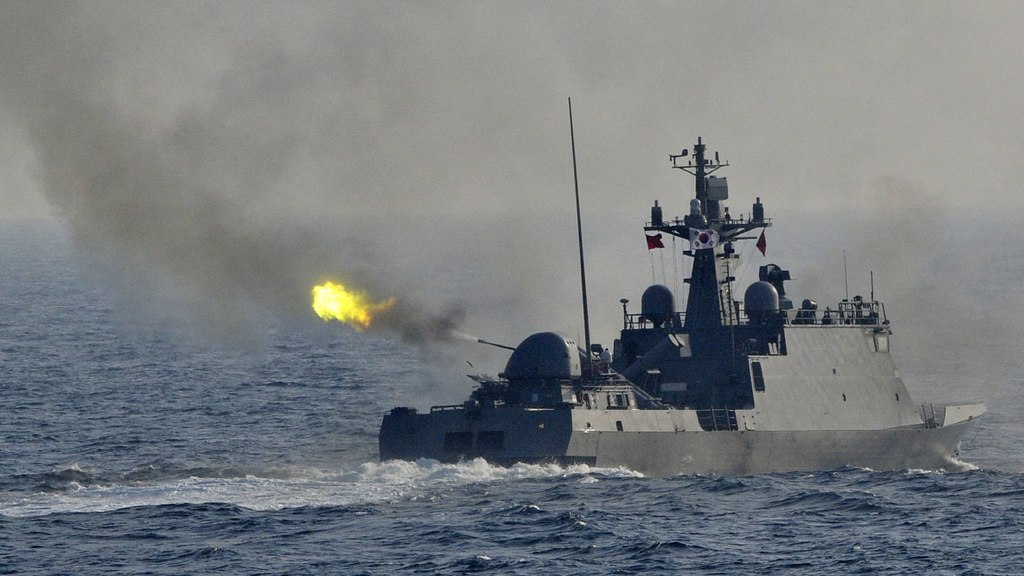
Image source: Republic of Korea Armed Forces, CC BY-SA 2.0 <https://creativecommons.org/licenses/by-sa/2.0>, via Wikimedia Commons[/caption]
Comparison with Fast Attack Craft from Neighboring Countries (China, Japan, and North Korea)
| Category | Baengnyeong class (South Korea) | Type 022 (China) | Hayabusa class (Japan) | North Korean escort vessel (estimated) |
|---|---|---|---|---|
| Displacement | 570 tons | 220 tons | 240 tons | 300–500 tons (estimated) |
| Dimensions (beam × length × height) | 8.8 m × 44 m × 6 m | 7.6 m × 43 m × 5.5 m | 7.4 m × 50 m × 6 m | 7 m × 40 m × 5 m (estimated) |
| Top speed | 74 km/h | 80 km/h | 76 km/h | 60–70 km/h (estimated) |
| Main gun | 76 mm naval gun | 30 mm autocannon | 76 mm naval gun | 57 mm naval gun (estimated) |
| Anti-ship missiles | None | YJ-83 | SSM-1B | Limited capability (estimated) |
| Key characteristics | Heavy firepower; optimized for coastal defense | High-speed maneuverability; stealth design | Equipped with anti-ship missiles | Limited operational capability |
Comparison with Fast Attack Craft from Advanced Naval Powers (the United States, the United Kingdom, Russia, and France)
| Category | Sea Wolf class (United States) | CB90 (United Kingdom) | Project 1241 (Russia) | FS65 (France) |
|---|---|---|---|---|
| Displacement | 600 tons | 230 tons | 540 tons | 250 tons |
| Dimensions (beam × length × height) | 9 m × 45 m × 6.5 m | 6 m × 24 m × 5 m | 9.8 m × 56 m × 7 m | 7 m × 40 m × 5.5 m |
| Top speed | 80 km/h | 72 km/h | 75 km/h | 70 km/h |
| Main gun | 76 mm naval gun | 40 mm autocannon | 76 mm naval gun | 57 mm naval gun |
| Anti-ship missiles | None | None | Kh-35 | MM40 Exocet |
| Operational advantage | Optimized for coastal maneuver warfare | Optimized for maritime special operations | Powerful anti-ship missiles | Optimized for European naval operations |
Future Development
- Joint operations with the PKX-B (Geomdoksuri-B class): Division of near-shore and coastal defense missions
- Enhanced electronic warfare and air-defense capabilities: Upgrades to modern radar and electronic warfare systems
- Consideration of anti-ship missile integration: Potential to strengthen fleet defense capabilities in the future
- Exploration of export opportunities: Pursuing exports, particularly to countries in Southeast Asia and the Middle East