Overview
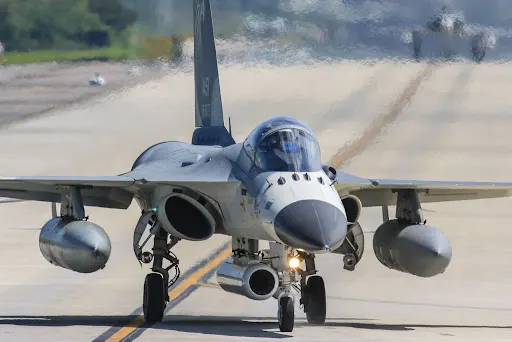
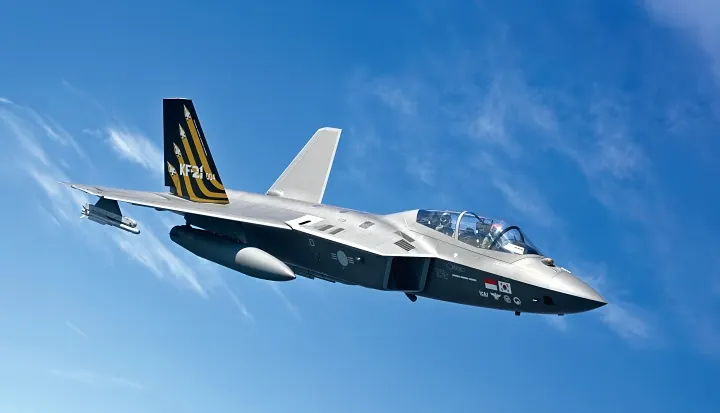
The KF-21 Boramae is a 4.5-generation multirole fighter developed independently by South Korea. It was designed to replace the Republic of Korea Air Force’s aging F-4 and F-5 fleets and strengthen the country’s airpower. Led by Korea Aerospace Industries (KAI), with Indonesia participating as a development partner, the aircraft combines a measure of stealth capability with advanced avionics and modern weapons systems.
- Key features
- 4.5-generation fighter: Performance approaching that of fifth-generation fighters such as the F-22 and F-35
- Advanced avionics: Equipped with an AESA radar and advanced electronic warfare systems
- Powerful weapons capability: Able to carry air-to-air, air-to-ground and anti-ship missiles
- High-power engines: Powered by two GE F414 engines, giving it strong maneuverability
- Stealth-oriented design: Incorporates features intended to reduce its radar cross section (RCS)
Development Background
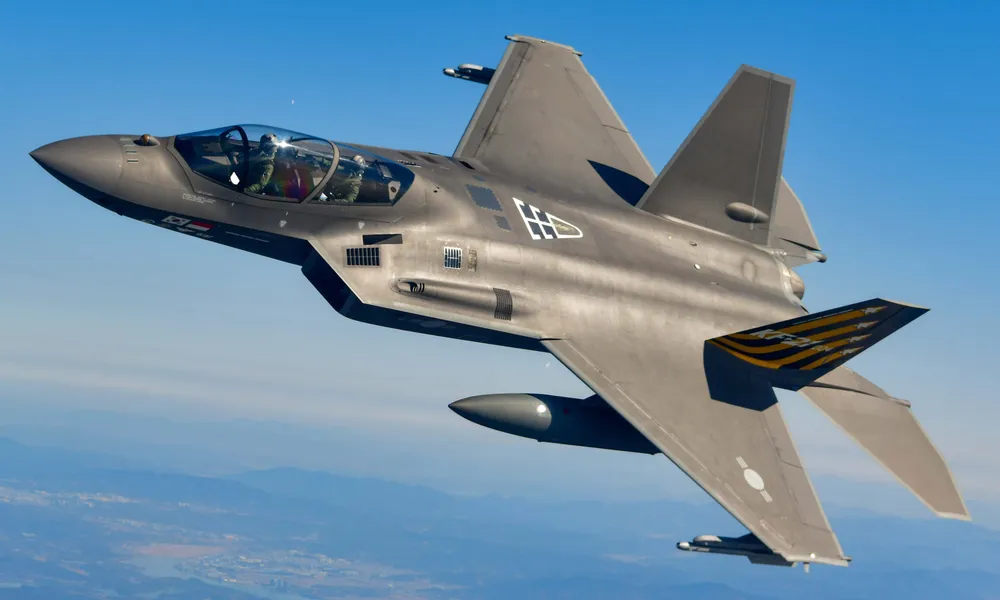
The Republic of Korea Air Force pursued the KF-21 program to replace aging fighters such as the F-4 and F-5 while strengthening the country’s defense-industrial independence through the development of a domestically produced fighter. Launched as the Korean Fighter eXperimental (KF-X) program, the project became the eighth case worldwide of a country developing its own fighter aircraft.
- Development timeline
- 2001: Korean Fighter eXperimental (KF-X) program launched
- 2015: Development contract signed
- 2021: Prototype rolled out
- 2022: First successful flight
- 2026: Scheduled to enter operational service
Strengths and Weaknesses
🔹 Strengths
✔ Advanced electronic warfare and aviation systems: AESA radar and modern avionics ✔ Powerful weapons capability: Compatible with Meteor air-to-air missiles and Taurus air-to-ground missiles ✔ Some stealth capability: Incorporates a reduced-RCS design ✔ Lower maintenance costs through domestic development: High compatibility with South Korean weapons systems ✔ Strong potential for future upgrades: Block II is planned to introduce internal weapons bays
🔻 Weaknesses
❌ Not a fully fifth-generation fighter: It lacks the comprehensive stealth capabilities of the F-22 and F-35 ❌ No internal weapons bay in the initial version: Block I retains an external weapons configuration ❌ Engine localization remains unresolved: The aircraft currently uses the GE F414 engine, creating a need for future domestic development
Comparison with Fighters in Neighboring Countries (China, Japan and North Korea)
| Category | KF-21 Boramae (South Korea) | J-20 (China) | F-2 (Japan) | MiG-29 (North Korea) |
|---|---|---|---|---|
| Top speed | Mach 1.8 | Mach 2.0 | Mach 2.0 | Mach 2.3 |
| Combat radius | 1,500 km | 2,000 km | 1,000 km | 1,400 km |
| Maximum weapons payload | 7.7 tonnes | 12 tonnes | 8 tonnes | 3.5 tonnes |
| Stealth capability | Partial | Fifth-generation stealth | None | None |
| Key advantage | Advanced avionics and multirole capability | Full stealth design | High maneuverability | Limited combat capability |
Comparison with Fighters from Advanced Military Powers (the United States, the United Kingdom, Russia and France)
| Category | F-35A (United States) | Eurofighter Typhoon (United Kingdom) | Su-57 (Russia) | Rafale (France) |
|---|---|---|---|---|
| Top speed | Mach 1.6 | Mach 2.0 | Mach 2.1 | Mach 1.8 |
| Combat radius | 1,100 km | 1,400 km | 1,500 km | 1,800 km |
| Maximum weapons payload | 8.1 tonnes | 7.5 tonnes | 10 tonnes | 9.5 tonnes |
| Stealth capability | Full stealth | Partial | Full stealth | Limited |
| Key advantage | State-of-the-art network-centric combat system | Outstanding air-to-air combat capability | Long-range operational capability | High maneuverability and multirole capability |
Future Development
- Block II development: Add internal weapons bays and enhance stealth performance
- Need for a domestically developed engine: Research an indigenous replacement for the GE F414
- Export efforts: Target fighter aircraft markets in Southeast Asia, Europe and other regions
- Research into unmanned teaming: Explore the potential for operations in coordination with UCAVs (unmanned combat aerial vehicles)