Overview
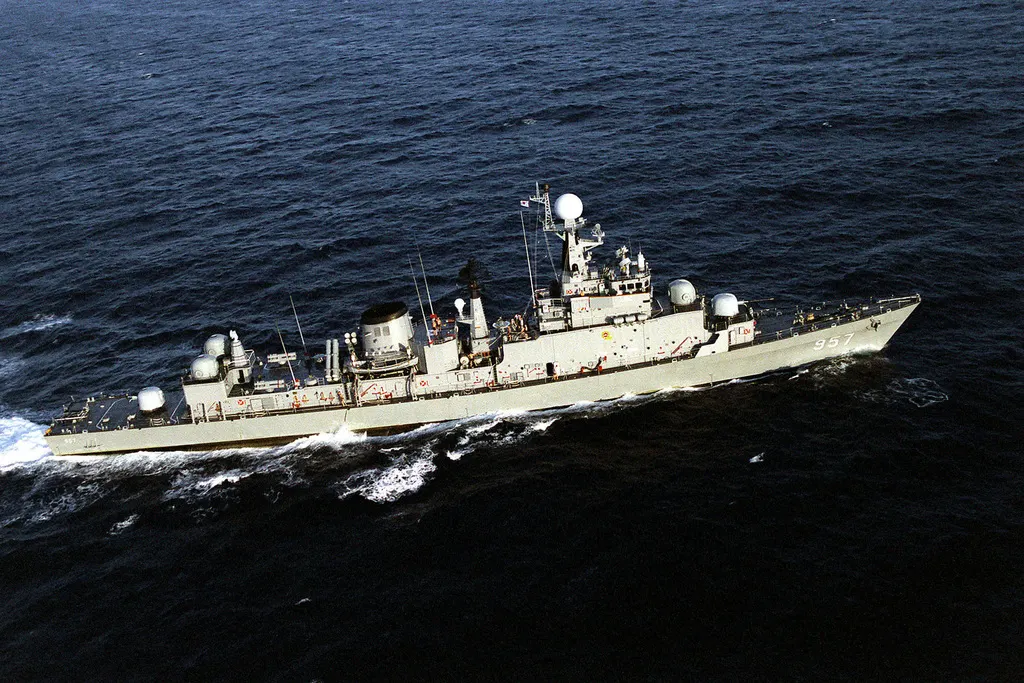
The Ulsan-class frigates are medium-sized warships operated by the Republic of Korea Navy for coastal defense and maritime operations. From the 1980s through the early 2000s, they served as a core element of the fleet. Designed for a range of missions, the class is now being replaced by the Daegu class (FFX-II) and Incheon class (FFX-I), although some vessels have been upgraded and exported after retirement.
- Key features
- Optimized for coastal operations: Capable of anti-ship, air-defense and anti-submarine missions
- Medium-sized frigate: More powerful combat capabilities than the Pohang-class corvettes
- Successful post-retirement exports: Some vessels have been upgraded and operated by countries including the Philippines
- Maritime surveillance and escort missions: Performs coastal-defense and maritime-protection duties
Development Background
By the late 1970s, the Republic of Korea Navy had determined that it needed new combat vessels to replace its aging destroyers and patrol craft. In response, South Korea pursued the development of a domestically built frigate, and the lead ship, ROKS Ulsan, was launched in 1980.
- Development timeline
- 1980: Lead ship ROKS Ulsan launched
- 1993: Ninth and final ship, ROKS Seoul, launched
- From the 2000s: Some vessels retired as replacement by the Daegu class (FFX-II) began
- Today: Some vessels continue to serve in upgraded form overseas and in maritime-security roles
Strengths and Weaknesses
🔹 Strengths
✔ Coastal and maritime operational capability: As a medium-sized frigate, it can perform a range of missions ✔ Cost-effective operation: Lower maintenance costs than a destroyer ✔ Export success: Retired vessels have been upgraded and sold to navies including the Philippine Navy ✔ Capable of anti-ship missile and anti-submarine operations
🔻 Weaknesses
❌ Limited air-defense capability: Restricted anti-aircraft defense systems ❌ Limited effectiveness in modern warfare: Lacks the latest stealth and electronic-warfare systems ❌ No ballistic-missile defense capability: No missile-interception capability
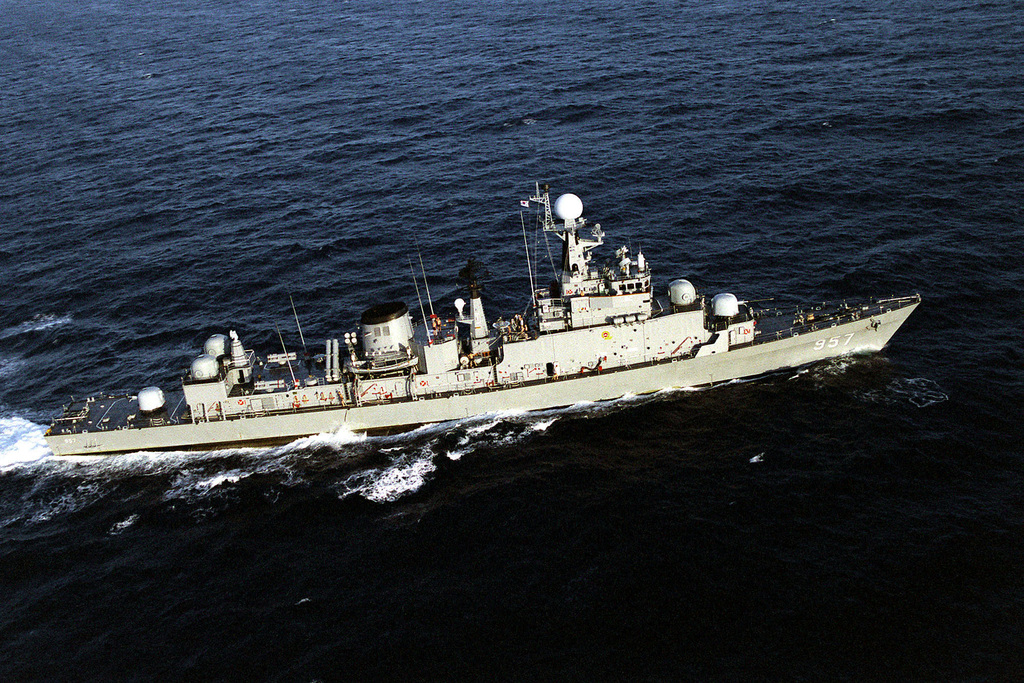
Starboard beam view of the Republic of Korea Navy ship CHON NAM (FF-957) as she returns to Hawaii at the end of exercise RIMPAC ’98.[/caption]
Comparison with Frigates of Neighboring Countries (China, Japan and North Korea)
| Category | Ulsan class (South Korea) | Type 054 frigate (China) | Abukuma class frigate (Japan) | North Korean frigate (estimated) |
|---|---|---|---|---|
| Displacement | 2,300 tons | 4,000 tons | 2,500 tons | 1,500–2,000 tons (estimated) |
| Dimensions (beam × length × height) | 12m × 103m × 5.5m | 14m × 134m × 6m | 12.5m × 109m × 5.8m | 11m × 95m × 5m (estimated) |
| Top speed | 55 km/h | 54 km/h | 52 km/h | 45 km/h (estimated) |
| Main gun | 76mm naval gun | 76mm naval gun | 76mm naval gun | 57mm naval gun (estimated) |
| Anti-ship missiles | Harpoon missiles | YJ-83 | SSM-1B | Limited (estimated) |
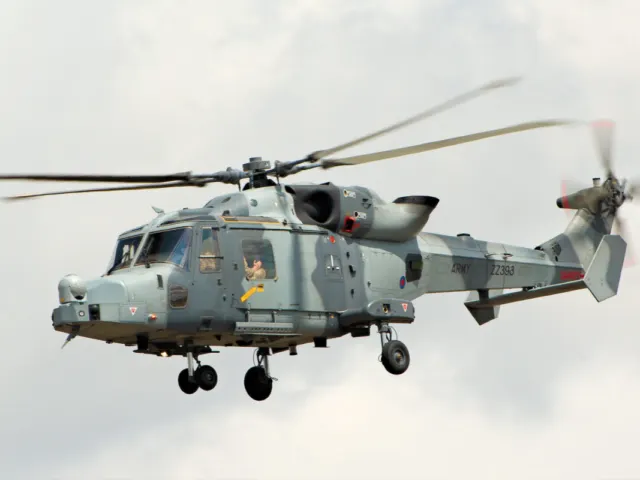
| Anti-submarine capability | Hong Sang Eo and anti-submarine helicopter | Yu-8 and anti-submarine rockets | Type 07 anti-submarine missile | Limited (estimated) |
| Areas of superiority | Optimized for coastal operations; highly maneuverable | Equipped with modern electronic-warfare systems | Strong anti-submarine capability | Can be deployed in large numbers |
Comparison with Frigates of Major Naval Powers (the United States, the United Kingdom, Russia and France)
| Category | Independence class (United States) | Type 23 (United Kingdom) | Neustrashimyy class (Russia) | La Fayette class (France) |
|---|---|---|---|---|
| Displacement | 3,100 tons | 4,900 tons | 4,400 tons | 3,800 tons |
| Dimensions (beam × length × height) | 13m × 127m × 6m | 16m × 146m × 8.5m | 17m × 135m × 8m | 16m × 133m × 8m |
| Top speed | 85 km/h | 55 km/h | 54 km/h | 52 km/h |
| Main gun | 76mm naval gun | 30mm autocannon | 76mm naval gun | 100mm naval gun |
| Anti-ship missiles | RGM-84 Harpoon | None | P-800 Oniks | MM40 Exocet |
| Anti-submarine capability | Anti-submarine rockets and torpedoes | Type 2087 sonar | Torpedoes and anti-submarine rockets | MU90 torpedoes |
| Areas of superiority | Incorporates modern stealth technology | Strong anti-submarine warfare capability | Russian-style anti-ship missile power | Optimized for air defense and European naval operations |
Future Development
- Replacement with new frigates: New coastal-defense vessels need to be developed
- Expanded overseas exports: Pursue additional exports by upgrading retired vessels
- Enhanced electronic warfare and air defense: Research upgrades involving modern radar and combat systems
- Improved operational efficiency: Reduce maintenance costs and continue fleet modernization