Overview
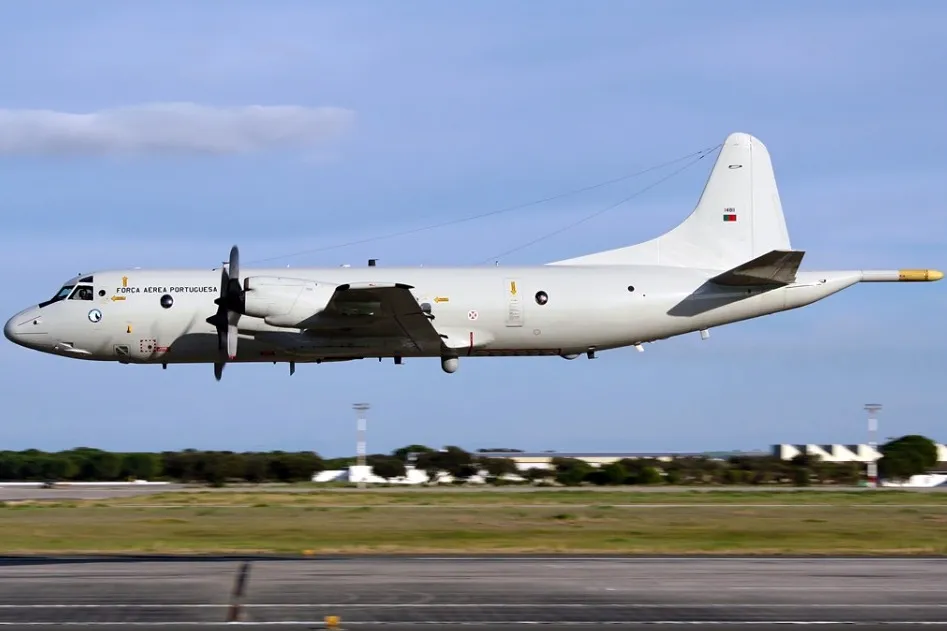
The P-3C Orion is a maritime patrol aircraft (MPA) operated by the Republic of Korea Navy. It is primarily used for anti-submarine warfare (ASW), maritime surveillance, anti-ship strikes, and maritime reconnaissance. Developed by Lockheed Martin of the United States, the aircraft is one of the world’s most widely used platforms for maritime surveillance.
- Key features
- Strong anti-submarine warfare capabilities: Equipped to deploy sonobuoys and carry anti-submarine torpedoes
- Maritime surveillance and intelligence gathering: Fitted with a long-range surveillance radar
- Capable of carrying anti-ship missiles and bombs: Can conduct anti-ship strikes and attacks against ground targets
- Long-range operations: Maximum range of 8,900 km
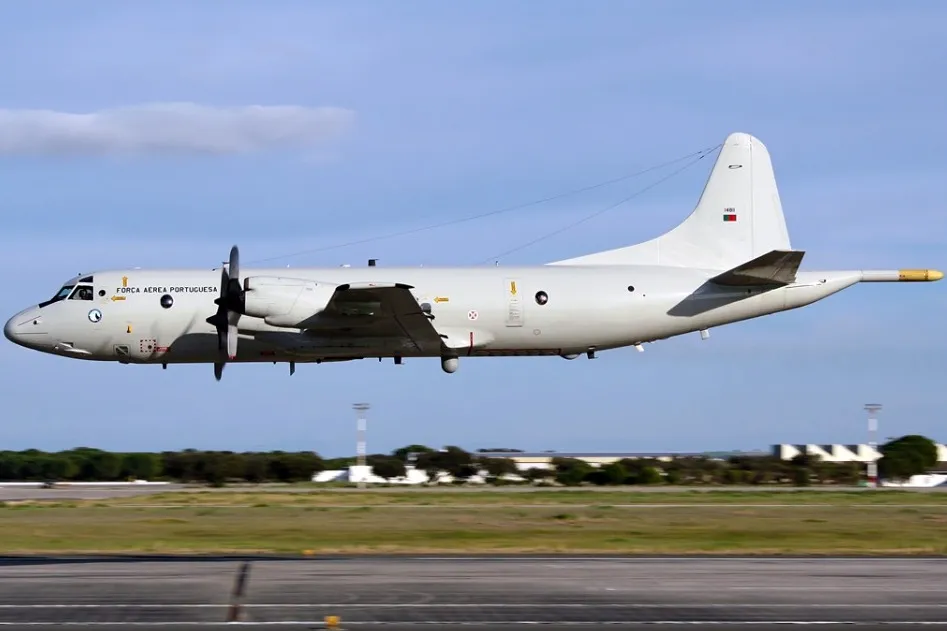
Development Background
The Republic of Korea Navy introduced the P-3C Orion in 1995 to strengthen its maritime patrol and anti-submarine warfare capabilities. Following domestic upgrades that added modern sensors and weapons, the P-3CK variant was developed. It remains a key maritime surveillance asset in the Republic of Korea Navy’s fleet.
- Development timeline
- 1995: The Republic of Korea Navy receives its first P-3C aircraft
- 2010s: Selected aircraft undergo capability upgrades, resulting in the P-3CK variant
- Today: The introduction of successor aircraft, including the P-8A Poseidon, is under consideration
Advantages and Disadvantages
🔹 Advantages
✔ Strong anti-submarine warfare capabilities: Can deploy sonobuoys and anti-submarine torpedoes ✔ Long-range operational capability: Maximum range of 8,900 km ✔ Versatile mission profile: Maritime surveillance, reconnaissance, anti-submarine warfare, and anti-ship operations ✔ All-weather capability: Can operate in a wide range of conditions
🔻 Disadvantages
❌ Ageing airframe: Designed in the 1960s, with performance limitations compared with newer maritime patrol aircraft ❌ Requires coordination with modern anti-submarine helicopters and drones: Its effectiveness is limited when operating alone ❌ Limited speed: Slower than jet-powered maritime patrol aircraft such as the P-8A
Comparison with Maritime Patrol Aircraft in Neighboring Countries (China, Japan, and North Korea)
| Category | P-3C Orion (South Korea) | Y-8Q (China) | P-1 (Japan) | North Korean maritime patrol aircraft (estimated) |
|---|---|---|---|---|
| Weight | 34 tons | 40 tons | 79 tons | 20–30 tons (estimated) |
| Maximum speed | 750 km/h | 660 km/h | 996 km/h | 500 km/h (estimated) |
| Range | 8,900 km | 5,700 km | 8,000 km | 3,000 km (estimated) |
| Anti-submarine capabilities | Sonobuoys, torpedoes | Sonobuoys, torpedoes | Sonobuoys, torpedoes | Limited (estimated) |
| Anti-ship attack capability | Yes (Harpoon missiles) | Yes (YJ-83) | Yes (ASM-2) | Limited (estimated) |
| Key advantage | Long-range operations, multirole capability | Modern sensors | Modern patrol aircraft with strong performance | Limited reconnaissance capability |
Comparison with Maritime Patrol Aircraft of Advanced Military Powers (United States, United Kingdom, Russia, and France)
| Category | P-8A Poseidon (United States) | Nimrod MRA4 (United Kingdom) | Ilyushin Il-38 (Russia) | ATL2 (France) |
|---|---|---|---|---|
| Weight | 85 tons | 78 tons | 63 tons | 46 tons |
| Maximum speed | 907 km/h | 925 km/h | 650 km/h | 725 km/h |
| Range | 7,500 km | 8,200 km | 7,000 km | 7,800 km |
| Anti-submarine capabilities | Sonobuoys, torpedoes | Sonobuoys, torpedoes | Sonobuoys, torpedoes | Sonobuoys, torpedoes |
| Anti-ship attack capability | Yes (Harpoon missiles) | Yes (Storm Shadow) | Yes (Kh-35) | Yes (Exocet missiles) |
| Key advantage | Modern equipment, powerful sensors | Among Europe’s most capable patrol aircraft | Russia’s maritime surveillance capability | Multirole operational capability |
Future Development
- Consideration of P-8A Poseidon acquisition: Moving toward replacement with a modern maritime patrol aircraft
- Strengthening drone-based maritime surveillance: Operating in coordination with platforms such as the MQ-9B
- Continued improvement of electronic warfare and anti-submarine capabilities: Incorporating advanced sonars and sensors
- Study of export opportunities: Exploring the possibility of selling upgraded aircraft to the navies of emerging countries