Conquer the Heart of Osaka: An Efficient Dotonbori Itinerary That Keeps You on Track
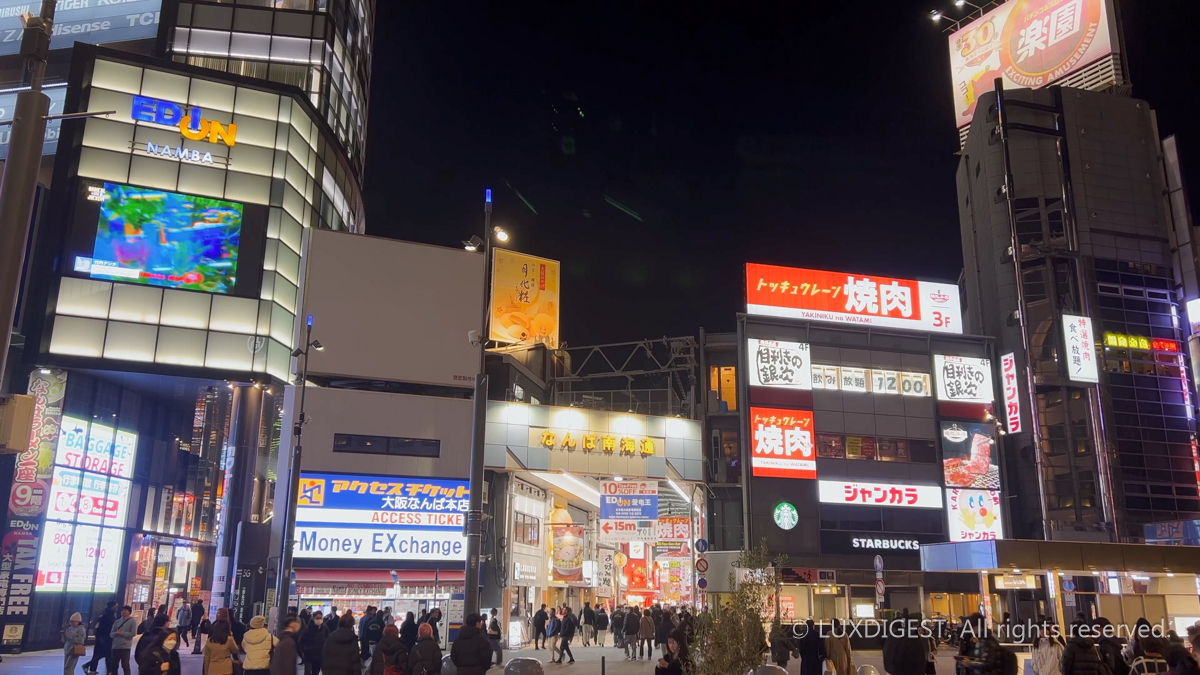
Osaka‘s beating heart and a paradise for food lovers, Dotonbori (道頓堀) can feel overwhelming at first. The area is larger than it looks, and wandering around without a plan can quickly eat into your day.
That is especially true when you are traveling with parents or young children. A well-planned route can make the difference between a relaxed outing and an exhausting one.
So how can you see the major sights, keep walking to a minimum, and enjoy Osaka’s best food without spending the whole evening in line? Here is a carefully planned Dotonbori route, along with practical tips for exploring the area smoothly and efficiently—almost like a local.
The Basics of Planning Your Dotonbori Route: Lines and Timing
To explore Dotonbori efficiently, it helps to understand the area’s geography first. Dotonbori is essentially a long east–west district centered on the Dotonbori River (canal). Crossing it from north to south are the shopping streets of Shinsaibashi-suji and Ebisubashi-suji.
Keep these three golden rules in mind when planning your route.
Give daytime and nighttime separate roles.
Dotonbori by day is ideal for shopping along the arcades, picking up souvenirs, and enjoying the streets before the crowds arrive. At night, the area comes alive with neon signs, street food such as takoyaki and kushikatsu, and river cruises. The same place can feel completely different depending on when you visit.
Start from a central landmark and explore outward.
Use the easy-to-find landmark of Ebisubashi Bridge, directly in front of the Glico Man sign, as your central reference point. Divide the area into east, toward Namba Walk and Nipponbashi, and west, toward Amerikamura and Yotsubashi. Moving through one section at a time will keep your route from becoming tangled.
Use the nearby train stations to your advantage.
Dotonbori is close to several stations, including Namba Station on the Midosuji Line, Nipponbashi Station on the Sakaisuji Line, and Nankai Namba Station. If you plan your route around the station that is most convenient for your hotel or next destination, you can save a great deal of energy.
A Recommended Time-Based Dotonbori Itinerary
For the fullest experience from afternoon through evening, try this half-day itinerary. Each stop flows naturally into the next.
[2:00 p.m.] Shinsaibashi-suji Shopping Street (walk from north to south)
      ↓
[3:30 p.m.] Amerikamura & Orange Street (a dose of Osaka's trendiest style)
      ↓
[5:00 p.m.] Dotonbori riverside & Glico Man photo stop (a quieter window just before sunset)
      ↓
[6:00 p.m.] Hozenji Yokocho (a peaceful stroll through old Osaka)
      ↓
[7:00 p.m.] Dinner and street-food sampling along Dotonbori's main street
      ↓
[8:30 p.m.] Tombori River Cruise (take in the glittering night views)
      ↓
[9:30 p.m.] Don Quijote shopping and the end of the day
[2:00–3:30 p.m.] A Comfortable Start: Shinsaibashi-suji Shopping Street
Dotonbori’s main streets begin to get seriously crowded later in the afternoon. Around 2 p.m., when the area is still relatively manageable, start at Shinsaibashi-suji, a covered arcade where you can shop without worrying about the weather.
Get off at Shinsaibashi Station and walk south toward Dotonbori. Drugstores, international fashion brands, and charming character shops line the route, making it ideal for browsing. Walking south from the north end naturally brings you to Ebisubashi Bridge, the center of Dotonbori.
[3:30–5:00 p.m.] Osaka’s Trendy Side: Amerikamura & Orange Street
If you are interested in fashion, vintage clothing, or street culture, combine a visit to Amerikamura with Orange Street in Horie, two blocks west of Shinsaibashi-suji.
This is a great place to experience the subculture of young Japan, with plenty of distinctive boutiques and atmospheric cafés. Take a break here with an iced coffee and give your legs a chance to recover.
[5:00–6:00 p.m.] The Landmark at Last: Ebisubashi Bridge & Glico Man
By around 5 p.m., the sun will be starting to set. Make your way to Ebisubashi Bridge, located at the southern end of Shinsaibashi’s shopping arcade and the gateway to Dotonbori.
Because the neon signs may not be lit yet and the crowds are usually lighter, this is a good time to take a clear portrait with the Glico Man sign. After taking photos on the bridge, head down to Dotonbori Riverwalk, the promenade along the canal. Looking up at Glico Man from below offers a completely different perspective.
[6:00–7:00 p.m.] A Step Back in Time: Hozenji Yokocho (法善寺横丁)
Just one block away from Dotonbori’s bright and noisy main street, you will find a wonderfully quiet, atmospheric lane. This is Hozenji Yokocho.
Traditional restaurants and izakayas are tucked along the narrow stone-paved alley. At Hozenji Temple in the center of the lane stands the moss-covered statue of Mizukake Fudoson. Legend has it that wishes come true when visitors pour water over the statue, so take a quiet, reflective walk here before dinner. It is a particularly appealing spot for older travelers and parents.
[7:00–8:30 p.m.] A Feast of Osaka Flavors: Dinner on the Main Street
Once the sun has gone down and the neon signs come on, Dotonbori transforms into one giant festival. This is the time to embrace Osaka’s famous kuidaore spirit—eating until you are broke.
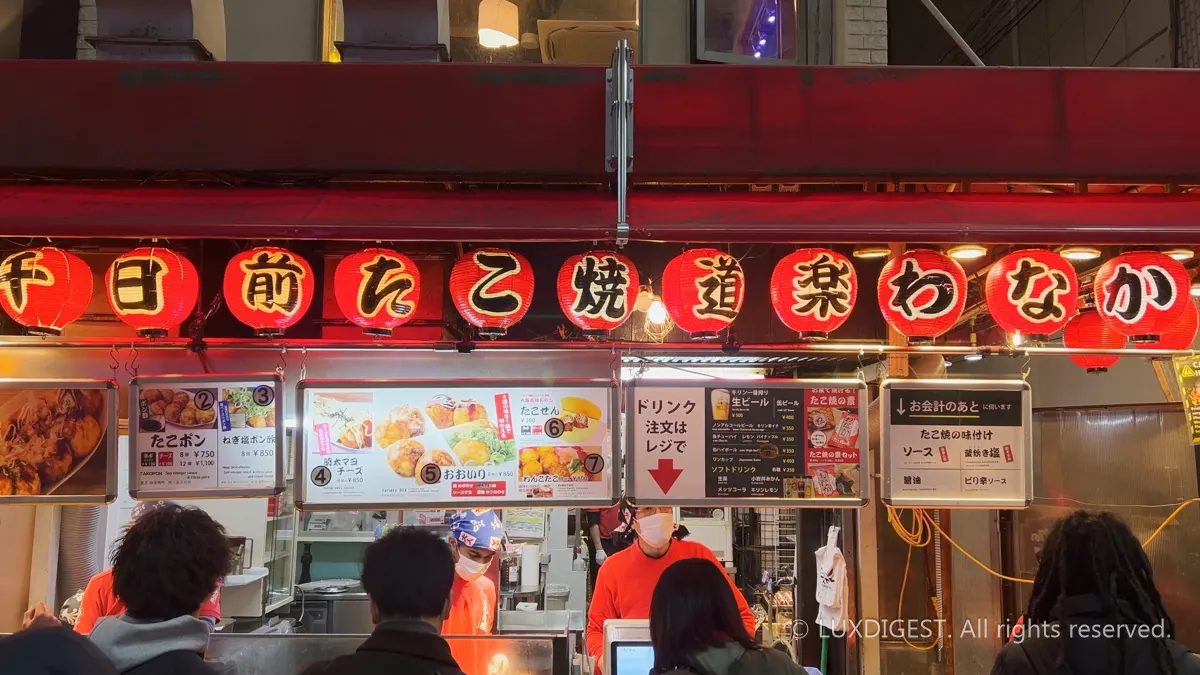
The main street is lined with famous sights and eateries, including Kani Doraku with its enormous moving crab sign, Kinryu Ramen beneath its giant dragon, and takoyaki shops where customers line up for a bite.
- Route tip: The main street becomes extremely crowded, so keep an eye on your group to avoid getting separated. If the wait at a popular restaurant is too long, try one of its branches or similar spots on the quieter side streets just off the main strip.
[8:30–9:30 p.m.] The Nighttime Highlight: Tombori River Cruise
After a satisfying dinner, it is time to enjoy Dotonbori’s nighttime scenery from the water. Take the Tombori River Cruise, which runs along the canal for approximately 20 minutes.
With the guide’s lively commentary—delivered in Japanese with some English and Korean—the moment you face Glico Man from the boat can become the highlight of your visit. The cruise is free with an Osaka Amazing Pass, but evening departures often sell out in the early afternoon. For that reason, it is wise to exchange your pass for a time-specific boarding ticket at the ticket counter as soon as you arrive in Dotonbori.
[9:30 p.m. onward] End the Day with Shopping at Don Quijote
No trip is complete without a little shopping. With its enormous yellow Ferris wheel attached to the exterior, Don Quijote Dotonbori is one of the area’s most recognizable landmarks.
Because it is open 24 hours, saving it for the end of the evening is the most efficient option. Keep in mind, however, that the Tax-Free counter can become extremely crowded at night. If you still have the energy, visiting after 11 p.m. or early the next morning can help you avoid the longest lines.
![[9:30 p.m. onward] End the Day with Shopping at Don Quijote](https://luxdigest.com/wp-content/uploads/2026/06/DOTOMBORI-in-OSAKA-0008.jpg)
Planning Your Arrival and Departure When Combining Dotonbori with Umeda, Kyoto, and Other Areas
Few travelers spend an entire day in Dotonbori. More often, they visit Umeda, Universal Studios Japan, Kyoto, or Nara during the day before heading to Dotonbori in the evening. Choosing your starting point based on your mode of transport can save you a great deal of unnecessary walking.
Coming from Umeda (Osaka Station) or USJ
- Recommended entry point: Namba Station on the Midosuji Subway Line
- Suggested route: Enter Ebisubashi-suji Shopping Street through the underground passageways from Namba Station, then walk north to reach Dotonbori’s main street.
Returning from Kyoto via the Hankyu or Keihan Lines
- Recommended entry point: Nipponbashi Station on the Sakaisuji Subway Line
- Suggested route: Exit through Exit 2 at Nipponbashi Station and you will connect directly with Dotonbori’s eastern end, near Kuromon Market. Walk from east to west toward Glico Man while taking in the nighttime scenery.
Local Tips for Making the Most of Your Dotonbori Visit
Make full use of Google Maps’ “Saved Places” feature.
Dotonbori’s narrow lanes and dazzling signs can make it surprisingly easy to lose your bearings. Save restaurants you want to try—such as Chibo Okonomiyaki and Kushikatsu Daruma—as well as other places of interest in Google Maps ahead of time. Check your location as you walk and work through the saved spots from nearest to farthest to avoid wasting time and energy.
Avoid the central lockers at Namba Station.
Dragging a heavy suitcase through Dotonbori is one of the worst ways to start your visit. Coin lockers around Dotonbori are often full. Instead, look for lockers near Nipponbashi Station or in less conspicuous corners of the underground shopping areas, such as Namba Walk. Another smart option is to use a luggage-storage app such as Ecbo Cloak and leave your bags at a nearby participating shop.
Find the restrooms before you need them.
There are not many public restrooms along Dotonbori’s streets. In an emergency, it helps to know the locations of the larger shopping complexes, such as Namba Parks and Namba CITY; the major department stores along Shinsaibashi-suji, including Daimaru; and the restrooms inside the Don Quijote building.
A Dotonbori Tour at Your Own Pace Is the Best Route of All
Many guidebooks present a single “ideal” itinerary, but the best route is the one that matches your energy level and interests. Dotonbori is worth visiting even if all you do is eat takoyaki from a street stall and watch the crowds beneath the colorful lights.
Use the basic framework outlined above—north to south during the day, followed by shopping, nighttime views, and food—and add the restaurants and cafés you personally want to visit. Once you see busy Dotonbori as a three-dimensional neighborhood rather than a maze, you can enjoy a more relaxed and romantic Osaka evening. We hope you make unforgettable memories in this lively, food-loving city.
FAQ
FAQ 1. Is Dotonbori better during the day or at night?
Dotonbori has a completely different appeal by day and by night. Daytime is best for shopping in Shinsaibashi, buying souvenirs, and taking a relatively quiet stroll. At night, you can enjoy the neon signs, Glico Man, street food, and river cruises that define Dotonbori. If time allows, arrive in the afternoon so you can experience both sides of the area.
FAQ 2. What foods should I try in Dotonbori?
Dotonbori’s signature foods include takoyaki, okonomiyaki, kushikatsu, ramen, and crab dishes. Takoyaki and kushikatsu are especially popular because they are easy to enjoy as street food. Popular restaurants can have long waits, so consider eating a little earlier or choosing a location on a side street for a more relaxed experience.
FAQ 3. How much time do I need to explore Dotonbori?
Two to three hours is enough to see the main highlights, but if you want to include shopping, a meal, and a river cruise, plan for half a day to a full day. A leisurely itinerary from 2 p.m. until around 10 p.m. tends to offer the most satisfying experience.
FAQ 4. Can I use the Osaka Amazing Pass in Dotonbori?
The Osaka Amazing Pass provides free or discounted access to some attractions in Dotonbori, including the Tombori River Cruise. Popular departure times often sell out early, however, so it is best to exchange your boarding ticket soon after arriving in Dotonbori.
FAQ 5. What should I keep in mind when visiting Dotonbori with parents or children?
Dotonbori becomes extremely crowded in the evening, so take care not to get separated from your group. You will also do a considerable amount of walking, making comfortable shoes essential. Build in breaks at cafés or other resting spots to conserve your energy. Checking the locations of restrooms and coin lockers in advance will make the visit more comfortable.