✅ Overview
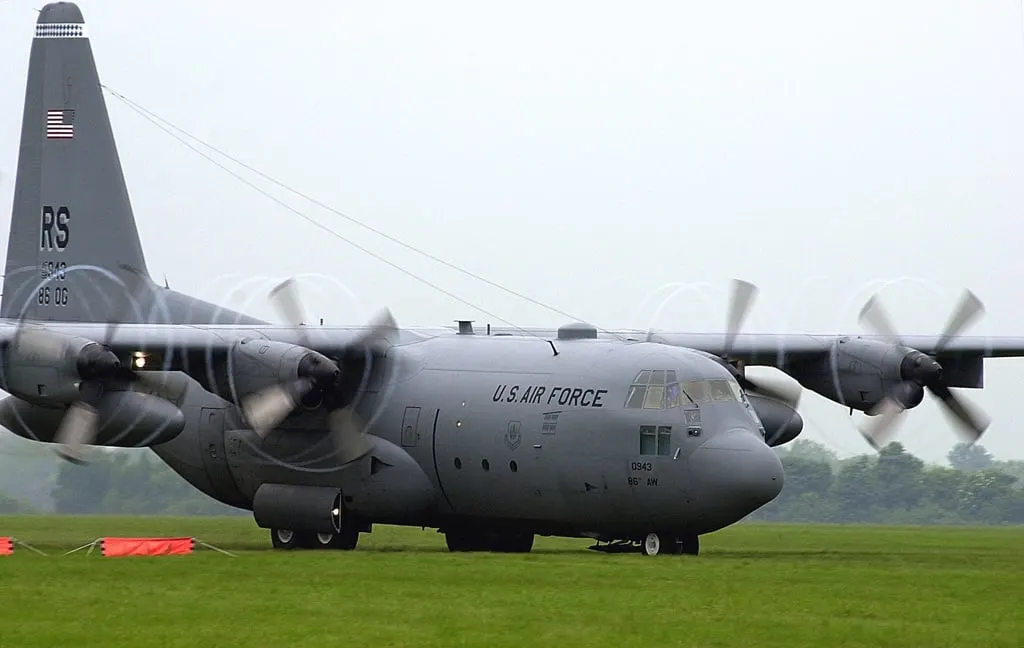
The C-130J is a tactical transport aircraft built by Lockheed Martin. A highly reliable platform capable of performing a wide range of missions—including multipurpose transport, airdrops, humanitarian assistance and search-and-rescue operations, it has become a mainstay of air mobility operations.
The Republic of Korea Air Force has also introduced the J model, where it plays a key role in force mobility, overseas deployments and emergency relief operations.

✅ Development Background
Developed to improve on the capabilities of the existing C-130 series, the C-130J incorporates modern technologies including digital navigation systems, new engines and a glass cockpit.
South Korea began introducing the J model in 2014, acquiring four aircraft with the aim of replacing its aging H models and improving operational efficiency.
✅ Strengths and Weaknesses
Strengths ✔ Versatile mission capabilities (transport, airdrops and humanitarian assistance) ✔ Capable of operating from short runways ✔ Modern, fully digital avionics ✔ Low accident rate and high reliability
Weaknesses ❌ High maintenance costs ❌ No armament (specialized for transport missions) ❌ Limited payload capacity (it is not a large strategic airlifter)
✅ Comparison with Regional Countries (Transport Aircraft)
| Category | C-130J (South Korea) | Y-9 (China) | C-1 (Japan) | An-26 (North Korea) |
|---|---|---|---|---|
| Weight | 34.4 tons | 54 tons | 47.7 tons | 24 tons |
| Dimensions | 29.3×40.4×11.9 m | 36×38×11.2 m | 29×30.6×10.6 m | 24×29×8.8 m |
| Top speed | 671 km/h | 660 km/h | 645 km/h | 540 km/h |
| Armament | None | None | None | Some aircraft fitted with machine guns |
| Armor | None | None | None | Some basic armor |
| Engine power | 4 × 4,637 hp | 4 × 5,100 hp | 4 × 5,000 hp | 4 × 2,820 hp |
| Key advantage | Digital systems, precision | Long range, domestic production | Reliability, short-field capability | Fleet numbers |
| Range | Approx. 3,300 km | Approx. 5,700 km | Approx. 1,700 km | Approx. 2,200 km |
✅ Comparison with Advanced Countries (Transport Aircraft)
| Category | C-130J (South Korea) | A400M (France) | C-17 (United States) | C-2 (Japan) |
|---|---|---|---|---|
| Weight | 34.4 tons | 76.5 tons | 128 tons | 60.8 tons |
| Dimensions | 29.3×40.4×11.9 m | 45.1×42.4×14.7 m | 53×51.7×16.8 m | 43.9×44.4×14.2 m |
| Top speed | 671 km/h | 781 km/h | 830 km/h | 890 km/h |
| Armament | None | None | None | None |
| Armor | None | None | None | None |
| Engine power | 4 × 4,637 hp | 4 × 11,000 hp | 4 × 40,440 hp | 2 × 60,000 hp |
| Key advantage | Tactical mobility, versatility | Strategic airlift, large capacity | World-class strategic airlift capability | Advanced technology, domestic production |
| Range | Approx. 3,300 km | Approx. 8,700 km | Approx. 10,390 km | Approx. 7,600 km |
✅ Future Development
- 推进 development of a domestically produced transport aircraft: Efforts are underway to develop an indigenous platform, including the L500 project.
- Consideration of additional C-130J acquisitions: More aircraft are needed beyond the existing fleet of four.
- Expand the use of multipurpose aircraft: Broaden strategies linking the aircraft to disaster relief, overseas deployments and other missions.
- Increase domestic maintenance capabilities: Reduce operating costs and establish a self-reliant maintenance system.