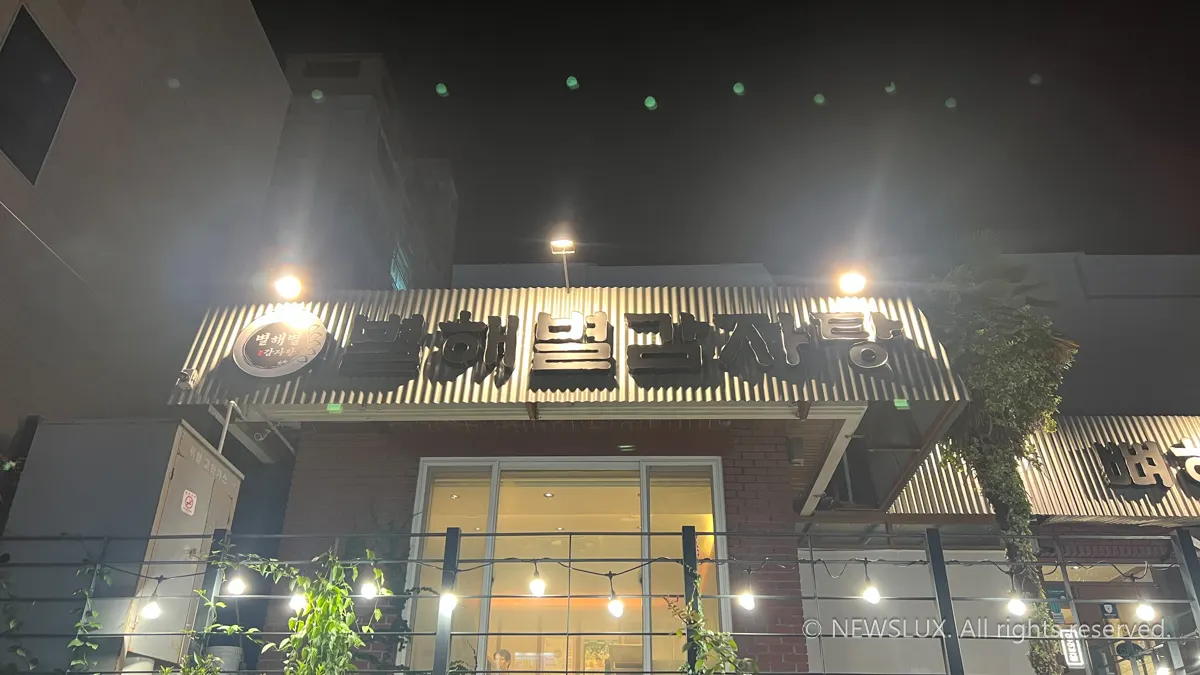
Byeolhaebyeol Gamjatang in Centum: How Is This Much Bone Gamjatang Only 10,000 Won?
- A visit at around 8 p.m. on July 23, 2026
Whenever I have been drinking the night before or feel like I need something spicy and restorative, I often seek out a restaurant serving gamjatang, a hearty Korean stew made with pork bones.
In that sense, the bone-stew restaurant in my neighborhood seems to have gained regulars almost by default. The food is merely average, but with few alternatives nearby, people go there because it is the convenient choice.
I generally do not write about ordinary restaurants like that. They are difficult to recommend with any confidence. It feels worthwhile to publish a review when a place can impress just about anyone who eats there.
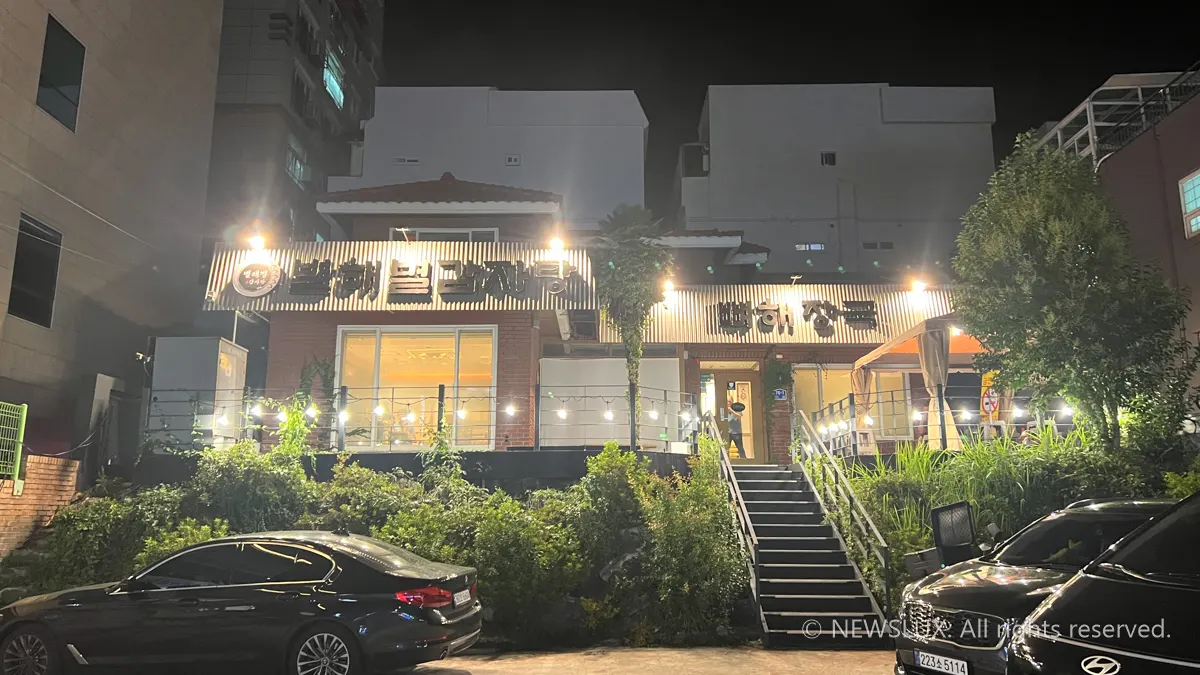
There is a gamjatang restaurant in Jaesong-dong, Haeundae, that genuinely impressed me, and I would like to introduce it. In Jaesong-dong, everything seems to begin with “Centum.” Local residents are particularly fond of the Centum name, almost as if it were an unwritten rule. I lived in Jaesong-dong for about six years myself.
I recently visited Byeolhaebyeol Gamjatang, which opened in May 2026.
I have a few criteria when choosing a gamjatang restaurant: how much meat is left on the bones, whether the broth is more aggressively seasoned than flavorful, whether the side dishes are prepared with care, and whether the service remains steady even when the restaurant is busy. Not many places meet all four standards, but this one did.
This is an honest account of my experience, paid for entirely out of my own pocket.
Why Has Gamjatang Become a Korean Soul Food?
Before getting into the review itself, I want to take a brief detour. Whenever I eat gamjatang, I find myself thinking that it is somewhat unfair to classify this dish simply as “bone hangover soup.”
The name gamjatang is interesting in itself. You might assume that potatoes are the star ingredient, but the leading theory is that the name comes from “gamja bones,” a term for pork backbones whose rounded shape resembles a potato. Potatoes are merely an accompanying ingredient, yet they gave the dish its name. In retrospect, that says a great deal about the dish’s humble, working-class origins.
Personally, I think gamjatang became a Korean soul food because it was designed from the start to be eaten together.
The very act of gathering around a large pot and picking meat from the bones is inherently social. This is not a dish to eat quietly by yourself. It keeps your hands busy while you talk with the people around you.
Then there is the rich, spicy broth—the kind of flavor people instinctively crave after working late, the morning after drinking, or simply on a chilly day when they feel under the weather. Hot soup with a shot of soju, or a bowl of rice stirred into the broth, is a form of comfort that Koreans understand without needing it explained.
Gamjatang has also remained popular because it is remarkably filling for its price.
The dish takes pork backbones—once an inexpensive and widely available cut—and slowly extracts deep flavor and tender meat from them. That approach embodies the wisdom of Korean comfort food: you can make a satisfying meal without relying on expensive ingredients.
The broth base varies from region to region and household to household. So does the use of perilla seeds, the amount of dried greens, and whether the heat comes mainly from red pepper flakes or Cheongyang chilies. That diversity is proof that gamjatang has become more than a single recipe—it is an entire food culture.
So searching for a great gamjatang restaurant is not simply about finding something to eat. It is closer to discovering the house’s particular touch and the time it has invested in its broth. With that in mind, let us get to why I enjoyed my visit to Byeolhaebyeol Gamjatang’s Centum location.
There Is Usually a Reason a Restaurant Is Busy
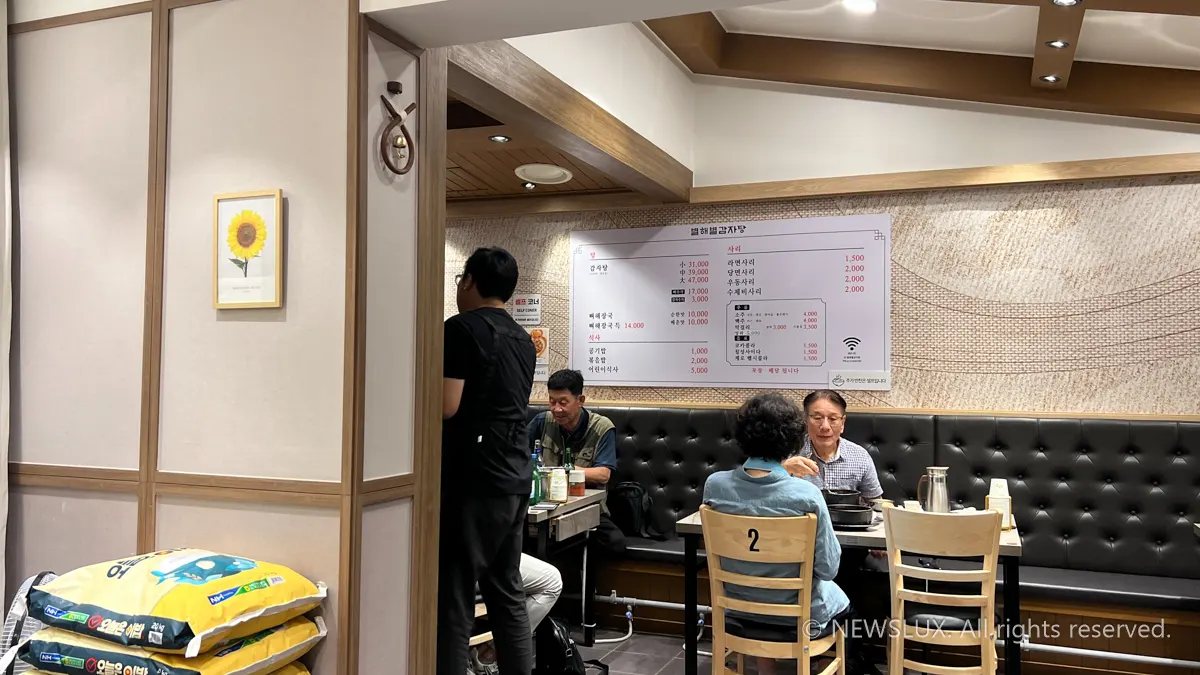
My first impression upon entering was that the restaurant was busy. It was not even particularly close to peak time, yet a good number of the tables were occupied.
I do not automatically assume that a crowded restaurant is a good one. I have seen plenty of places with high turnover but thoroughly ordinary food. Here, however, those concerns proved unfounded. Despite serving so many customers, the staff never seemed flustered and treated each guest courteously.
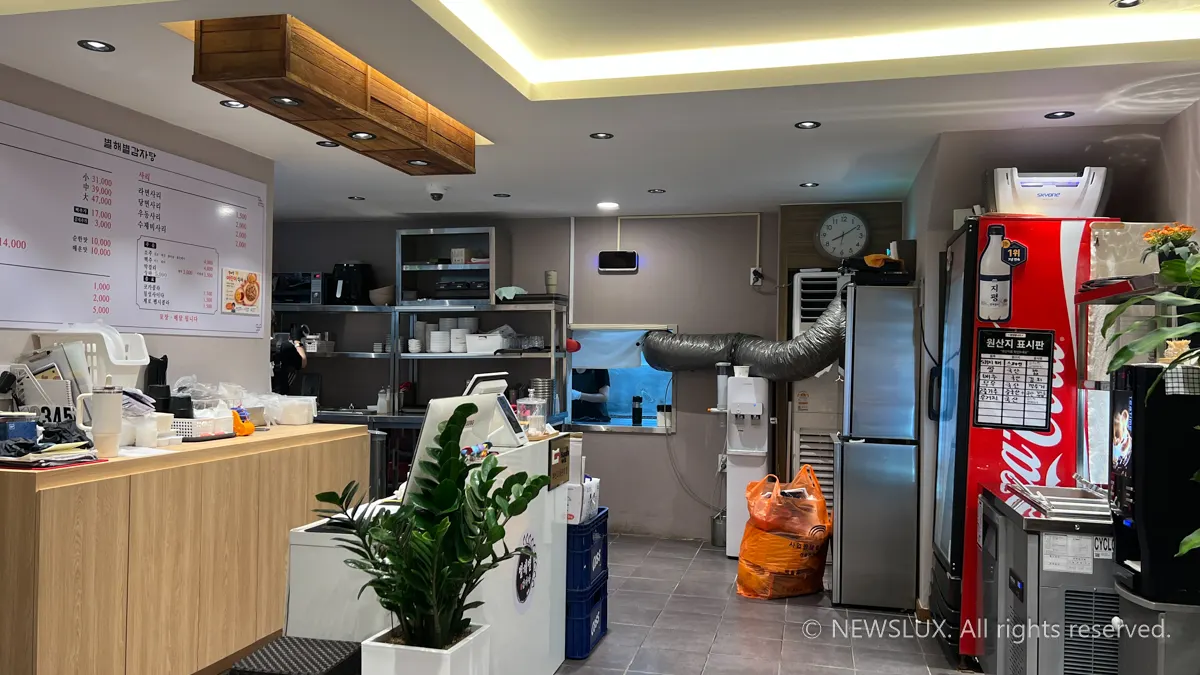
Whether taking orders or replenishing the side dishes, the staff maintained a relaxed manner and spoke with patience. That, in turn, made the entire restaurant feel comfortable. Having that much capacity to look after customers seemed to reflect the restaurant’s experience and competence.
When a restaurant remains busy without allowing service standards to slip, it usually means the operation is well practiced. It also suggests that ingredients are moving quickly, which can only help with freshness.
A 10,000-Won Bowl of Bone Gamjatang That Delivers
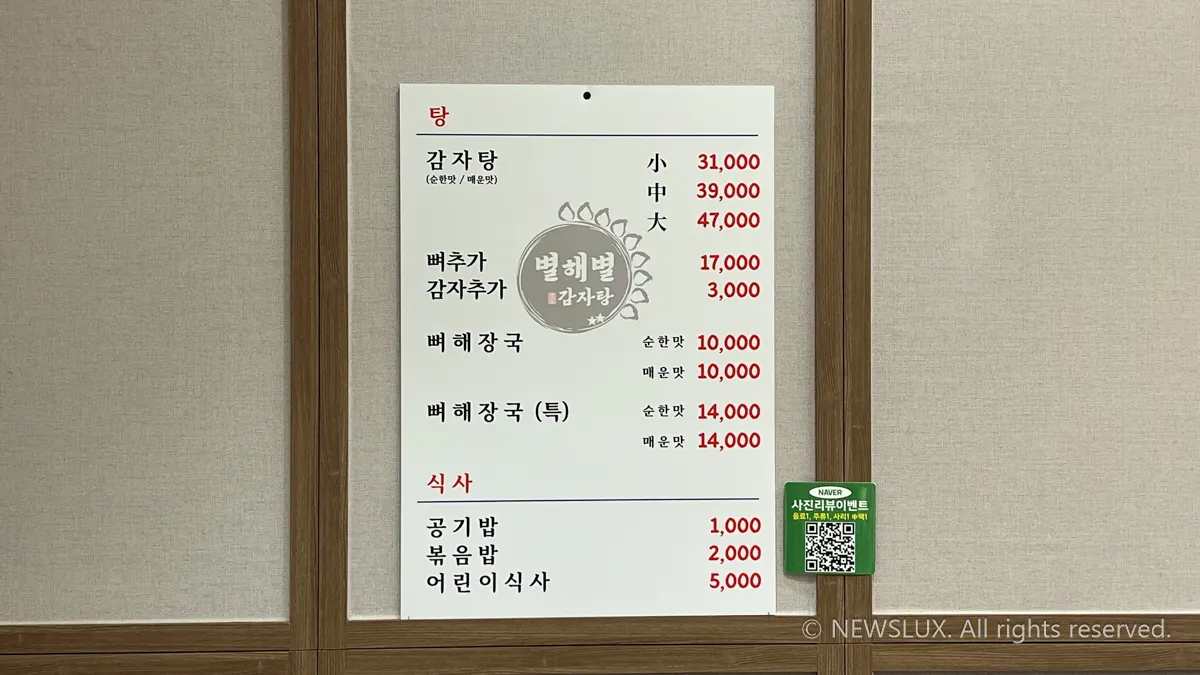
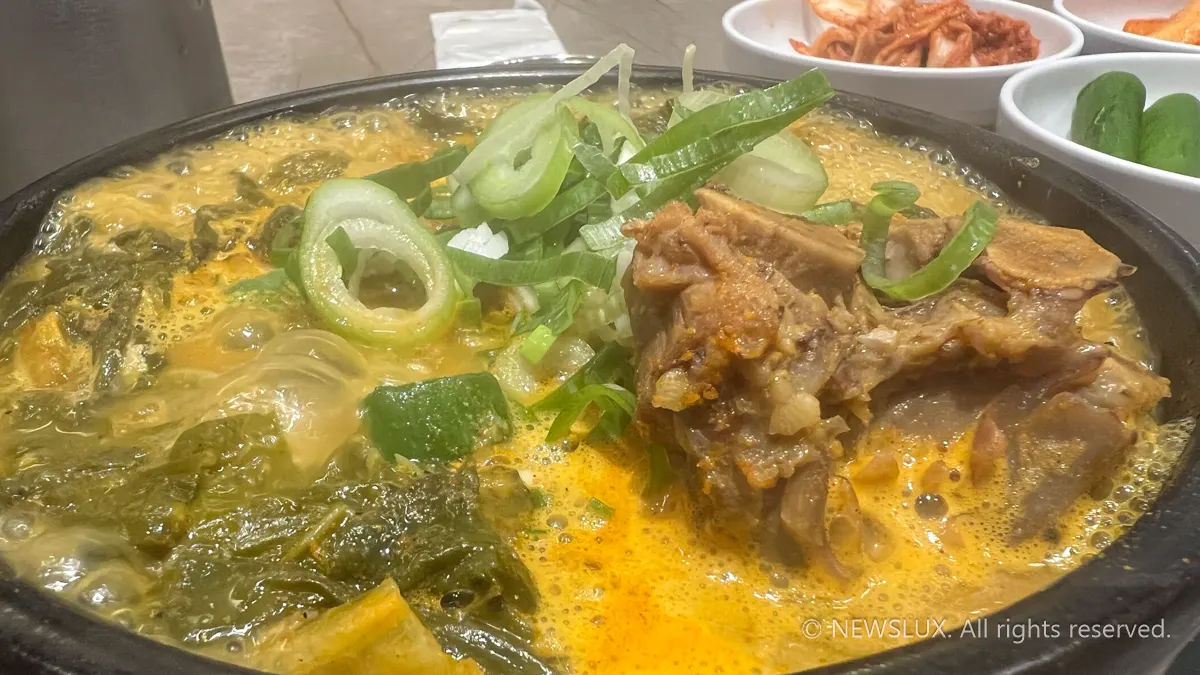
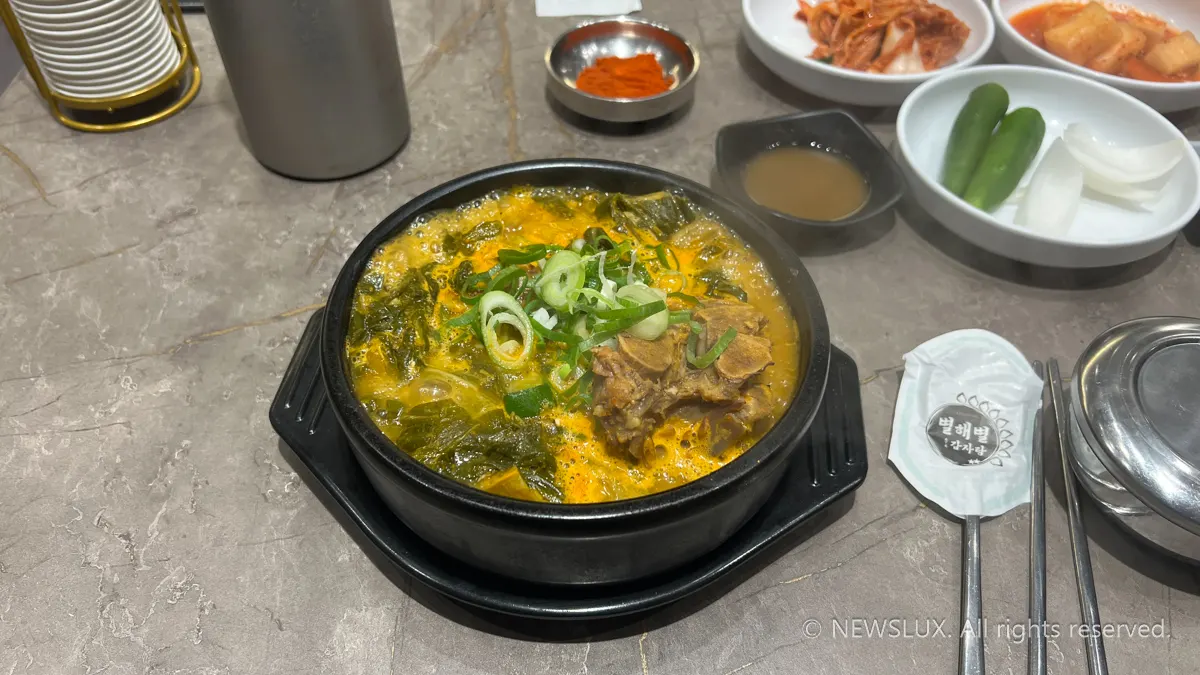
I ordered the 10,000-won bone gamjatang. To be honest, I did not expect much based solely on the price.
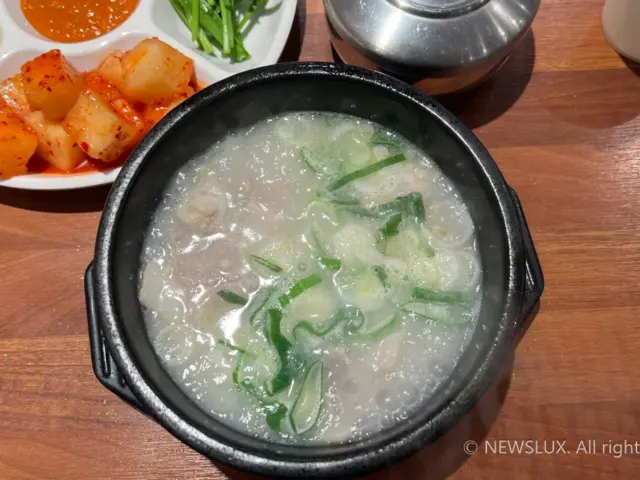
These days, it is common for something to feel lacking when a dish costs less than 10,000 won—whether in portion size or ingredients. But I was pleasantly surprised when the bowl arrived. There was a generous amount of meat on the bones, making it satisfying to pick apart, and the portion was far from skimpy for the price.
The meat came cleanly away from the bones without being dry, retaining a pleasant texture. The broth was not simply hot and aggressively spicy; its deep savoriness came through first. It was exactly my kind of flavor. I have tried gamjatang at many places, but personally, I would call this the best bone gamjatang I have had.
It is worth emphasizing the price. At a time when the cost of eating out continues to rise, it is unusual to receive this much for 10,000 won.
In recent years, many restaurants have raised the price of a bowl of gamjatang to 15,000 or even 20,000 won. Against that backdrop, maintaining this price while still being generous with the ingredients felt like a sign of confidence.
When the value is this good, there is no reason not to return. It would be particularly suitable for a filling but affordable lunch, or for a casual evening meal with a drink.
The Self-Service Corner Was Surprisingly Well Stocked
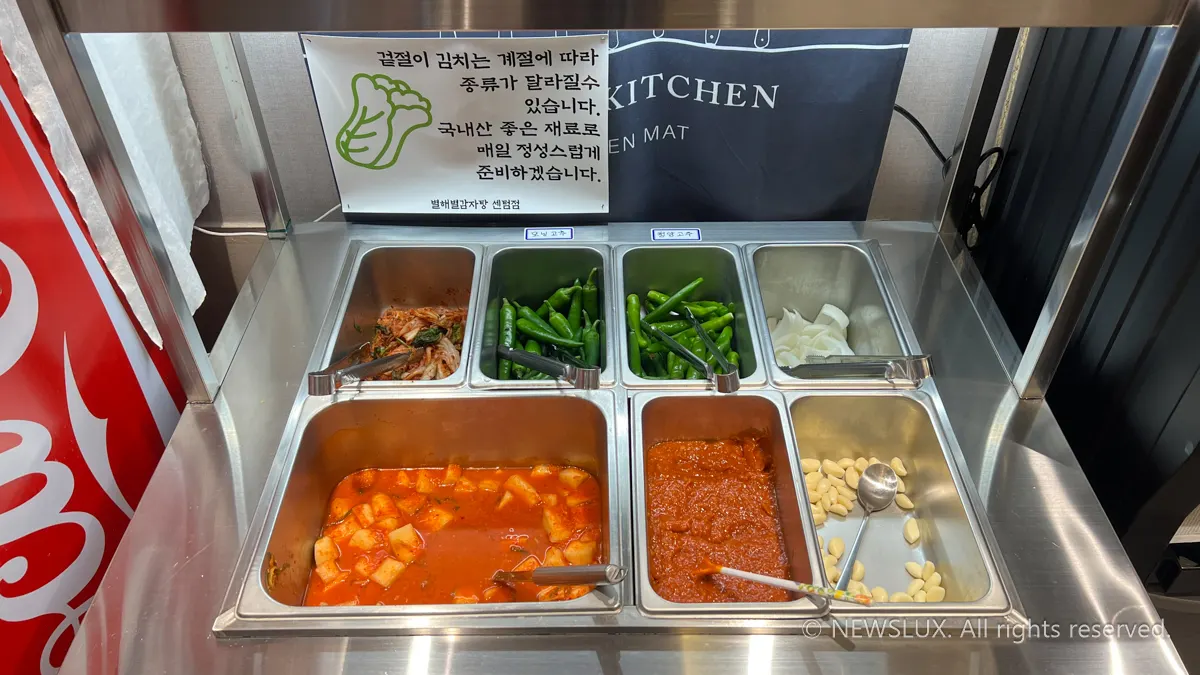
The self-service corner was almost as impressive as the main dish. Kimchi,
kkakdugi, onion with doenjang, and Korean cucumber peppers were all available, allowing diners to choose their own accompaniments. None of them felt like an afterthought; every item was good. The kimchi was nicely fermented and paired well with the broth, while the kkakdugi retained a satisfying crunch.
The onion with doenjang helped cut through the richness of the spicy broth, while the crisp cucumber peppers refreshed the palate and kept me reaching for more. I tend to believe that a restaurant that takes care with every side dish is likely to be trustworthy when it comes to the main menu, and this was a perfect example.
A well-stocked self-service bar also improves the experience because guests can adjust the balance of flavors to their own liking.
A Comfortable Space with Plenty of Seating
The atmosphere matters almost as much to me as the food, and there was little to criticize here.
The dining room was spacious and open, with enough room between tables to avoid feeling cramped. Even with many customers, I never felt overwhelmed by the noise from neighboring tables.
I am not particularly fond of the greasy smells or stuffy atmosphere often associated with gamjatang restaurants, but this place felt more comfortable, perhaps because the ventilation was effective. The tables were neatly set, and the bowls for side dishes and individual plates also appeared well maintained.
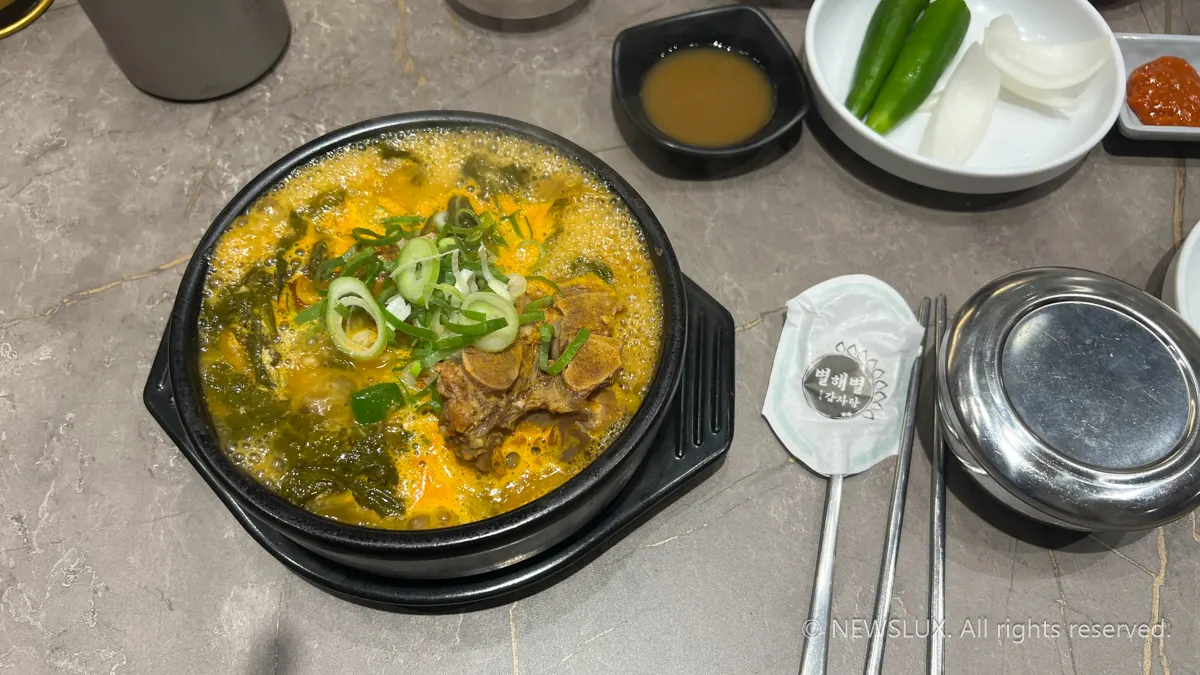
With a dish like gamjatang, which requires plenty of hands-on eating, cleanliness can quietly have a major effect on satisfaction. On that front, I would give the restaurant full marks.
The seating arrangement was also versatile, making it easy to accommodate groups of different sizes.
There were tables suitable for two people who wanted to eat quietly, as well as larger tables for lively gatherings. I came away with the impression that it would work equally well for a company dinner or a family meal.
This kind of flexibility may seem like a minor detail, but not having to worry about seating when you arrive is a meaningful advantage.
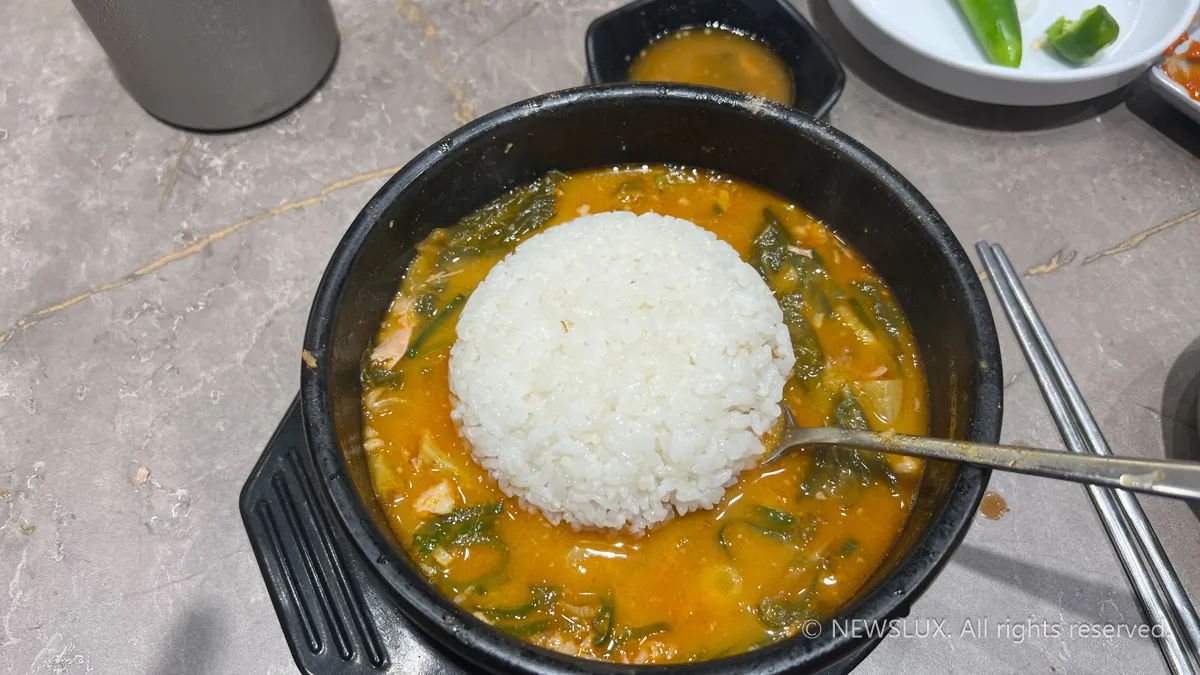
The Unwritten Rule: Finish Gamjatang with Rice
I have a routine I always follow when eating gamjatang.
I consider the meal incomplete until I have picked all the meat from the bones and either stirred rice into the remaining broth or fried it in the pot. I was able to follow that same routine here.
Adding rice to the rich broth offered a different kind of satisfaction from eating the meat off the bones. Anyone who enjoys a drink with dinner would also find the combination with a shot of soju especially appealing.
The spicy, deeply flavored broth cuts through the heaviness of alcohol, making this a meal I would happily choose in the evening. Even without drinking, however, a single bowl of rice turns it into a thoroughly satisfying meal, so it works just as well for lunch.
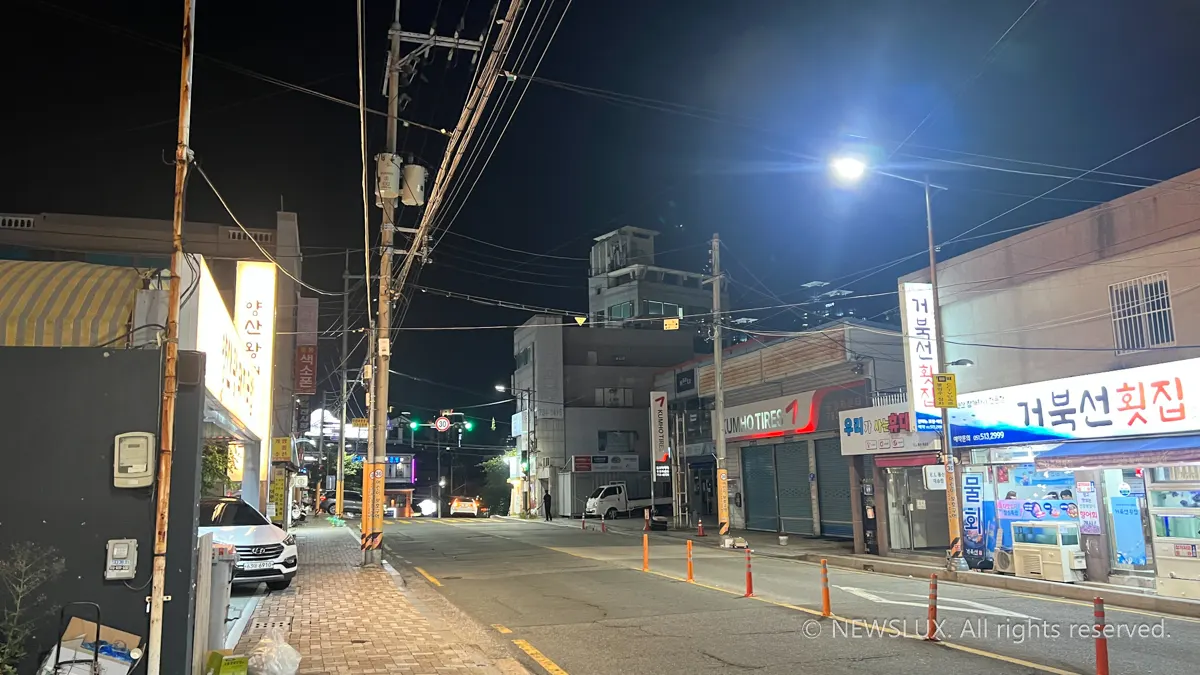
What This Restaurant Brings to Centum and Jaesong-dong
The Centum City and Jaesong-dong office districts have plenty of polished franchises and cafés, but hearty restaurants serving deeply flavored soups are comparatively rare.
That is why I was pleased to find such a practical, satisfying gamjatang restaurant in the middle of the area. During lunch, it offers nearby office workers an affordable meal, while in the evening it can easily serve as a place for a group dinner with a bottle of soju.
The restaurant is spacious and comfortable enough for families, too. It has all the appeal of a dependable neighborhood restaurant where you can drop in whenever you find yourself wondering, “What should we eat today?”—without needing a special occasion.
Where It Has the Edge Over Other Gamjatang Restaurants
Gamjatang varies noticeably from one restaurant to the next, so anyone who has tried several places will naturally make comparisons. Some restaurants specialize in a thick, nutty broth loaded with perilla seeds, while others emphasize a clean finish and a sharper level of spice.
I personally find that too many perilla seeds make the broth heavy and tiring to eat. This restaurant seemed to strike a balance somewhere in between. The broth was spicy without becoming muddy, and it remained easy to enjoy all the way through the final spoonful.
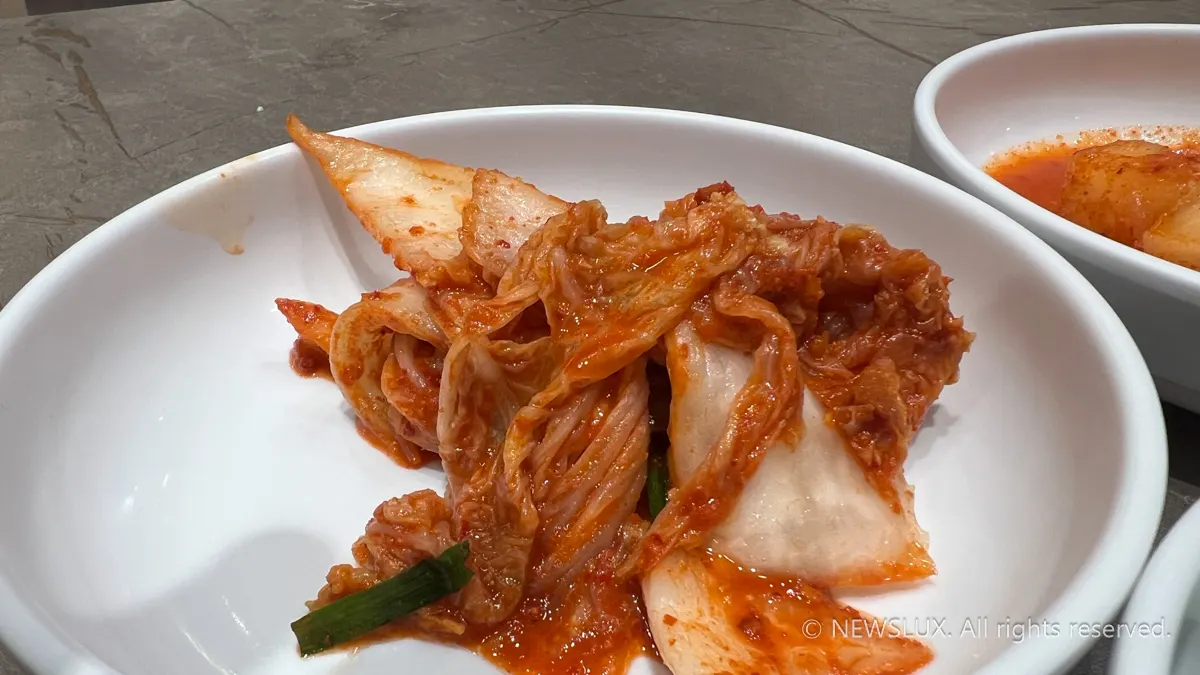
The side dishes deserve a mention as well. At many restaurants, small portions of kkakdugi or kimchi are served almost as a token gesture, meaning you have to ask for more. If they are not particularly good, I simply leave them alone. Here, however, the side dishes were fresh and well made—especially the kimchi and kkakdugi. Being able to help yourself from the self-service bar without having to ask was another welcome touch.
The dried greens were not so soft that they fell apart. They retained some bite, allowing their natural flavor to come through even when I was mainly drinking the broth.
At other restaurants, the greens can feel like an afterthought, left in long pieces simply because no one wanted to prepare them properly. Here, they were cut into easy-to-eat pieces, and their tenderness worked beautifully with the broth. They were not tough or stringy.
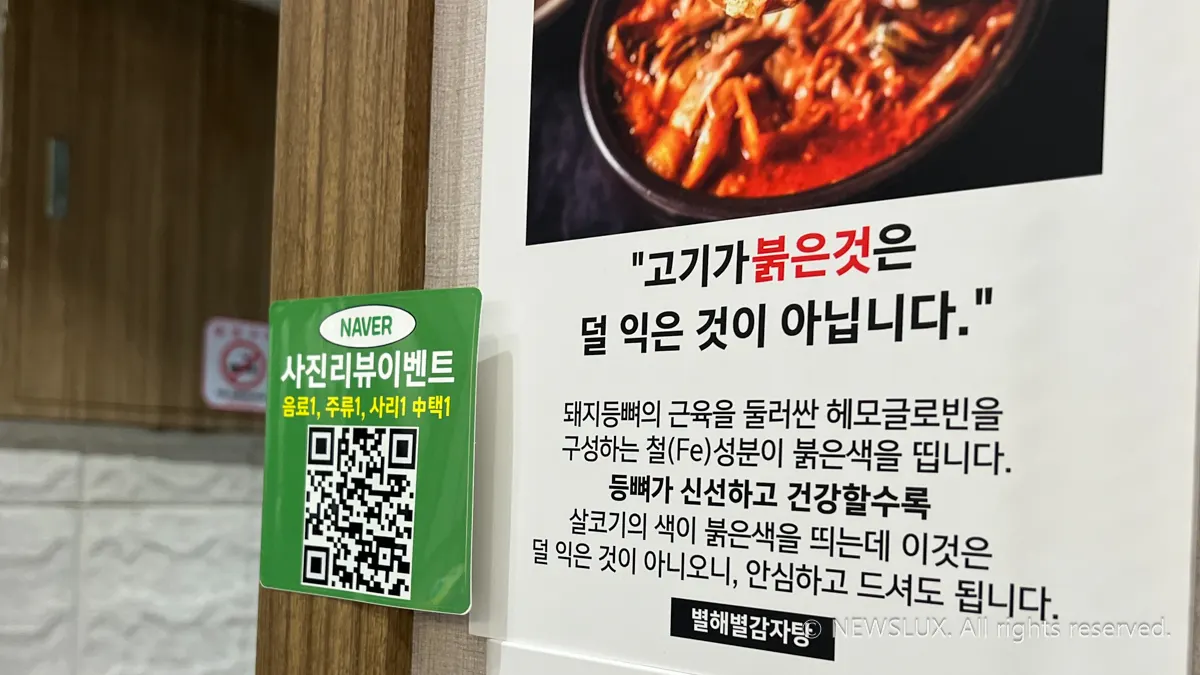
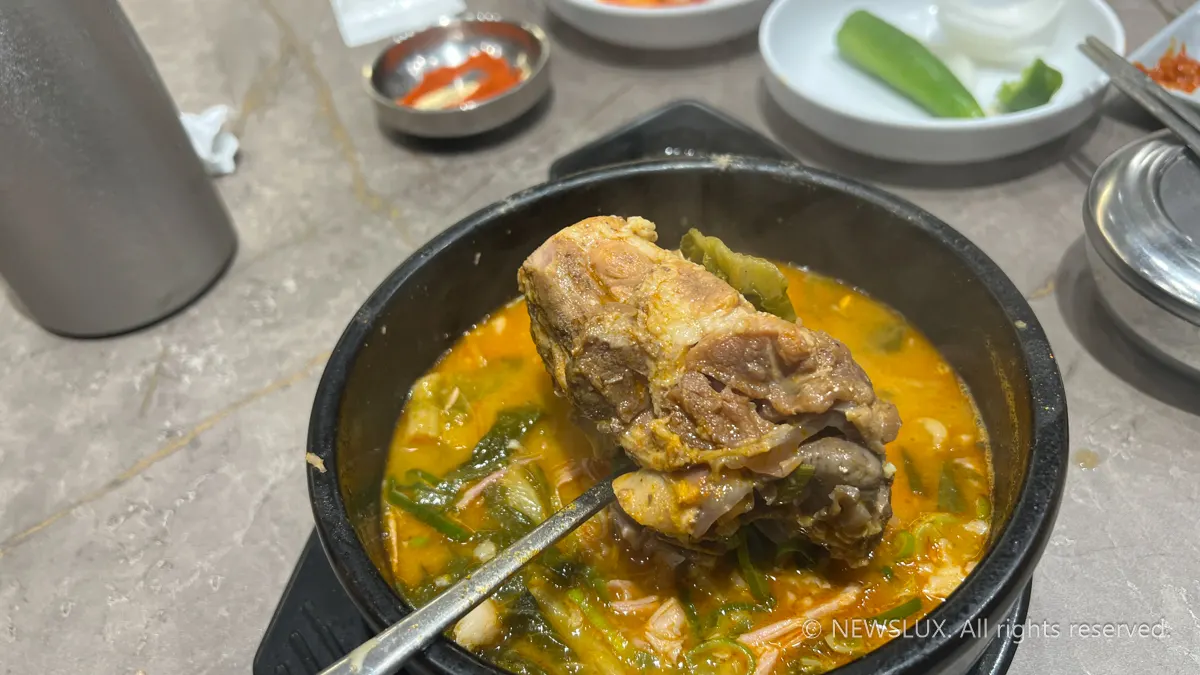
Another point of comparison is how the meat is prepared. At cheaper gamjatang restaurants, the bones sometimes carry very little meat, or the meat that remains is so tough that it is difficult to pull off. That was not a problem here, even with the 10,000-won menu.
As many people know, the meat in a bowl of bone hangover soup is often limited to a few scraps left clinging to the bone after the better cuts have been removed. Here, by contrast, there was so much meat that it almost seemed to have been deliberately left attached.
The bones had been cleaned and trimmed neatly, making the meat easy to pick off, while the tendons and fatty sections had been reduced to a reasonable amount. These are details that are difficult to appreciate without actually eating the dish, but they were among the things I noticed most clearly during this visit.
All of these elements explain why I cannot help but recommend this restaurant.
Overall Verdict—A Restaurant Worth Returning To
There was little to fault in the price, portion size, service, or side dishes. I felt that this restaurant stayed true to the essence of gamjatang: a hearty meal that makes you feel comforted and looked after.
This is not a restaurant that relies on flashy interiors or social-media-friendly presentation. In fact, the absence of those embellishments made it feel more trustworthy. Consistent service despite a busy dining room, generous ingredients for the price, and careful attention to even the smallest side dish—restaurants where all three come together are rarer than you might expect. This is one of them.
When I am craving bone hangover soup or gamjatang near Centum or Jaesong-dong, this is the first place I will return to without hesitation. If you have had a difficult day, I can confidently say that a bowl of bone gamjatang here could provide a surprisingly effective form of comfort.
I enjoyed the visit enough to think that next time I would like to bring a group and order the large size.
Frequently Asked Questions (FAQ)
Where is Byeolhaebyeol Gamjatang’s Centum location?
It is located at 70-1 Jaeban-ro, Haeundae-gu, Busan. The restaurant is close to Centum City and the Jaesong-dong office district, making it easy to reach.
What is the phone number for Byeolhaebyeol Gamjatang’s Centum location?
You can contact the restaurant at 010-8544-4879. It is recommended that you call ahead to confirm the opening hours and whether there is a wait.
How much does the bone gamjatang cost?
The bone gamjatang cost 10,000 won when I visited. Given the generous amount of meat on the bones at this price, I felt it offered excellent value.
What side dishes are available at the self-service bar?
The self-service corner offers kimchi, kkakdugi, onion with doenjang, and Korean cucumber peppers. You can help yourself according to your preference, and each side dish was well prepared.
Where does the name gamjatang come from?
There are several theories about the exact etymology, but the leading explanation is that it comes from “gamja bones,” a term for a section of pork backbone. Rather than being named because it contains potatoes, many believe the name refers to the bone itself.
Is Byeolhaebyeol Gamjatang’s Centum location the same restaurant as the Jeonggwan location?
They are separate locations under the same brand. The Jeonggwan location is in Jeonggwan-eup, Gijang-gun, while the Centum location is on Jaeban-ro in Haeundae-gu. When using a map app, be sure to check the branch name before setting out.
Is there usually a wait?
Even though I visited outside peak hours, the restaurant was busy enough that many of the tables were occupied. It is a popular spot, so waits may occur depending on the time of day.
Is it comfortable to dine there alone?
The restaurant is spacious and attracts a varied clientele, so dining alone should not feel uncomfortable. That said, gamjatang is particularly well suited to sharing, so visiting with companions allows you to enjoy a wider range of dishes and accompaniments.
Would it work for takeout or a group dinner?
The restaurant has a variety of seating arrangements and can comfortably accommodate anything from a small gathering to a larger company dinner. Takeout policies may vary by location, so it is best to call 010-8544-4879 in advance to confirm.