Beotgol Acorn Makguksu near Pusan National University: Beating the Heat with a Bowl of Water Makguksu

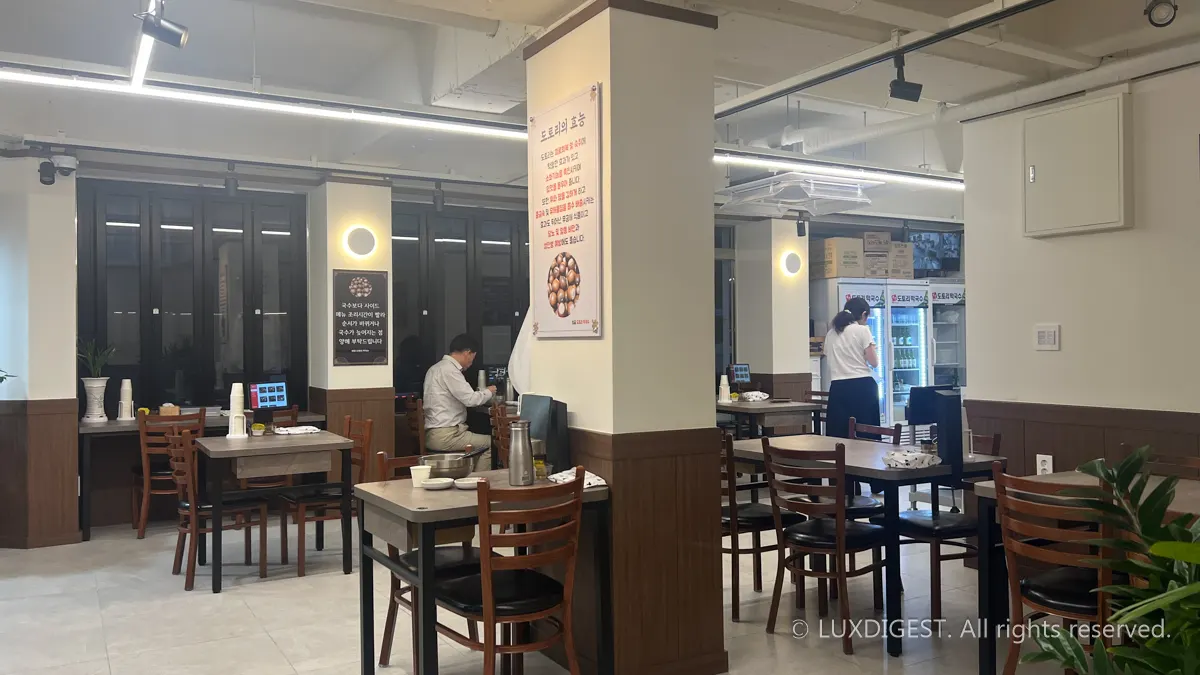
There are days when, walking past Pusan National University, all you can think about is a bowl of cool, refreshing noodles. This was one of those days.
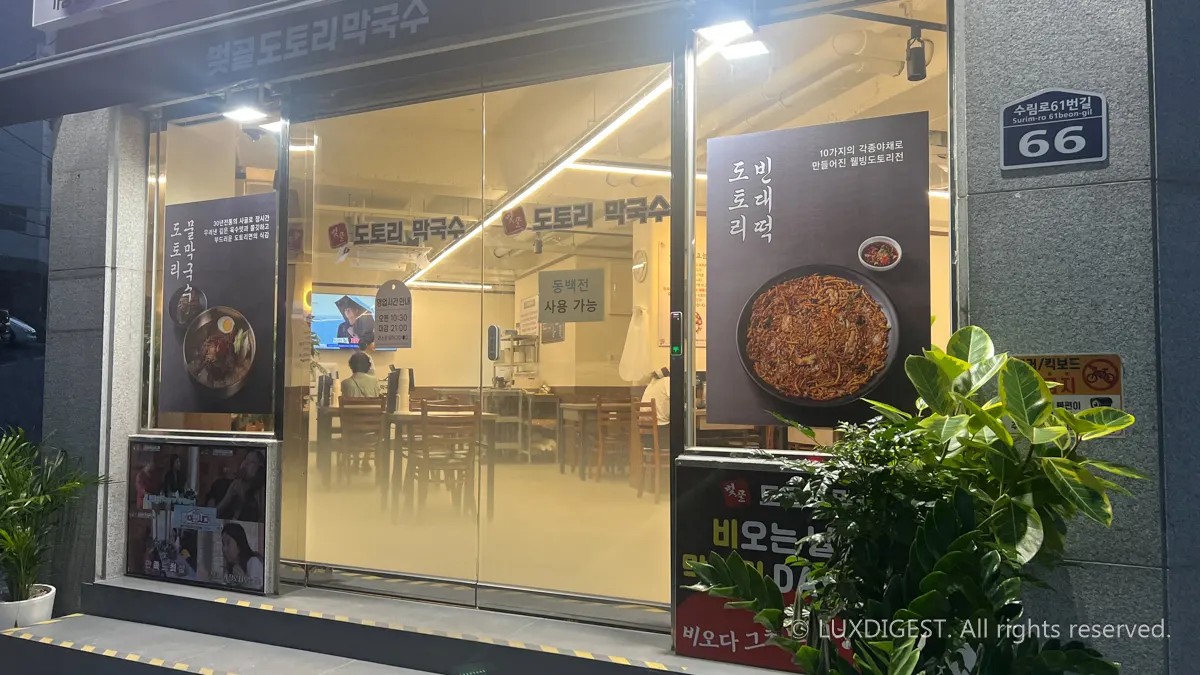
The name Acorn Makguksu was unfamiliar, but intriguing.
Buckwheat makguksu was familiar enough, but I had never heard of noodles made with acorns. Half curious and half hopeful, I stepped inside.
The Unexpected Appeal of Acorn Noodles
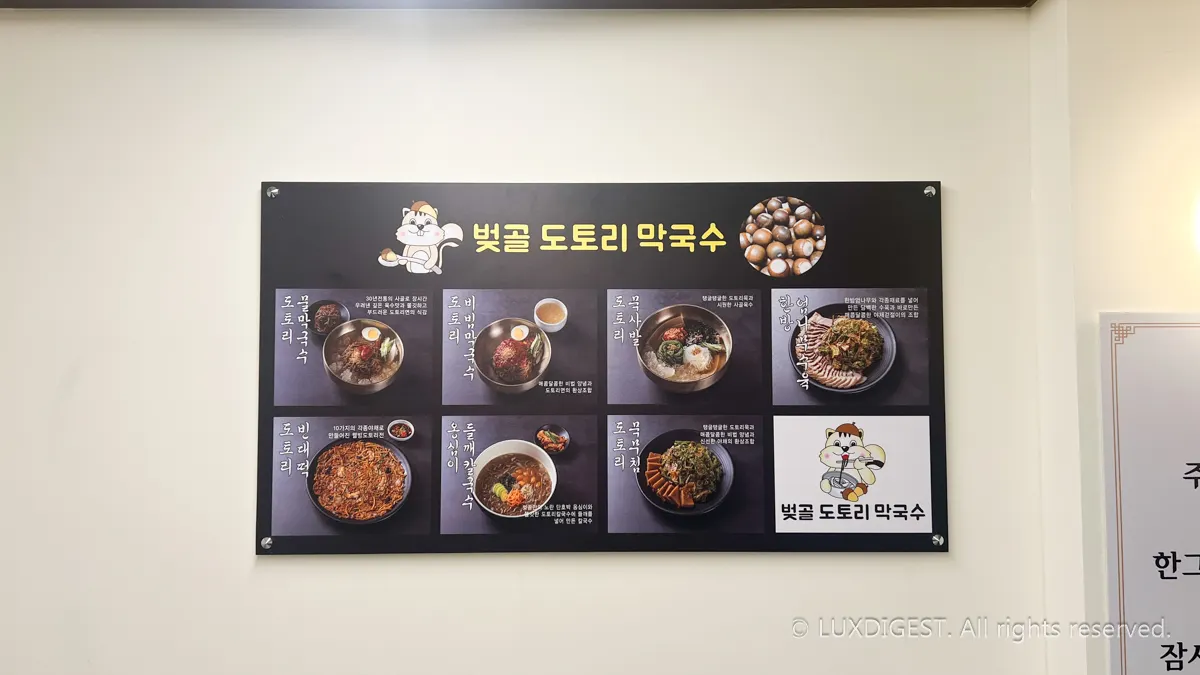
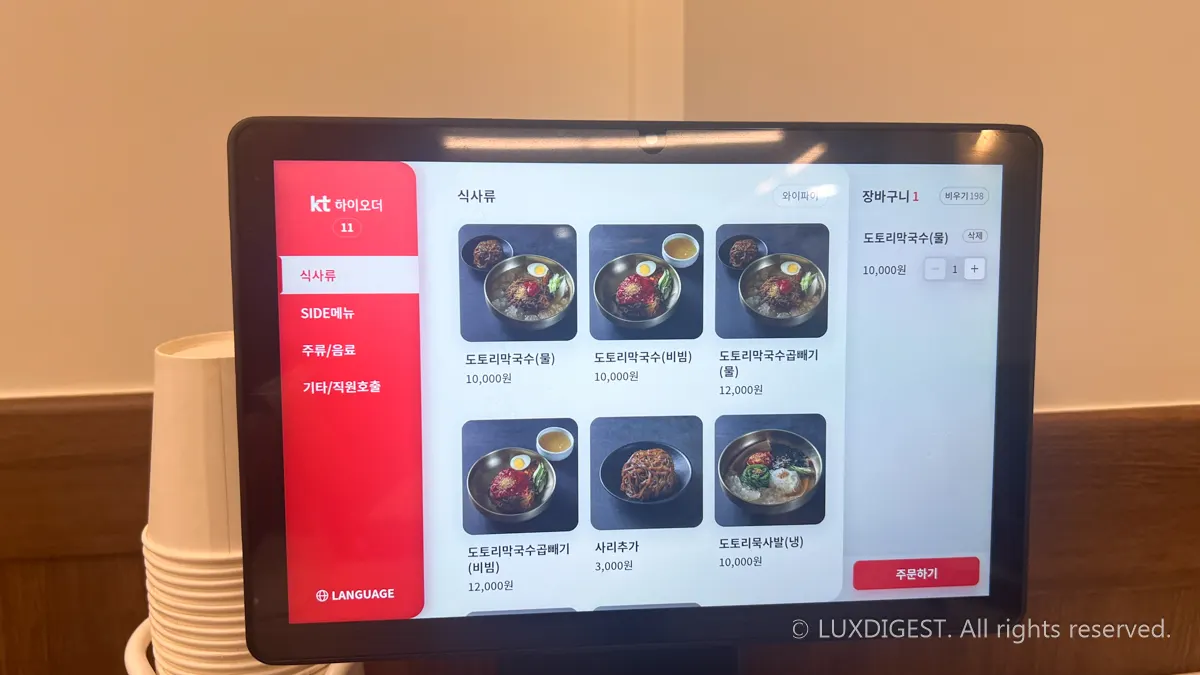
Once seated, I found water makguksu and spicy mixed makguksu listed side by side on the menu.
I ordered the water makguksu without hesitation. On a hot day, a chilled, refreshing broth is usually more appealing than anything heavily seasoned.
As I waited, I wondered what noodles made with acorns would actually be like.
Buckwheat noodles are appealing for the way they snap cleanly when you bite into them, but how would acorn noodles compare?
Water Makguksu, One Bite at a Time

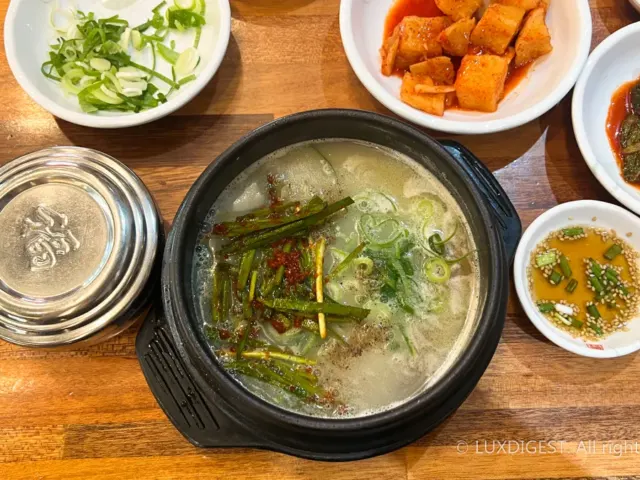
At last, the bowl arrived. The first thing to catch my eye was the broth, dotted with fine shards of ice.
One spoonful brought an immediate wave of cool relief. The broth was refreshing without being overpowering, yet still full of savory depth.
As I lifted the noodles, their signature smooth, springy texture was immediately apparent.
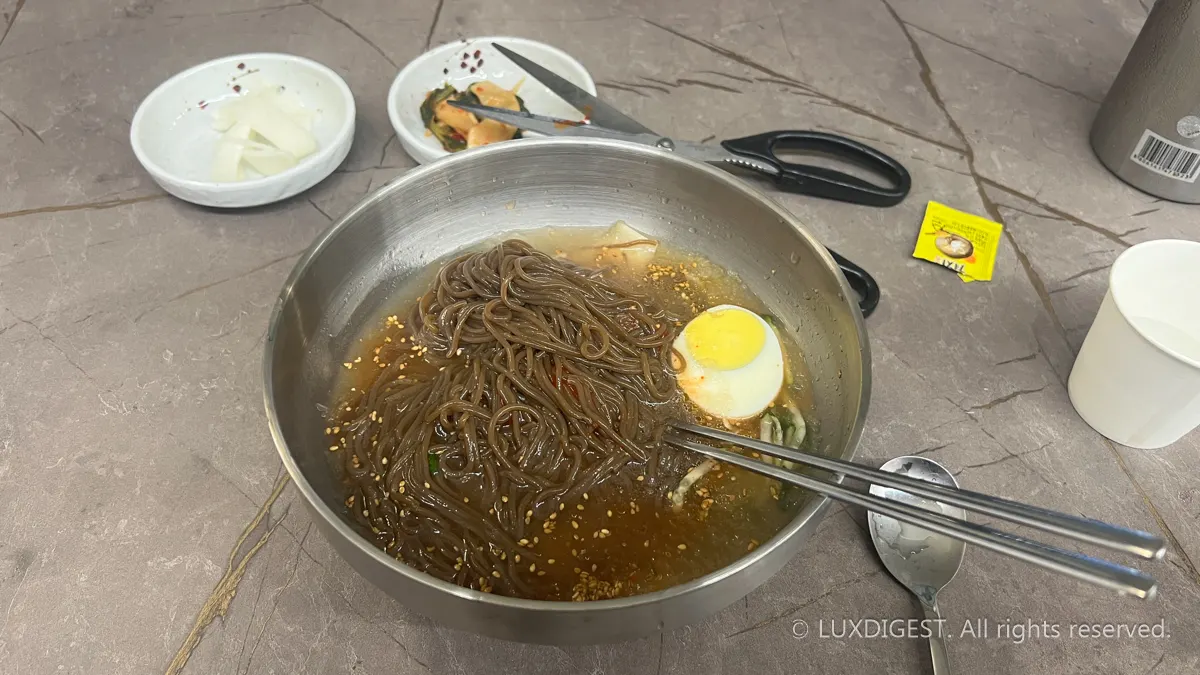
They were far chewier and more elastic than buckwheat noodles, making for a distinctly different bite.
Their subtle brown hue also made it clear at a glance that acorns had gone into the noodles.
The noodles and broth worked together better than I had expected.

The acorns’ warm, earthy aroma blended with the broth’s cool freshness, creating a flavor that kept calling for another bite.
Vinegar and mustard were set out on the table, so diners could season the dish to taste. I added a small splash of vinegar, and the extra tang made me feel as though the heat had finally lifted.
What About Parking?
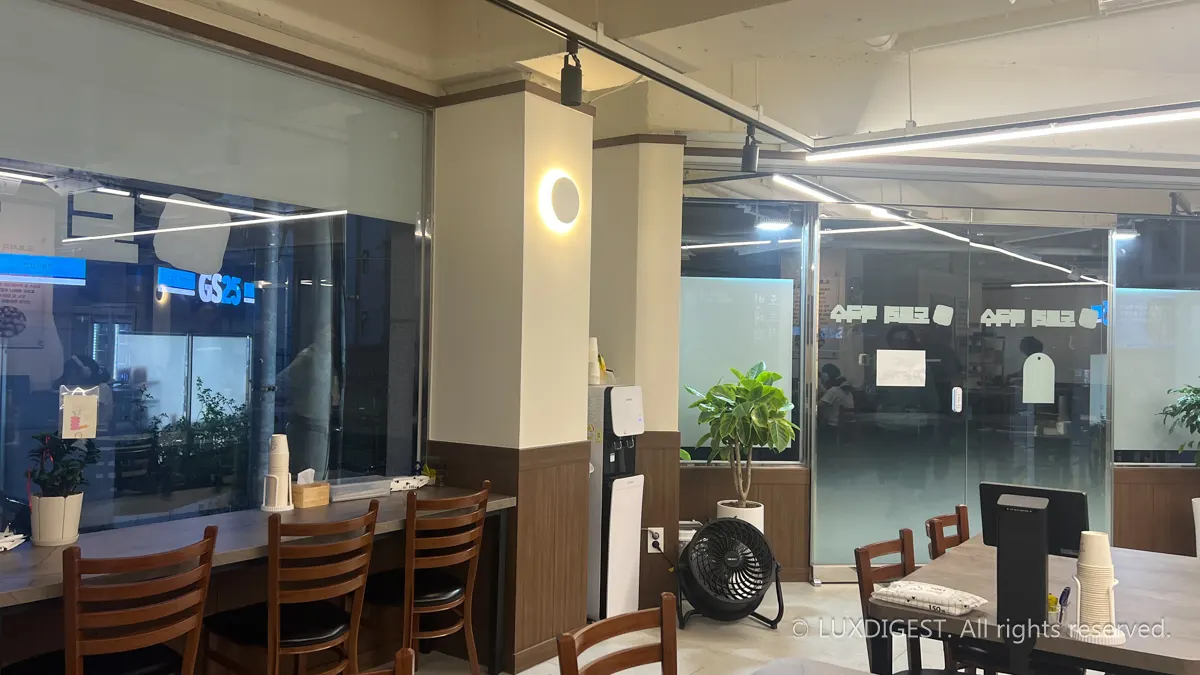
There is a parking lot right next to the restaurant.
It looked large enough to accommodate roughly five or six cars without difficulty. Parking can be challenging in this elevated neighborhood, where homes and shops share the same space, so the restaurant appears to have made a thoughtful effort to provide convenient parking.
Rounding Out the Meal
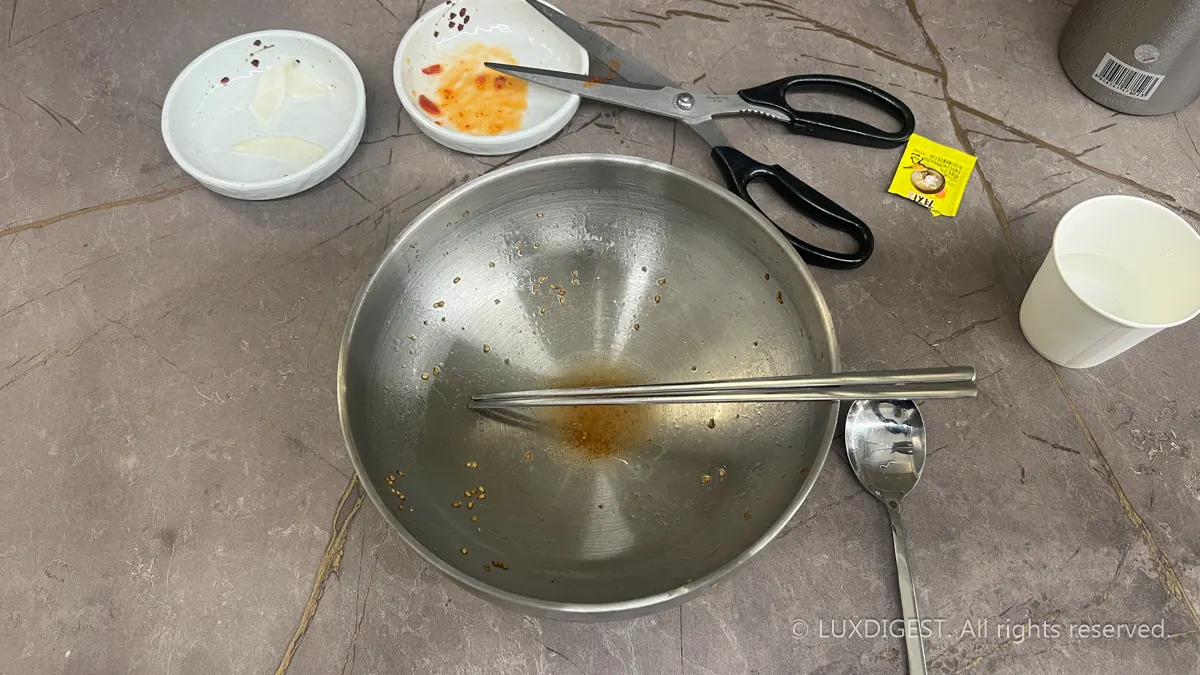
By the time I had polished off the bowl, I felt refreshed.
Chinese restaurants often serve naengmyeon, and Korean barbecue restaurants commonly offer it as a dessert. But whenever I eat it in those places, I find myself thinking that I am reaching for my chopsticks simply because it is part of the expected lineup.
In other words, it is hard to experience the true flavor of the dish.
The same is true of makguksu. Restaurants that make both a proper broth and proper noodles are rare. Too many places serve something that is called makguksu in name only.
It feels like a waste of money, but more than that, it leaves you disappointed that an entire meal fell short. It is not a pleasant feeling.
But this restaurant gives you every reason to praise it. You find yourself thinking, “They got it right. This place is good.”
This visit made me realize that acorn makguksu is not merely a variation on buckwheat makguksu. It is a distinctive dish with an identity all its own.
When you need a cool, satisfying meal on a hot day, one bowl of water makguksu is more than enough.

This article was published using DecoBlocks.