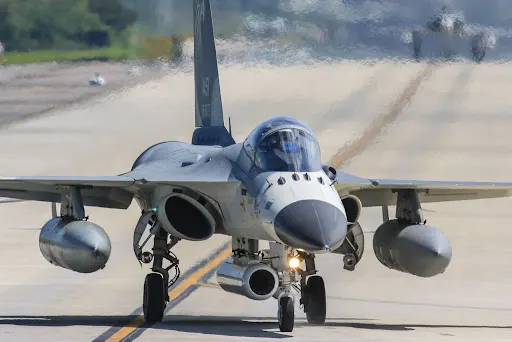
On February 22, 2025, Defense Weekly reported that Taiwan’s Ching-Kuo fighter jets would be equipped with HF-3 anti-ship missiles.
“Taiwan Enhances Defense with HF-3 Missile Integration on CK-1 Jets” Defense News reported that Taiwan is strengthening its defense capabilities by integrating HF-3 supersonic missiles with its CK-1 fighter jets.
The HF-3 missile is capable of striking both naval and ground targets, and its high speed and long range have made it an important strategic deterrent. The integration project demonstrates that Taiwan’s defense industry can develop and deploy advanced weapons systems using domestic capabilities, a development expected to have a significant impact on the regional military balance.
Improving the performance of the CK-1 fighter is also expected to strengthen the overall combat capability of the Republic of China Air Force. However, the military buildup could heighten tensions with neighboring countries and provoke a range of international reactions.
The Taiwanese government has stressed that the decision is defensive in nature, describing it as part of its effort to preserve peace and stability in the region. Let’s take a closer look at the Ching-Kuo fighter.
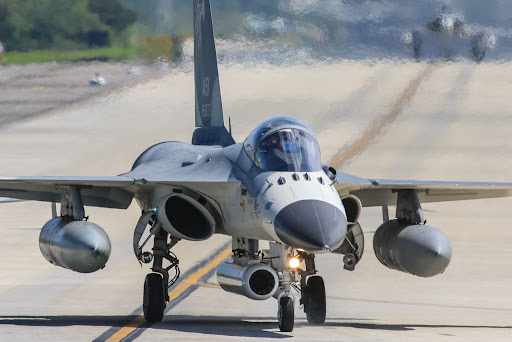
Taiwan’s Ching-Kuo fighter, officially designated the F-CK-1 Ching-Kuo, was developed domestically to defend the island. Its appearance combines features associated with the F-16 and the F/A-18.
The fighter was built with considerable assistance from the United States after international pressure—driven by concern over China—made other countries reluctant to export weapons to Taiwan.
Development Background and History
In 1979, the United States severed diplomatic relations with the Republic of China, or Taiwan, and established diplomatic ties with the People’s Republic of China. As a result, Taiwan faced growing restrictions on arms imports from the United States.
Taiwan urgently needed to replace its aging F-104 and F-5 fighters. But diplomatic concerns involving China made it difficult for Taipei to acquire American F-16 or F-20 fighters, prompting Taiwan to pursue the development of an indigenous combat aircraft.
Against this backdrop, full-scale research and development began in 1982. With technical assistance from a number of U.S. companies, including General Dynamics, Taiwan achieved the fighter’s first flight in 1989.
Design and Technical Features
The Ching-Kuo is a twin-engine fighter with a maximum takeoff weight of approximately 9,072 kilograms and a top speed of Mach 1.7. It is powered by F125 turbofan engines, developed jointly with U.S. company Honeywell Garrett. Each engine produces approximately 9,500 pounds of thrust with afterburner engaged.
For its avionics, Taiwan worked with U.S. companies including Smiths and Northrop Grumman, as well as the United Kingdom’s BAE Systems, to develop its radar and electronic systems. With technical assistance from Westinghouse, the fighter was equipped with an advanced derivative of the AN/APG-67 radar.
Armament and Performance
The Ching-Kuo’s standard armament includes an M61A1 20mm cannon. For air-to-air combat, it carries Taiwan’s domestically developed Tien Chien-1 and Tien Chien-2 missiles.
The Tien Chien-1 is a short-range, infrared-guided missile with capabilities similar to those of the AIM-9 Sidewinder. The Tien Chien-2 is a medium-range, radar-guided missile often compared with the AIM-120 AMRAAM. The fighter can also carry the Wan Chien air-to-ground missile, giving it a precision-strike capability against targets on the ground.
Introduction and Operational Status
Taiwan initially planned to produce 256 aircraft, but after the United States approved the export of 150 F-16A/B fighters in 1992, production of the Ching-Kuo was reduced to 130 aircraft.
Today, the Republic of China Air Force operates the Ching-Kuo as one of its main fighter aircraft and continues to improve its combat capability through successive upgrades.
In recent years, however, Taiwan’s air force has faced difficulties developing engines for its next-generation fighters. Those challenges could affect the Ching-Kuo’s future operations and further performance upgrades.
Can Taiwan’s Defense Upgrades Hold China at Bay?
The Ching-Kuo fighter is the product of Taiwan’s drive for self-reliant defense, developed with indigenous technology despite severe diplomatic constraints. But the aircraft is now approaching 40 years of service, and its takeoff weight is only around nine tons—less than South Korea’s F-50.
Our F-50 has a maximum takeoff weight of 15 tons. Anti-ship missiles are neither small nor light, so it is remarkable that this fighter can even take off carrying two of them.
If the missiles were launched immediately after takeoff, the setup might still be usable to some extent. Even so, the situation is difficult to watch. Global experts say China may seek to forcibly annex Taiwan around 2026. Taiwan will not be able to stop China on its own.
The United States will try to make use of this situation in one way or another. It may avoid selling strategic weapons so as not to provoke China too severely, but it will continue profiting by selling conventional weapons to Taiwan.
Fortunately, South Korea is one of the few countries to have achieved a degree of self-reliance in national defense, so it does not face this kind of humiliation today. But just a few decades ago, it also struggled to acquire weapons while carefully weighing Washington’s position. South Korea must continue building its defense capabilities; otherwise, neither China nor Japan will take it seriously.