Overview
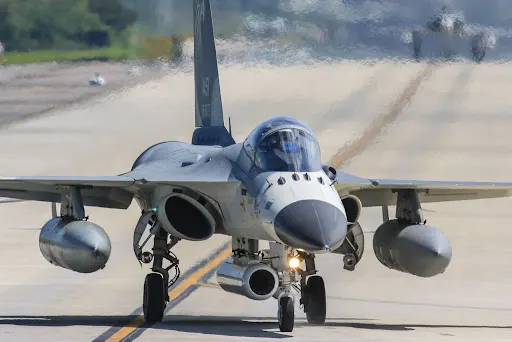
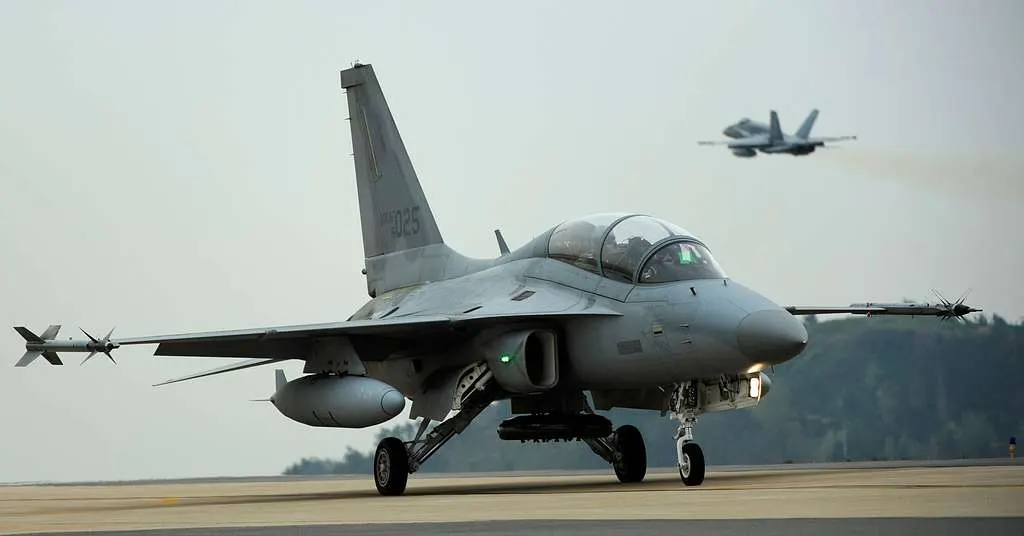
The FA-50 is a light attack and light fighter aircraft developed indigenously by South Korea. Derived from the T-50 Golden Eagle advanced trainer, it is a multirole fighter enhanced with combat capabilities. The aircraft has also achieved significant export success and is currently operated by the Philippines, Indonesia, Thailand, Poland and several other countries, in addition to the Republic of Korea Air Force.
- Key features
- Lightweight fighter: Operating costs are roughly half those of an F-16-class fighter
- Modern avionics: An AESA radar is planned for future integration, along with an advanced mission computer
- Multirole capability: Capable of carrying air-to-air, air-to-ground and anti-ship weapons
- High agility and a strong operational range: A top speed of Mach 1.5 and an operational radius of 1,800 km
- Strong export performance: Successful entry into Southeast Asian and European markets
Development Background
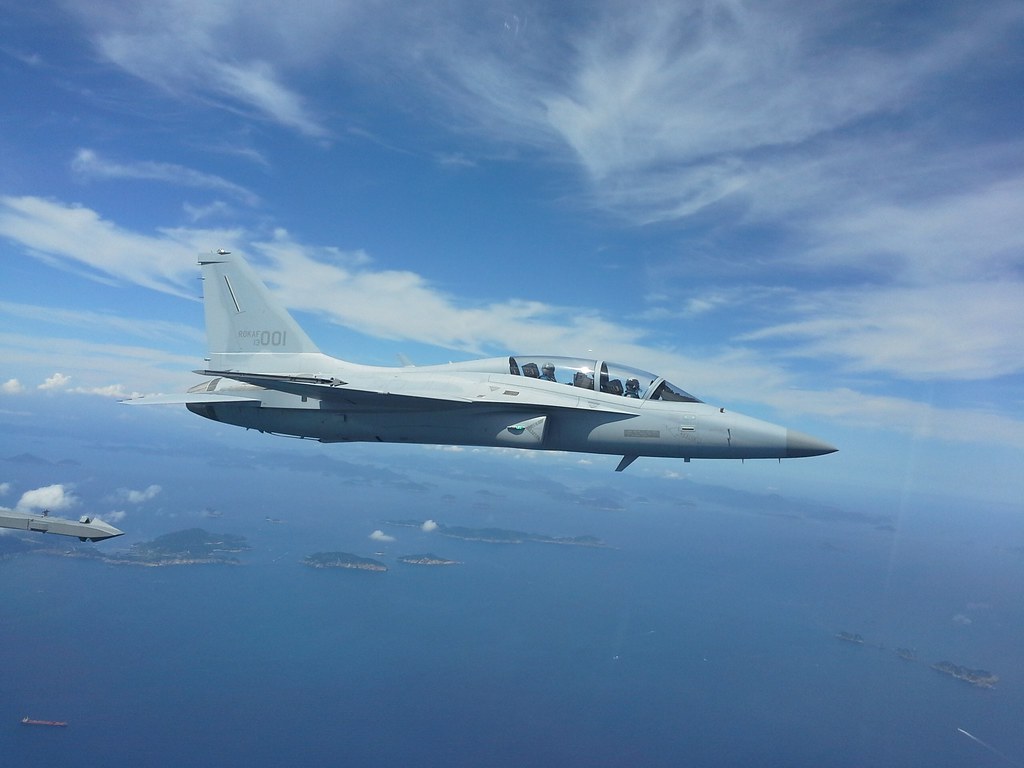
The FA-50 was developed to replace the Republic of Korea Air Force’s aging light fighters, including the F-5E/F and A-37, while strengthening the country’s indigenous fighter-development capabilities. By adding weapons and advanced avionics to the existing T-50 trainer, the FA-50 gained operational combat capability. It is designed as a cost-effective fighter that reduces operating expenses while maintaining combat power.
- Development timeline
- 2000s: Development of the T-50 advanced trainer completed
- 2011: FA-50 prototype rolled out and conducted its maiden flight
- 2013: Deliveries to the Republic of Korea Air Force began
- 2020s: AESA radar integration and expanded weapons upgrades under way
Strengths and Weaknesses
🔹 Strengths
✔ Lower operating costs: Maintenance and mission costs are lower than those of the F-16 ✔ Powerful multirole capability: Can perform air-to-air, air-to-ground and anti-ship missions ✔ Successful export record: Operated by numerous countries, including the Philippines, Thailand, Indonesia and Poland ✔ Strong upgrade potential: AESA radar and electronic-warfare equipment can be added ✔ High compatibility with the F-16: Strong interoperability with NATO and other Western military aircraft
🔻 Weaknesses
❌ Limited medium- and long-range operations: Its operational radius is shorter than that of larger fighters ❌ Limited weapons payload: Carries less weaponry than medium-weight fighters ❌ No stealth capability: The aircraft lacks stealth performance because it was not designed with radar-cross-section reduction in mind
Comparison with Light Fighters in Neighboring Countries (China, Japan and North Korea)
| Category | FA-50 (South Korea) | JL-9 (China) | F-2 (Japan) | MiG-21 (North Korea) |
|---|---|---|---|---|
| Top speed | Mach 1.5 | Mach 1.4 | Mach 2.0 | Mach 2.0 |
| Operational radius | 1,800 km | 1,500 km | 1,000 km | 900 km |
| Maximum weapons payload | 4.5 tons | 3 tons | 8 tons | 2.5 tons |
| Radar | Mechanically scanned (AESA upgrade planned) | Mechanically scanned | AESA | Mechanically scanned |
| Key advantage | Multirole capability and modern avionics | Low-cost trainer-based design | High maneuverability | Limited combat capability |
Comparison with Light Fighters from Advanced Nations (the United States, the United Kingdom, Russia and France)
| Category | F-16V (United States) | Hawk 200 (United Kingdom) | MiG-35 (Russia) | Mirage 2000 (France) |
|---|---|---|---|---|
| Top speed | Mach 2.0 | Mach 1.3 | Mach 2.2 | Mach 2.2 |
| Operational radius | 2,400 km | 1,500 km | 1,700 km | 1,800 km |
| Maximum weapons payload | 7.7 tons | 4 tons | 6.5 tons | 6.5 tons |
| Key advantage | Powerful multirole fighter | Low-cost, lightweight fighter | High speed and heavy weapons load | High maneuverability and multirole capability |
Future Development
- AESA radar integration: Plans call for fitting the same AESA radar used on the KF-21
- Potential for long-range weapons: Integration of air-to-ground cruise missiles, including the KGGB and KEPD-350K, is under review
- Further export efforts: New markets are being pursued in the Middle East, Europe and Africa
- Enhanced electronic-warfare capabilities: Advanced electronic-warfare (EW) equipment and ECM systems are scheduled for addition