Overview
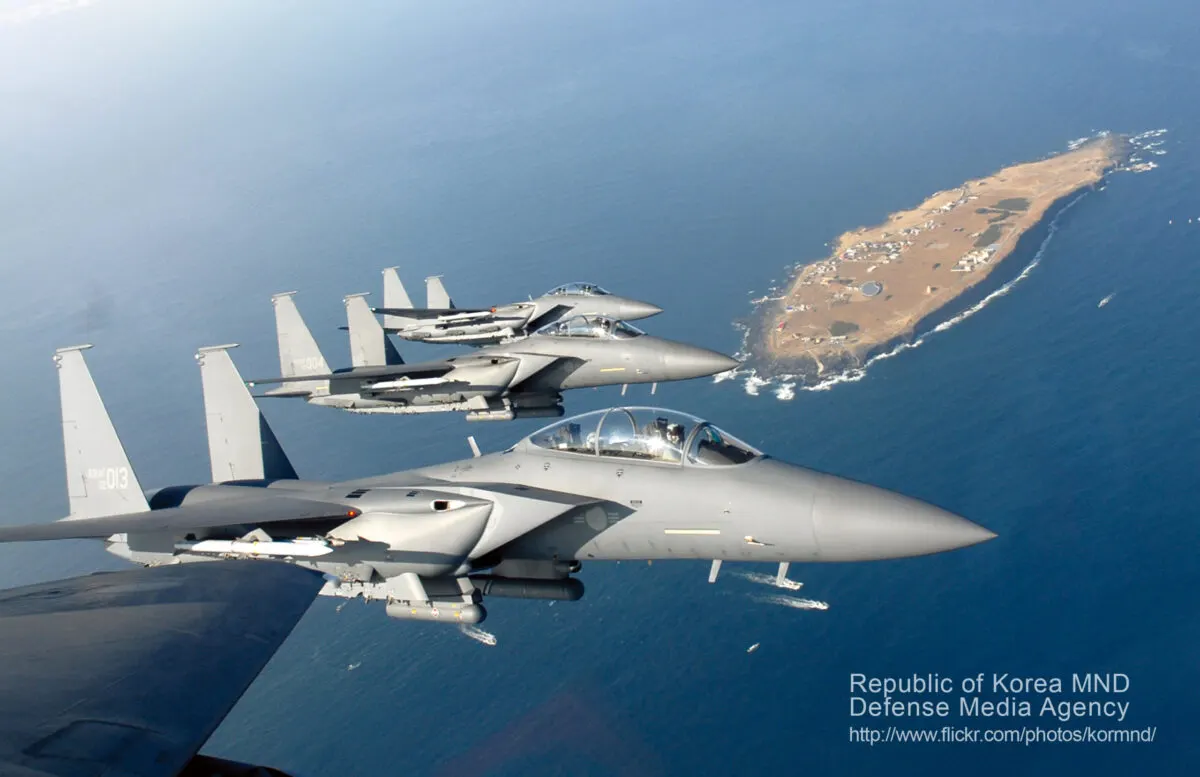
The F-15K Slam Eagle is a multirole fighter developed by Boeing from its F-15E Strike Eagle to meet the specific requirements of the Republic of Korea Air Force. Capable of carrying out a wide range of missions—including long-range precision strikes, air superiority, and precision air-to-ground attacks—it remains one of the ROK Air Force’s principal combat aircraft.
- Key features
- Extended range and heavy payload capacity: Capable of conducting long-range operations while carrying a substantial weapons load
- Precision air-to-ground strike capability: Compatible with a range of precision-guided weapons, including Taurus missiles, JDAMs, and AGM-84s
- Strong maneuverability and operational efficiency: Equipped with high-output engines and electronic warfare systems
- Twin-seat cockpit: Allows the pilot and weapons systems officer to divide flight and weapons-management duties
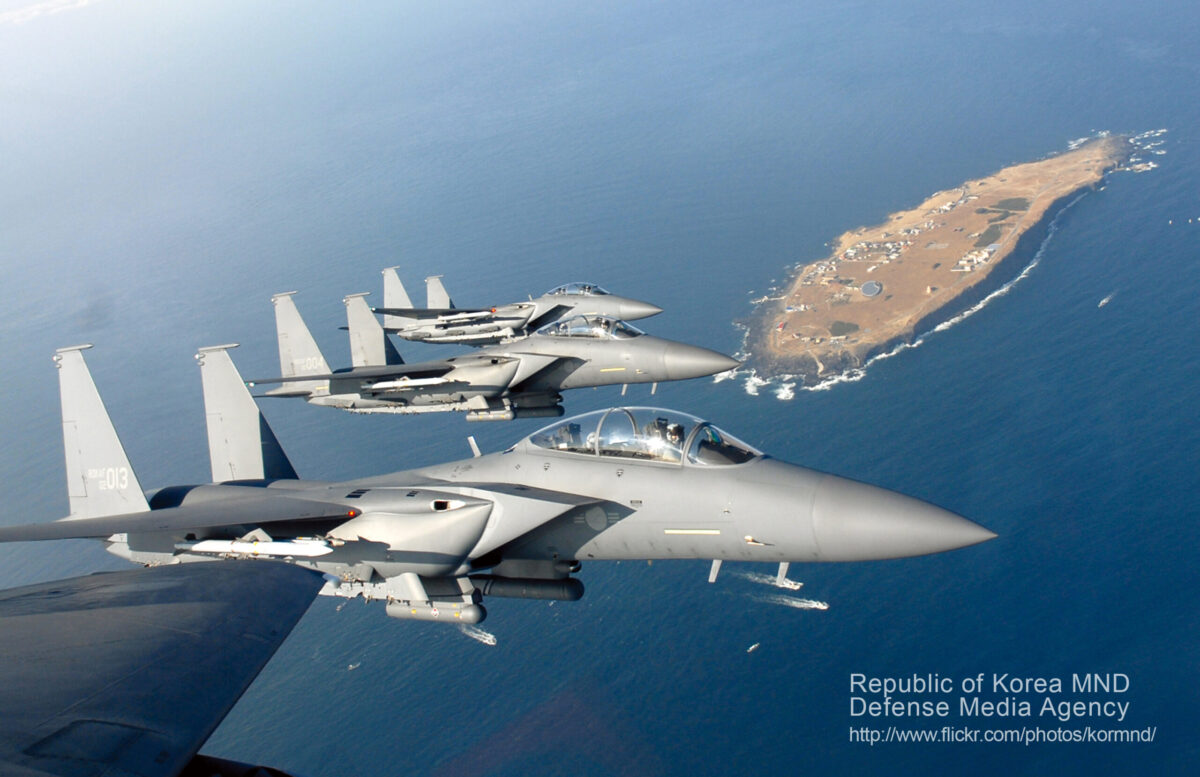
Republic of Korea Armed Forces, CC BY-SA 2.0[/caption]
Development Background
In the early 2000s, the Republic of Korea Air Force launched the next-generation fighter acquisition program, known as the F-X program, to replace aging aircraft and build a long-range strike capability. The F-15K was selected as a result, with deliveries beginning in 2005. A total of 61 aircraft were introduced and subsequently developed into a platform optimized for South Korea’s operational environment.
- Development timeline
- 2002: F-15K selected during the first phase of the F-X program
- 2005: Initial aircraft delivered and brought into operational service
- 2010s: F-15K SE upgrade variant considered
- Today: Operated as a core frontline fighter
Strengths and Weaknesses
🔹 Strengths
✔ Exceptional weapons capacity: Can carry up to 11.3 tons of ordnance ✔ Long-range precision strike capability: Can carry long-range stand-off weapons such as the Taurus missile ✔ Twin-seat cockpit: Enables efficient weapons management ✔ High speed and maneuverability: Mach 2.5 top speed and the ability to conduct high-altitude, high-speed penetration missions ✔ Aerial refueling and night-operations capability
🔻 Weaknesses
❌ Limited stealth performance: Its design lacks sufficient radar-cross-section reduction, making it difficult to avoid detection ❌ High operating costs: Fuel and parts-related maintenance costs are substantial ❌ Airframe aging: Some aircraft are aging, requiring shorter maintenance intervals
Comparison with Fighters from Neighboring Countries (China, Japan, and North Korea)
| Category | F-15K (South Korea) | J-16 (China) | F-15J (Japan) | MiG-29 (North Korea) |
|---|---|---|---|---|
| Top speed | Mach 2.5 | Mach 2.0 | Mach 2.5 | Mach 2.3 |
| Combat radius | 1,800 km | 1,500 km | 1,300 km | 1,400 km |
| Maximum weapons payload | 11.3 tons | 8 tons | 8 tons | 3.5 tons |
| Stealth capability | None | None | None | None |
| Primary advantage | Long-range precision strikes and heavy weapons loads | Enhanced electronic warfare equipment | Air-superiority capability | Limited maneuverability |
Comparison with Fighters from Advanced Military Powers (the United States, the United Kingdom, Russia, and France)
| Category | F-15EX (United States) | Eurofighter Typhoon (United Kingdom) | Su-35S (Russia) | Rafale (France) |
|---|---|---|---|---|
| Top speed | Mach 2.5 | Mach 2.0 | Mach 2.25 | Mach 1.8 |
| Combat radius | 2,200 km | 1,400 km | 1,600 km | 1,800 km |
| Maximum weapons payload | 13.4 tons | 7.5 tons | 8 tons | 9.5 tons |
| Stealth capability | None | Partial | None | Partial |
| Primary advantage | Modern multirole fighter with extensive digital integration | Exceptional air-to-air performance | High maneuverability and strong medium-range combat capability | Highly maneuverable multirole fighter |
Future Development
- Airframe upgrades: Plans call for the integration of an AESA radar, a new mission computer, and upgraded sensors
- Enhanced electronic warfare capabilities: Installation of a next-generation ECM system is under consideration
- Expanded precision-weapons integration: Potential integration with long-range guided bombs and stealth weapons
- Possible F-15EX acquisition: Introducing the F-15EX as the F-15K’s successor could improve compatibility and strengthen overall combat capability