Is South Korea’s Defense Policy Really Better Than Ukraine’s?
My conclusion is that it is not.
That judgment applies not only to former Defense Minister Kim Yong-hyun, who was busy mobilizing soldiers to support an authoritarian power grab, but also to the alleged illegal surveillance of civilians and politicians, efforts to identify whistleblowers, and allegations of abuse of power within the Defense Counterintelligence Command between April and May 2026—as well as Defense Minister Ahn Gyu-baek’s inadequate initial response. All of this suggests that the defense minister is failing to perform his duties properly.
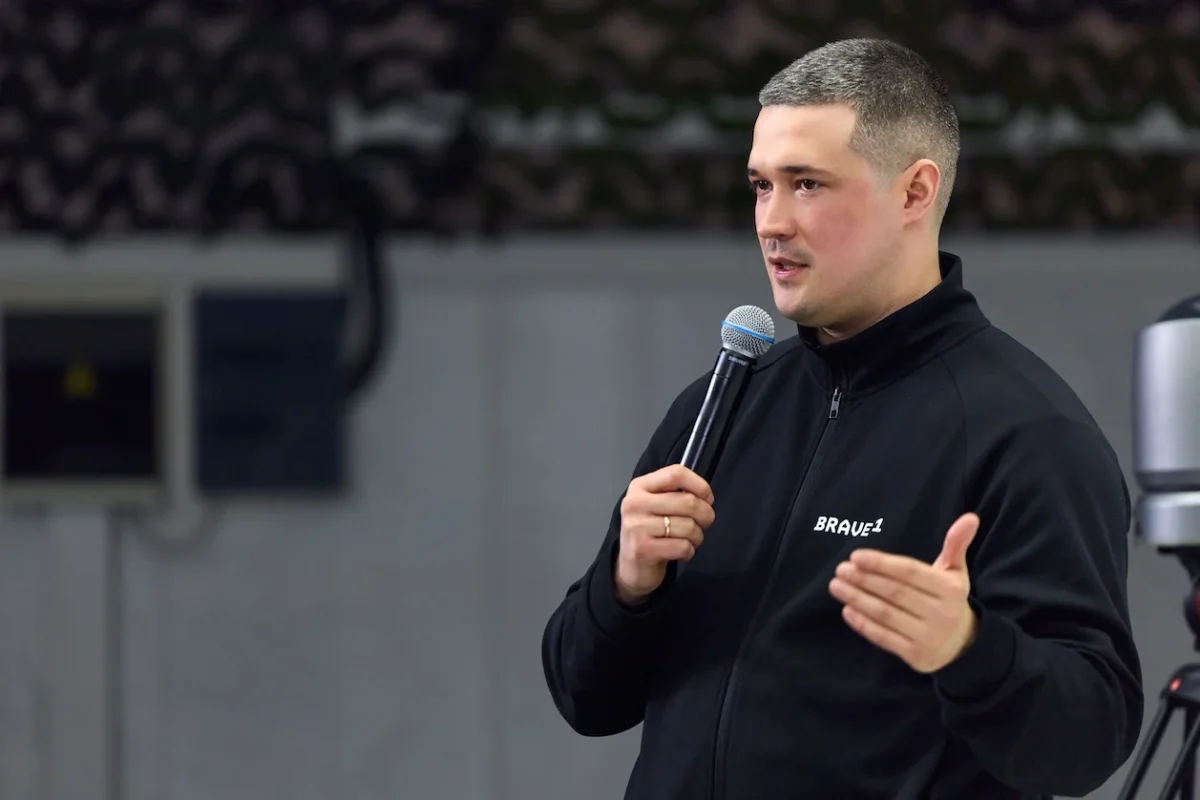
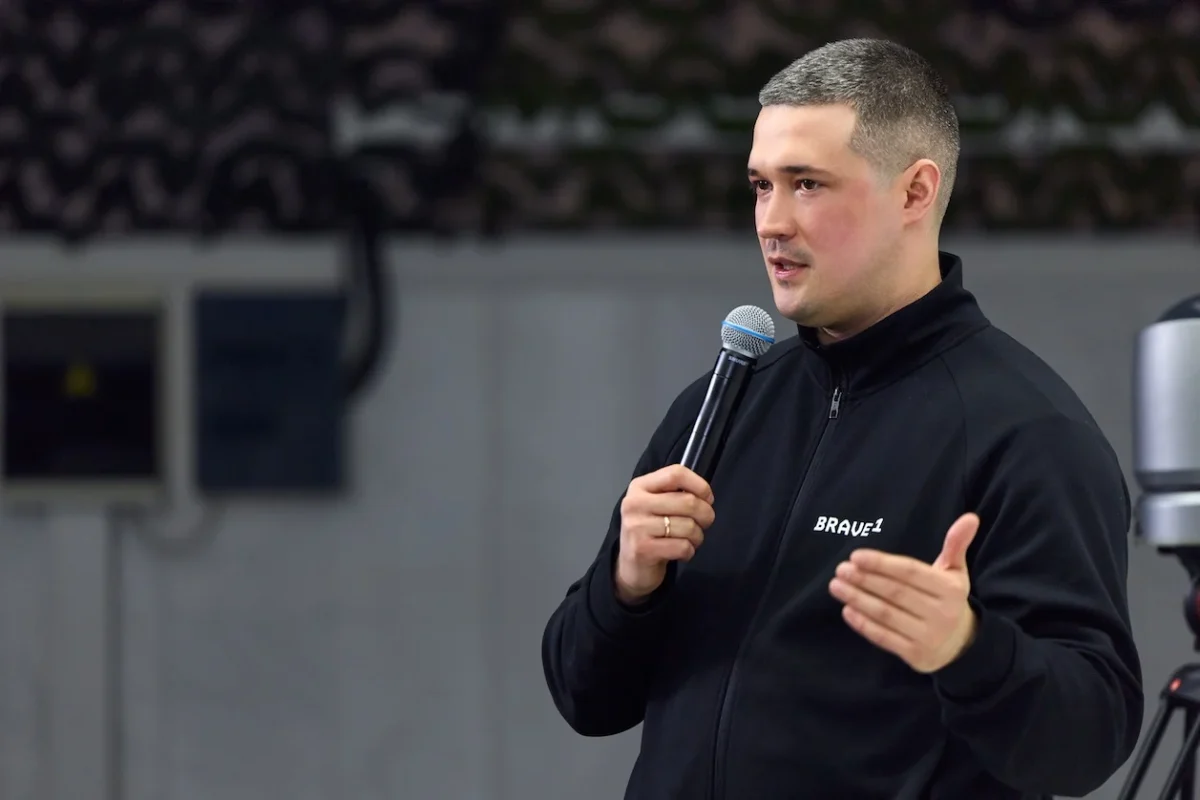
Ukraine’s Defense Minister, Mykhailo Fedorov, is a very different kind of figure.
Born in 1991, he became Ukraine’s minister of digital transformation and first deputy prime minister at the age of 28 in 2019, where he built the country’s digital government infrastructure.
After earning recognition for his outstanding ability to build a technologically advanced military, he was appointed Ukraine’s new defense minister in January 2026.
He has moved to dismantle entrenched bureaucracy and corruption within the military, reshaping the battlefield through overwhelming, technology-driven efficiency.
1. Taking Office and Reforming Leadership: Introducing Performance-Based Management
In his first major statement after taking office, Minister Fedorov declared that the Defense Ministry’s top priority would be “management.”
He reorganized the military leadership into a rigorously performance-driven structure and pursued pragmatic reforms, including the decisive removal of officials who failed to deliver results.
In particular, he concluded that a cumbersome, slow-moving military organization modeled on the former Soviet system could not conduct modern technological warfare. He therefore made the military structure more flexible, allowing civilian innovations to be deployed on the battlefield immediately.
One striking example was his decision to recruit prominent technology bloggers on Telegram and civilian drone experts as advisers reporting directly to the defense minister.
[Former Soviet-style bureaucratic military] ──(structural reform)──> [Civilian-integrated, performance-driven organization]
- Complex procurement approval procedures             - Streamlined drone paperwork and immediate deployment
- Weapons supplies disconnected from frontline needs  - Deployment of Digital Officers
2. Building a New Defense Network Platform and Digital Ecosystem
One of Fedorov’s central achievements as defense minister has been the “vertical and horizontal enhancement of the defense network platform” to enable seamless battlefield communication and command and control.
Digital Officers and the Vertical Integration of Military Innovation
He created new “Digital Officer” positions in corps- and brigade-level units, giving them responsibility for technological innovation.
These officers serve as a bridge between frontline units and technical specialists at the Defense Ministry, providing real-time feedback on technological problems identified in combat and changes in enemy tactics.
Blocking the Weaponization of Starlink and Developing an Independent Communications Network
When intelligence indicated that Russian forces were using Starlink terminals acquired on the black market to attack Ukrainian troops, Fedorov responded swiftly.
Working closely with Elon Musk and SpaceX, he completely blocked access to the illicit terminals used by Russian forces, reducing the enemy’s ability to receive real-time battlefield video feeds to one-eleventh of its previous level.
At the same time, to reduce dependence on any single private company, he established an independent internal operational network exclusively for the Ukrainian military, improving battlefield resilience.
By comparison, what is the situation in South Korea? Wasn’t this the military that astonishingly priced a single 4G USB device at 950,000 won simply because it was labeled a military product?
For all we know, tens or even hundreds of billions of won could once again be allocated to a single drone program, creating yet another opportunity for funds to be siphoned off.
Does the South Korean military actually have an effective and credible drone force capable of countering North Korea?
As far as I know, it has little more than a drone unit designed for appearances and publicity. It makes plenty of television appearances. But in reality, it is merely a show unit created to look impressive.
The fact that South Korean defense contractors export large quantities of military equipment does not necessarily mean that the Ministry of National Defense is doing its job well. We should not confuse the two.
South Korea is supposedly ranked fifth in the world for military power? There are simply too many problems to accept that claim at face value.
What matters even more than the quality or quantity of weapons is the capability of the people operating them.
Digitizing Military Personnel Management Through the Army+ App
Fedorov transferred to the military the expertise he gained from Diia, the citizen-services app he successfully developed as minister of digital transformation. Through the Army+ and Reserve+ apps, conscription, reassignments and administrative paperwork were simplified and moved onto mobile platforms.
He also established a system guaranteeing that personnel contracted for specialized technical roles, such as drone operators, would not be arbitrarily transferred to other units. This significantly strengthened trust between soldiers and the military.
3. An Innovative Point-Based Weapons Procurement System: Brave1 Market
Among Fedorov’s achievements, the most original and unconventional is widely considered to be Brave1 Market, a points-based weapons procurement platform that allows frontline soldiers to select and purchase equipment directly based on their combat performance.
[Combat achievement] ──> [Cross-checking by AI and command] ──> [Brave1 Market credits issued]
   (Destroying an enemy tank, etc.)    (Kill or destruction confirmed)       (Reward points added)
                                                                     │
[Immediate frontline delivery] <── [Soldiers purchase the weapons they need] <───────────────┘
  (Drones/electronic-warfare equipment)       (Autonomous, tailored shopping)
How the System Works
The system operates on the basis of achievements by combat units in the field.
- A frontline soldier or unit strikes and destroys a major Russian target, such as a tank, armored vehicle or fuel depot.
- Once the achievement is officially verified through drone footage and battlefield data, the unit or individual receives “credits,” or reward points.
- Soldiers use those credits to access Brave1 Market, an internal defense platform modeled on online marketplaces such as Amazon.
- They use their credits to purchase the equipment their unit needs most urgently, including FPV drones, anti-drone jamming equipment and unmanned ground vehicles (UGVs).
- The advanced equipment ordered is delivered directly to frontline units without passing through complicated chains of reporting or bureaucratic approval.
Why It Was Introduced and What It Has Achieved
Under the traditional military procurement system, rear-area supply units purchased weapons in bulk and distributed them to the front. This created a chronic problem: equipment that was useless in actual combat was delivered, while frontline units often failed to receive drones with the specifications they needed in time.
Fedorov completely reversed that model by introducing a market-based mechanism built around the principle that “the soldier who knows the battlefield best should choose the weapon.”
Through this system, more than 500,000 drones, worth approximately $22 million, were delivered to the front at the right time. It became a decisive factor in boosting soldiers’ combat motivation and operational flexibility.
It is frustrating to ask why our system has so many old-fashioned bureaucrats but so few people capable of this kind of innovation.
Even now, military-owned golf courses are full of generals playing golf as though they were training to become professional golfers. We are clearly still under an armistice, and an armistice merely pauses a war; it does not end one.
Why military-owned golf courses are necessary is something I simply cannot understand.
4. Building a Drone Ecosystem and Completing the AI-Driven “Mathematics of War”
Fedorov has transformed Ukraine into the world’s largest “proving ground” for military technology.
- Explosive growth in drone and weapons manufacturing infrastructure: Through the technology ecosystem he built, the number of companies producing drones increased from just seven at the beginning of the war to more than 500. The number of electronic-warfare companies rose from two to more than 200, while the number of private missile manufacturers grew from none to more than 20.
- Turning battlefield data into an asset and training AI weapons: Fedorov established a system for providing Western allies and private technology companies with vast quantities of combat data accumulated by the Ukrainian military over four years, including drone footage, air-defense operational data and patterns in enemy combat behavior. Allies use this valuable data to improve their AI algorithms, while Ukraine receives cutting-edge AI-enabled machine-vision weapons in return—a strategy described as the “mathematics of war.” This has laid the foundation for autonomous drone-swarm technology capable of finding and striking targets independently even when jamming cuts off the control signal.
- Small-scale air defense and automated logistics: To destroy Russia’s low-cost Shahed drones, Ukraine has deployed large numbers of inexpensive interceptor drones instead of relying on costly air-defense missiles, maximizing the efficiency of its aerial defenses. It is also automating casualty evacuation and ammunition deliveries through unmanned ground vehicles (UGVs), reducing the risks of frontline resupply and saving soldiers’ lives.
5. A Summary and Overall Comparison of Minister Mykhailo Fedorov’s Achievements
| Area of reform | Previous military structure and problems | Minister Fedorov’s digital transformation |
|---|---|---|
| Weapons and equipment procurement | Bulk purchasing and distribution by rear-area supply units, with little consideration for frontline demand and delays caused by bureaucracy | Introduction of Brave1 Market. Credits awarded for battlefield achievements enable tailored purchases and direct delivery to the front |
| Military administration and personnel | A Soviet-style paper-based system, declining trust caused by mismatched assignments and draft evasion | Launch of the Army+ / Reserve+ apps. Digital ID-based contract guarantees and fully digitized administration |
| Battlefield communications and security | The risks of relying exclusively on civilian Starlink, including exposure to Russian interception and exploitation | Blocking enemy terminals in cooperation with SpaceX, reducing Russian live-streaming by a factor of 11, and building an independent internal operational network |
| Military technology infrastructure | A weak military startup ecosystem, with only seven domestic drone manufacturers and two electronic-warfare companies | Operation of the Brave1 innovation platform. More than 500 drone companies and over 200 electronic-warfare companies, accelerating the conversion of civilian technology for military use |
| Command and decision-making | A rigid, top-down hierarchy, loss of battlefield data and reliance on experience-based judgment | Deployment of Digital Officers and more sophisticated, AI-assisted decision-making based on four years of battlefield big data |
Defense Minister Mykhailo Fedorov is more than a commander of troops. He is a “military-tech visionary” who has turned the battlefield into a digital platform and transformed soldiers into its active users.
The defense network platform and points-based weapons system he has established offer a textbook example of how a resource-constrained country can use technology to gain an asymmetric advantage over a much larger enemy.
In Closing
Could we actually win a war against North Korea or China? Or, at the very least, is there a way to avoid losing one?
Looking at the example of the great Admiral Yi Sun-sin, we can see how profoundly the wisdom, insight and patriotism of a single person can change the outcome.
You are probably aware that Ukraine has faced a great deal of criticism: being a weak country dependent on foreign aid, with politicians and a president who allegedly divert and exploit that aid through corruption, leaving the public to suffer.
Yet one of the few things that president may have done right was appointing Mykhailo Fedorov as defense minister.
This is not to say that current Defense Minister Ahn Gyu-baek has already made a grave mistake or should be dismissed. The point of this article is that, as the person currently responsible for our national defense,
he must answer the questions of how he will deal with and reform inefficient practices and corruption, and how he intends to build a stronger Ministry of National Defense in the years ahead.