The Korean people are a great people!
There will always be dictators willing to betray the Korean people for their own gain
On December 3, 2024, the president in power—apparently seeking to establish a long-term dictatorship—
imposed an unlawful emergency martial law against the people. The country soon returned to normal thanks to the resistance of courageous citizens.
Some may argue that the crisis was contained because lawmakers passed a resolution calling for the martial law to be lifted.
But that was only the formal mechanism. It would have been difficult to achieve without citizens blocking military vehicles and clearing a path for lawmakers to enter the National Assembly.
As everyone knows, the martial law operation was carried out in the middle of the night, almost like a burglary. Citizens calmly persuaded and restrained the troops, making many young soldiers reluctant to move forward.
That was a major reason the improper orders they had received could not be carried out smoothly.
Once again, a righteous citizenry prevailed.
When we look back at Korean history, we see in era after era and event after event that this is a truly distinctive people.
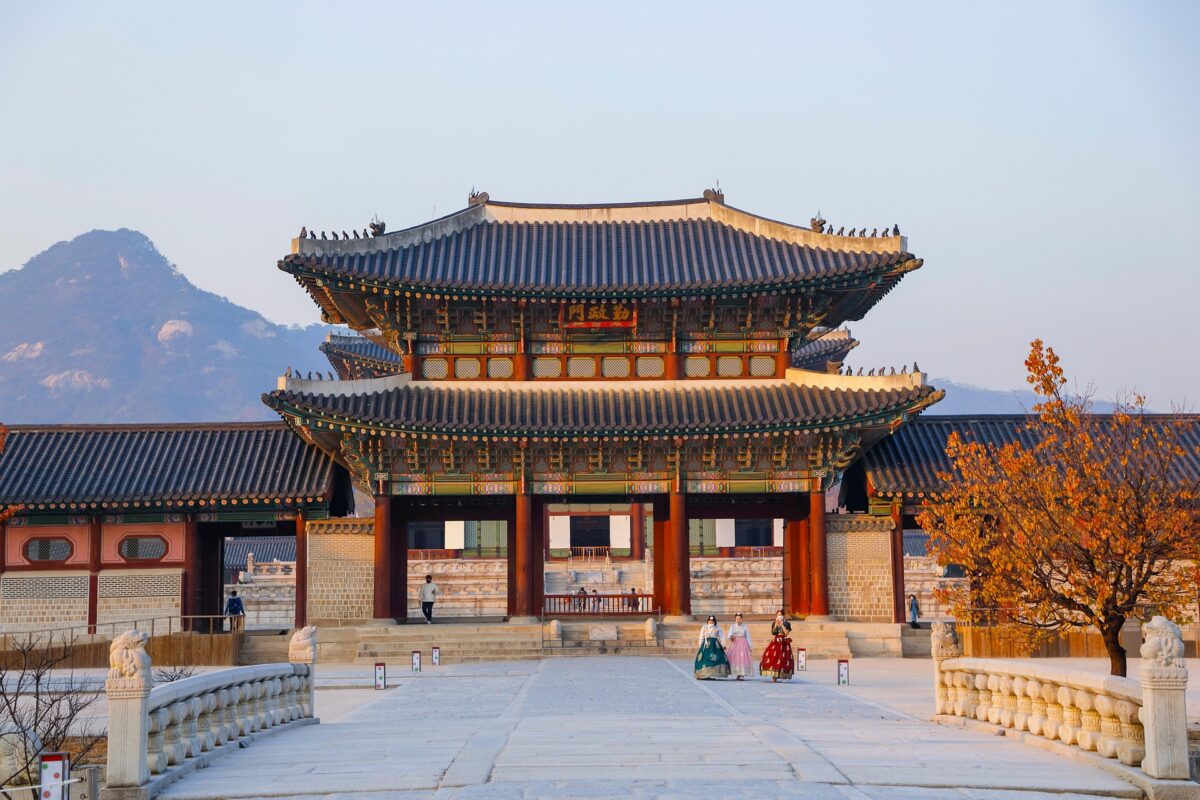
How the Republic of Korea has overcome national crises
There have been countless examples: the Silla–Tang War; the volunteer militias during the Japanese invasions of Korea and the Manchu invasion; the independence movement during Japanese colonial rule; the Korean War; the April 19 Revolution; the nationwide gold-collection campaign during the IMF financial crisis; the 2019 boycott of Japanese goods; and the candlelight movement that led to President Park Geun-hye’s impeachment.
The beginning of the Korean people’s suffering: the Silla–Tang War
Cause: Kim Chunchu’s betrayal of history by being the first to invite a foreign power onto the peninsula
During the Three Kingdoms period, Goguryeo, Baekje, and Silla watched one another carefully. Yet Baekje and Silla still recognized Goguryeo as the eldest brother—the largest and most powerful of the three.
That is why, when Japanese forces invaded Silla, Goguryeo marched south, drove them back,
and still allowed Silla’s government to remain in place.
Baekje, meanwhile, maintained close ties with Wa. Since the forces that established Wa are believed either to have included a branch of the Baekje royal family or to have built their state on the migration of people from the Korean Peninsula—a history Japan has consistently concealed—Wa sometimes sent expeditions to help Baekje.
In that sense, the forces that founded Baekje were also, according to some historical theories, migrants from Goguryeo’s political elite.
In other words, the three kingdoms were one people, sharing a common language and culture.
Although the indigenous Ainu people had lived in the Japanese archipelago since prehistoric times, Japan can also be viewed as a derivative state shaped in part by migration from the Korean people.
This is not meant to be a history lesson, but in simple terms, the ancient history of Northeast Asia can be seen as a history of confrontation between the Korean people and the Chinese people. Kim Chunchu was the figure who invited the foreign power of Tang into this struggle in order to advance his own interests.
Was Kim Chunchu a hero?
Did he really unify the Three Kingdoms? Did he?
Did Unified Silla bring the territory of Goguryeo under its rule? No. Kim Chunchu brought in Tang forces, swallowed up Baekje, and then claimed that he had unified the Three Kingdoms.
The real danger was that Tang’s true intention was to conquer Goguryeo and Silla after taking Baekje.
In the cold logic of international relations, no country willingly lends its troops to help another country wage a war of conquest out of simple goodwill.
Did the United States form a military alliance with South Korea simply because it likes Korea? Anyone who understands the realities of international relations can see that the reason lies in South Korea’s geopolitical position, which is essential for counterbalancing China and Russia.
Kim Chunchu’s decision to bring Tang into the peninsula would create enormous problems for the Korean people in the centuries that followed.
By leaving the concept of sadaejuui—serving the great power—as a political ideology at home, it implanted the notion that Korea had to serve the larger country of China and left a deep scar on the Korean people’s independent sense of history.
Yi Seong-gye’s Wihwado Retreat followed the same pattern.
Was Yi Seong-gye a great man?
There was value in eliminating the corrupt and unjust political forces that had brought Goryeo to the end of its days and establishing a new country.
But by paying tribute to Ming China, acknowledging a subordinate relationship, and seeking permission for the country’s name and the installation of its king, Yi Seong-gye accepted the notion that Korea was a vassal state rather than an independent nation. That legacy was connected to Kim Chunchu’s shameful achievement.
Some may ask: with such a vast difference in population and economic power, how could a small country possibly stand up to a great power?
Was Goguryeo stronger than the Sui and Tang dynasties? Was Israel stronger than the countries surrounding it when it was founded?
The Korean people are stronger than the people of Israel. The reason Korea failed to demonstrate that strength was not a lack of ability among its people, but the absence of political forces and wise leaders capable of guiding this great nation.
Whenever the country has faced hardship, the Korean people have united with their characteristic resilience and overcome it.
History tells us that the forces who seized power during times of crisis have rarely done anything commendable.
The Korean people have enjoyed little peace throughout their history. Yet even during the reign of King Sejong, we can see that when a leader was a good one, national calamity could be avoided. When a leader was utterly incompetent, ordinary people always paid the price. Unlike the people of many other countries, Koreans have somehow always managed to unite, help one another, and overcome each crisis.
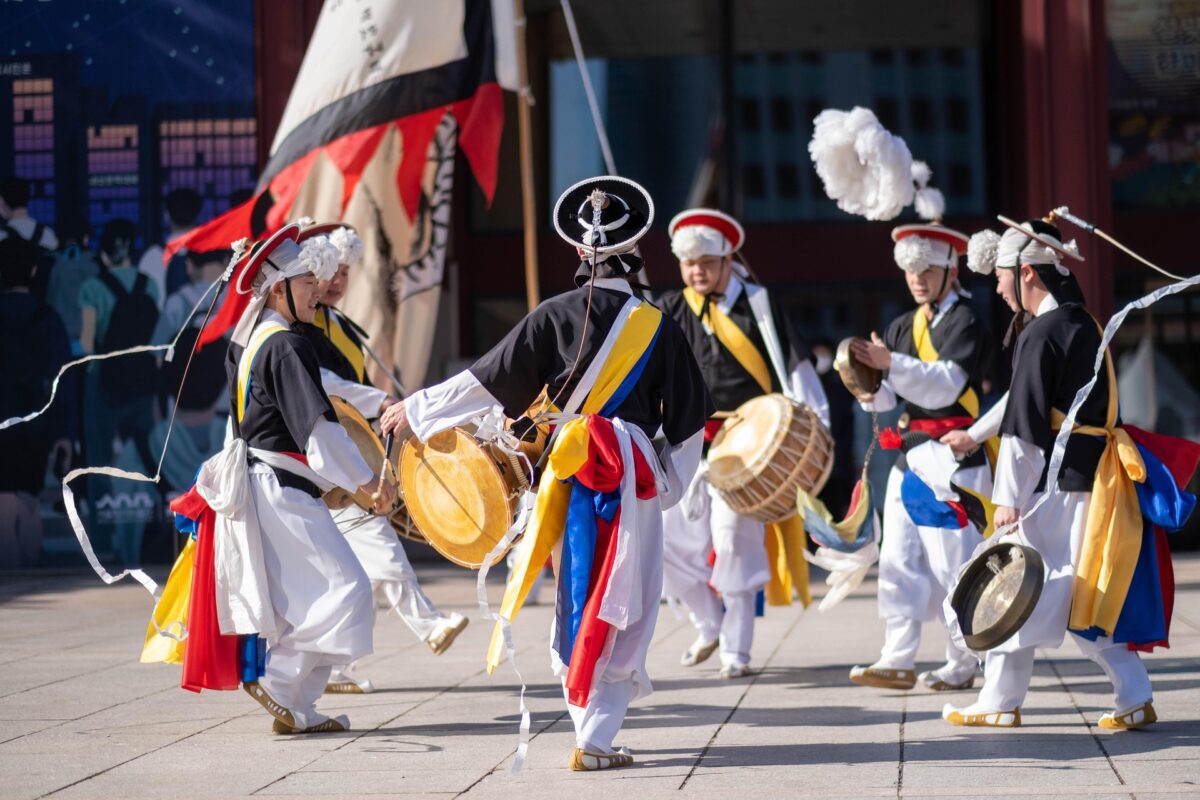
The volunteer militias of the Imjin War
Cause: King Seonjo, who was good at running away but weak on international affairs, and political forces obsessed with factional warfare and the distortion of truth
As everyone knows, before the Imjin War began, Joseon sent diplomatic envoys to Japan to assess the situation there.
But because of political infighting, they distorted their reports simply to oppose the opposing faction.
They said there would be no war. Even today, when we see political parties in the National Assembly opposing everything merely for the sake of opposition, it is hard not to notice the same old tradition being carried on. What matters is making decisions for the country and its people.
The people of Joseon ultimately paid the price. Fortunately, the great Admiral Yi Sun-sin created the decisive conditions for overcoming the invasion.
Sadly, the country’s rotten politicians also inflicted great suffering on this extraordinary commander.
Admiral Yi did not win the war alone. It was a victory achieved through the combined efforts of the volunteer militias and the entire population.
I will write in greater detail about Admiral Yi Sun-sin in a future post.
The volunteer militias of the Manchu invasion
Cause: King Injo’s extreme incompetence and the pro-China political forces that ignored the realities of statecraft
Because the political leadership failed to respond to the expanding power of Later Jin, the predecessor of the Qing dynasty, the people once again suffered. Yet ordinary citizens rose up regardless of their background and formed volunteer militias to defend the country.
Whenever political leaders are incompetent, it is ultimately the people who suffer.
They are dragged away as slaves, while the people’s backs are broken under the burden of tribute. Political leaders are not dragged away, nor are their assets confiscated.
Given its circumstances, it would have been no surprise if this country had collapsed at any time without the Korean people.
The independence movement under Japanese colonial rule
Cause: political leaders who ignored international affairs while living in comfort and luxury
After experiencing the Imjin War, Korea’s political leadership should have monitored developments not only in Japan and China but around the world and prepared an appropriate response.
Instead, it clung to the complacent belief that the country could be protected simply by closing its doors, all in an effort to preserve its wealth and power.
Another serious mistake in Yi Seong-gye’s administration, as mentioned earlier, was adopting Confucianism as the state ideology.
Confucianism itself was not the problem. The problem was that its application overlooked practical concerns, relied on convention, appearances, and empty formalities, and remained trapped in a backward mindset unable to keep pace with the times. The people suffered as a result.
Consider the movement to abolish slavery in the United States. Through war, Americans pursued a better national ideology and greater human happiness. But when the Donghak Movement and Silhak emerged in Joseon, the government tried by every means to crush them and preserve the existing system.
Because the ruling class placed the preservation of power and privilege above progressive ideas and culture, Joseon ultimately fell to Japanese imperialism.
The people once again suffered—and resisted.
Even this history shows a continuing pattern: ordinary people suffer because of the incompetence of political forces.
It is deeply regrettable that liberation came through the United States rather than through a war of independence led by Koreans themselves.
Some may say that if Korea had been capable of winning such a war, it would not have remained under Japanese rule for 35 years. But how long did it take Israel to reestablish its state?
Do not underestimate yourselves. Koreans always find a way to rise again.
The Korean War
Cause: a state system shaped by foreign powers and incompetent forces with ties to Japanese colonial rule
As we can see from the many historical episodes since Kim Chunchu, the people suffer when incompetent political forces become dependent on foreign powers.
If an independent government had taken control of the state system after liberation from Japan, the independence movement’s forces would have shaped the country. Instead, the US military government, seeking an efficient system of administration, retained and repurposed the existing personnel who had served under Japan.
This would later have a profound influence on South Korea’s political forces.
This was very different from France’s purge of collaborators who had worked with Nazi Germany. From the United States’ perspective, Korea was not particularly important, and declarations such as the Acheson Line reflected Washington’s neglect of the country.
A responsible political leadership should have gone to Washington and negotiated this issue carefully.
What did Syngman Rhee and the political establishment actually do for the country’s future? Well, they worked hard at rigging elections. The April 1958 Constitutional Amendment
The Korean War was launched by Kim Il-sung and communist forces seeking to expand their power. But we must also recognize the failures of South Korea’s political leadership, which did not prepare for the threat.
This is no different from preparing defenses such as a kill chain and expanded surveillance systems in response to North Korea’s nuclear weapons.
The April 19 Revolution
Cause: restrictions on the people’s basic rights to preserve a dictator’s hold on power
When extending his rule became impossible without electoral fraud, the government openly carried out the fraudulent March 15 election. Students began protesting Syngman Rhee’s dictatorship, and their resistance grew into a nationwide movement. It was a historic struggle by the people.
Previously, people had primarily resisted foreign powers rather than domestic political forces. But as ideas of democracy, individual freedom and equality, and human rights began to take root, citizens also started challenging their own political leaders and reclaiming the proper course of Korean history.
The IMF crisis and the nationwide gold-collection campaign
Cause: an incompetent government that neglected the nation’s future
The crisis occurred because the government failed to monitor and manage the national economic system, allowing it to operate recklessly until foreign forces took advantage of its vulnerabilities.
Ordinary people ultimately paid an enormous price, including mass layoffs.
The crisis made the wealthy even wealthier and destroyed much of the middle class.
The working poor endured tremendous hardship amid the devastating economic turmoil.
But the great Korean people did not stand by and watch. They stepped forward to help resolve the crisis.
Through the gold-collection campaign, the “save, share, exchange, and reuse” movement, and other efforts, Korea overcame the crisis in just three and a half years. This reflected a remarkable national character rarely seen anywhere else in the world.
History tells us the truth.
History speaks only the truth. When a country falls into crisis because of political forces or incompetent leaders, other nations are absorbed into new political orders or foreign powers, causing their national identity and legitimacy to disappear. Korea is unique in having endured without losing its dignity or identity.
That is why I am proud to be Korean.
Throughout Korean history, the outcome of every national hardship has depended on how the political forces in power responded.
The kind-hearted and compassionate Korean people have repeatedly united in times of crisis and overcome it.
Yet because those influenced by subservience to great powers remain, and because collaborators with Japan were never fully purged, the country’s identity continues to be shaken.
Whenever I hear people on the news seriously claim that emergency martial law was merely intended as a warning or that soldiers entered the National Assembly to protect the public,
I sometimes wonder whether our kind-hearted people should respond more firmly and hold such individuals accountable.
Thank you for reading this lengthy article to the end.