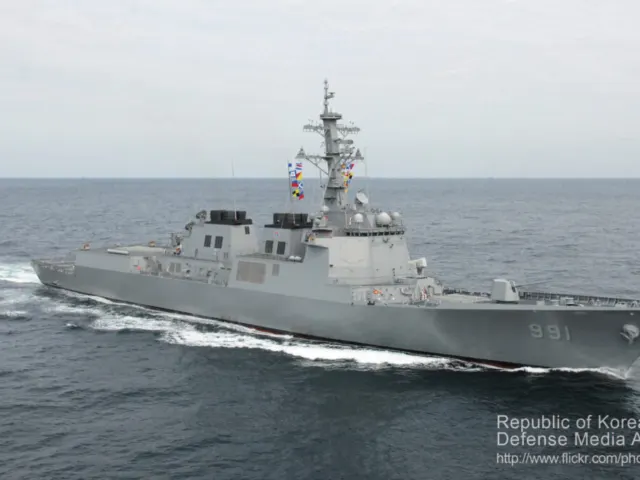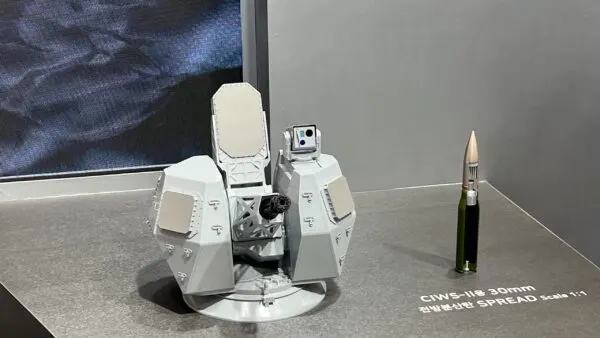
South Korea is developing the next-generation close-in weapon system (CIWS-II) for installation aboard Republic of Korea Navy vessels, with the system being developed entirely using indigenous technology.
The ROK Navy had originally preferred the Dutch Goalkeeper system for its destroyers. However, with orders too limited to generate a profit, the company that produced Goalkeeper proposed to be acquired by South Korea at an excessively high price.
The Goalkeeper system ultimately failed because of poor sales, although its maintenance license had previously been granted to LIG Nex1. From then on, new naval vessels had to rely on the US-made Phalanx through sole-source procurement.
With its main competitor, Goalkeeper, gone, Phalanx more than doubled its price. Frustrated by what it saw as unfair treatment, the ROK Navy ultimately decided to develop its own CIWS from the ground up. That effort has now produced a system set to be installed on the country’s frigates and destroyers.
It is expected to be installed beginning with the Chungbuk. The defining feature of CIWS-II is that its turret, radar, electro-optical equipment and fire-control system are all built using South Korean technology.
The weapon is regarded as the last line of defense against incoming supersonic anti-ship missiles, small drones and unmanned surface vessels.
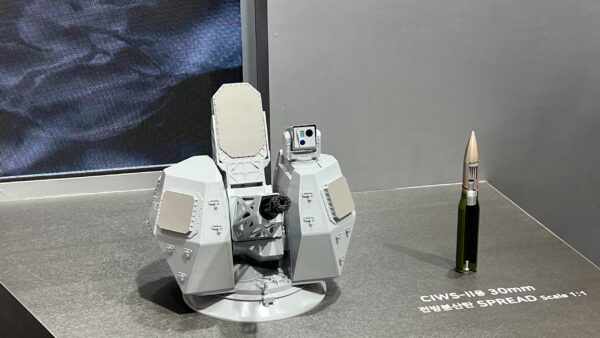
🔍 Key Features of South Korea’s CIWS-II
The US-made Phalanx CIWS previously adopted by South Korea uses a 20mm gun. By contrast, CIWS-II uses a more powerful 30mm weapon, the same caliber as Goalkeeper.
- Turret: Led by Hanwha Aerospace and equipped with an automated seven-barrel 30mm Gatling gun
- Radar: LIG Nex1 has developed an indigenous AESA multifunction tracking radar
- EO/IR sensor: Hanwha Systems has developed the electro-optical tracking system
- Fire-control system: The Agency for Defense Development (ADD) is responsible for system integration and control-system design
This makes CIWS-II a fully indigenous weapon system, with the entire process—from detection and tracking to interception—conducted using domestic technology.
🧭 Strategic and Technological Significance
The most serious threats in modern naval warfare include hypersonic missiles, drone swarms and stealthy attack vehicles that are difficult for radar to detect. Defensive systems must therefore be capable of detecting and engaging such threats immediately. CIWS-II is designed to combine AESA-radar-based automatic detection and tracking with the precision firepower of a high-rate-of-fire gun. It is also a highly symbolic example of how South Korea’s independent weapons-development capabilities could help open up export markets and strengthen the country’s military sovereignty.
💡 Implications and Outlook
- Technological independence: Developing a high-performance defensive weapon domestically, rather than relying entirely on imports, marks a major milestone in South Korea’s defense-industry history.
- Greater operational flexibility: Repairs, upgrades and tactical modifications can be carried out more quickly based on South Korea’s own decisions.
- Expanded export potential: Demand for CIWS-II could emerge among the navies of middle powers in Southeast Asia, the Middle East and other regions.
- Integration with next-generation weapon systems such as KDDX: Further synergies can be expected across South Korea’s broader defense architecture, including the future Korean Destroyer (KDDX) and light aircraft carriers.
LIG Nex1’s CIWS-II is a system the author eagerly hopes to see completed and deployed as soon as possible. The new CIWS-II is reportedly capable of defending a wider area more effectively with dispersal-type ammunition, which makes its eventual configuration all the more anticipated. Congratulations and thanks are due to all the engineers and technicians who worked so hard on its research and development.
SLBM (Submarine-Launched Ballistic Missile) Comparison and Analysis