Overview
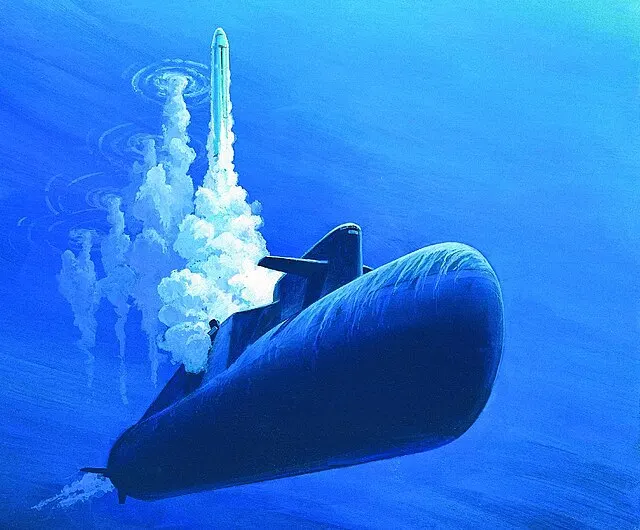
Submarine-launched ballistic missiles (SLBMs) are ballistic missiles capable of being launched from submarines. The Republic of Korea Navy has recently secured the ability to operate indigenously developed SLBMs through its Dosan Ahn Chang-ho-class submarines. As key strategic weapons, SLBMs can deliver powerful deterrence because they support covert operations and offer a high degree of survivability.
- Key features
- Submarine launch capability: Can be launched by surprise from underwater to evade detection
- Long-range strike capability: Provides strategic deterrence through medium- and long-range reach
- Compatible with nuclear or conventional warheads: Supports a range of missions
- Potential to carry multiple independently targetable reentry vehicles (MIRVs): Allows a single missile to engage multiple targets
Development Background
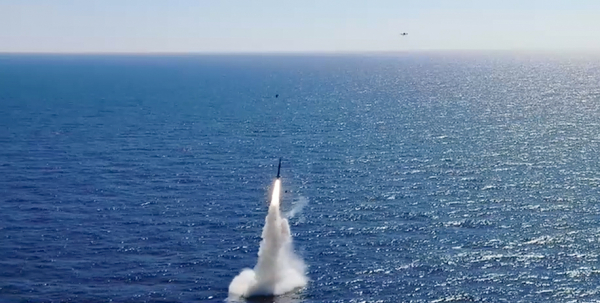
The Republic of Korea pursued the development of an indigenous SLBM in response to North Korea’s ballistic-missile and nuclear threats and has successfully developed an SLBM capable of being deployed aboard Dosan Ahn Chang-ho-class submarines. By becoming one of the first non-nuclear-weapon states to develop an SLBM, South Korea has strengthened its strategic defense capabilities.
- Development timeline
- Mid-2010s: Assessment of the need for a South Korean SLBM
- 2021: Successful SLBM test launch
- 2022: Initial deployment aboard Dosan Ahn Chang-ho-class submarines
- Present: Further upgrades and extended-range variants under development
Pros and Cons
🔹 Advantages
✔ Stronger strategic deterrence: Covert maneuvering enables surprise attacks ✔ Greater potential to evade interception: More survivable than land-based ballistic missiles ✔ Powerful retaliatory strike capability: Enables a rapid response against critical targets ✔ Mission flexibility: Can be configured with either nuclear or conventional warheads
🔻 Disadvantages
❌ High development and maintenance costs: Advanced technologies require significant investment ❌ High technical complexity: Requires the ability to launch missiles reliably from a submarine ❌ Limitations from the lack of nuclear warheads: Capability is restricted to conventional strikes
Comparison of Regional SLBMs (China, Japan and North Korea)
| Category | South Korean SLBM | JL-2 (China) | Japan (none) | North Korean SLBM (estimated) |
|---|---|---|---|---|
| Range | 500–800 km | 7,400 km | None | 1,500 km (estimated) |
| Warhead type | Conventional | Nuclear | None | Nuclear and conventional (estimated) |
| Submarine platform | Dosan Ahn Chang-ho class | Jin-class nuclear submarines | None | Sinpo class (estimated) |
| MIRV capability | None | Yes | None | None (estimated) |
| Key advantage | Surprise-strike capability | Long-range nuclear strike capability | None | Potential nuclear-warhead capability |
Comparison of SLBMs Operated by Major Powers (the United States, the United Kingdom, Russia and France)
| Category | Trident II (United States) | Trident II (United Kingdom) | Bulava (Russia) | M51 (France) |
|---|---|---|---|---|
| Range | 12,000 km | 12,000 km | 8,000 km | 10,000 km |
| Warhead type | Nuclear warhead (MIRV) | Nuclear warhead (MIRV) | Nuclear warhead (MIRV) | Nuclear warhead (MIRV) |
| Submarine platform | Ohio class | Vanguard class | Borei class | Le Triomphant class |
| MIRV capability | Yes | Yes | Yes | Yes |
| Key advantage | Long-range, multiple-warhead strikes | Core of the United Kingdom’s nuclear deterrent | Core of Russia’s strategic nuclear forces | One of Europe’s most capable SLBMs |
Future Development
- Extended range: Plans to increase the current 500–800 km range to more than 1,000 km
- Next-generation warheads: Potential development of various warhead options, including electronic-warfare and precision-strike warheads
- Consideration of nuclear-powered submarines: Further research is needed to maximize the operational efficiency of SLBMs
- Research into export opportunities: Exploration of potential sales, primarily to countries in Asia and the Middle East