What Is Kiyomizu-dera, Kyoto’s Most Iconic Temple?
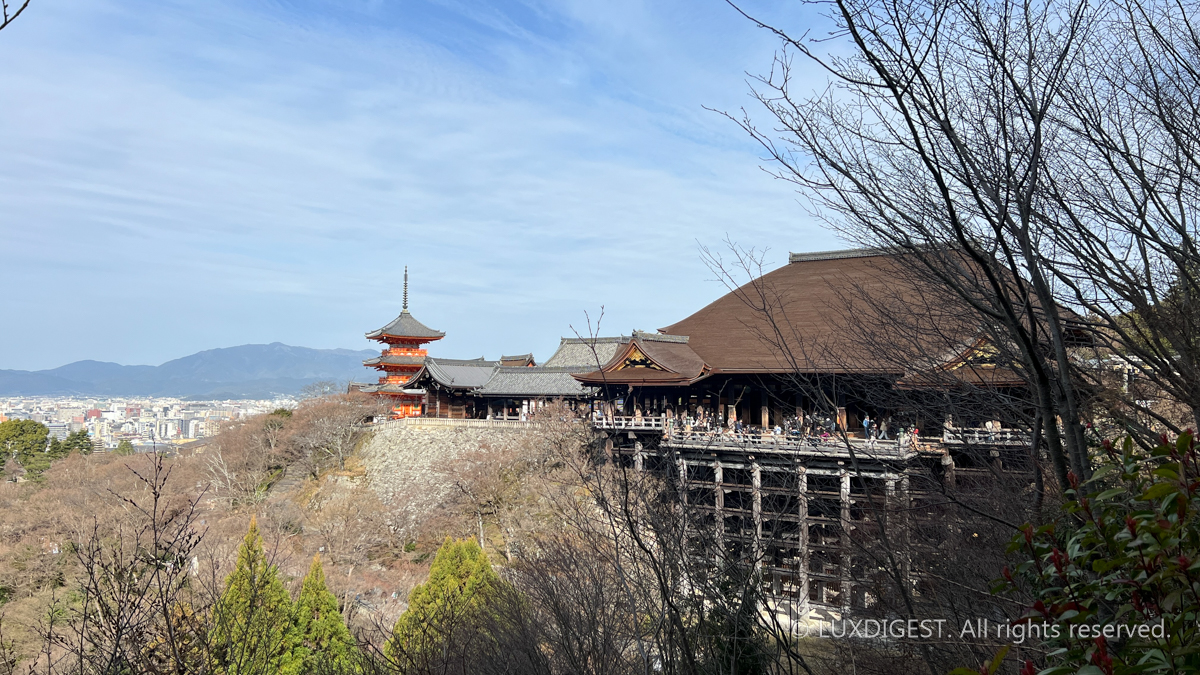
Kiyomizu-dera is one of Kyoto‘s most celebrated temples, perched on a hillside in the Higashiyama district on the city’s eastern edge.
Known in Korea as Cheongsusa, it is one of Japan’s essential tourist destinations and a perennial favorite among international visitors.
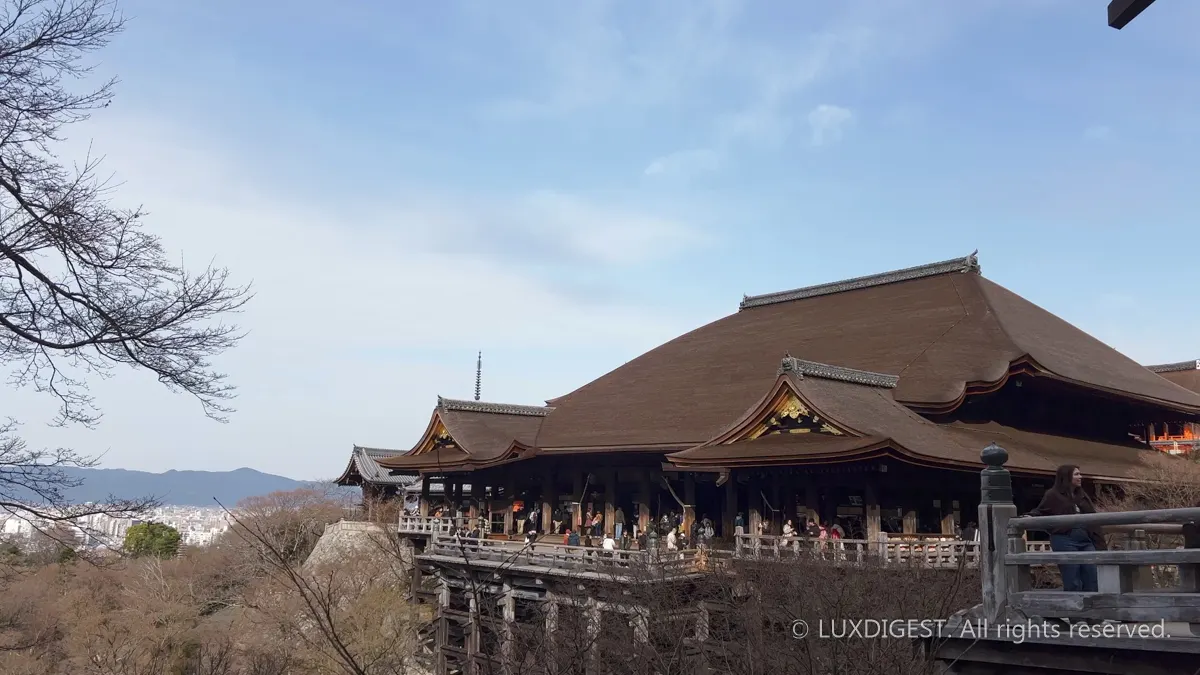
The temple is especially famous for its vast wooden stage, which projects dramatically from the mountainside, and for its sweeping views over Kyoto.
The temple is believed to have been founded in 778, while its principal buildings were rebuilt during the era of the Tokugawa shogunate.
In 1994, Kiyomizu-dera was recognized for its historical significance when it was included in the UNESCO World Heritage site Historic Monuments of Ancient Kyoto.
The Meaning Behind the Name
“Kiyomizu-dera” (清水寺) literally means “Temple of Pure Water.”
The name comes from the clear water flowing from Otowa Waterfall, located below the temple’s cliffs.
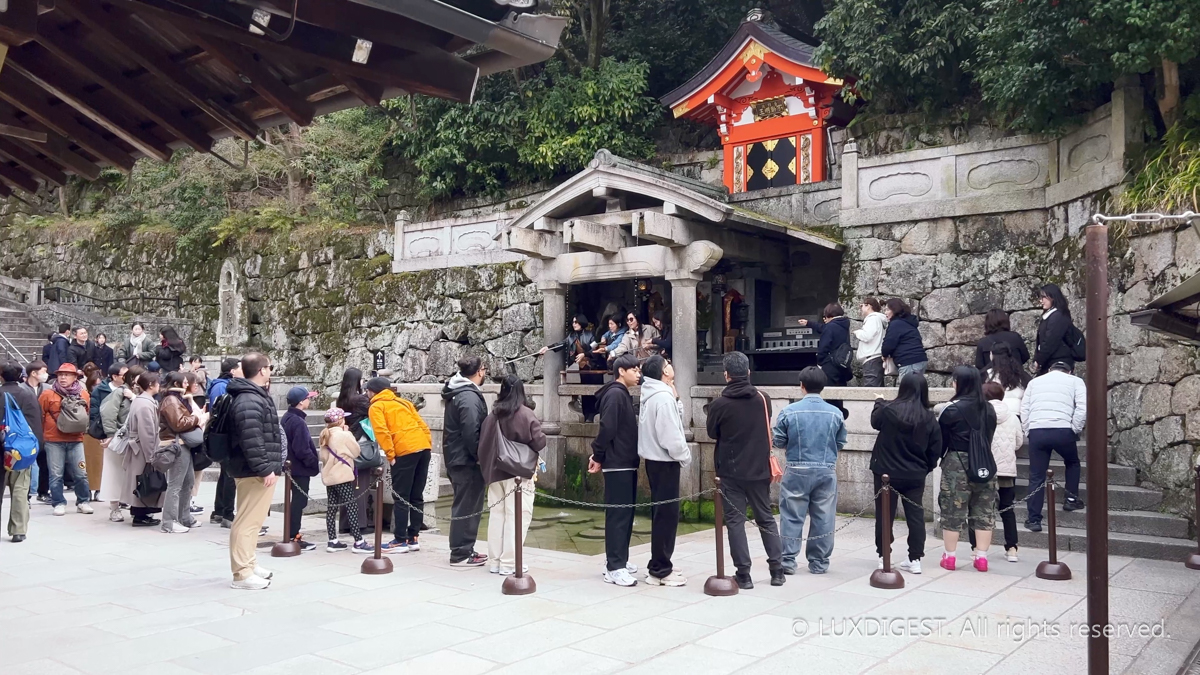
Visitors can still drink the water today. Each of the three streams is traditionally associated with a different benefit: academic success, love, or longevity.
Drinking from all three streams, however, is sometimes considered greedy, so most people choose just one.
It is common to see visitors lining up for a drink and waiting to take photos documenting the experience.
Top Attractions
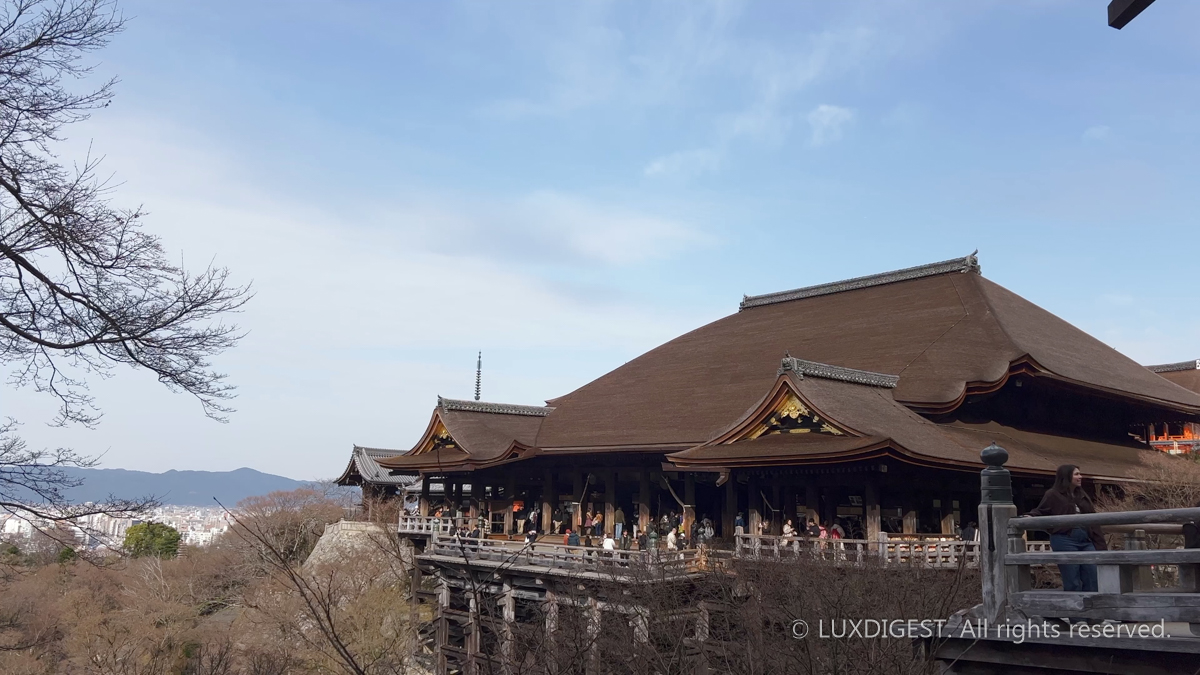
Kiyomizu Stage
This is the temple’s most famous and instantly recognizable feature.
A massive wooden structure juts out over the cliff, built using traditional Japanese techniques that rely on almost no nails.
The stage is particularly popular during cherry-blossom season in spring and when the leaves turn in autumn, offering an entirely different atmosphere in each season.
The view of Kyoto from the stage is the defining highlight of any visit to Kiyomizu-dera.
Otowa Waterfall
This small waterfall sits below the main hall.
Its three separate streams are a distinctive feature, and visitors can often be seen collecting the water with long-handled ladles before drinking it.
The water has long been regarded as sacred, and this is also the place from which the name Kiyomizu-dera originated.
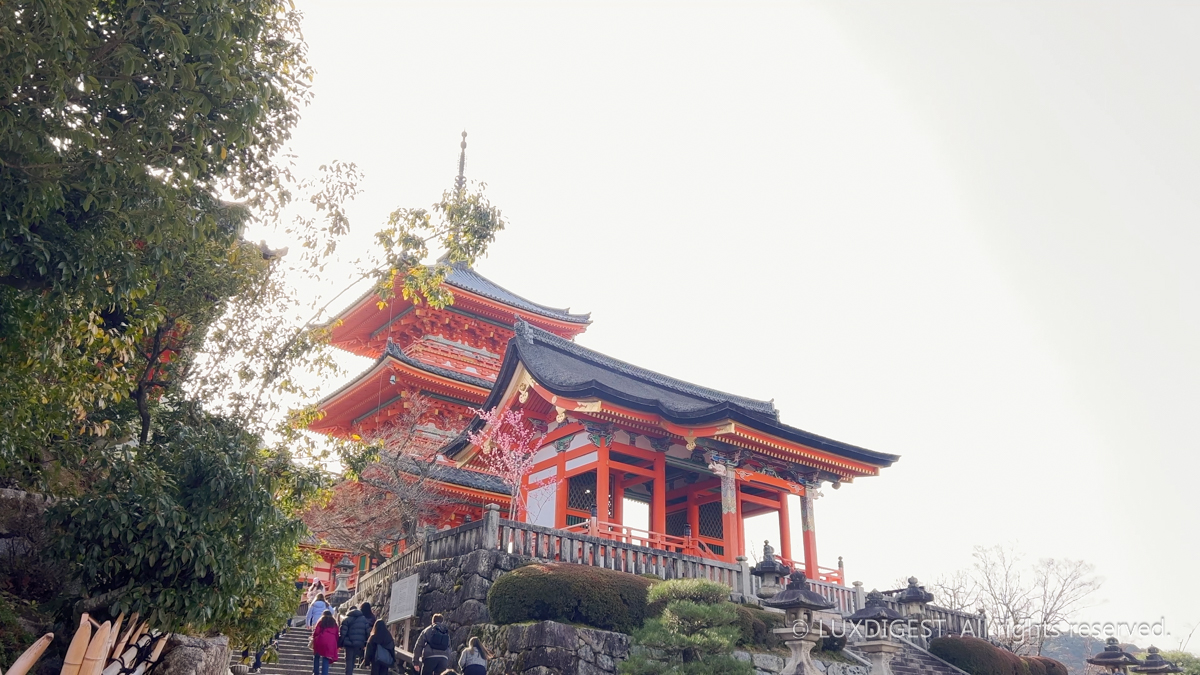
Niomon Gate and Three-Story Pagoda
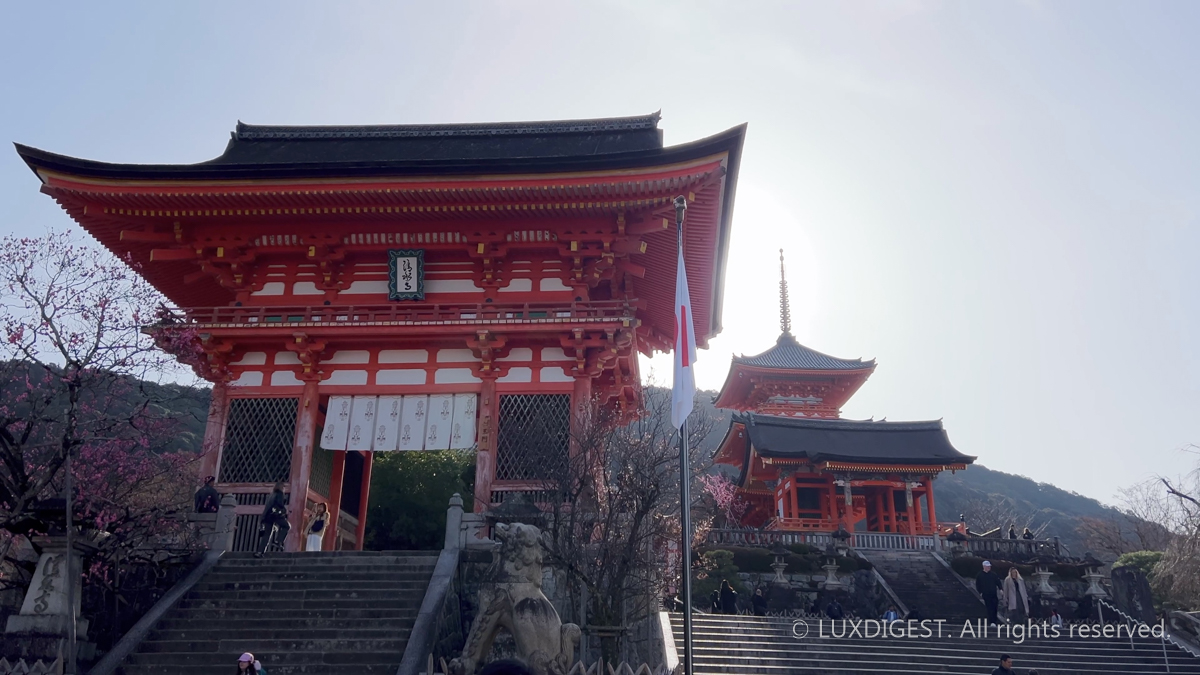
The red Niomon Gate near the entrance and the ornate three-story pagoda are also among the temple’s most popular photo spots.
At sunset, the red architecture set against Kyoto’s evening sky creates an especially striking scene.
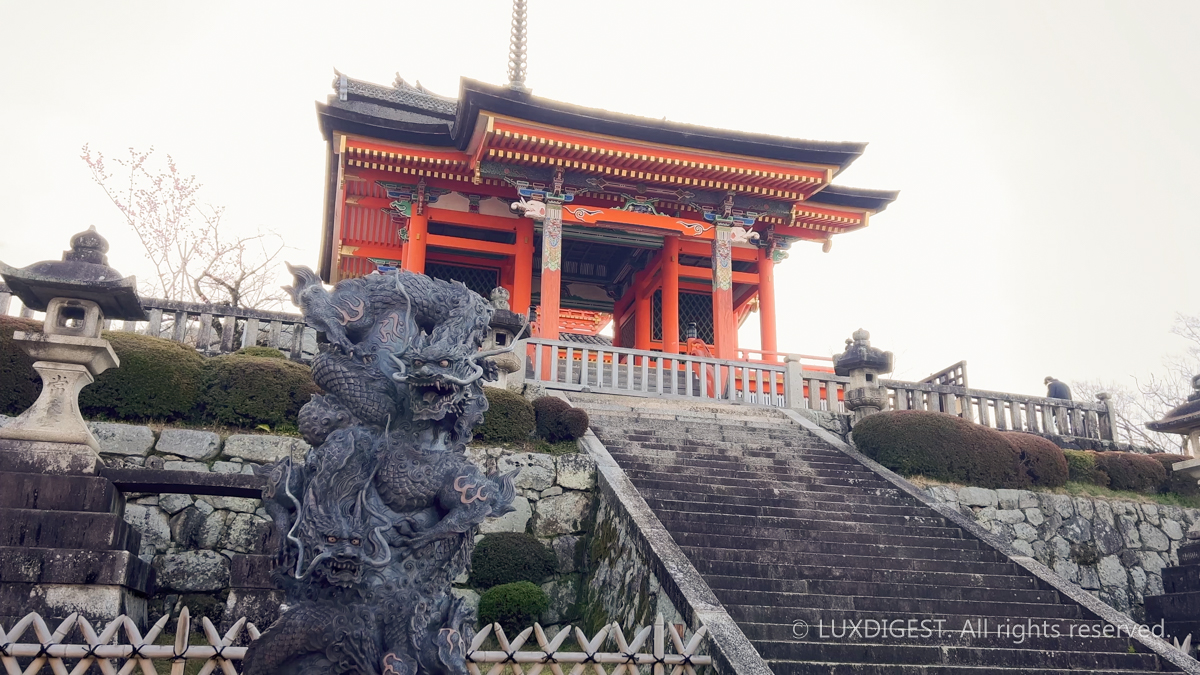
Kiyomizu-dera Through the Seasons
Spring
During cherry-blossom season, Kiyomizu-dera becomes one of the busiest destinations in Kyoto. Special evening openings are often held, and the illuminated main hall framed by cherry blossoms is a major attraction.
Summer
The surrounding greenery is at its fullest, creating a relatively calm atmosphere. Visitors should, however, be prepared for the high humidity and heat typical of Japanese summers.
Autumn
Autumn is the peak season for colorful foliage. Red and golden leaves blanket the mountainside, and Kiyomizu Stage is regarded as one of the defining symbols of Kyoto’s autumn scenery.
Winter
On snowy days, the traditional architecture and snow-covered landscape create an exceptionally quiet and atmospheric setting. Visitor numbers also tend to be lower.
When I visited in early spring, the bare branches were still visible, which was a little disappointing. In my view, Kiyomizu-dera is at its most spectacular when the autumn foliage or winter snow is on display. These are also the seasons that attract the greatest number of photographers.
Kiyomizu-dera Hands-On Experience
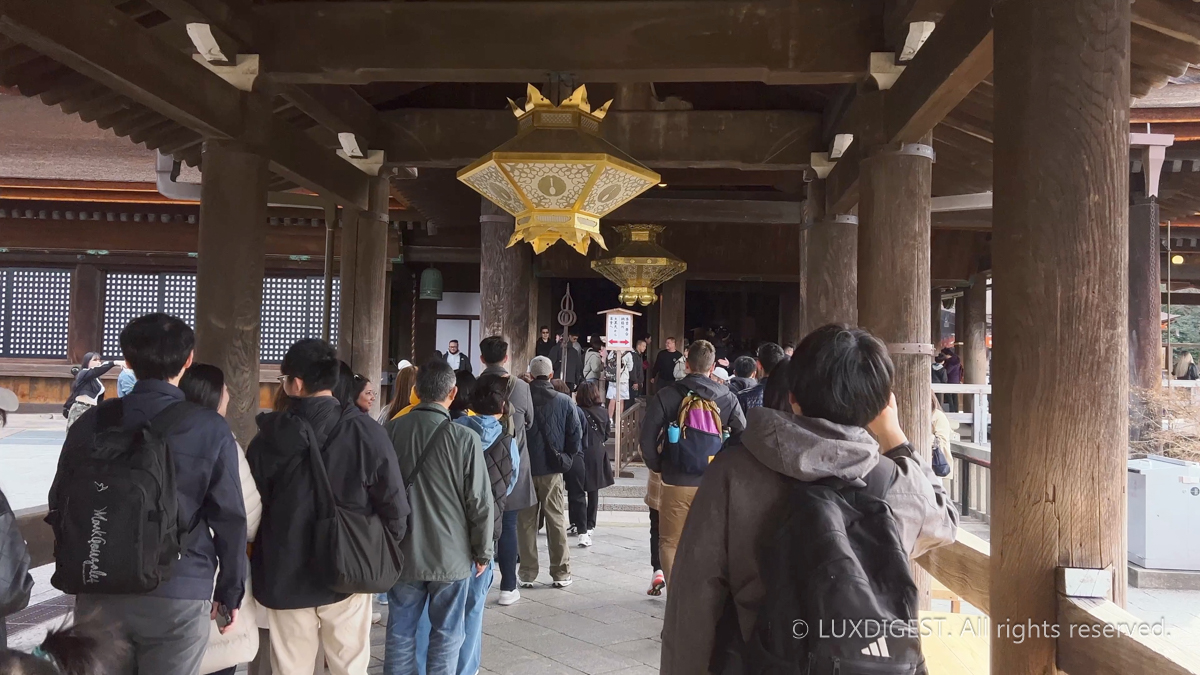
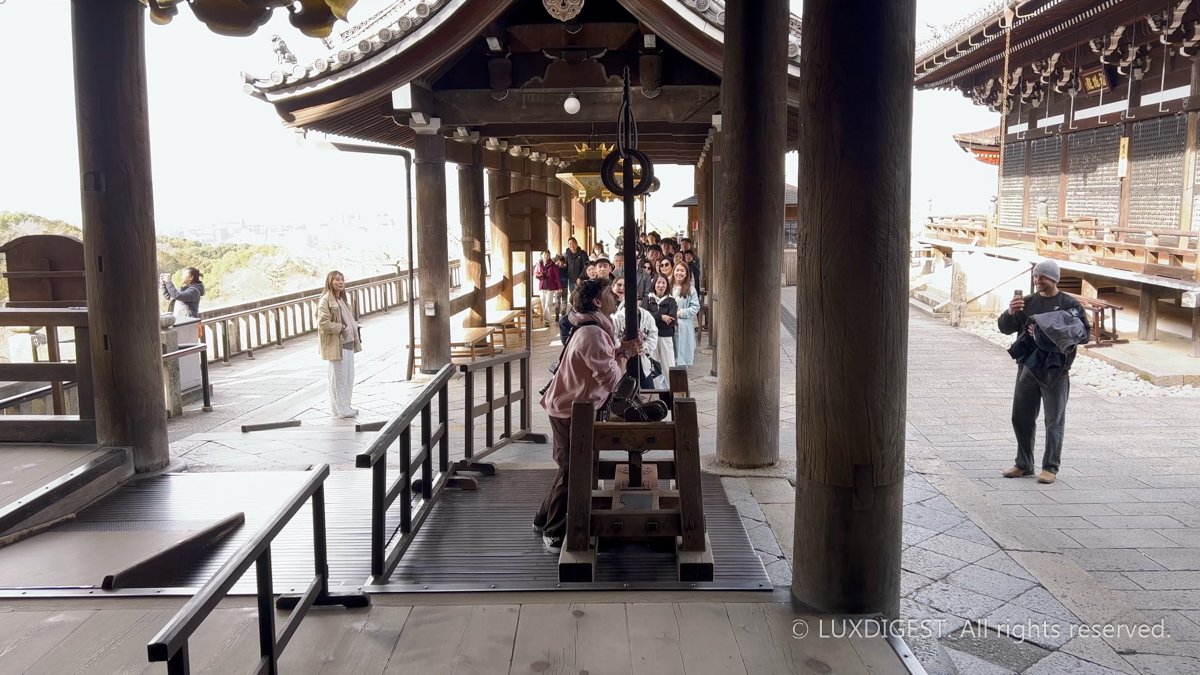
Three lifting weights of different sizes are set out here. The two smaller ones can be lifted without too much difficulty, but the largest, a heavy iron bar, is considerably harder. People with a bit of strength and training can sometimes lift it with ease.
According to local folklore, anyone who lifts all three will have a wish granted.
Would you like to try? Be careful—you could easily strain your back.
Views of Kiyomizu-dera
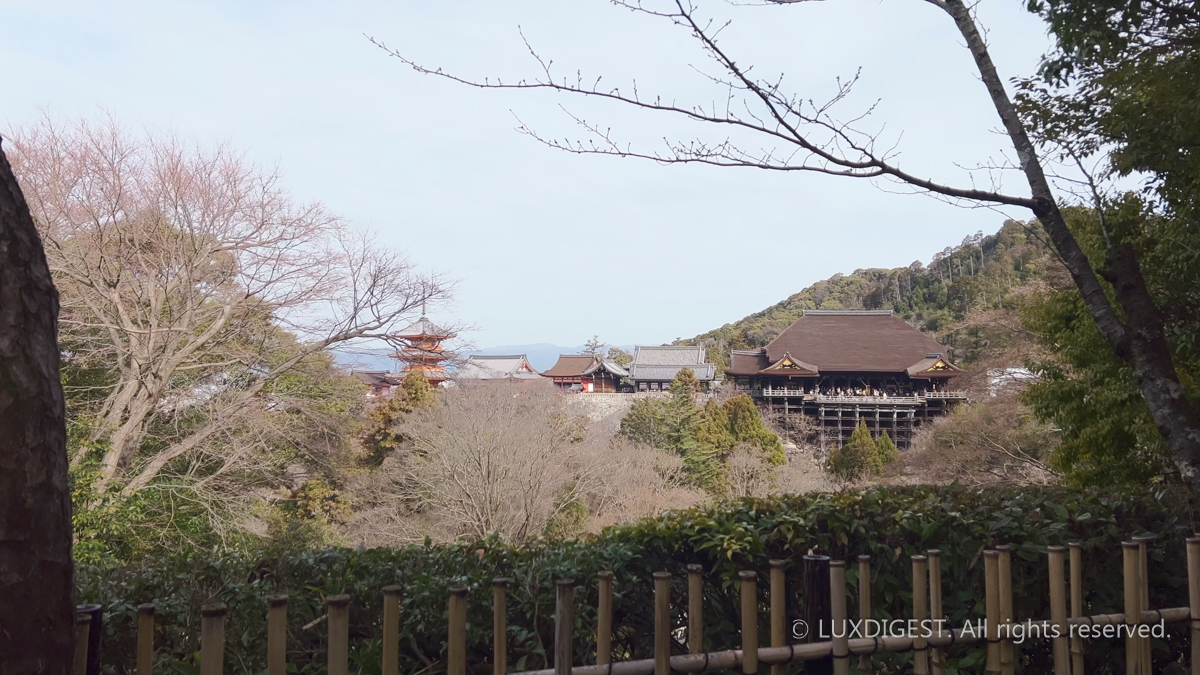
Kiyomizu-dera winds down in a U-shaped route along the upper slopes of the mountain.
That layout allows visitors to look back at the entire complex from the opposite side, as shown in the photo below.
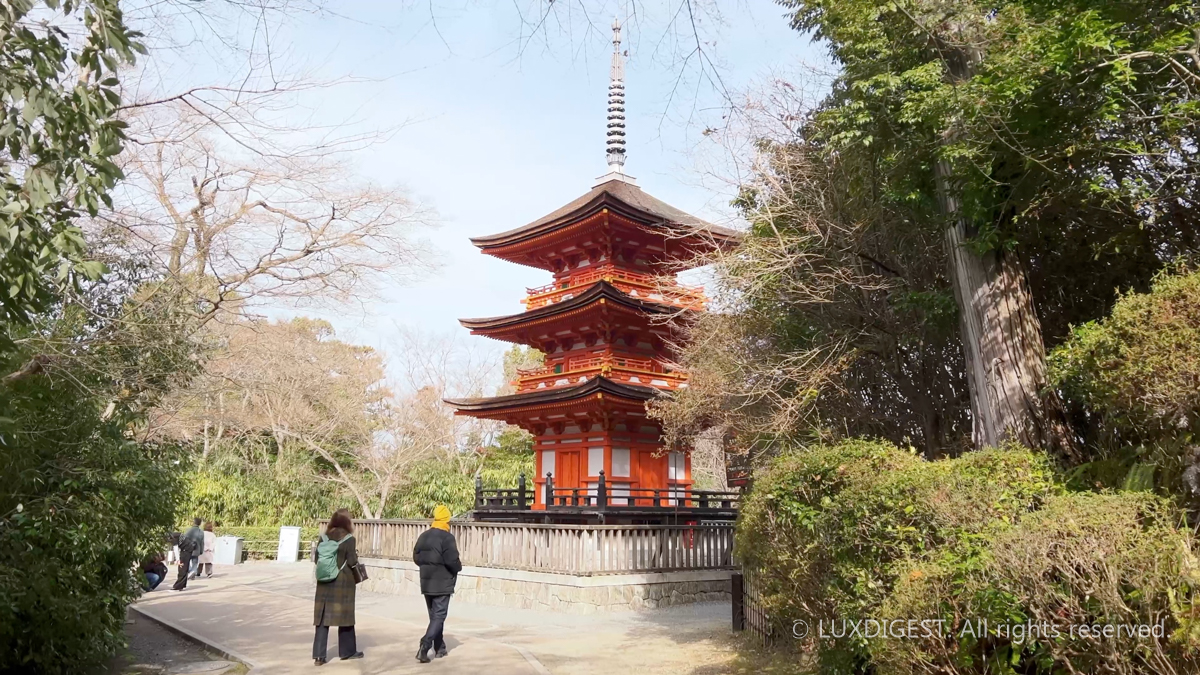
There is also another three-story pagoda, along with a walking path where you can take in various other temple structures as you make your way downhill.
The route ends at a small waterfall, similar to the sacred spring introduced earlier.
Video of a Visit to Kiyomizu-dera
Places to Explore Nearby
The area around Kiyomizu-dera retains much of Kyoto’s traditional streetscape.
Sannenzaka · Ninenzaka
Sannenzaka and Ninenzaka are two of Kyoto’s most iconic streets, lined with traditional wooden buildings and shops.
Souvenir stores, matcha desserts, and Japanese teahouses are clustered throughout the area, making these streets a popular pairing with a visit to Kiyomizu-dera.
Yasaka Shrine
Yasaka Shrine is the main shrine of the Gion district and is often included as part of an evening stroll.
Gion
Gion is one of the best places to experience Kyoto’s traditional atmosphere. If you are lucky, you may even catch sight of a maiko or geisha dressed in a kimono.
Tips for Visiting Kiyomizu-dera
Kiyomizu-dera is one of the busiest tourist attractions in Kyoto.
Arriving early in the morning is the best way to experience it with relatively fewer crowds.
It is also important to explore the surrounding lanes rather than limiting your visit to the temple grounds.
A visit to Kiyomizu-dera itself takes a little over an hour, but adding Ninenzaka, Sannenzaka, and Gion makes for a satisfying half-day itinerary.
Crowds are particularly heavy during the spring cherry-blossom and autumn foliage seasons, so a weekday morning is generally the safest choice if your schedule allows.