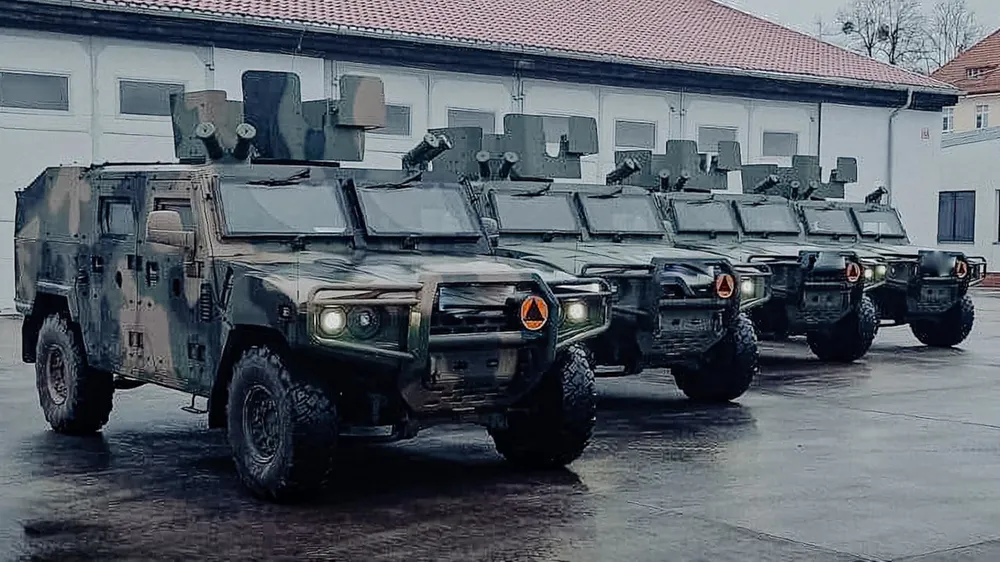
Overview
The K151 tactical vehicle is a light tactical vehicle developed by South Korea to replace the aging K131 (Korando) and K311A1 1¼-ton truck. Designed as a modern, multipurpose military vehicle combining high mobility with enhanced protection, it is currently operated by the Republic of Korea Army and Marine Corps.
- Key features
- High mobility: Designed for operation across a wide range of terrain
- Mission flexibility: Capable of transport, reconnaissance, command and control, and fire-support missions
- Enhanced protection options: Survivability can be improved by adding an armor kit
- Export potential: South Korea is pursuing sales in overseas markets, including Southeast Asia and the Middle East

Development Background
As existing tactical vehicles such as the K131 and K311A1 grew increasingly outdated, the South Korean military determined that it needed a new vehicle suited to modern warfare. The result was the K151 tactical vehicle, developed to deliver mobility and survivability comparable to those of the U.S. military’s High Mobility Multipurpose Wheeled Vehicle (HMMWV).
- Development timeline
- 2016: K151 prototype developed
- 2018: Deployment began with the Republic of Korea Army and Marine Corps
- 2020: Further performance upgrades and series production proceeded
- Today: Efforts are under way to expand into export markets
Assessment of Strengths and Weaknesses
🔹 Strengths
✔ Excellent mobility: Suitable for operation across a wide range of terrain ✔ Mission versatility: Can perform a variety of roles, including transport, reconnaissance, and command and control ✔ Upgrade potential: Additional armor kits can be fitted ✔ Export competitiveness: Positioned to compete in global markets
🔻 Weaknesses
❌ Limited baseline protection: The standard model is vulnerable to anti-tank weapons ❌ Firepower constraints: Its armament is limited compared with heavily armed vehicles ❌ Need for wider deployment: Current fleet numbers remain limited and would need to grow
Comparison with Tactical Vehicles in Neighboring Countries (China, Japan, and North Korea)
| Category | K151 (South Korea) | Dongfeng EQ2050 (China) | Type 73 Light Truck (Japan) | North Korean Tactical Vehicle |
|---|---|---|---|---|
| Weight | 5 tons | 4.5 tons | 3.5 tons | 4–5 tons (estimated) |
| Dimensions (W × L × H) | 2.1m × 4.9m × 2.2m | 2.2m × 4.8m × 2.1m | 2.0m × 4.5m × 2.0m | 2.1m × 4.7m × 2.1m (estimated) |
| Top speed | 130 km/h | 120 km/h | 100 km/h | 110 km/h (estimated) |
| Armament options | 12.7mm machine gun, grenade launcher | 12.7mm machine gun | 7.62mm machine gun | 7.62mm machine gun (estimated) |
| Protection | Basic ballistic protection | Ballistic protection available | No basic ballistic protection | Basic ballistic protection (estimated) |
| Engine output | 225 hp | 200 hp | 150 hp | 180–200 hp (estimated) |
| Key advantage | High mobility and protection options | Suitable for large-scale deployment | Lightweight design and economy | Potential for mass production |
Comparison with Tactical Vehicles from Advanced Military Powers (the United States, the United Kingdom, Russia, and France)
| Category | HMMWV (United States) | Pinzgauer (United Kingdom) | Tiger-M (Russia) | PVP (France) |
|---|---|---|---|---|
| Weight | 5.5 tons | 4.8 tons | 5.3 tons | 4.5 tons |
| Dimensions (W × L × H) | 2.2m × 4.9m × 2.2m | 2.0m × 4.7m × 2.1m | 2.3m × 5.0m × 2.2m | 2.1m × 4.8m × 2.1m |
| Top speed | 125 km/h | 110 km/h | 120 km/h | 130 km/h |
| Armament options | 12.7mm machine gun, grenade launcher | 7.62mm machine gun | 14.5mm machine gun | 7.62mm machine gun |
| Protection | Ballistic protection available | Basic ballistic protection | Ballistic protection available | Ballistic protection available |
| Engine output | 250 hp | 200 hp | 240 hp | 200 hp |
| Key advantage | Versatile multipurpose capability | Lightweight design and air transportability | Powerful protection | Balance of mobility and protection |
Future Development
- Enhanced protection: Exploring armor upgrades and the possible application of active protection systems
- Potential firepower upgrades: Studying possible modifications to add grenade launchers and anti-tank missiles
- Network integration: Linking tactical data systems and sharing real-time battlefield information
- Expanded exports: Targeting markets in the Middle East and Southeast Asia