Wandering Through Jiufen, Taiwan
This is a travel account of Jiufen, the Taiwanese town often described as one of the main settings associated with director Hayao Miyazaki’s film Spirited Away.
Once I arrived, I could see why so many people feel that parts of the film resemble this place.
That said, Jiufen is cramped and not always comfortable—so much so that some people jokingly call it “Hell-fen.”
Getting there is not exactly effortless either, so it is best to prepare yourself before setting out.
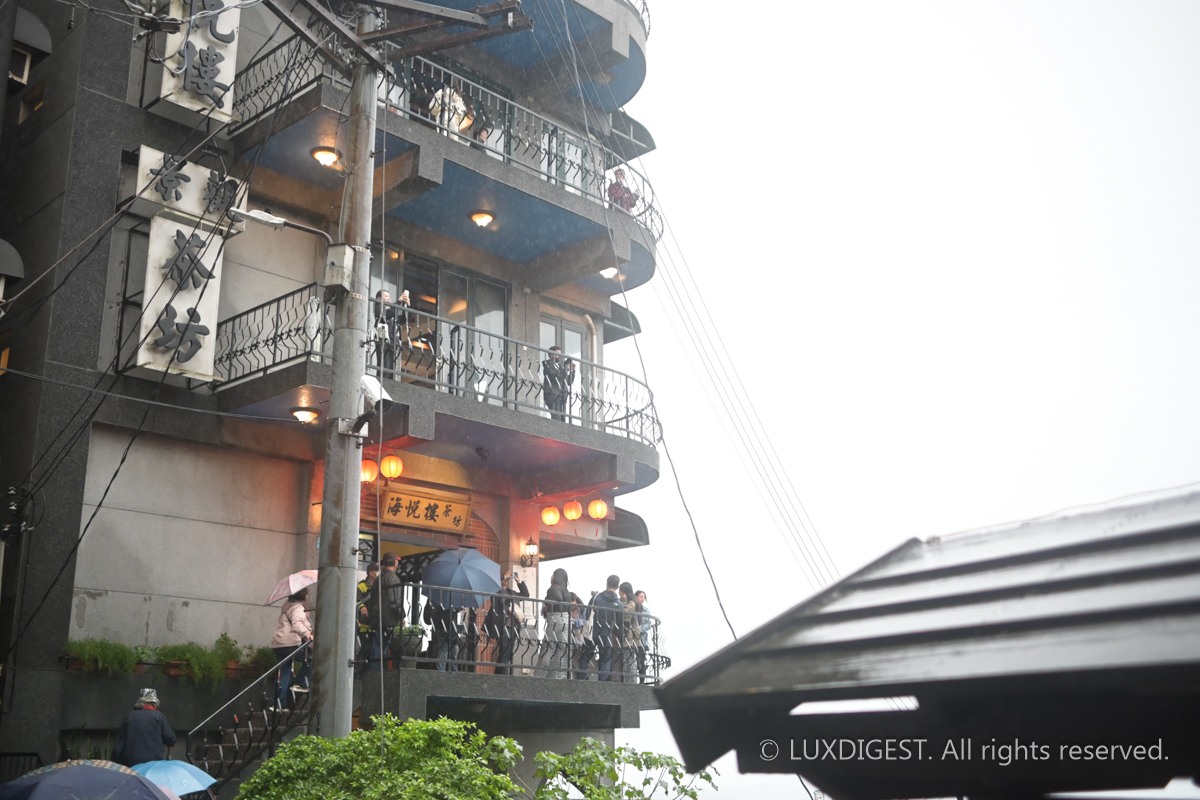
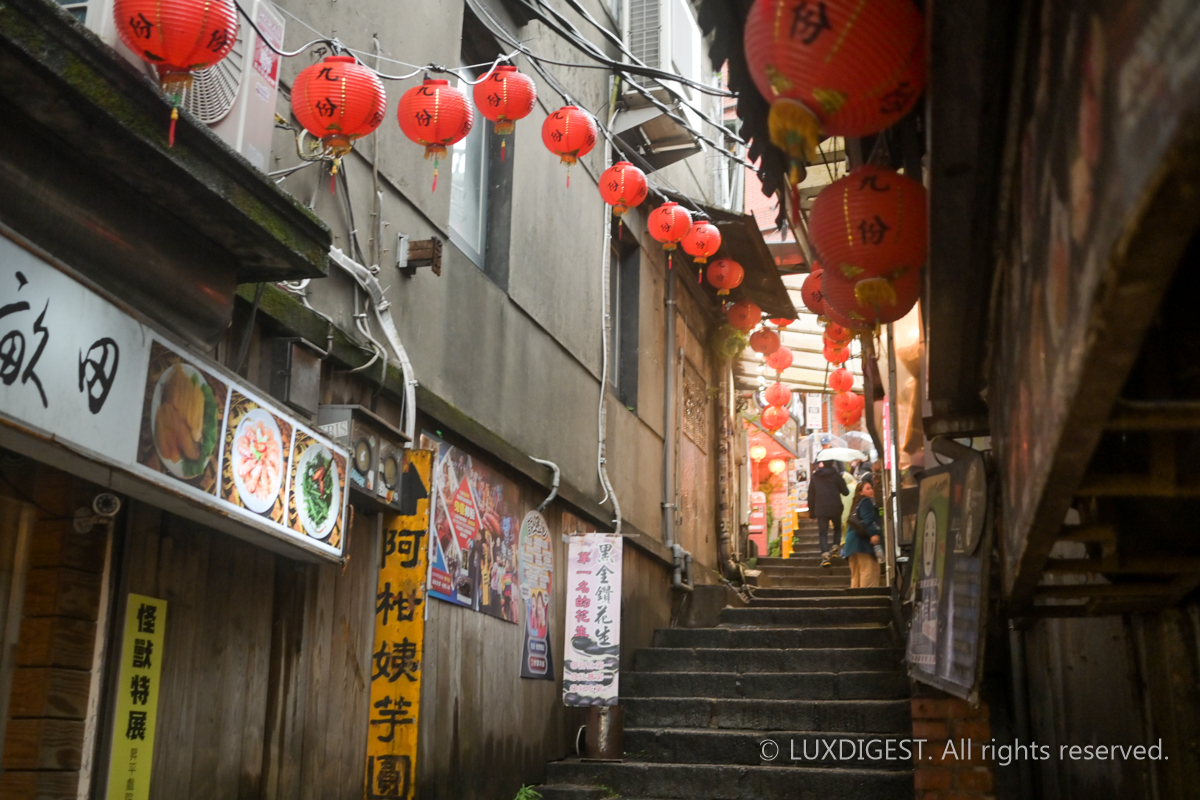
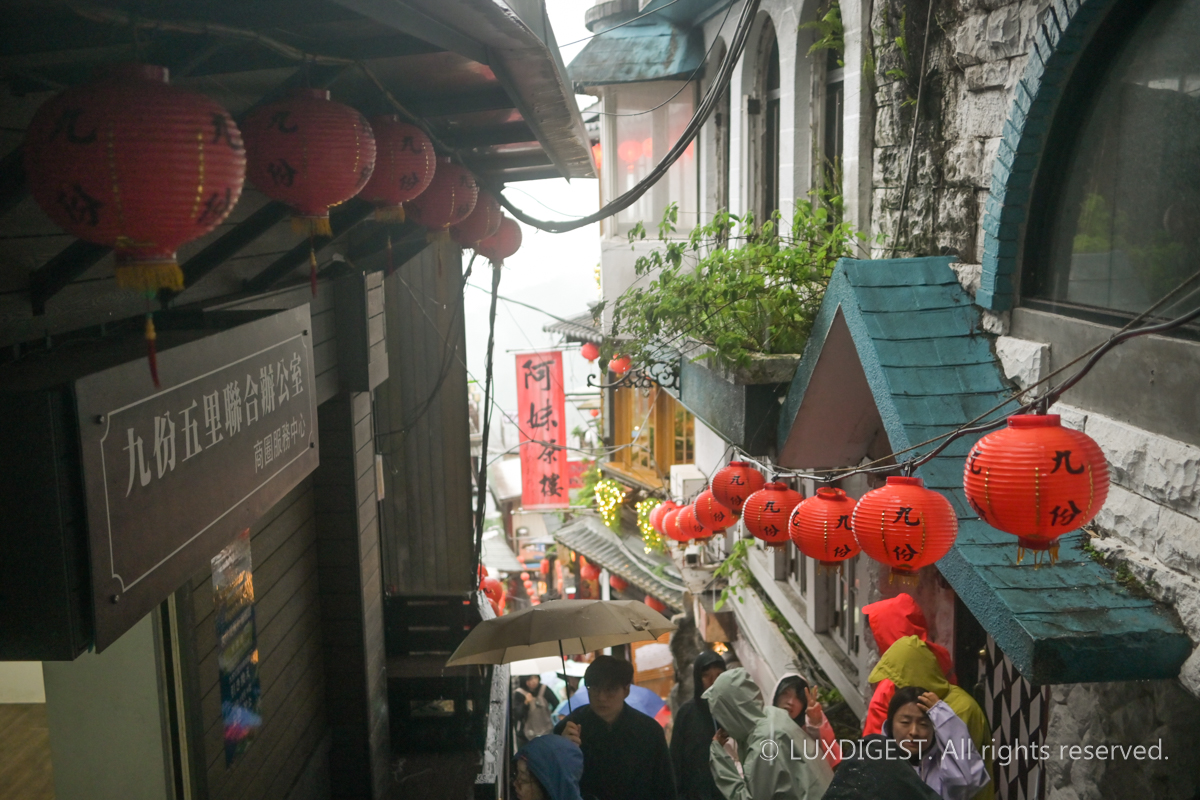
Jiufen’s Connections to the Film
“The Otherworldly Street” Chihiro Reaches After Passing Through a Tunnel with Her Parents
A Strange, Dreamlike Shopping Street Illuminated by Red Lanterns at Night
Buildings and Stairways Climbing the Hillside in Layered Tiers
Miyazaki has never officially acknowledged Jiufen as a direct model for the film. It does appear to be true, however, that he traveled to Taiwan and that the film was made afterward.
Where Is Jiufen?
Jiufen (九份) is a small town in northern Taiwan.
The area was developed as a gold-mining town under the Japanese Empire. It was home to a large population from the late nineteenth century through the early twentieth century, but its population declined as the mining industry faded. Today, the town is bustling once again thanks to tourism.
It would not be an exaggeration to say that Japanese culture shaped much of the town. Set along steep mountain roads, Jiufen combines distinctive Japanese and Chinese architectural influences with sweeping views of the surrounding landscape.
Jiufen’s lanes are particularly narrow and winding, and visitors can discover traditional teahouses and distinctive shops as they make their way through them.
There are especially plenty of teahouses here. The views from inside them are genuinely picturesque.
Jiufen’s misty mountain setting also gives it a romantic atmosphere, which has made it a backdrop for numerous films and television dramas.
That may be why the town attracts so many Taiwanese visitors.
How to Get to Jiufen
The main ways to reach Jiufen are by bus or taxi.
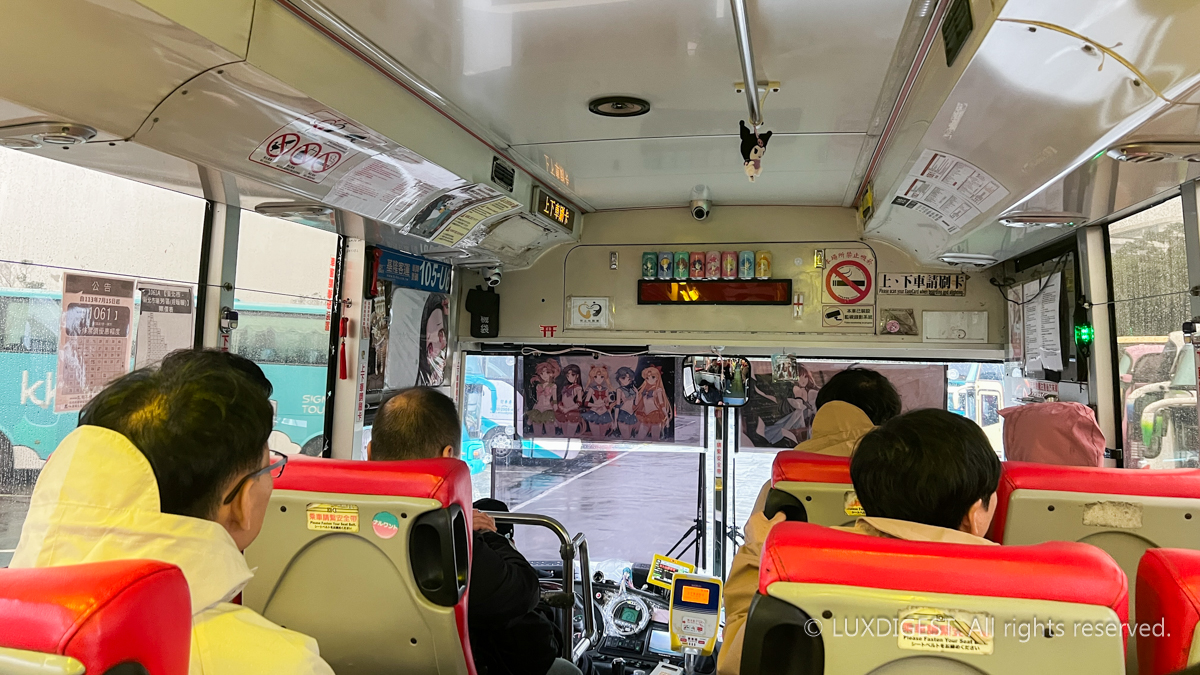
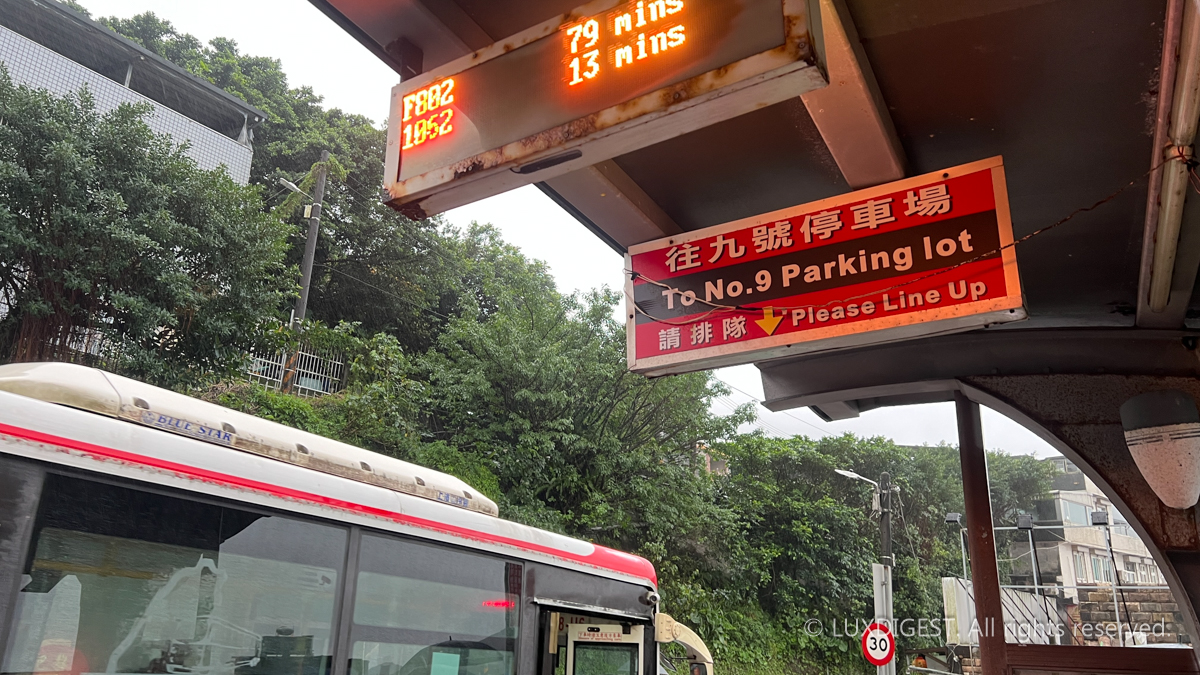
The easiest and most common way to travel from Taipei to Jiufen is by bus.
From the MRT station near Taipei Main Station, the journey takes roughly 40 minutes to an hour.
Bus 965 is the best-known direct route from central Taipei to Jiufen. It runs through the heart of the city and is particularly popular with tourists.
The main boarding points are near Ximending and Beimen Station, and it is also possible to walk from Taipei Main Station and board there.
The bus travels directly to the entrance of Jiufen without a transfer. Depending on traffic, the journey takes approximately one to one and a half hours. If your accommodation is in western Taipei, this is the most convenient option.
The second most popular option is bus 1062. It departs near MRT Zhongxiao Fuxing Station, making it convenient for travelers staying in eastern Taipei.
This direct route runs to Jiufen and Jinguashi and takes about one hour to one hour and 20 minutes. It is an efficient choice if you are staying in Da’an District or around Zhongxiao Dunhua, on the opposite side of the city from Ximending.
Many locals take a combination of train and bus. Take a train from Taipei Main Station to Ruifang Station, then transfer to a local bus bound for Jiufen outside the station.
The buses running uphill to Jiufen from Ruifang include routes 788, 825, 827, and 856, and they run relatively frequently. The drawback is that a transfer is required, and the buses can be crowded during commuting hours.
In short, bus 965 is the simplest and most reliable option from central Taipei, while 1062 is ideal if easy MRT access is your priority. If you have more time and feel comfortable navigating local transportation, transferring at Ruifang is also a practical choice.
Buses run frequently, so the wait is usually not too long. Once you arrive in Jiufen, however, you will need to explore the entire area on foot.
Another option is to take a train, get off at Long Shan Station, and continue by taxi, which reportedly takes about 30 minutes. I would simply recommend taking the bus.
I visited Jiufen during the day, but I found myself thinking that the town must be even more impressive at night.
Arriving around sunset and exploring into the evening seems like the ideal plan.
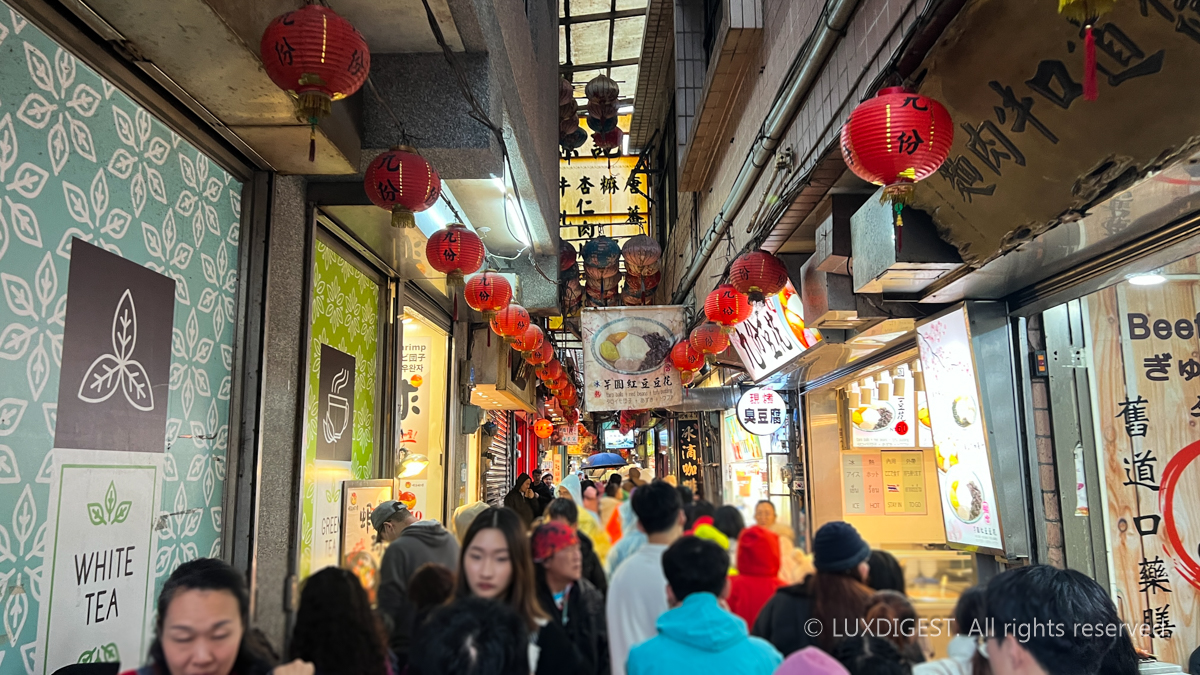
Jiufen Highlights You Shouldn’t Miss
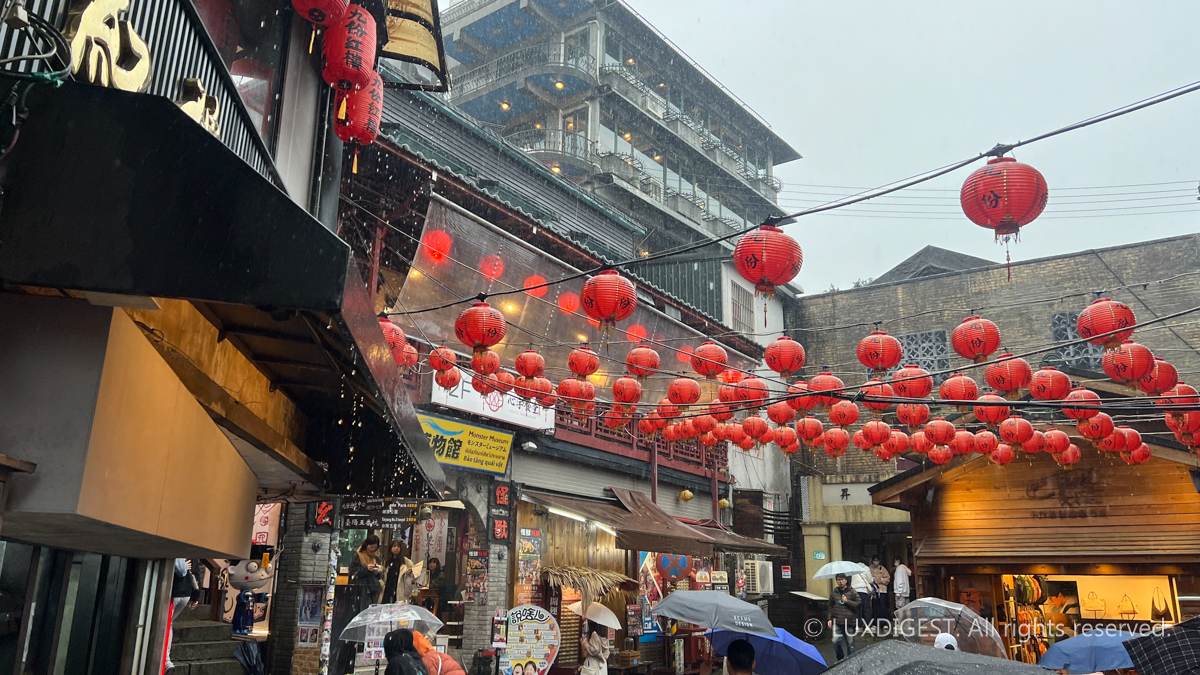
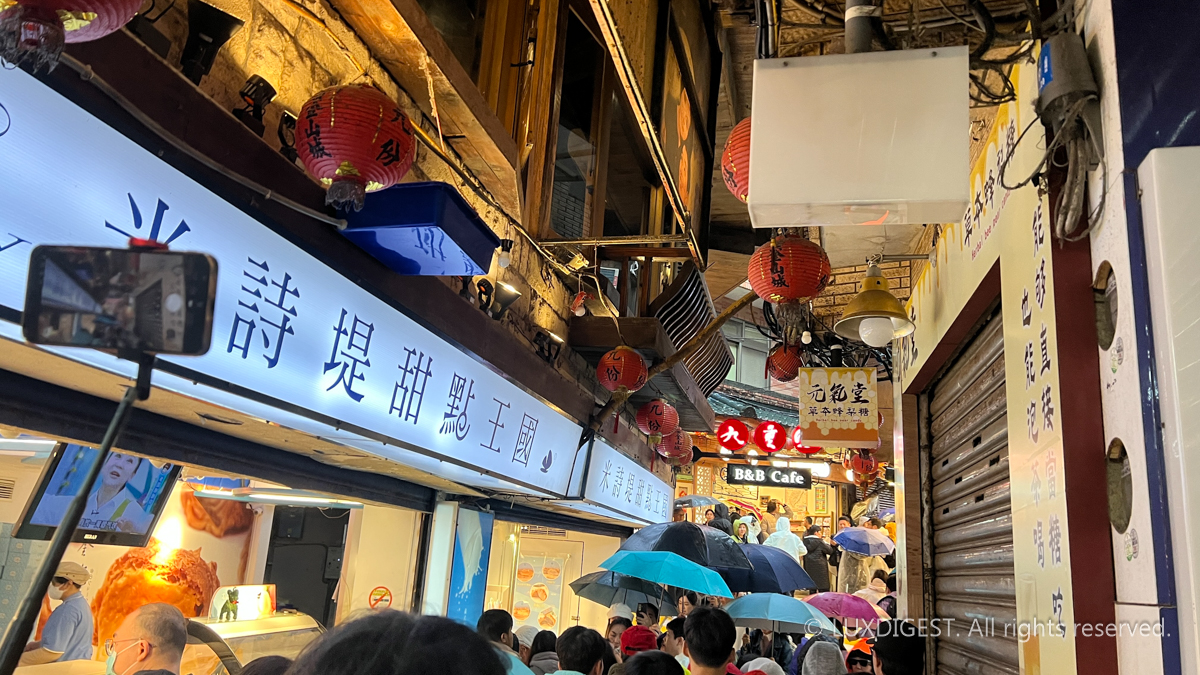
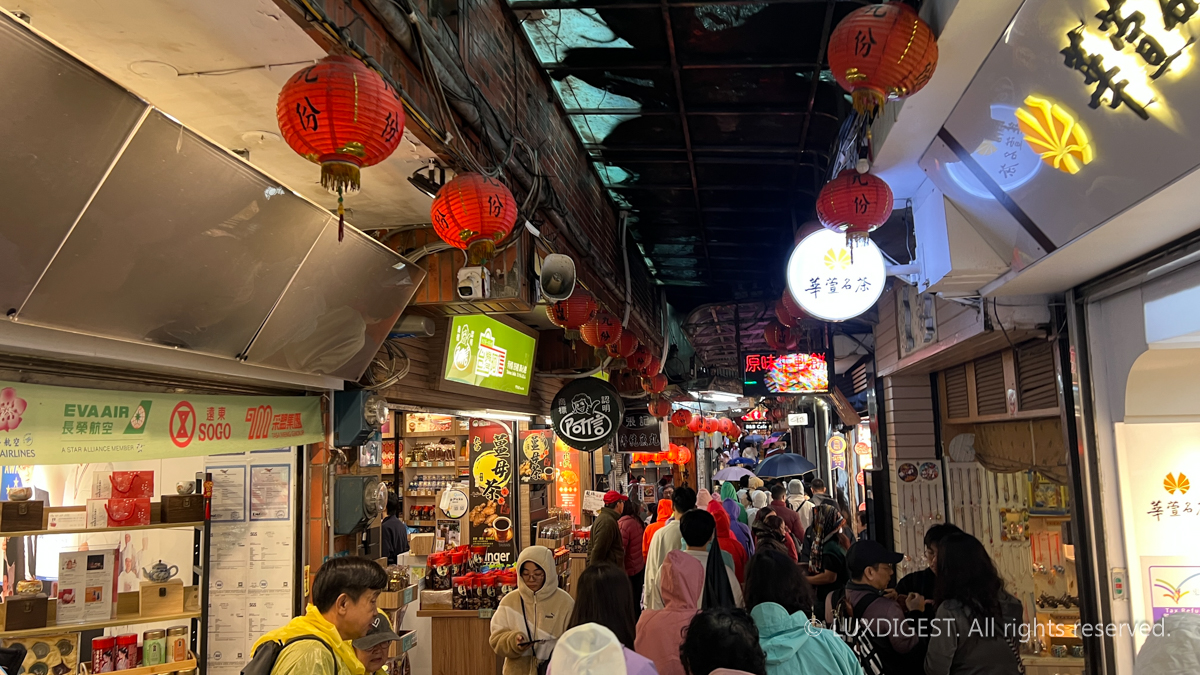
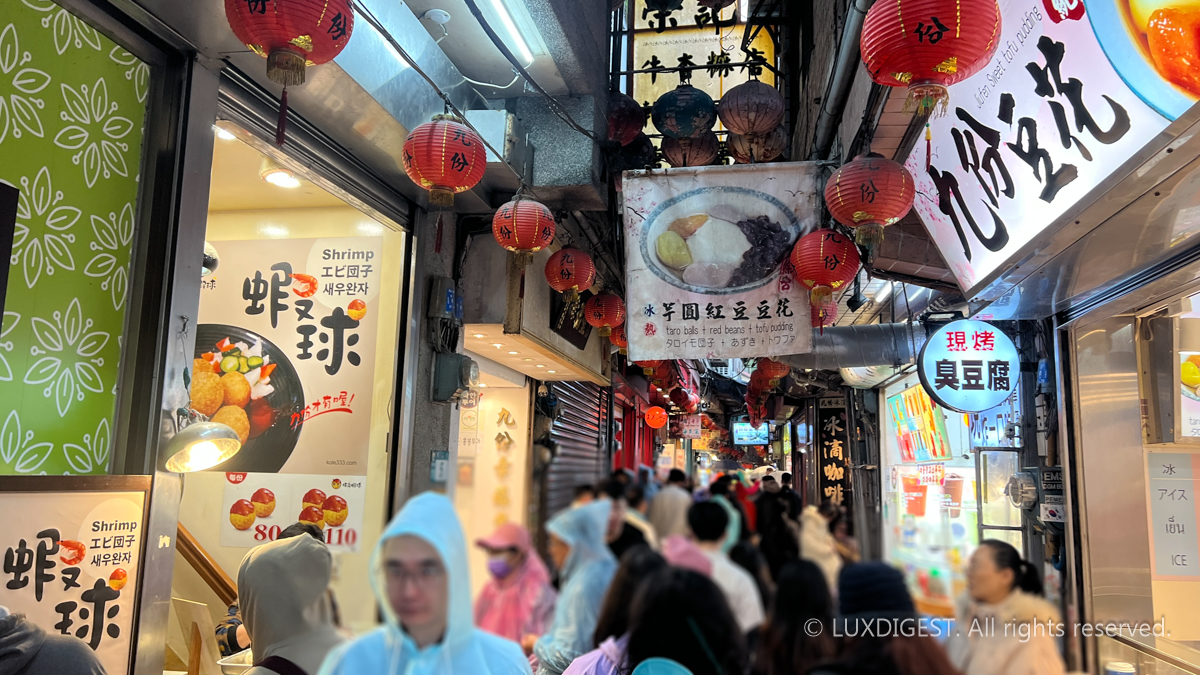
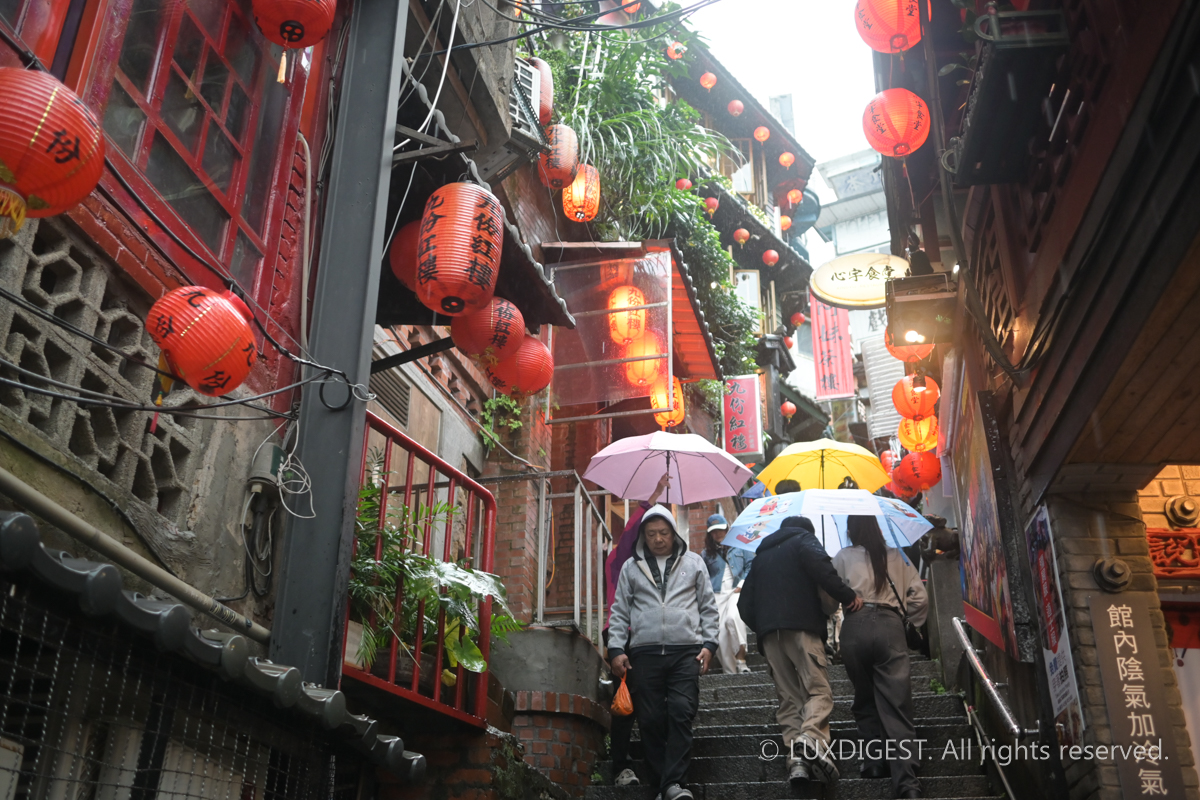
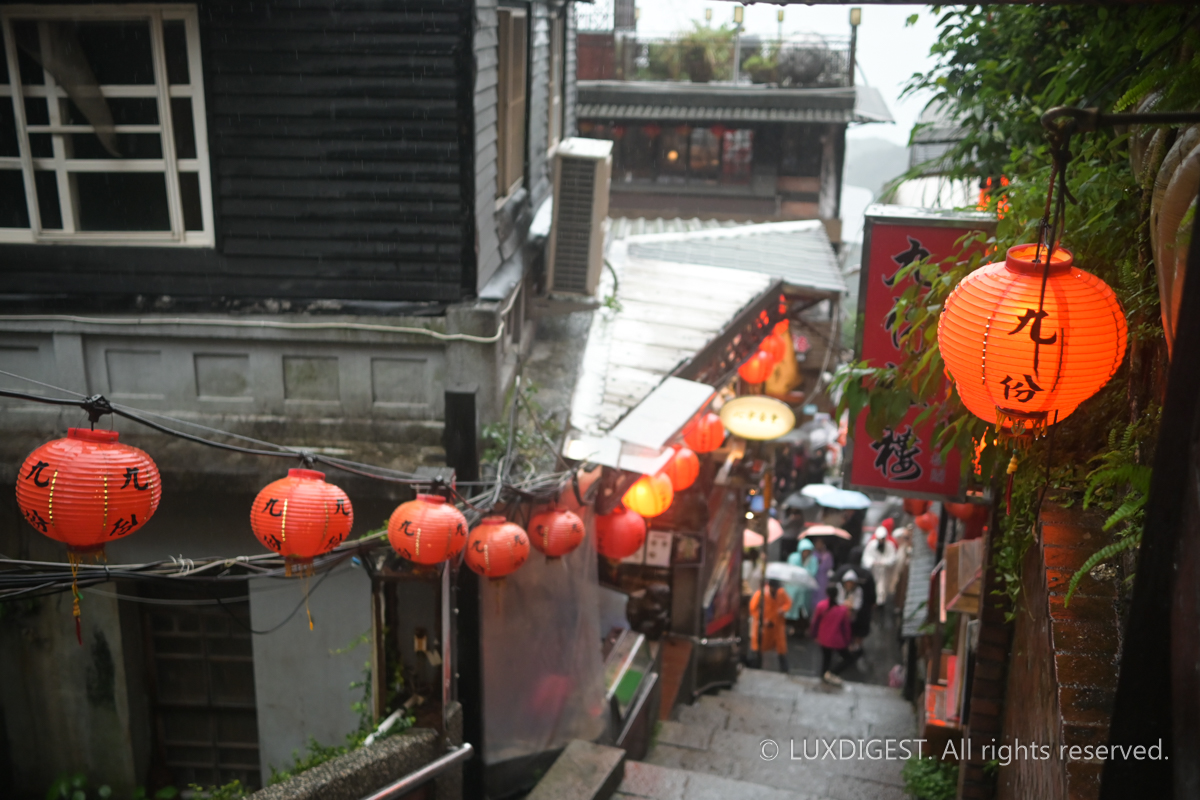
Most of Jiufen consists of tightly packed shops and businesses. This is what the streets look like.
The photos give you a clear sense of just how narrow and complicated the area can be.
It was raining that day, which made things even more difficult as I tried to avoid both umbrellas and other people.
At times, it felt less like sightseeing and more like I had come to do my grocery shopping at a market.
Teahouses, souvenir shops, traditional craft stores, restaurants, and more line the streets one after another.
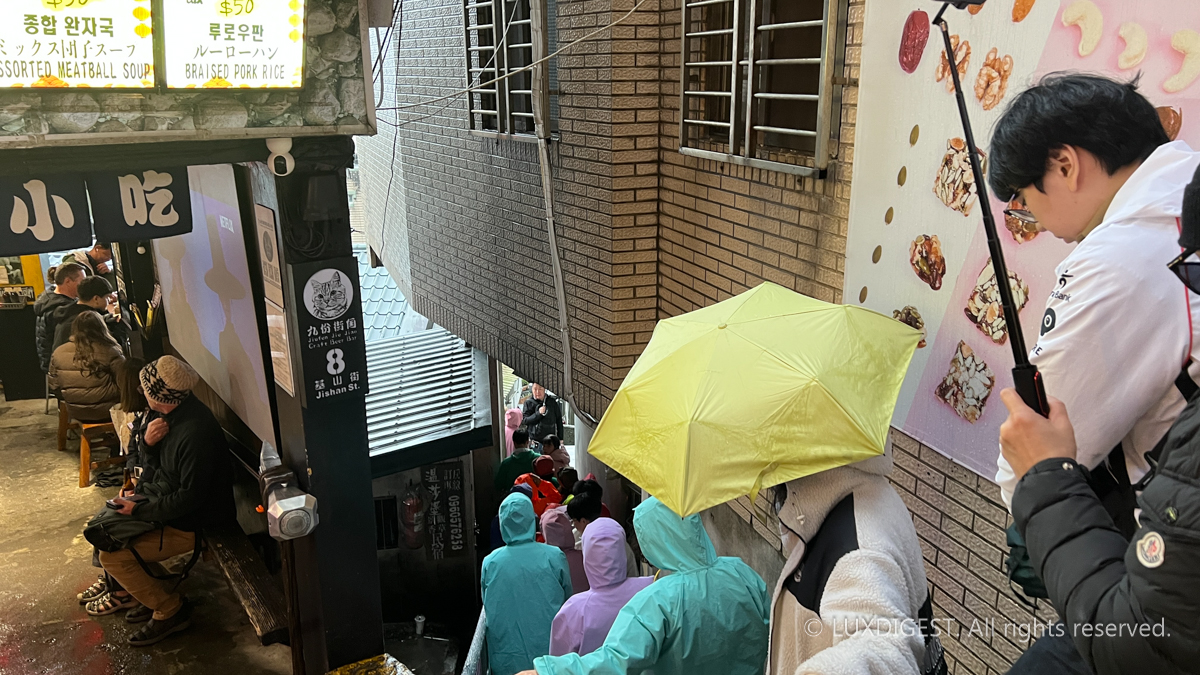
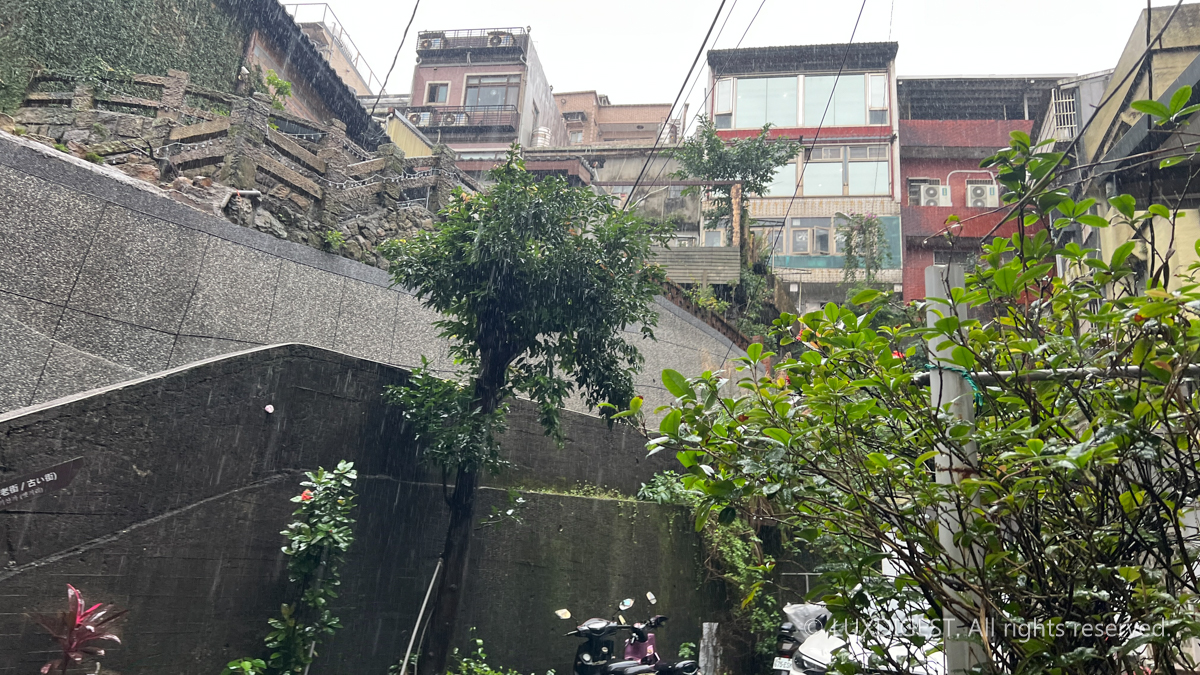
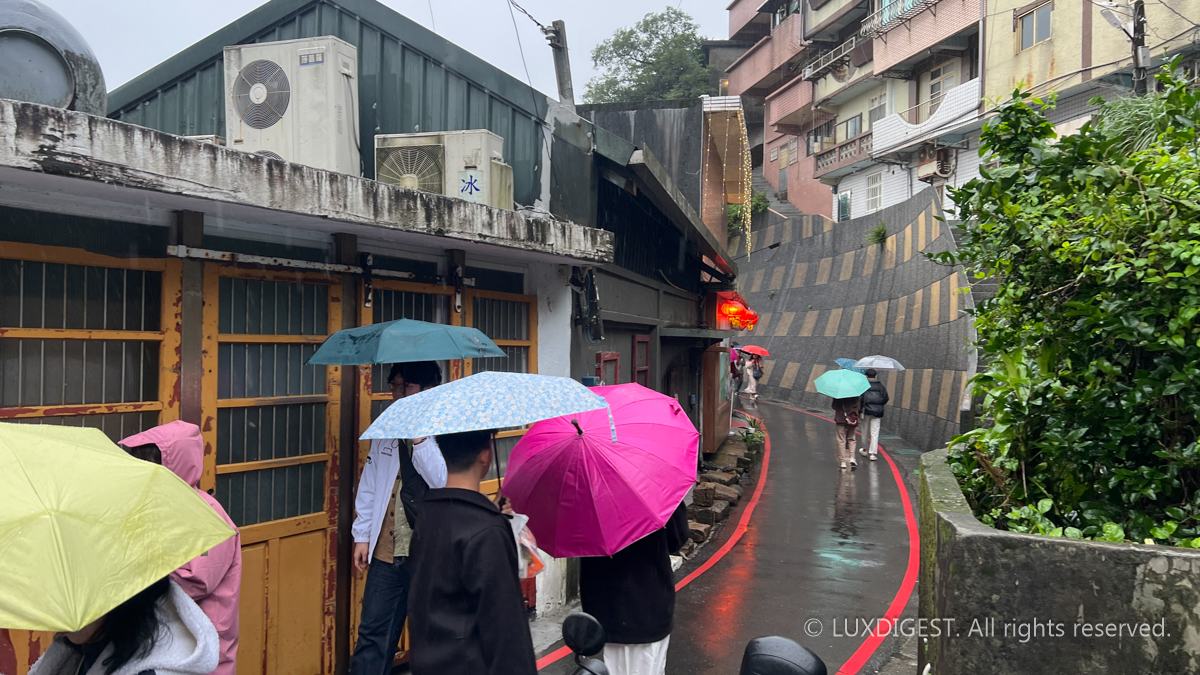
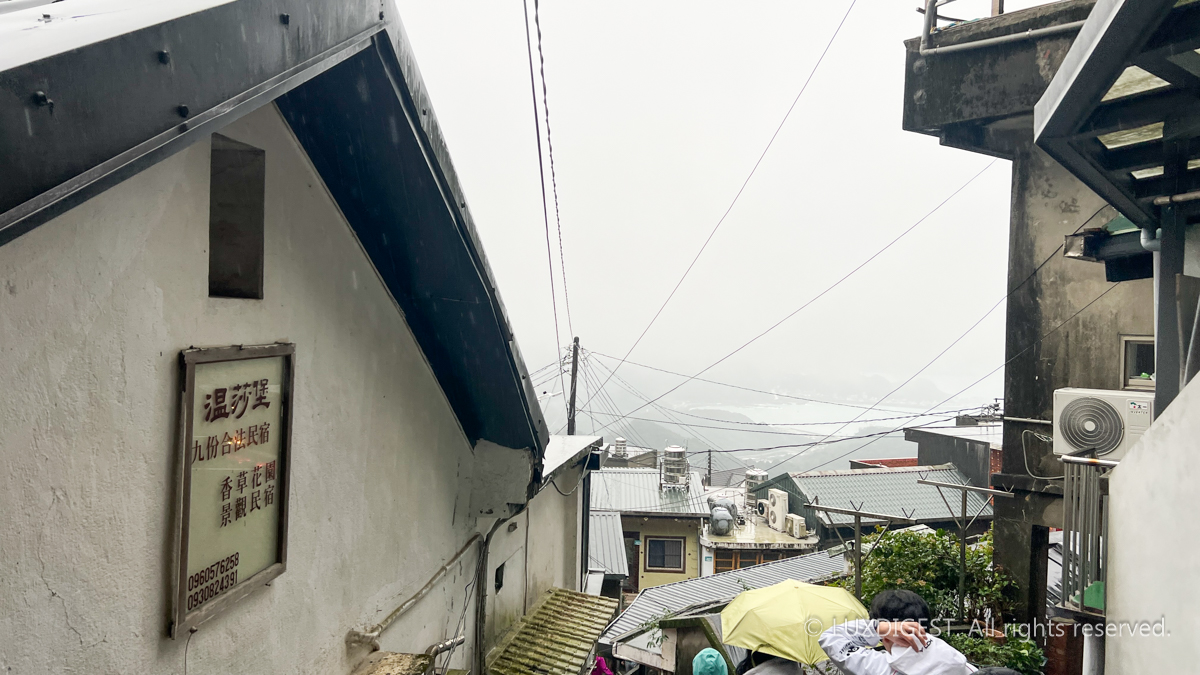
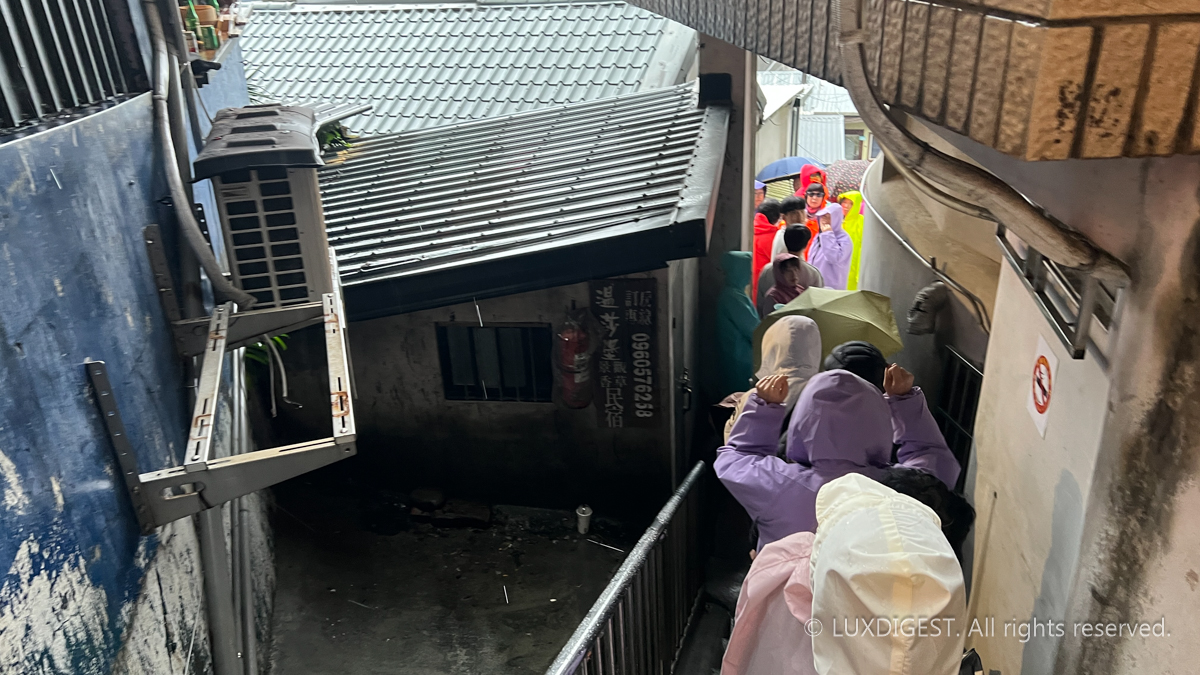
It is not easy to find the right way to describe this place.
It may help to picture one of Korea’s old hillside neighborhoods, although those areas were mainly residential. Jiufen is more like a blend of homes and shops occupying the same dense space.
There is one long, narrow main shopping street, with several tiers of roads and buildings extending below it.
As you can see in the photos above, the lower levels are connected by narrow passageways.
The images above should make the layout easier to understand.
These are densely packed commercial buildings built into the mountainside.
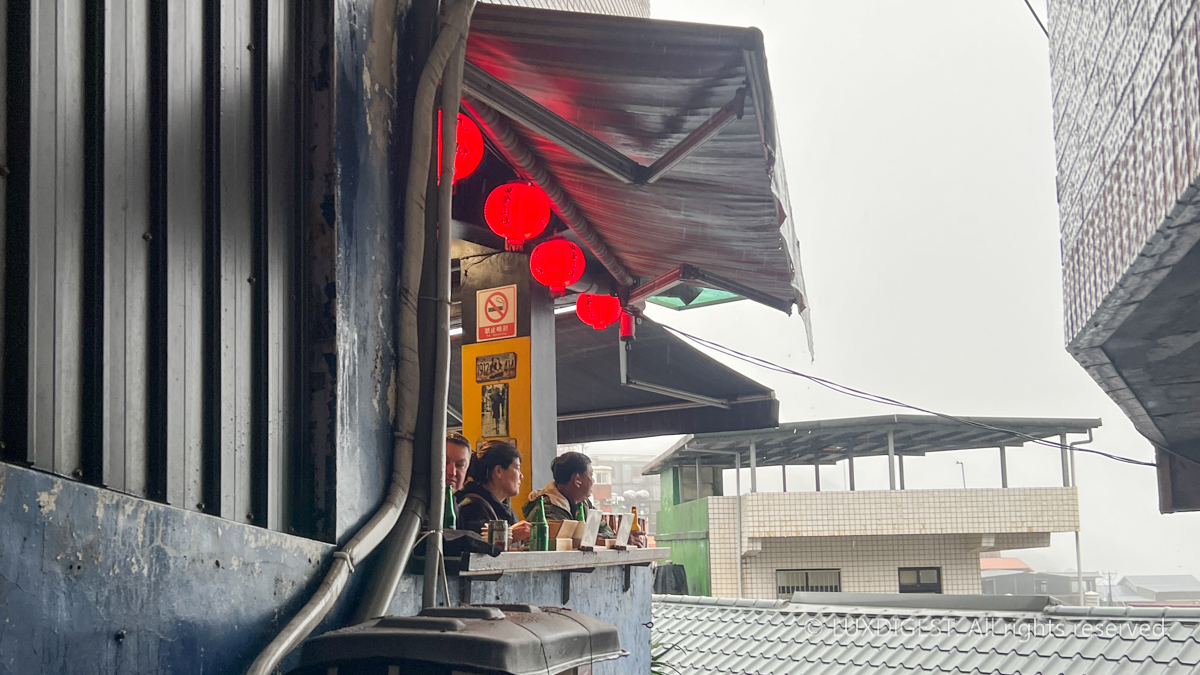
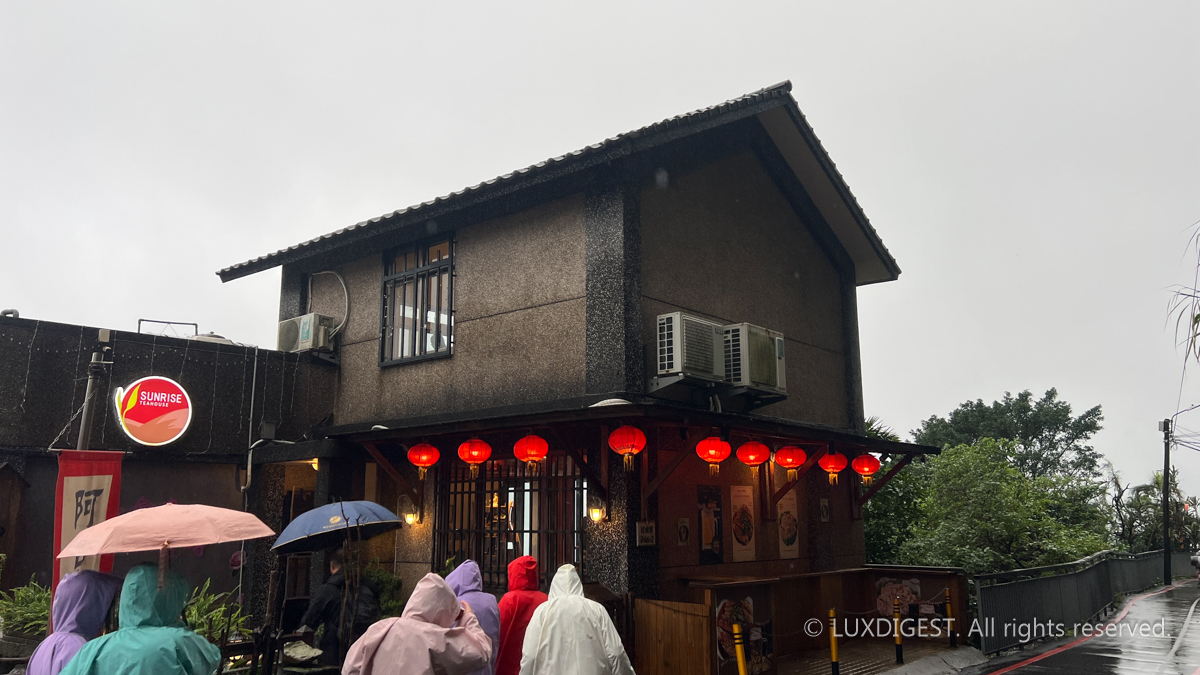
I found my favorite shop while wandering around.
Sitting there with a beer seemed like the perfect way to spend the afternoon. With the rain coming down, it would have been even better.
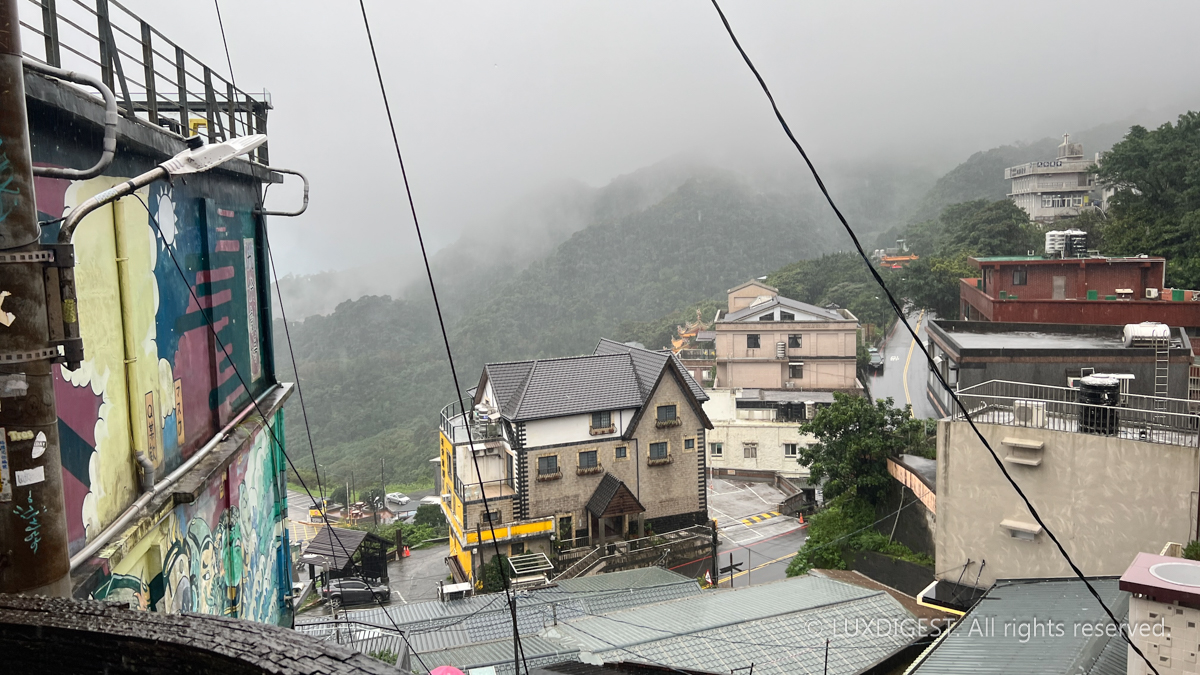
This is the kind of view you can enjoy from there.
There must be a lot of Korean tourists visiting Jiufen.
Hangul appears everywhere. Even the LED announcements on the buses offer Korean-language service. It was one of those moments that made me newly appreciate Korea’s global influence.
Korean is even prominently displayed at restaurants like this one.
There was so much Korean that I briefly wondered whether the owner might be Korean.
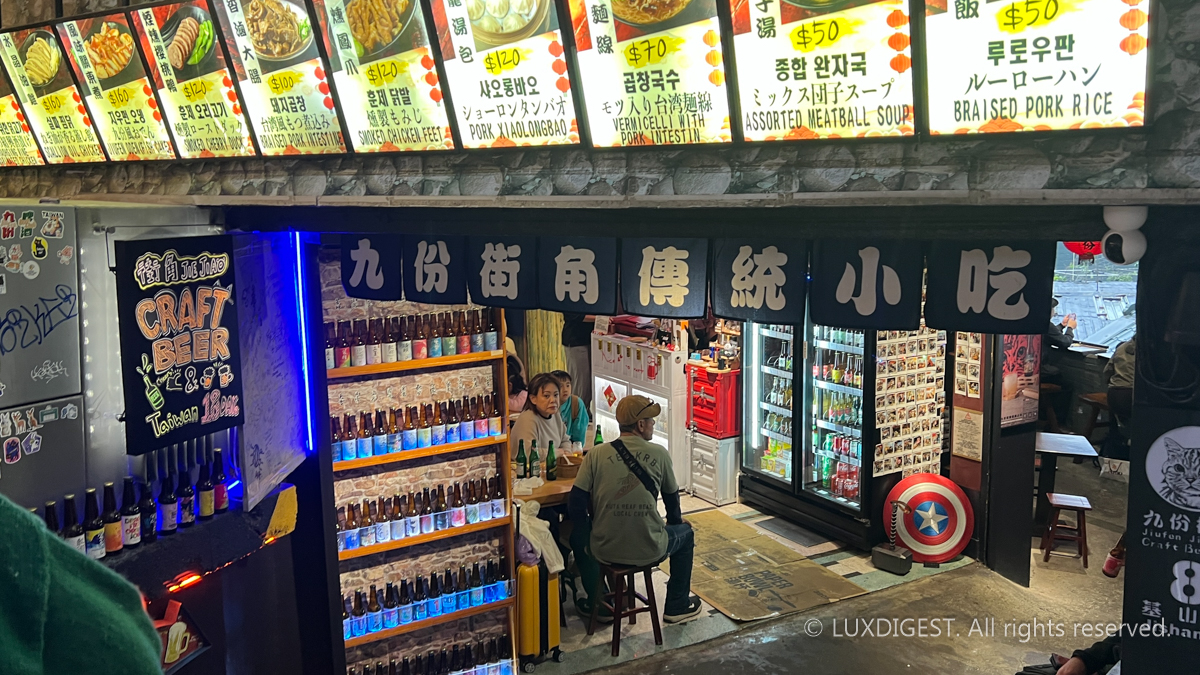
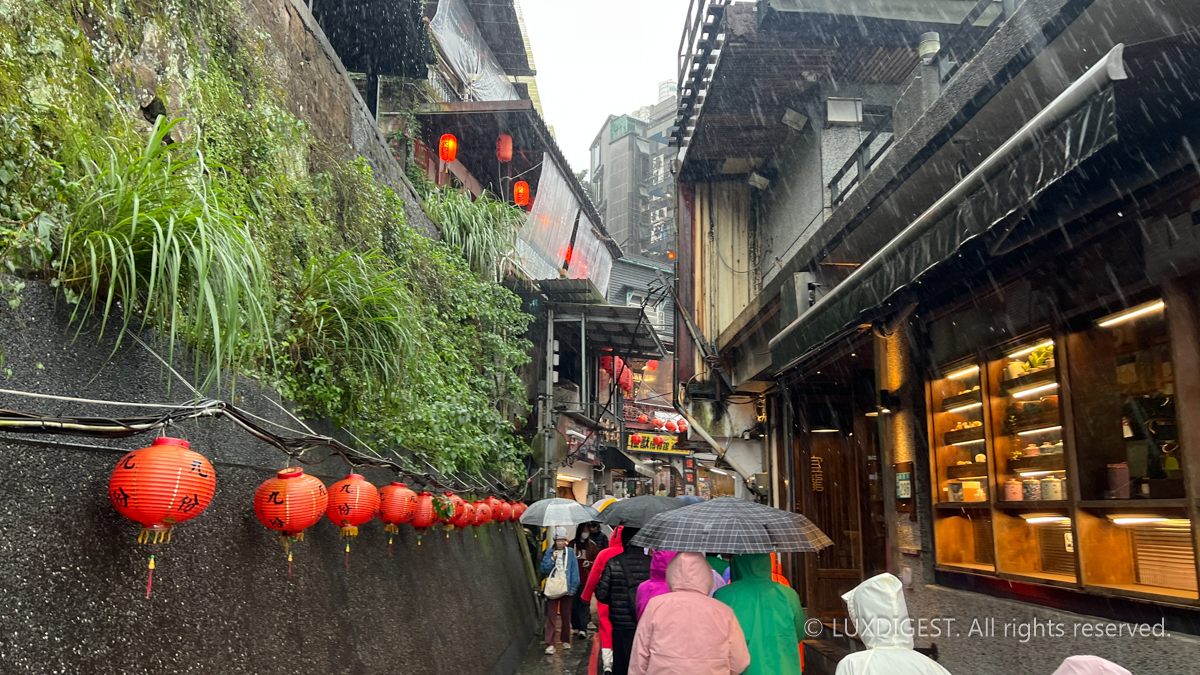
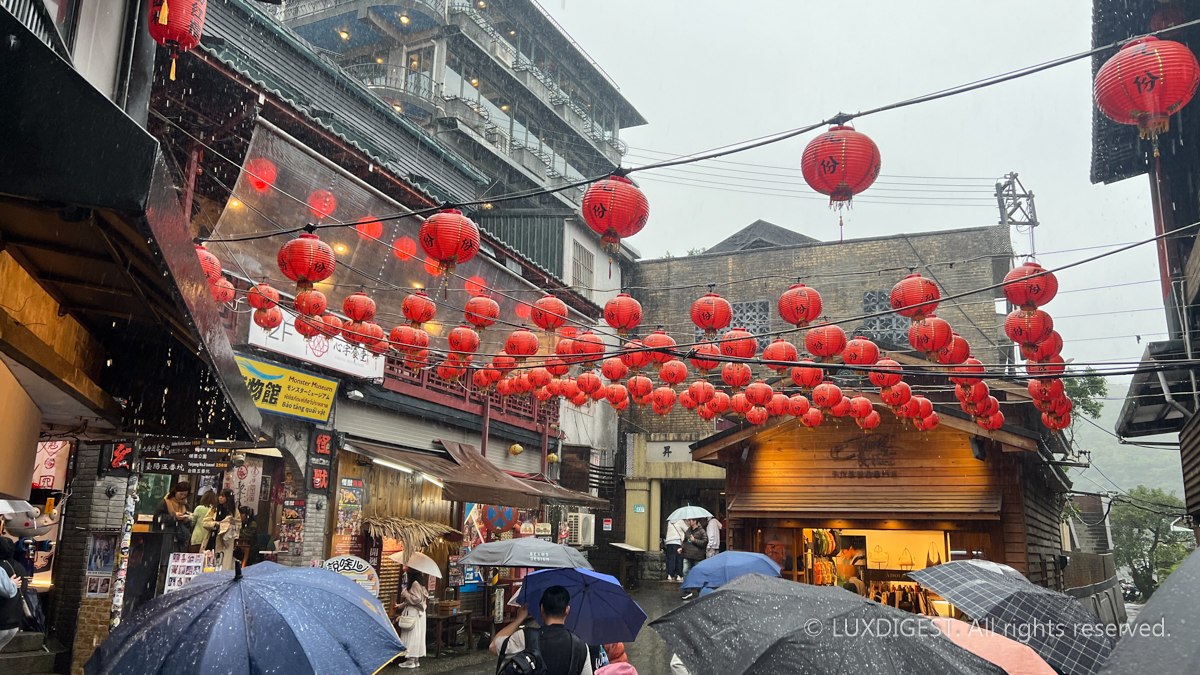
This is Jiufen’s main square.
Yes, it really is a square. This cramped little space is apparently the widest spot in the area—a natural meeting point of sorts.
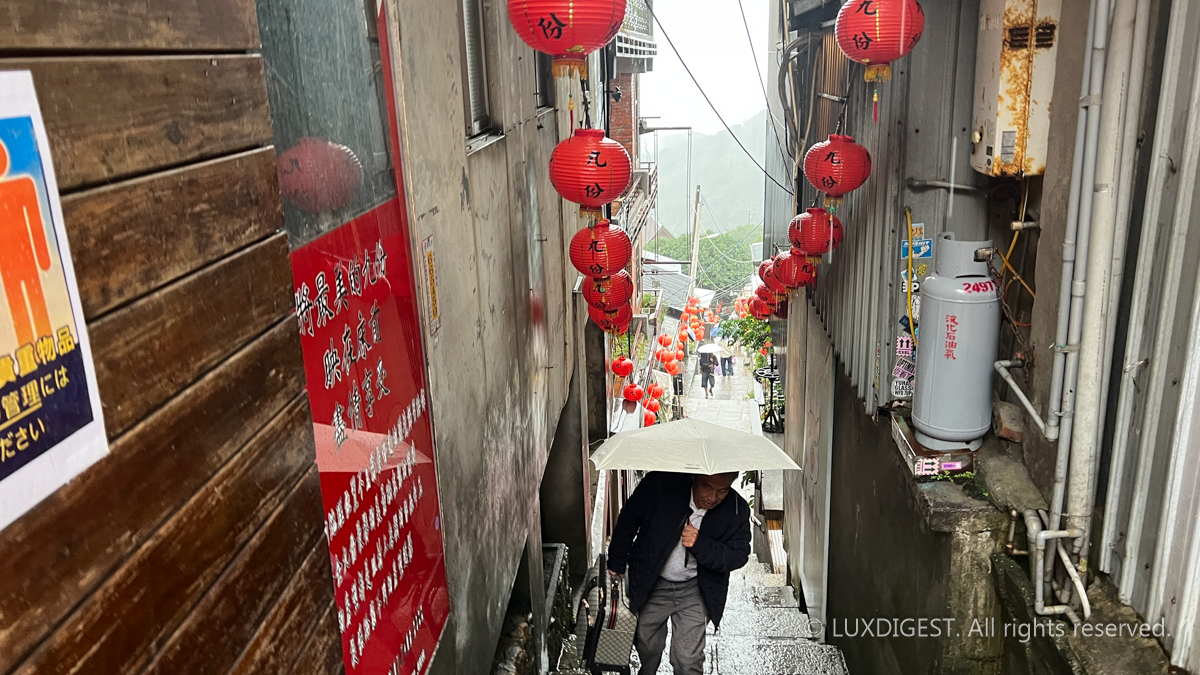
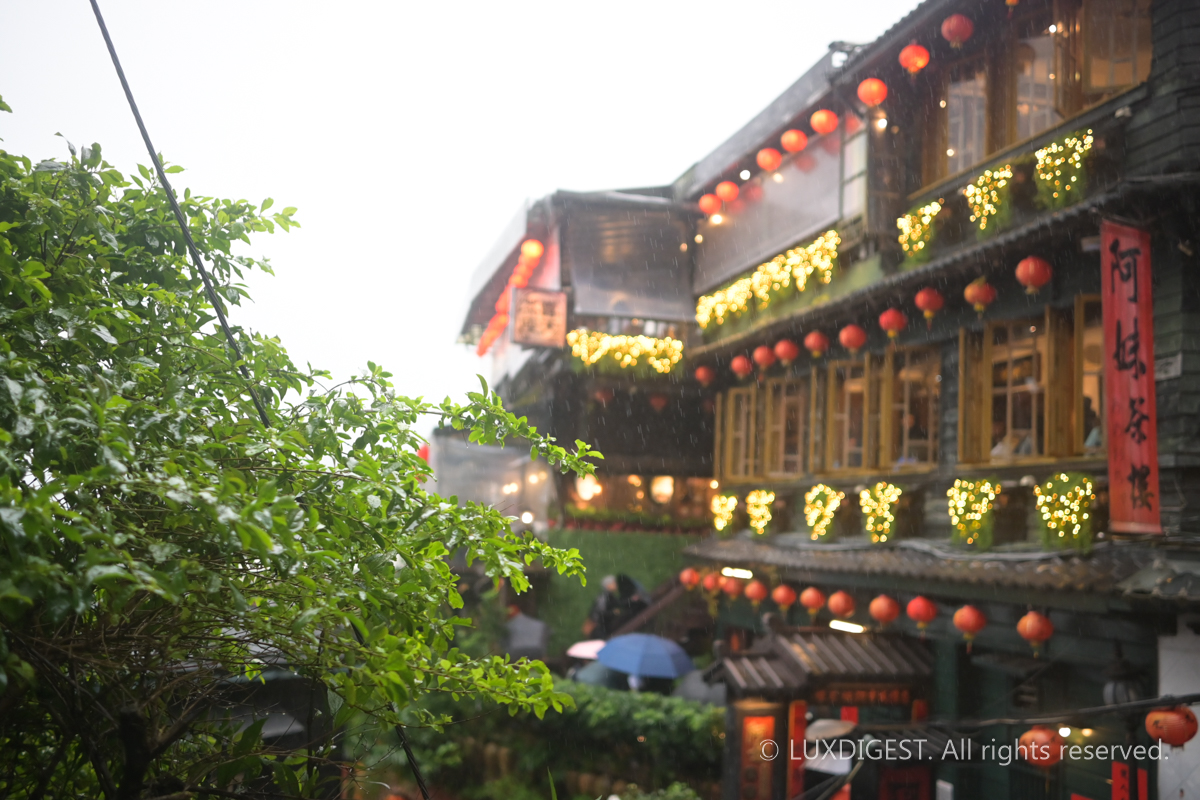
Now we come to Jiufen’s most important photo spot.
This is the area most strongly associated with Spirited Away.
It brings to mind the “otherworldly street” Chihiro reaches after passing through a tunnel with her parents, the strange, dreamlike shopping district lit by red lanterns at night,
and the layered buildings and stairways rising along the hillside.
Even at first glance, it has the atmosphere of the film. There is a sense that you have stepped into another dimension, somewhere outside the ordinary world.
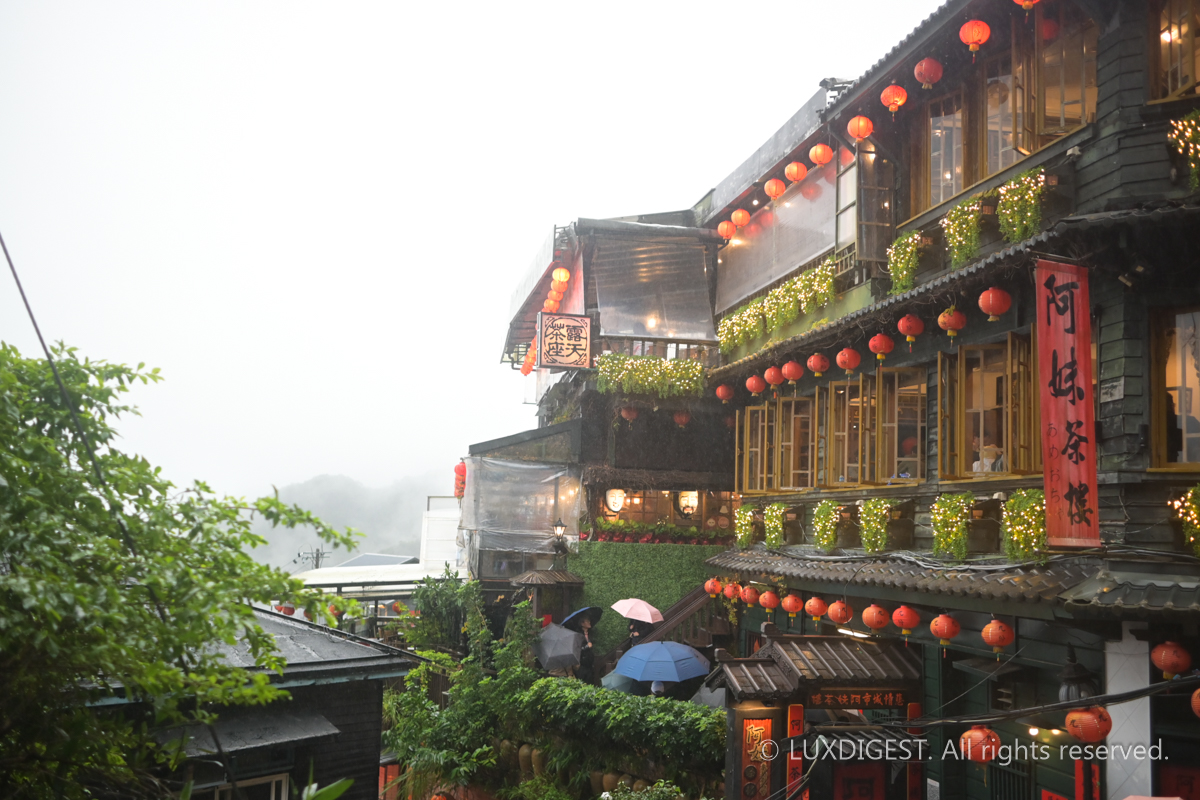 Don’t you think?
Taking photos here is great fun. For a moment, it really feels as if you have walked into the film.
That feeling, in fact, was the main reason I decided to come.
Where to Eat in Jiufen
One dish visitors should try in Jiufen is a local specialty known as agui, or aopu.
Agui is often described as fish grilled to order. It is cooked with various seasonings and has a warm, tender texture. Among the restaurants serving it, Jhongwan Shijin (忠萬食堂) is said to be particularly popular.
Another popular choice in Jiufen is Taiwanese-style orange juice. It is sold throughout the town and looks as though it is made with fresh oranges.
There are also plenty of cafés serving Jiufen favorites such as fried mushrooms, Taiwanese rice cakes, and a variety of teas and desserts.
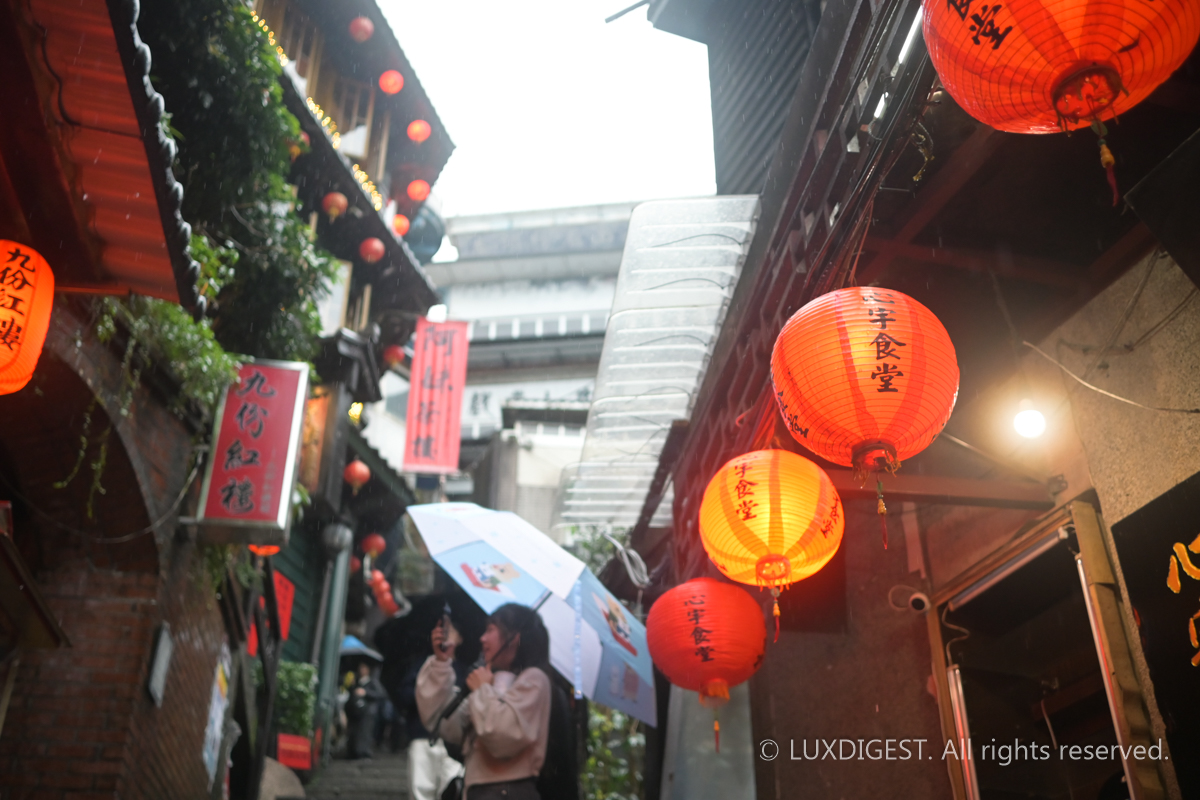
Jiufen’s Most Popular Photo Spots
My first recommendation is Jiufen’s network of alleyways. The narrow lanes and colorful shops come together to create an ideal setting for capturing memorable moments.
In the early evening, the warm glow of the streetlights adds an especially romantic atmosphere.
The second place I recommend is Jiufen’s lookout point. From there, you can take in Taiwan’s beautiful mountains and coastline at a glance.
Views framed by sunrise or sunset can make for striking photographs. The lookout is not easy to find, however, as you have to make your way toward the far end of the shopping district. Depending on your expectations, the view may feel like a less-than-generous reward for the effort it takes to get there.
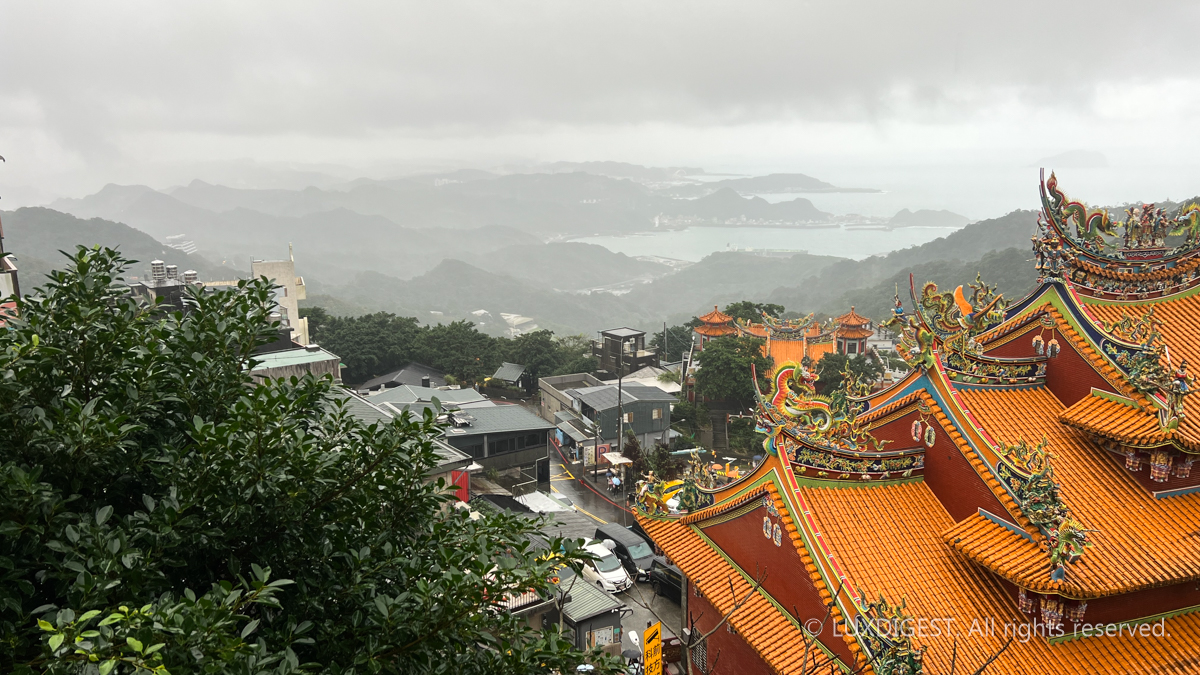
Final Thoughts After Wandering Around Jiufen
Jiufen is difficult to reach and not always easy to navigate—hence the nickname “Hell-fen.” Many parts of the town are cramped and uncomfortable to walk through.
As a former mining area developed under Japanese colonial rule, it has very little in the way of planned roads or modern infrastructure.
But perhaps that is also part of what makes it so interesting and popular.
In the midst of the miners’ difficult lives, taverns and theaters must have sprung up wherever possible, offering some relief from the exhaustion of daily work.
Those same spaces are now filled with tourists, carrying the added allure of being associated with a famous film.
I was more than satisfied with the visit. I could feel the atmosphere of the film, and I admit that gave me a little thrill.
I think you would enjoy going as well.
Just be sure to wear comfortable shoes and clothing.
That’s all from Lux.
Omizutori – Why and How the Omizutori of Todai-ji’s Nigatsu-do Began