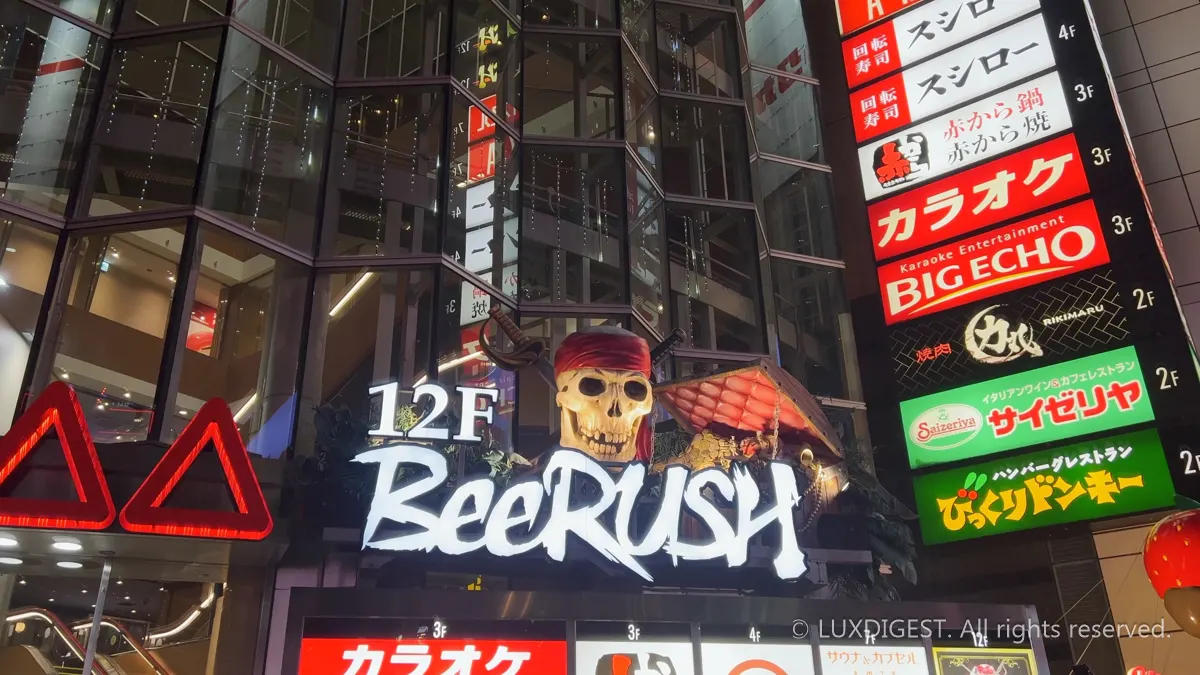
Dotonbori After Dark: An Essential Osaka Experience
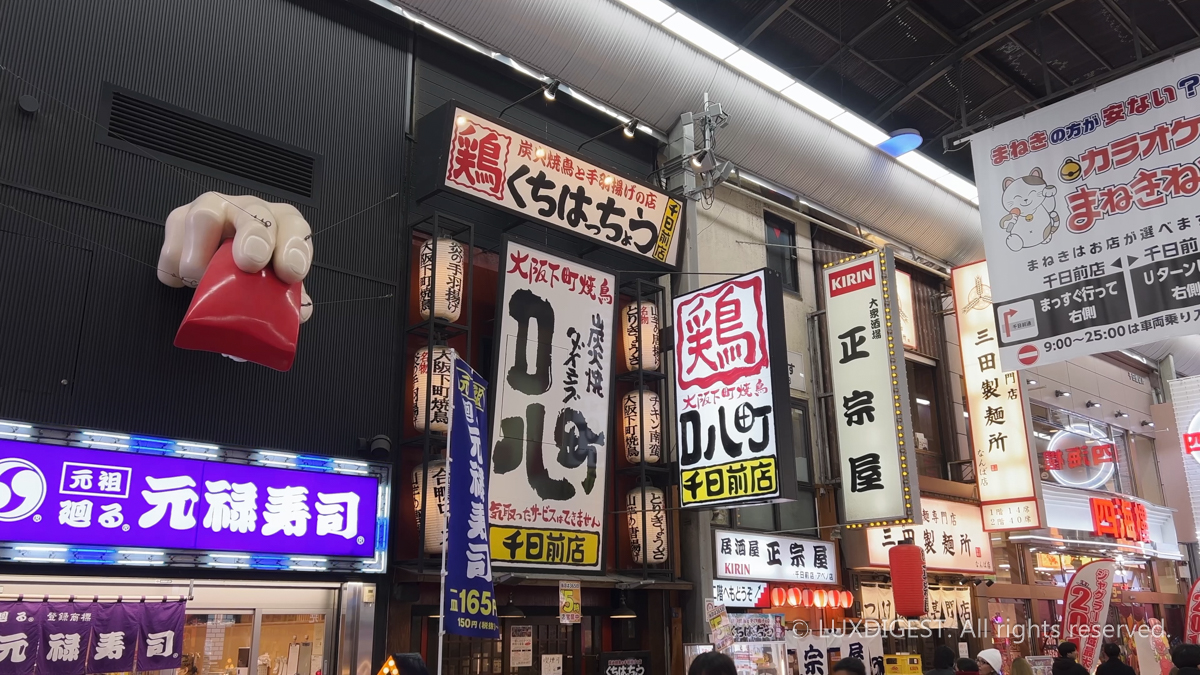
I recently visited Dotonbori, the beating heart of Osaka, this past March. After all these years, revisiting this vibrant district brought back so many memories while feeling entirely fresh. As one of Osaka’s must-see destinations, Dotonbori truly rewards visitors who take time to explore its best features. Read on to discover how to capture the most memorable moments and stunning photos during your visit.
The Golden Hours: When to Experience Dotonbori’s Nightscape
To truly immerse yourself in Dotonbori’s spectacular nightscape, plan your visit between 15 minutes after sunset and 9 p.m. These three hours represent the most dynamic transformation of the district.
[18:00 - 19:00] Magic Hour & Illumination Switch-On (Crystal-clear photo quality)
       ▼
[19:00 - 21:00] Prime Peak Hours (Maximum neon reflections and vibrant energy)
       ▼
[21:00 - 22:00] Peaceful Late-Night Stroll (Crowds thin out considerably)
6:00 PM – 7:00 PM | Magic Hour: When Sky and Neon Harmonize
- What to expect: Just after sunset, the sky transforms into a rich silhouette blue—the photographer’s dream known as the “magic hour.”
- Why it matters: Before darkness falls completely, your camera captures both the sky’s ethereal blue tones and the vivid neon signage in sharp detail. This is when Osaka’s iconic Glico Man sign lights up—a truly breathtaking moment that occurs precisely during this window. The contrast between the dimming sky and the suddenly illuminated billboards creates unmatched visual drama.
7:00 PM – 9:00 PM | Dotonbori’s Heartbeat: Peak Hours
- What to expect: The riverside comes alive with blazing neon signs and throngs of visitors creating an electric atmosphere at its peak.
- Why it matters: The neon reflections dancing across the canal reach their most vivid and intense. Add in the shimmering lights of the Tombori River Cruise gliding across the water, and you experience the full pulse of Osaka’s metropolitan nightlife and undeniable energy.
9:00 PM – 10:00 PM | Atmospheric Late Night: A More Intimate Vibe
- What to expect: The main streets gradually lose their daytime hustle and bustle.
- Why it matters: With crowds dispersing, you can leisurely stroll along the Tombori Riverwalk and absorb the nightscape at your own pace. Keep in mind that some shops and restaurants begin closing, so plan your dining and shopping for earlier hours.
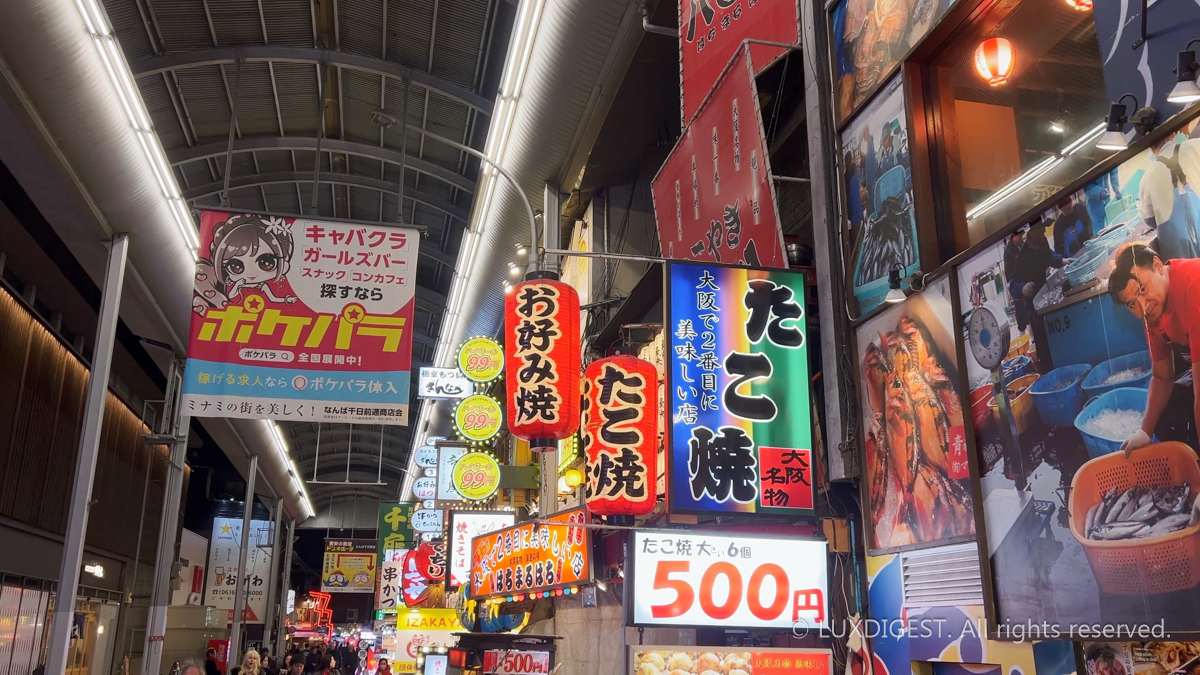
Five Must-Visit Photo Spots That Guarantee Instagram Gold
Tired of taking the same generic souvenir photos as everyone else? Professional photographers consistently return to these five essential spots.
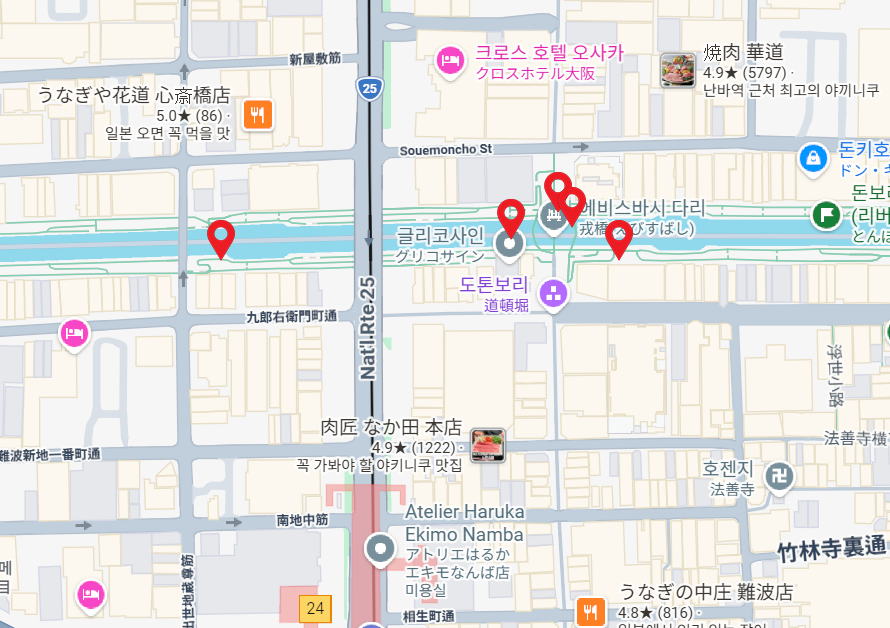
┌────────────────────────────────────────────────────────┐
│  ① Ebisu Bridge (Classic straight-on shot)              │
│  ② Tombori Riverwalk North Steps (Diagonal low angle)   │
│  ③ Kani Doraku Giant Crab Sign (Visual spectacle)       │
│  ④ Donki Observation Wheel (Water reflection magic)     │
│  ⑤ Hozenji Yokocho Alley (Charming retro escape)        │
└────────────────────────────────────────────────────────┘
① Osaka’s Icon: Ebisu Bridge (戎橋)
- Location: The main bridge crossing the heart of Dotonbori.
- Pro tip: The Glico Man sign—featuring a runner in a victorious pose—is perfectly framed from the bridge’s center. Since the bridge becomes incredibly crowded, position yourself at the railing and mimic the runner’s dynamic pose, then shoot from a low angle looking upward. This technique helps you avoid the crowds while capturing the energetic essence of the sign.
② The Hidden Gem: Tombori Riverwalk North Steps (Below Ebisu Bridge)
- Location: The northern staircase leading down from Ebisu Bridge to the riverside pedestrian path.
- Pro tip: Escape the bridge crowds and capture the Glico Man from a low diagonal angle looking upward. Position your subject leaning against the staircase railing, lower your camera to include the neon reflections in the water below, and you’ll create a cinematic, three-dimensional composition worthy of a film scene.
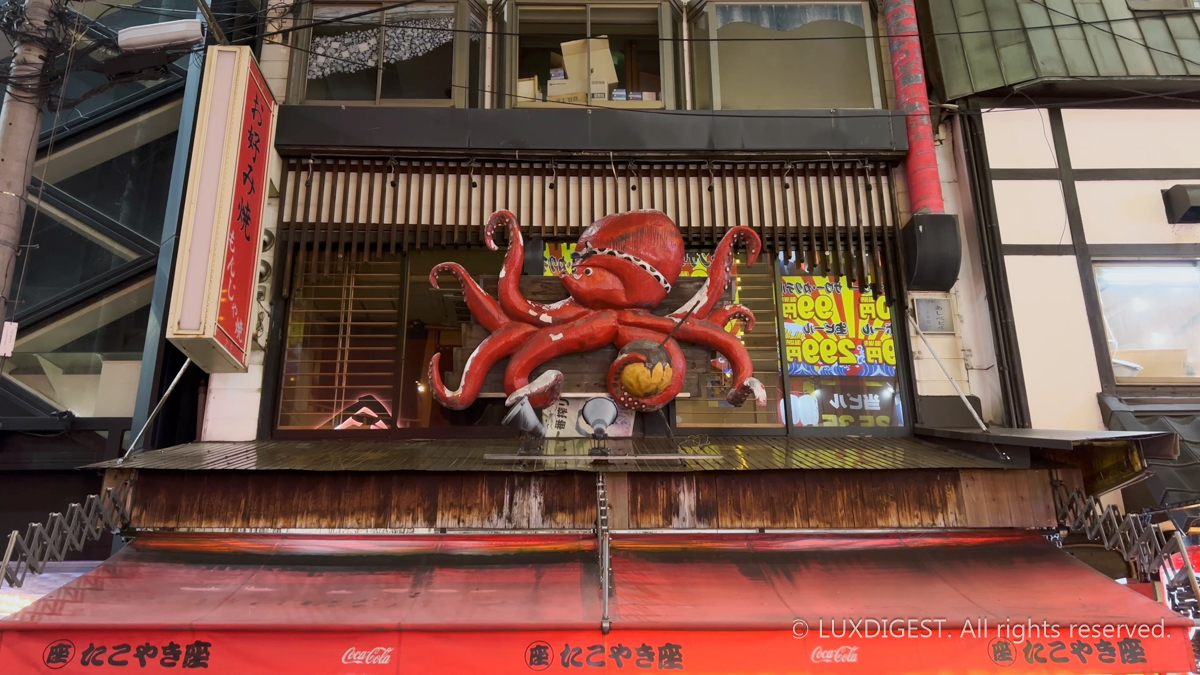
③ Visual Impact: Kani Doraku’s Colossal 3D Crab Sign
- Location: Directly across from Ebisu Bridge at this famous crab restaurant.
- Pro tip: Dotonbori’s motto is “kuidaore” (eat until you’re broke), and the district’s massive billboard characters prove it. The giant mechanized crab with waving legs is unmissable. Stand directly beneath it, tilt your camera straight upward, frame your subject tightly against the sign, and you’ll capture Osaka’s signature wit and playful spirit in one shot.
④ Dazzling Spectacle: Across from Donki’s Observation Wheel
- Location: The riverside walk opposite the yellow oval observation wheel (Ebistar) atop the Donki building.
- Pro tip: The massive yellow wheel’s lights stretch across the water like a shimmering ribbon. Seat or position your subject at the water’s edge railing, and use the Donki building and passing river cruise as an out-of-focus backdrop. The result is an emotionally resonant photo that amplifies Osaka’s glamorous spirit.
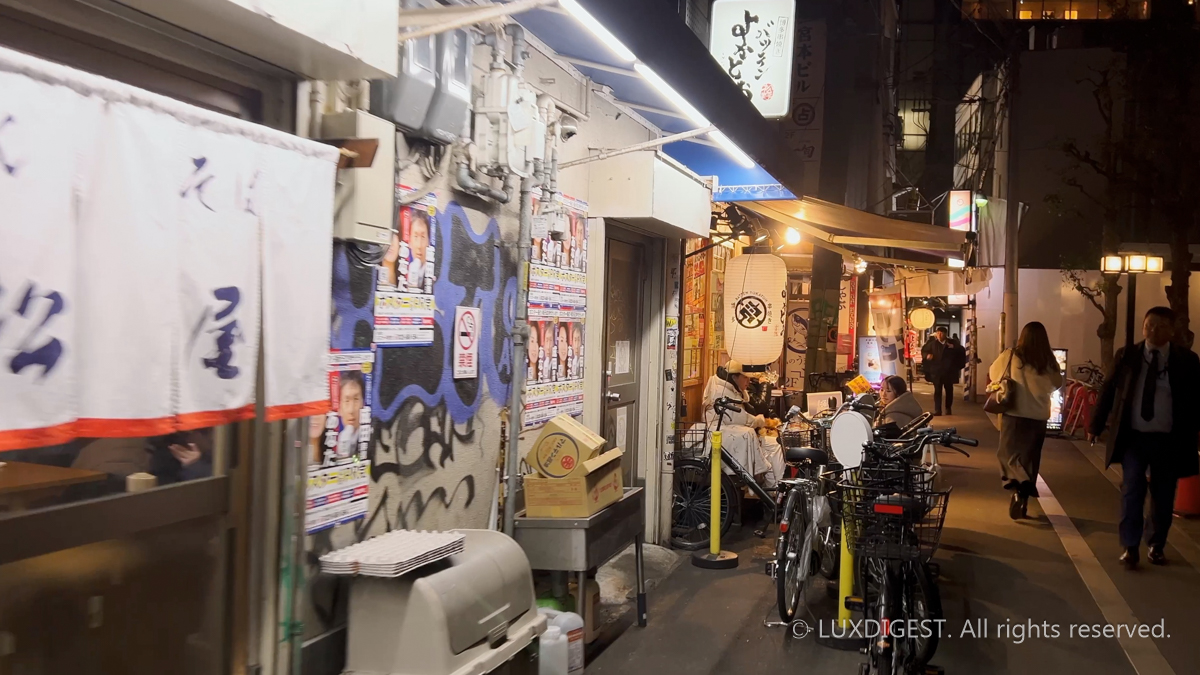
⑤ A Pleasant Contrast: Hozenji Yokocho Alley (法善寺横丁)
- Location: Just one block south of Dotonbori’s main thoroughfare.
- Pro tip: When the main street’s constant neon flashing becomes overwhelming, slip into this narrow cobblestone alley. Soft amber lanterns glow warmly outside traditional sake bars lining both sides. Capture locals pouring water over the moss-covered Mizukake Fudo Buddha statue, and you’ll preserve a poetic, timeless portrait of old Japan’s enchanting nightlife.
Essential Tips for a Flawless Nightscape Adventure
- Check the sunset time on Google before you go
- Arriving timed to sunset allows you to witness every gradation of light as the sky transforms from day to night.
- Purchase Tombori River Cruise tickets during the day
- While Osaka Day Pass and e-Pass holders enjoy discounts or free rides, peak evening tickets (7:00 PM–8:30 PM) often sell out by 3–4 PM. Head straight to the ticket booth next to the riverside Donki building upon arrival and secure your evening departure time.
- Wear bright solid colors or white
- Surrounded by vivid neon, dark clothing will blend into the background and make you invisible. Wear white or light-colored clothing so the neon acts as a natural reflector, illuminating your face beautifully.
Dotonbori after dark transcends mere sightseeing—it’s an opportunity to recharge your energy from an tireless city. Simply standing still feels like stepping into a festival. Come experience this unforgettable district for yourself.
Frequently Asked Questions
Q1. What’s the best time to visit Dotonbori for nightscape photography?
A. The ideal window is between 15 minutes after sunset and 9 PM. Peak hours from 7 PM to 9 PM offer the most active atmosphere, with maximum neon glow, water reflections, and street energy. This is when Dotonbori truly reveals its magnetic charm.
Q2. Where should I photograph the Glico Man sign?
A. The most famous spot is the center of Ebisu Bridge. If crowds feel overwhelming, descend to the Tombori Riverwalk stairs below the bridge for unique low-angle shots while avoiding congestion.
Q3. Do I need to reserve the Tombori River Cruise in advance?
A. During peak seasons and weekend evenings, walk-up tickets frequently sell out. Daytime evening departures (especially 7 PM–8:30 PM) are particularly popular, so purchasing tickets during daylight hours is highly recommended.
Q4. How much time should I budget for a Dotonbori nightscape visit?
A. Two to three hours suffices for exploring major photo spots and enjoying a meal. If you’re including a river cruise or visiting Hozenji Yokocho, allow four hours.
Q5. What else should I see near Dotonbori?
A. The adjacent Shinsaibashi shopping district, Namba neighborhood, and Hozenji Yokocho are natural extensions. Hozenji Yokocho offers a striking contrast—while Dotonbori blazes with modern neon, this traditional alley preserves old-world Japanese ambiance.