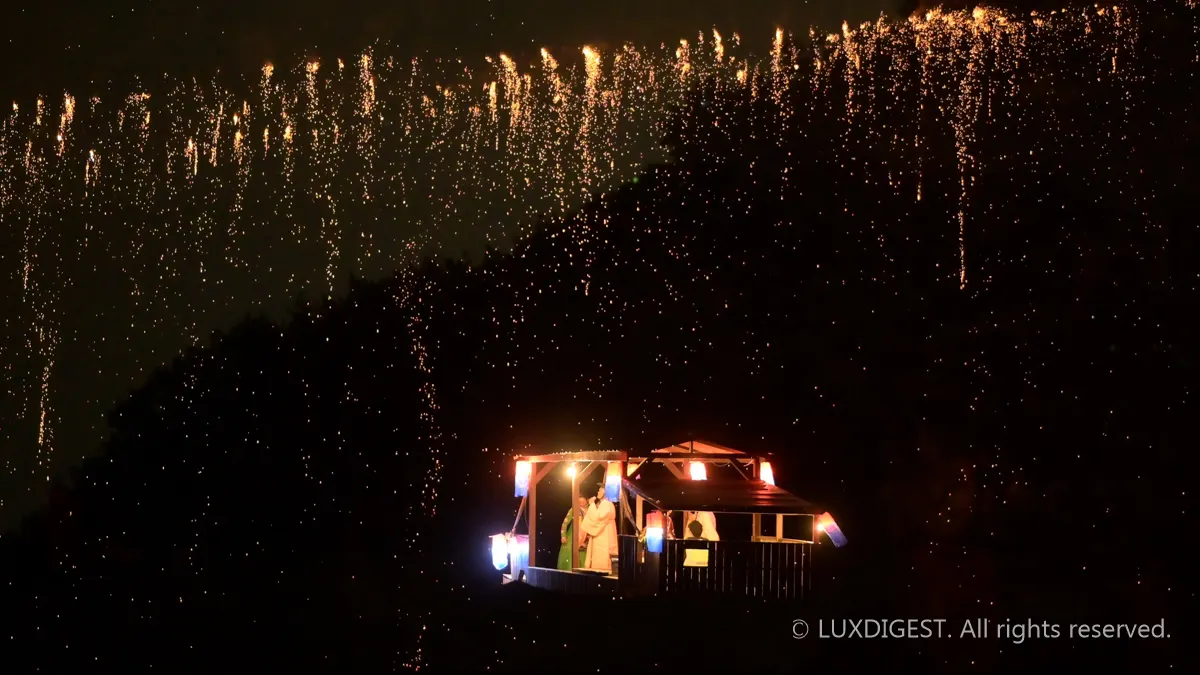
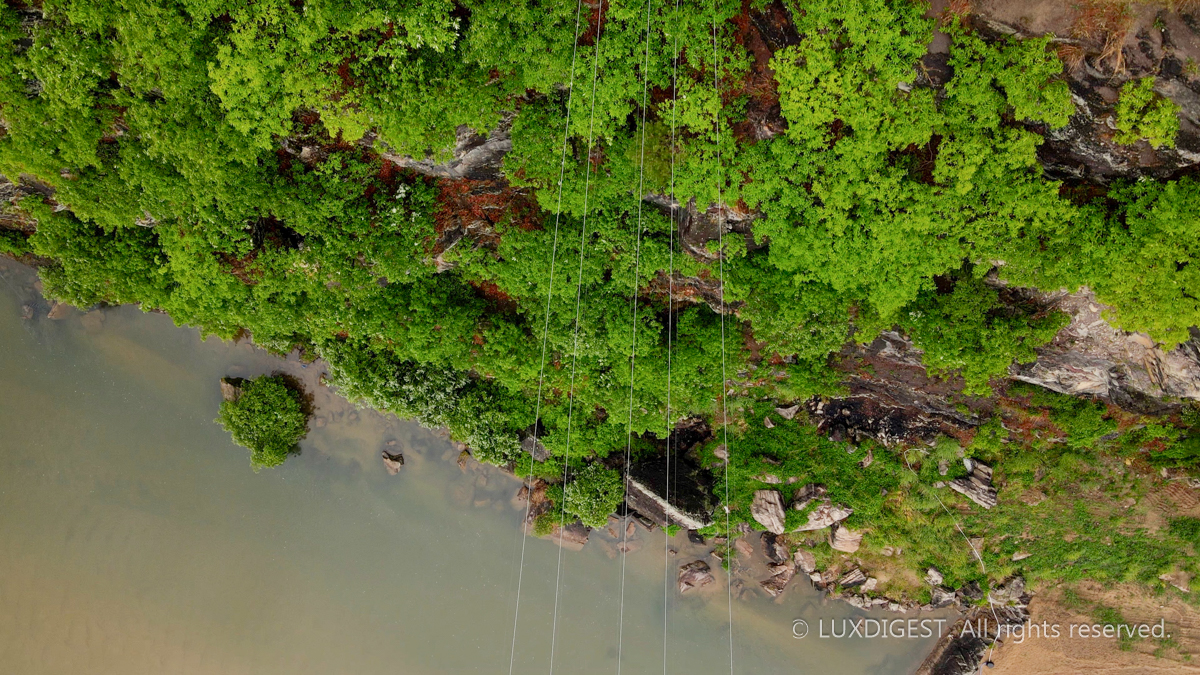
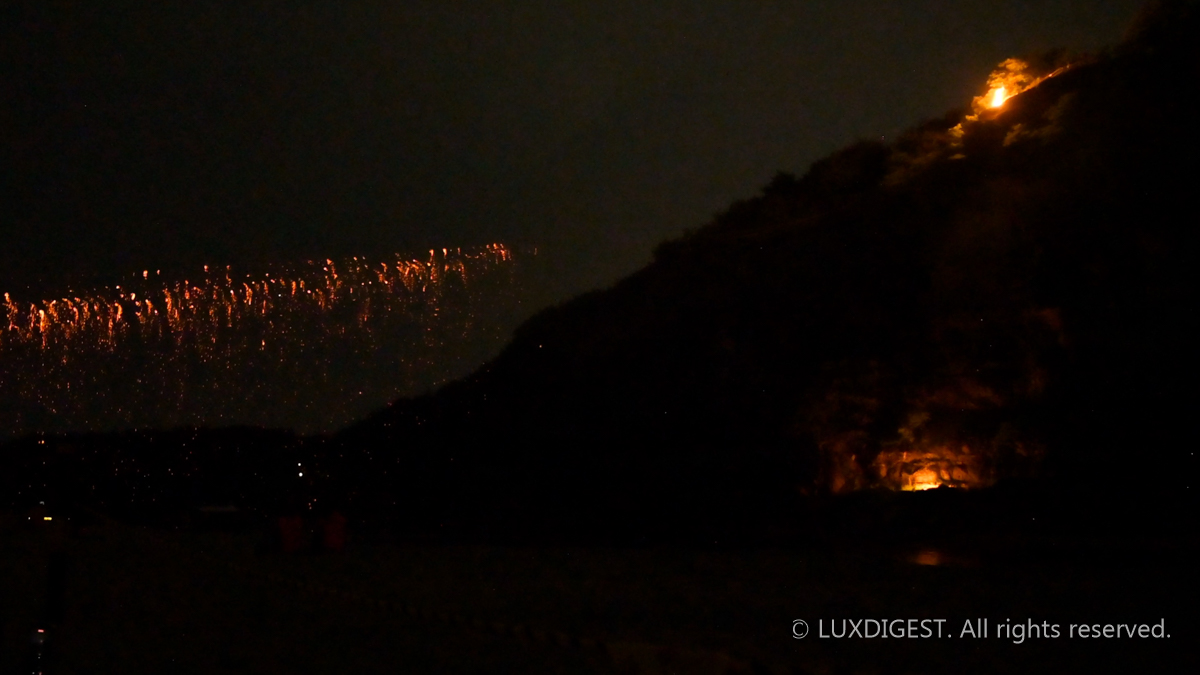
As shown in the photograph above, Seonyu Julbulnori is a spectacular display of fire climbing four parallel wires stretching from Buyongdae.
I first came across it on social media and in the media, and it was so beautiful that I immediately decided I had to see it in person.
When I heard that the event would begin around the May holiday period, I checked online, only to find that reservations had already sold out.
When I called, I was told that online reservations had closed within an hour of opening.
After asking again, I learned that, unlike last year, the organisers planned to accept an additional 300 people on site this year.
I waited impatiently for the day to arrive.
I had travelled all the way to Andong and was worried that I might not be able to get a ticket.
On-site ticketing: an event that made everyone who waited in line feel like fools
The trouble began on the day itself.
People were all standing in line, but as 1 p.m.—the announced ticketing time—drew near, not a single official in charge had appeared.
In fact, I had arrived at 11 a.m. because I was afraid I would miss out on a ticket.
By then, I had already been standing there for two hours.
Fortunately, I was far enough forward in the queue that I should have been able to get a ticket as soon as the on-site ticketing staff arrived.
It was hot, and standing for so long was exhausting.
Even so, I had no intention of going anywhere else. I had come for the fireworks.
Other visitors were doing their best to keep their places in line while trying to calm their children.
A traffic-control worker called the officials at Andong City Hall to find out what was happening.
Apparently, they said they were stuck in traffic and could not get in.
It was unbelievable.
What kind of officials behave like this? For a major event, they had apparently set off expecting ordinary traffic conditions and a perfectly punctual arrival.
The event organisers’ handling of the situation was simply appalling.
It made it painfully clear how little they thought of the public.
Apparently, public-service skills are not part of the civil-service job description
I have never had much faith in civil servants—although my own father was one.
They seem to have no sense of urgency and little interest in what most people would call a service mindset.
By the standards of a private company, their attitude can be extraordinarily frustrating.
Once they become civil servants, many seem to adopt the classic job-for-life mentality: they believe they cannot be dismissed, and no one will hold them personally accountable.
Eventually, at 1:30 p.m., half an hour after ticketing was supposed to begin, one official finally appeared.
He casually opened a laptop. That was it.
People began to murmur.
That was when the situation descended into chaos.
Without having prepared anything, the official simply announced that he would provide a link.
The person at the very back of the line was probably the first to hear the link clearly, because everyone had rushed forward to find out what was going on.
There was no point in having stood in line for more than two hours.
No one took responsibility.
They simply pretended not to know what had happened.
Everyone was furious.
The Andong City Hall officials responsible for the event had already faced strong criticism from residents over last year’s Seonyu Julbulnori.
Yet nothing appeared to have improved.
Apparently, 4,000 to 5,000 people had been forced to share a single toilet last year.
It was the predictable result of officials failing to think things through.
This year, they handled the first attempt at on-site ticketing with the same lack of preparation.
Why would anyone expect a different attitude from officials with guaranteed job security?
I decided not to engage with them any further.
There was no point in allowing them to ruin the rest of my travel memories.
In the end, I paid through the link and entered Hahoe Village.
There was no apology and no special consideration for the people who had been made to wait. We were simply expected to accept it and go inside.
For a moment, I even wondered why the event was being held at all. Was it simply a public-relations exercise for the mayor of Andong?
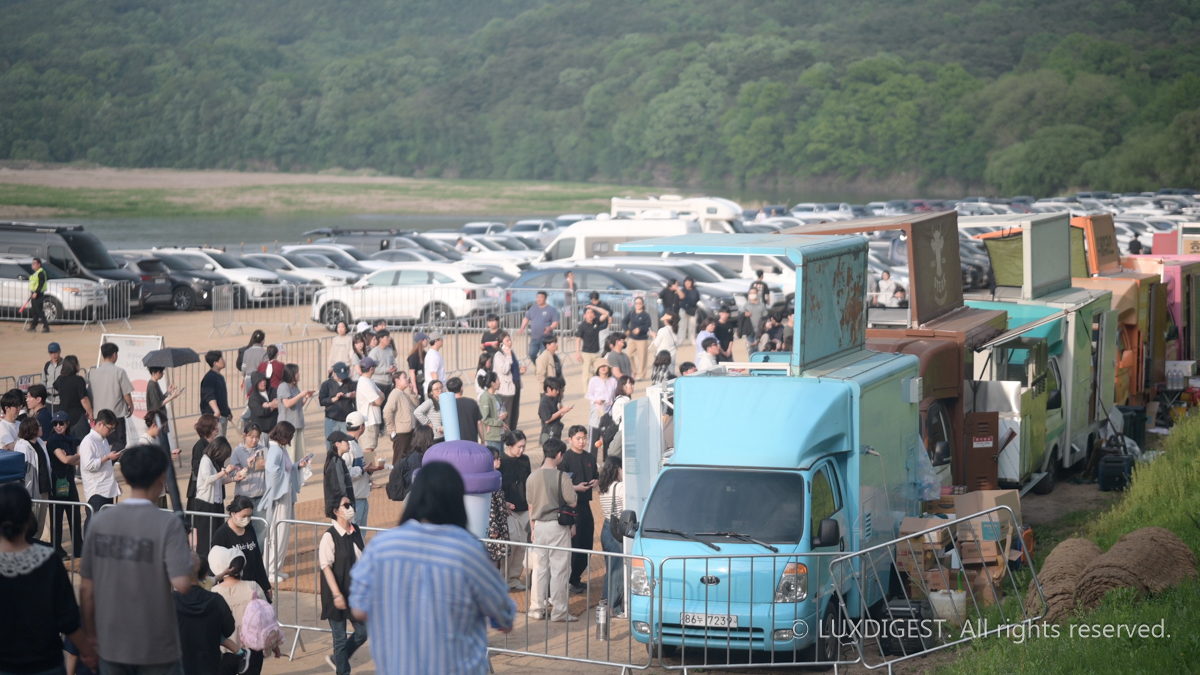
The food trucks over there charge more than restaurants in Ilsan—not ordinary food-truck prices.
Most items start at 10,000 won.
I was hungry, so I bought something anyway.
Once you leave Hahoe Village, there is virtually no chance of getting back in if you stop somewhere else first.
Traffic becomes congested and access is restricted.
If you plan to attend this event, make sure you bring enough food with you.
The history and origins of Seonyu Julbulnori
Historical records indicate that the event dates back to the Joseon period, and it is particularly associated with the renowned scholar and official Ryu Seong-ryong.
The tradition is said to have originated with Ryu Seong-ryong’s boat outings on the Nakdong River with his brother after he retired from public office.
Some interpretations also link the wider Seonyu culture to the tradition of river excursions associated with the Chinese poet Su Shi, better known as Su Dongpo, at the Red Cliffs.
It later merged with the Confucian culture of Hahoe Village and developed into a distinctive local tradition.
The event was suspended during the Japanese colonial period, partially restored after liberation, and has now become one of Andong’s best-known traditional celebrations.
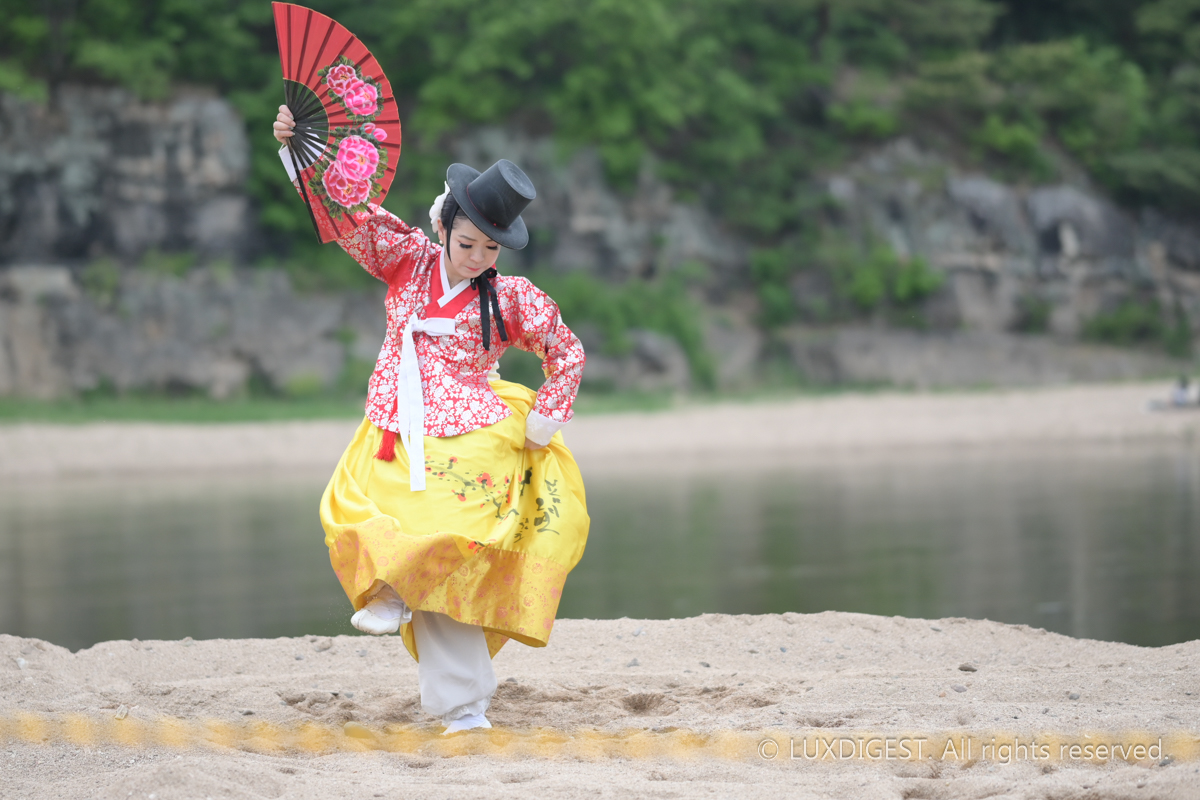
I took a photograph as village elders posed nearby for their own pictures.
I was told that the people responsible for the singing and dancing were elders from Hahoe Village.
Videos related to travelling in Andong
What is Seonyu Julbulnori?
Seonyu Julbulnori is a traditional fire performance passed down in Hahoe Village, Andong, in North Gyeongsang Province.
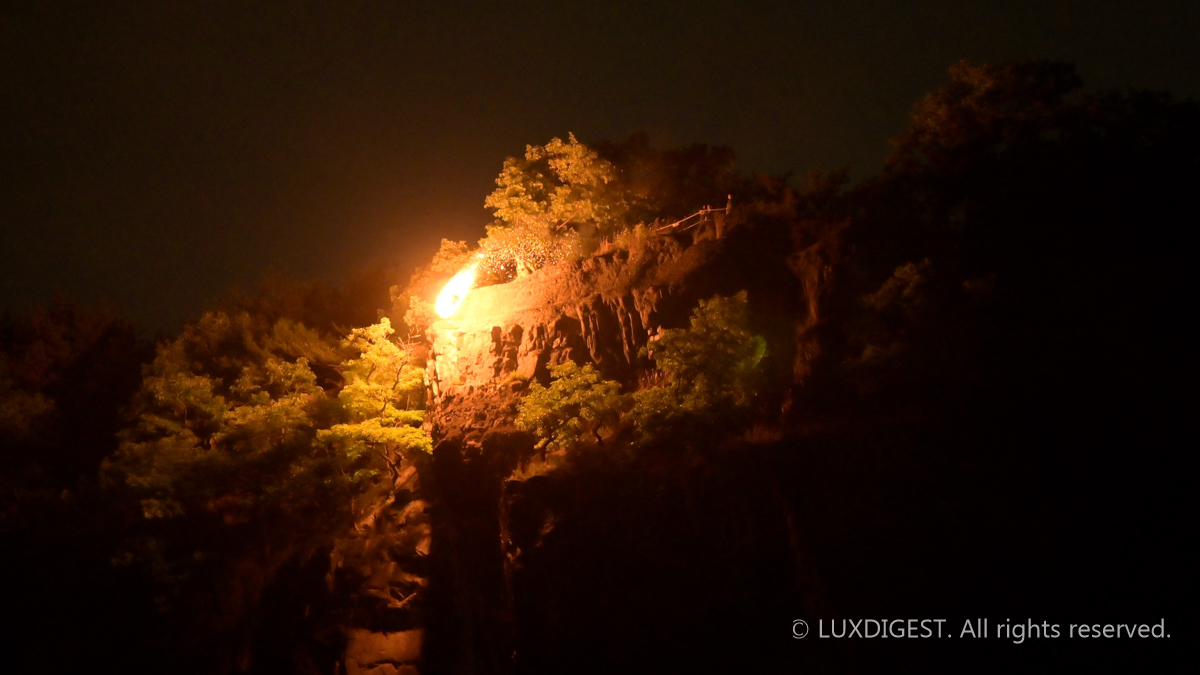
“Seonyu” (船遊) refers to the refined pleasure of travelling along a river by boat, while “Julbulnori” describes the practice of hanging pouches filled with charcoal powder from long ropes stretched across the river, allowing sparks to cascade down.
Together, these two elements form Seonyu Julbulnori.
In simple terms, it is a grand traditional fire performance inspired by Joseon-era scholars who floated along the river at night, reciting poetry and enjoying the scenery.
Its atmosphere, however, is completely different from that of a modern fireworks festival.
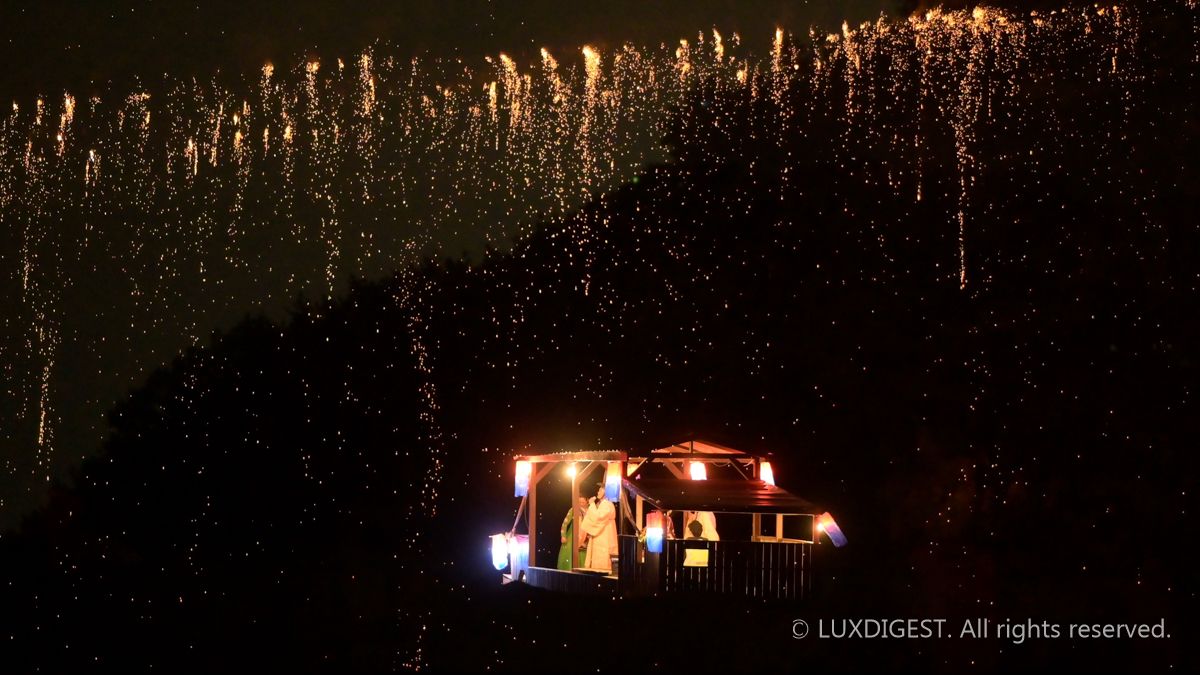
Instead of ear-splitting explosions, the event’s beauty lies in the quiet sight of embers falling like rain across the river.
After arriving at 11 a.m. and enduring the frustration of on-site ticketing, I waited until 7 p.m.
The entire day was spent there.
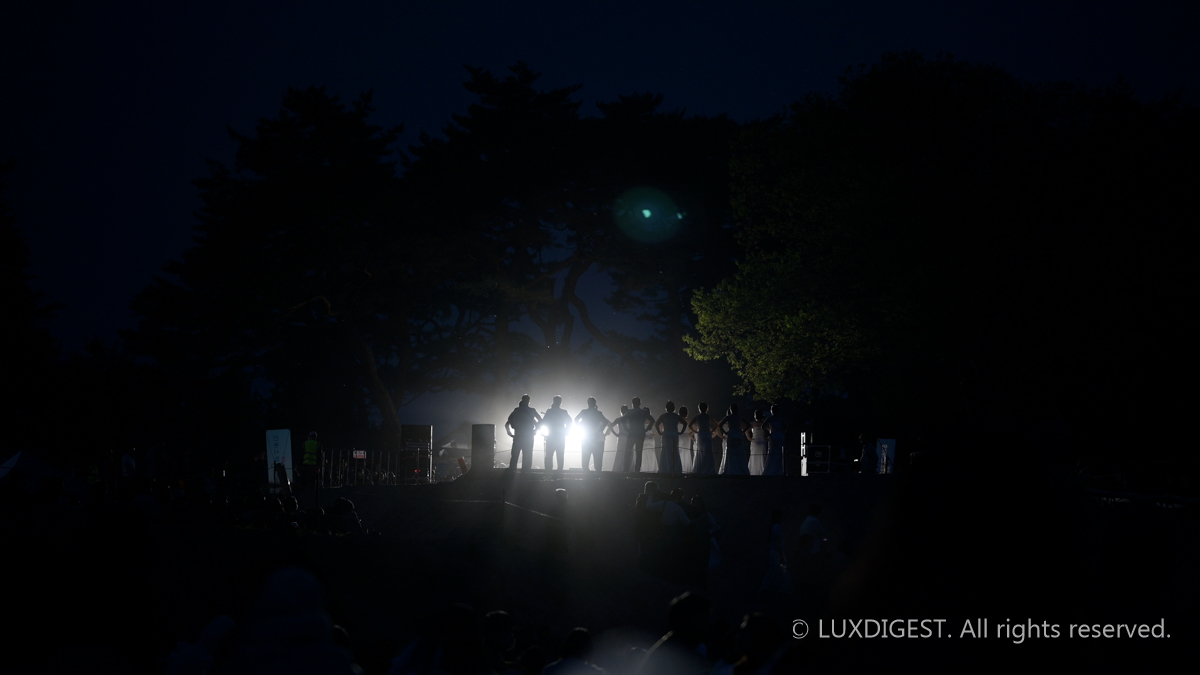
For about an hour, there were performances by a choir and traditional Korean musicians. Once complete darkness had fallen, the Seonyu fire performance finally began.
I forgot all the frustrations of the day and focused on the spectacle I had come to see.
It was truly beautiful.
These slow-moving flames have a warmth and intimacy that set them apart from conventional fireworks.
The burning bundles of straw released from Buyongdae are said to be part of a ritual in which wishes and hopes are cast into the night.
The sight of the flames, accompanied by people calling out “Nak-hwa-ya!” as they watched, was magnificent.
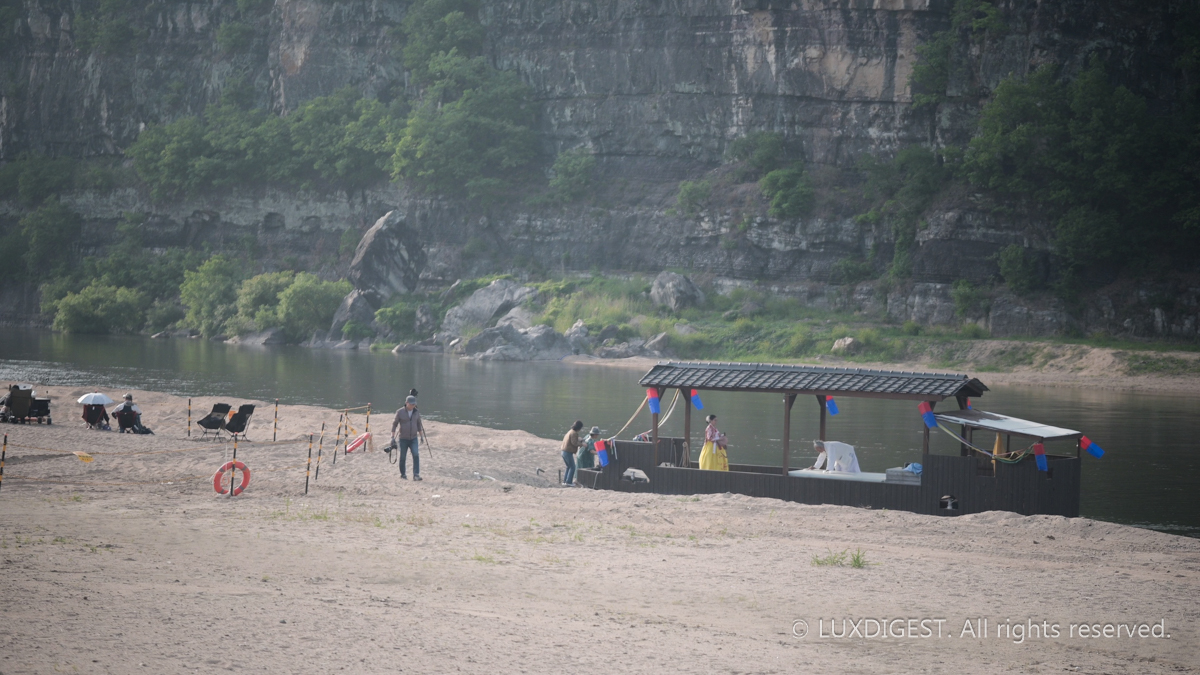
Finally, boats were set afloat, and people sang as they enjoyed the fire display from the river.
It was a scene that beautifully captured the essence of Korea.
Video of Seonyu Julbulnori at Andong Hahoe Village
FAQ
Q1. What kind of event is Seonyu Julbulnori?
Seonyu Julbulnori is a traditional firework performance passed down in Andong’s Hahoe Village.
It combines the Seonyu (船遊) tradition of travelling along the river by boat with Julbulnori, in which flames cascade along ropes stretched above the water.
Rather than resembling a loud and dazzling modern fireworks festival, it is closer to an expression of traditional Korean culture, inviting visitors to watch lights slowly descend through the darkness between the river and the cliffs.
Q2. Where can I watch Seonyu Julbulnori?
The event takes place around Hahoe Village and Buyongdae in Andong.
The main attraction is the cascade of flames travelling along ropes connecting Buyongdae with Hahoe Village.
The programme also includes nakhwa fire displays, traditional boat rides and Korean traditional music performances, creating an experience that goes beyond a simple fireworks show.
Q3. Is it difficult to get tickets for Seonyu Julbulnori?
It can be extremely difficult.
Online tickets often sell out soon after reservations open, and on-site ticketing is also highly competitive.
Many visitors begin queuing several hours before the event.
Because the ticketing system may change from year to year, be sure to check the official announcements in advance.
Q4. What should I bring when visiting the event?
The most important things are food and supplies for a long wait.
Traffic controls and congestion around Hahoe Village can be severe on the day of the event. Once you leave, re-entry may be difficult, and parking can also become a problem.
Food trucks inside the event area also tend to be expensive, so it is best to bring snacks and water with you.
A picnic mat or portable chair can be useful if you expect to wait for several hours.
Q5. Is Seonyu Julbulnori worth seeing?
Despite the inconvenience of the event’s organisation, the performance itself is highly impressive.
Once night has fully fallen, the flames descending from Buyongdae and the glowing ropes flowing above the river create an atmosphere completely unlike that of a conventional fireworks festival.
The slowly drifting lights, traditional Korean music, and boats on the river combine to create a uniquely atmospheric experience, almost like witnessing an evening of refined entertainment from the Joseon era. 🌙