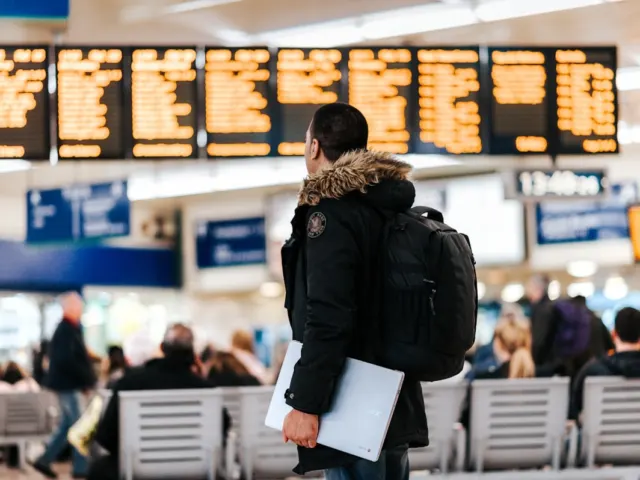
Introduction: Why Power Banks Matter for Travel Safety
As smartphones and other electronic devices have become an increasingly central part of daily life, the use of portable chargers—also known as power banks—has surged.
Many passengers want to bring a power bank on board so they can charge their devices while traveling. However, a number of safety regulations apply.
Airlines and airport authorities place particular emphasis on the safe handling of power banks in order to protect passengers.
This article explains the rules and safety guidelines passengers should know when bringing a power bank onto an aircraft.
Key Rules and Safety Guidelines for Power Banks
Airlines and airport authorities have established several rules for the safe use and transport of power banks. In general, passengers may bring power banks into the cabin, although restrictions may apply to batteries above certain capacity limits.
Most airlines allow power banks rated at or below 100Wh (watt-hours) in carry-on baggage. Batteries rated between 100Wh and 160Wh generally require the airline’s prior approval. Power banks exceeding 160Wh are not permitted in the cabin.
How to Check a Power Bank’s Capacity
A power bank’s capacity is usually printed on the device itself. Check the capacity in Wh (watt-hours) and confirm that it complies with the airline’s rules.
If the capacity is not listed, you can calculate the watt-hours by multiplying the battery’s voltage (V) by its capacity (Ah). For example, a battery rated at 3.7V and 20Ah has a capacity of 3.7V x 20Ah = 74Wh.
Precautions When Using a Power Bank
Passengers should follow several precautions when using a power bank on board. First, power banks must be carried as personal belongings and should never be placed in checked baggage.
Second, avoid using a power bank that is overheating or damaged. If you notice anything unusual about the battery, report it to a member of the airline’s crew immediately.
Finally, if you charge a power bank during the flight, follow the rules governing the use of the aircraft’s power outlets.
Other Relevant Policies and Regulations
Power-bank policies may vary by airline, so it is important to check the rules of your airline before traveling.
The International Air Transport Association (IATA) has also established guidelines for the safe transport of power banks, with passenger safety as a priority.
These policies are intended to prevent fires and other safety incidents on board, and all passengers are expected to follow them.
Conclusion: Essential Information for a Safe Journey
Power banks are an essential travel accessory, but failing to follow safety regulations can create serious risks.
Passengers should therefore check their power bank’s capacity and the airline’s rules in advance, and follow all safety guidelines carefully.
Knowing this information is essential for a safe journey, helping ensure that everyone can enjoy a secure and convenient flight.
Frequently Asked Questions (FAQ)
Q. What is the maximum permitted capacity for a power bank?
A. Most airlines allow power banks rated at or below 100Wh in carry-on baggage. Batteries rated between 100Wh and 160Wh generally require prior approval.
Q. Can I pack a power bank in my checked baggage?
A. Power banks must be carried as personal belongings and should never be placed in checked baggage.
Q. Can I charge a power bank during the flight?
A. If you charge a power bank on board, you must follow the rules governing the use of the aircraft’s power outlets.