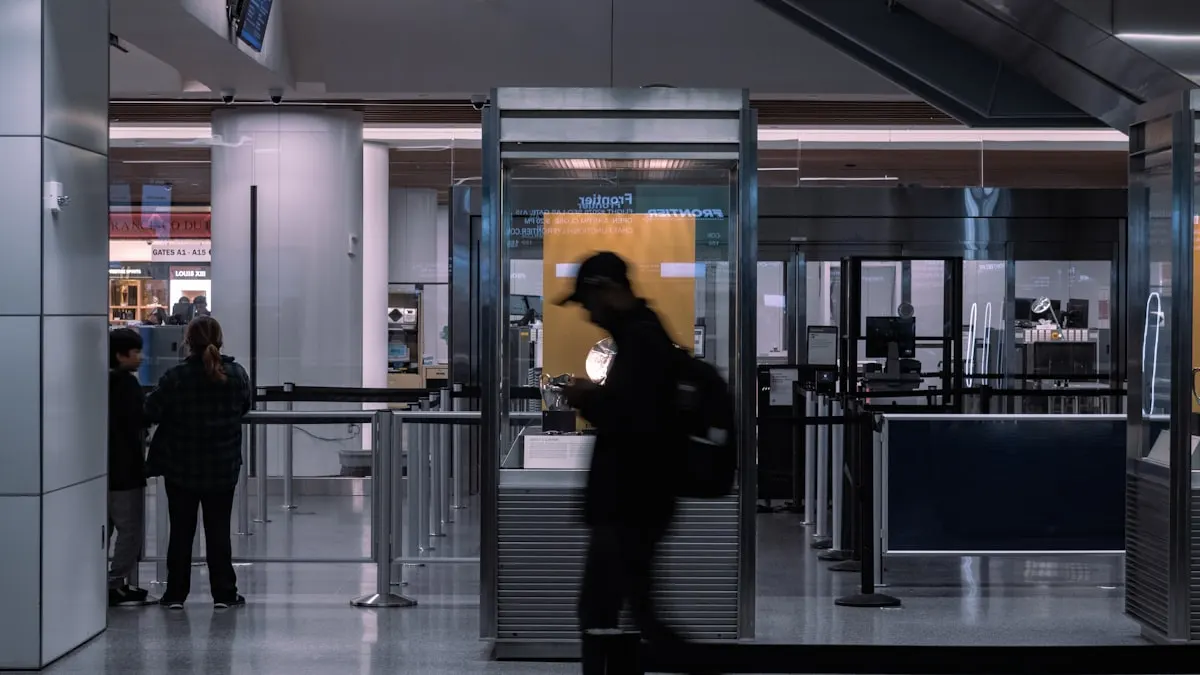
Artificial intelligence (AI) is changing how airports handle passenger processing and aviation security. Facial recognition for identity verification, automated departure procedures, and AI-assisted security screening systems are emerging as key technologies for managing passenger flows and detecting dangerous items.
That said, airports where passports have disappeared entirely are not yet a reality. Today’s smart-airport services generally work by having passengers register their passport and boarding-pass information in advance, then using facial recognition at certain points to streamline identity checks.
Why Rising Air Travel Demand Is Driving Airport Automation
According to ACI World, the number of air passengers worldwide is expected to reach 10.2 billion in 2026. That would represent a 3.9% increase from the previous year, underscoring the need to improve both airport operating efficiency and security-screening capacity.
Airports cannot expand their terminals indefinitely, and passengers tend to converge at departure halls, security checkpoints, and gates during peak periods. Airport operators are therefore using AI to predict congestion and allocate staff and screening equipment, increasing the capacity of existing facilities.
Streamlining Passenger Processing Through Facial Recognition
How Incheon Airport’s Smart Pass Works
Incheon Airport’s Smart Pass service allows passengers who have preregistered their passport, facial information, and boarding pass to verify their identity through facial recognition at departure halls and selected gates. According to guidance from Incheon Airport Corporation, facial information can be used for up to five years after a one-time registration, although passengers must register again when they renew their passports.
Smart Pass users go through facial recognition in designated departure-lane areas, but they must still carry their passports and boarding passes. Because availability varies by airline and gate, passengers cannot complete every step using only their faces.
These biometric systems can reduce the need for passengers to repeatedly take out their documents and shorten the time required for identity checks. At the same time, the system must accurately match registered information with the face of the person using it, making recognition performance and operational reliability critical.
AI-Assisted Security Screening Improves Threat Detection
AI is being used not only to improve passenger convenience but also in aviation security. The U.S. Department of Homeland Security’s Science and Technology Directorate is researching technologies for detecting explosives and prohibited items in baggage, cargo, and passenger screening. Automated systems that identify potential threats in airport security-screening footage are also part of its development efforts.
AI-based screening systems can analyze images produced by X-ray or computed tomography (CT) equipment, flag suspicious objects, and prioritize items for additional review by screening officers. Security personnel still make the final decisions and take any necessary action, but AI can improve screening efficiency by assisting with repetitive image analysis.
The technology can be used to detect not only dangerous items such as firearms, knives, and explosives, but also objects whose shapes are obscured in screening images. However, performance varies depending on the equipment, regulations, and data quality at each airport, so AI cannot yet be considered a complete replacement for security screening.
AI Is Also Being Used to Manage Crowds and Guide Passengers
AI applications at airports extend beyond departure procedures and security screening. By analyzing passenger volumes, flight information, and wait times throughout the day, airports can predict congestion in departure halls and at gates and adjust staffing and facilities accordingly.
AI-powered guidance systems can provide directions, gate locations, and connection times based on a passenger’s destination and flight details. Combining voice guidance, multilingual chatbots, and autonomous wayfinding devices could also make it easier for travelers unfamiliar with the airport and for passengers making connections to find their way.
The key to these technologies lies not in individual devices but in integrating airport operational data. Flight information, security-screening wait times, terminal congestion, and baggage flows must be connected within a single operating system for AI to deliver real improvements in processing capacity.
Privacy and Accountability Challenges Behind the Convenience
As facial recognition and AI screening systems become more widespread, privacy protection and data security will become increasingly important challenges. Because biometric information is sensitive and difficult to change, airports must clearly explain why it is collected, how long it is stored, how it may be used, and how it can be deleted.
It must also be clear who makes the final decision when facial recognition errors or false positives and false negatives occur. Rather than applying automated results without question, airport operators should establish procedures that allow human intervention in exceptional cases, along with alternative processing channels.
Introducing AI does not simply mean cutting staff. The roles of screening officers and passenger-service personnel are likely to shift from routine verification toward handling exceptions, assessing risks, and managing systems. That is why AI needs to be introduced gradually, with safety and human rights as guiding principles.
The Future of AI-Powered Airports Is About Seamless Travel, Not Going Paperless
The future of AI-powered airports is less about eliminating passports and kiosks altogether than about connecting procedures so passengers do not have to submit the same information repeatedly at different stages. Combining preregistered identity information and facial recognition with automated security screening and real-time congestion management could make the airport journey considerably smoother.
Commercially available services such as Incheon Airport’s Smart Pass show that this transformation is no longer limited to the experimental stage. Going forward, the competitiveness of smart airports is likely to depend on the accuracy of biometric systems, the reliability of AI-powered security screening, and the strength of privacy protections.
Ultimately, the success of AI-powered airports will depend not on how many procedures they automate, but on how effectively they reduce waiting and inconvenience while protecting passengers’ safety and freedom of choice.
Frequently Asked Questions (FAQ)
Do you really not need a passport at an AI-powered airport?
For now, passports are not being eliminated entirely. Services such as Incheon Airport’s Smart Pass allow passengers to preregister their passport and facial information, then use facial recognition in some departure procedures instead of showing their documents for identity verification.
How do you use Incheon Airport’s Smart Pass?
Passengers can register their passport, facial information, and boarding pass through the Smart Pass app or at registration points in the airport. The departure halls, gates, and airlines where the service is available may vary over time.
Will AI completely replace airport security officers?
No. AI primarily analyzes X-ray and CT screening images to flag suspicious objects and assist security officers in making decisions. People remain responsible for final checks and actions on the ground.
Are facial-recognition services at airports safe?
Because these services use biometric information, encryption, access controls, limits on data retention, and deletion procedures are essential. Passengers should review each service’s privacy policy and terms of use and should be able to choose standard processing procedures when necessary.
How much will AI reduce airport waiting times?
Because equipment and operating methods vary by airport and service, it is difficult to provide a single estimate. However, facial-recognition identity checks and AI-powered congestion management can help reduce repetitive procedures and queues.