What Yoon Suk Yeol’s Coup Accomplices Reveal About Hypocrites
Yoon Suk Yeol and his inner circle launched a bizarre, unprecedented, and utterly absurd self-coup.
Yoon Suk Yeol could hardly have carried out such a strange coup on his own. It was only because people consumed by their hunger for power joined him that they were able to plot this anachronistic self-coup. By examining these individuals and the traits they share—particularly their contempt for the public—I hope this article may help readers recognize similar people and distinguish the genuine from the fraudulent in the future.
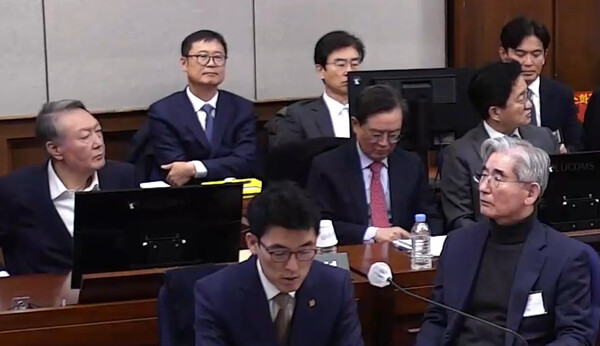
Yoon Suk Yeol’s Coup Accomplices
Han Duck-soo (former prime minister)
- Main charges: Aiding the ringleader of an insurrection, abuse of authority obstructing the exercise of rights, perjury, and document forgery.
- Legal status: He was indicted on allegations that he convened a Cabinet meeting to facilitate the declaration of martial law and aided and supported media controls. He was sentenced to 15 years in prison on appeal.
- He takes pride in seeing himself as an elite and often uses unnecessary English-style expressions simply to make others uncomfortable, revealing how superior he believes himself to be. Despite his age, he shows little wisdom or insight; instead, he looks down on others and lies without hesitation.
- He is a hypocrite who committed perjury without shame when it served his interests. The judge sharply criticized this conduct and increased his sentence as a result.
- Although he was one of the highest-ranking officials responsible for a coup that endangered the country and its people, he acted as a wolf-like conspirator who supported the plot. When the coup failed, he tried to present himself as an innocent lamb, effectively telling the public, “I knew nothing—so please make me president.” He is a deeply repugnant man with a sordid way of thinking, intent on hurting the public a second time.
- Although Kim Moon-soo had been selected as the People Power Party’s final presidential primary candidate, Kwon Seong-dong and Lee Young-se, who tried to install Han Duck-soo as the candidate overnight, are also accomplices to the insurrection.
Kim Yong-hyun (former defense minister)
- Main charges: Performing a key role in an insurrection, obstruction of official duties through deceptive means, and aiding the enemy.
- Legal status: He was sentenced to 30 years in prison at trial for allegedly planning and ordering the deployment of troops to the National Assembly.
- He was the official who, under an elaborate plan, told soldiers to point their guns at the people. Perhaps he dreamed of becoming another Chun Doo-hwan or Park Chung-hee.
- He is a textbook power-hungry authoritarian, still trapped in a bygone era and convinced that the people will meekly submit to military force.
- Rather than resembling a defense minister, he behaved more like an actor and conspirator. Even during the trial and his defense, he exchanged glances with Yoon Suk Yeol and improvised a coordinated legal narrative, displaying an impressive talent for performance.
Lee Sang-min (former interior and safety minister)
- Main charges: Performing a key role in an insurrection, among others.
- Legal status: He was arrested and indicted for controlling police personnel during the declaration of emergency martial law and actively participating in and supporting its implementation.
- This man is also a world-class example of shamelessness. Although he was a central figure in an active coup plot that included plans to cut power and water to areas in order to seize key national facilities, media organizations, and the National Assembly, he has consistently pretended not to know anything, making him a quintessential hypocrite who treats the public with contempt.
- The court strongly condemned the fact that the interior and safety minister, whose foremost duty was to protect the public, instead placed citizens in danger and created chaos in an attempt to seize permanent control of power. Yet rather than showing remorse, he has responded with even greater shamelessness.
Park Seong-jae (former justice minister)
- Main charge: Performing a key role in an insurrection.
- Legal status: He was indicted without detention for allegedly tolerating or participating in the insurrection as a Cabinet member involved in the deliberations and procedures surrounding the declaration of martial law.
- He tried to dress up an illegal coup as something legitimate under the law, making the nature of his wrongdoing exceptionally sordid. He used his power to block every investigation into Kim Keon Hee and even bypassed the prosecutor general to commit illegal acts, all while posturing as though he were a righteous and legitimate official and mocking the public.
- Every time he appeared in the media, he glared into the cameras and maintained an unrelentingly aggressive and arrogant demeanor. He was an utterly unpleasant hypocrite.
Choi Sang-mok (former deputy prime minister and finance minister)
- Main charges: Aiding the insurrection and perjury.
- Legal status: He was indicted without detention for allegedly giving false testimony or concealing facts about discussions surrounding emergency martial law during subsequent investigations and hearings.
- After even Han Duck-soo relinquished his authority to provide support, Choi became interim leader. Rather than acting neutrally, he allegedly tried by any means possible to delay efforts to resolve the coup and obstruct the investigation. He even postponed the appointment of vacant Constitutional Court seats while scheming behind the public’s back.
- When the country was in crisis, he failed to understand what mattered most and instead sought personal advancement by leaning on power. His character is far too tainted for him to have been entrusted with an important national position.
- If he had not pretended to be clean, perhaps he would have been seen merely as someone obsessed with power. But, like the other hypocrites, he enthusiastically performed the role of the innocent lamb.
Cho Tae-yong (former director of the National Intelligence Service)
Legal status: He was arrested and indicted for allegedly using the intelligence agency to assist in carrying out the insurrection and ordering intelligence operations during the declaration of martial law.
Main charges: Significant involvement in the insurrection and abuse of NIS authority.
He turned what should have been a public safeguard into a weapon against the people, blocking the National Assembly and preventing citizens from approaching it. Like Yoon Suk Yeol and his associates, he repeated the absurd claim that these actions were intended to “protect the public.” Soldiers tried to take control of the Assembly, citizens went there to stop them, and then the police blocked the citizens. What kind of nonsensical situation is that? There is no doubt that this man was blinded by his lust for power.
Park Jong-jun (former chief of the Presidential Security Service)
- Key charges: Special obstruction of official duties and destruction of evidence.
- Major misconduct: After the emergency martial-law declaration, a joint investigation team made up of the Corruption Investigation Office, police, and Defense Ministry attempted to execute arrest and search warrants against former President Yoon Suk Yeol. Park erected vehicle barricades at the presidential residence and used security personnel to completely block physical entry.
- Legal status: He resigned after being investigated for obstructing execution of the warrants. He was also indicted for allegedly attempting to destroy evidence by remotely deleting electronic information from secure phones belonging to Yoon and other key participants. However, he was acquitted on the secure-phone deletion charge at trial because the court found insufficient proof of intent.
- He is a foolish man who believes that covering the sun with his palm will make a truth known to the entire world disappear.
Kim Seong-hoon (former deputy chief and acting chief of the Presidential Security Service)
- Key charges: Abuse of authority and special obstruction of official duties.
- Major misconduct: Along with Chief Park Jong-jun, he led efforts to block law-enforcement officers from executing arrest warrants. Investigators revealed that immediately after emergency martial law was declared, he contacted the security service’s secure-phone server administrator and personally pressured the official to “delete the call records of Counterintelligence Commander Yeo In-hyung, Capital Defense Commander Lee Jin-woo, and others—it’s an order from the president.” Fortunately, the staff member deemed the instruction illegal and refused, so the deletion never took place.
- Legal status: He has acknowledged the objective facts that barricades and vehicle barriers were erected to obstruct official duties, while continuing to contest the legal implications in court.
- He is perhaps the most foolish of them all. Drunk on the prospect of promotion, he made arrogance his guiding philosophy. Although no one is above the law, he invoked nonsensical security-related statutes to obstruct higher-ranking legal instruments such as warrants and to block investigations into the national insurrection. He is a delusional hypocrite who cannot tell right from wrong.
- As evidence has gradually emerged against him and Yoon Suk Yeol’s influence has evaporated, he has finally begun revealing fragments of the truth about Yoon and Kim Keon Hee. But he is not doing so for justice; he is merely trying to reduce his own punishment, continuing to rely on the same sordid opportunism.
No Sang-won (former commander of the Defense Intelligence Command)
- Key charges: Performing a key role in an insurrection and violating the Military Secrets Protection Act.
- Major misconduct: As an unofficial adviser to former Defense Minister Kim Yong-hyun, he designed and oversaw the operational plan for the self-coup. A notebook seized from him contained a list of roughly 500 “collection targets”—politicians from both parties, judges, journalists, and others to be arrested—as well as a scenario for prolonged rule after martial law was imposed, shocking the public. He also pressured an active-duty intelligence commander to leak military secrets in order to build an unofficial organization.
- Legal status: He received a final two-year prison sentence for illegally obtaining military intelligence. At the first trial in the main insurrection case, he was sentenced to 18 years in prison after being found to have plotted the coup and led its implementation.
- He is a fascinating but hidden villain. He meticulously studied and planned how to eliminate evidence, kill opponents, silence the public, and suppress pro-democracy citizens. In some respects, he came closer to evil than anyone else involved.
Kim Keon Hee (former presidential spouse)
- Key charges: Violating the Capital Markets Act through stock manipulation, arranging illicit favors under the Act on the Aggravated Punishment of Specific Crimes, and violating the Political Funds Act.
- Major misconduct: She was accused of directly participating in the manipulation of Deutsch Motors’ stock price and making hundreds of millions of won in illicit gains, as well as violating the Political Funds Act by receiving illegal opinion polling free of charge through Myung Tae-kyun. Investigators also established that she received luxury handbags, a diamond necklace, and other valuables worth tens of millions of won from groups including the Unification Church in exchange for arranging access and favors on pending matters. Suspicions of behind-the-scenes involvement in the December 3 emergency martial-law crisis were raised, but a special counsel investigation found no concrete evidence that she conspired in the insurrection. She testified as a witness in related proceedings that she had not been aware of the process leading to the declaration of martial law.
- Legal status: She was sentenced to one year and eight months in prison at trial. The appellate court recently overturned that ruling, recognized her as a co-principal in the stock-manipulation scheme, found her guilty on all charges involving the arranging of luxury gifts, and sentenced her to four years in prison and a fine of 50 million won.
- As everyone knows, Kim Keon Hee was where this entire disaster began: a woman so obsessed with power that she even remarried Yoon Suk Yeol. Her parents, too, were mired in fraud allegations, tax delinquency, and various scandals, seemingly incapable of feeling shame.
- The most reasonable suspicion about December 3, 2024, is that Yoon Suk Yeol had been cornered by evidence from Myung Tae-kyun concerning an illegal presidential primary and election fraud, while Kim Keon Hee was also facing the worst possible crisis. It seems clear that they hastily carried out the coup and insurrection they had been preparing.
- Kim Keon Hee’s vain and arrogant behavior was not limited to one or two incidents. Let us look at a few examples.
- During former President Yoon Suk Yeol’s Southeast Asian tour in November 2022, she canceled the official spouses’ visit to Angkor Wat and instead visited the home of a Cambodian child with congenital heart disease. Photographs later released by the presidential office showed her holding the child while wearing a black short-sleeved top and white trousers. The composition and clothing closely resembled a 1992 photograph of Audrey Hepburn holding a malnourished child at a UNICEF feeding center in Somalia, prompting an outpouring of criticism that the scene had been deliberately staged as a cosplay imitation. The episode revealed how childish, flamboyant, and insecure Kim Keon Hee could be, and how her desire to appear pure and clean despite her own sordid image drove her to imitate a famous humanitarian. She seemed to believe that copying Audrey Hepburn would somehow bring her within touching distance of the actress’s greatness.
- Kim Keon Hee also freely took national cultural assets and used them to decorate her living quarters, wasted taxpayers’ money on a swimming pool and other facilities for her dogs, and removed perfectly sound flooring to install tatami mats. At other times she toured bridges over the Han River accompanied by police, as if she herself were the head of an administrative government. She treated Yoon Suk Yeol like a pushover, and it is reasonable to suspect that her outrageous encouragement helped push him to rush into the coup and insurrection.
- In an interview before appearing for questioning, Kim Keon Hee said, “Who am I to…” We should pay close attention to those words. People often express themselves publicly by saying the opposite of what they truly mean. Strong denial can function as strong affirmation. A genuinely strong and decent person does not insist that she is good. Evil people, by contrast, do not admit that they are bad; they insist that they are virtuous. “Someone like me” really means, “Do you know who I am, and how dare you?” “Who am I to…” means, “I am a queen whom everyone should bow to because I am so important.” In other words: “How dare you summon me and subject me to this humiliation?” She has reached the highest level of hypocrisy.
- That statement was also a way of concealing herself. She wanted to emphasize that she was insignificant and incapable of committing the grand fraud, abuses of power, and corruption of which she was accused. Hypocrites behave tyrannically when they are strong, then play the innocent lamb when they are at a disadvantage.
- They are like Gollum: willing to kill for their own purposes, yet eager to act weak and pitiable when the situation turns against them.

Their Ultimate Objective
There are many others besides the people mentioned above, most notably figures from the People Power Party. I will discuss them in greater detail later. Their ultimate objective was not loyalty to Yoon Suk Yeol. It was power. They are forces obsessed with enjoying power for generations, regardless of whether the public is trampled underfoot.
To seize and retain that power, they cared nothing about whether something was true or false, legal or illegal. They imagined themselves above the law, and their entire foolish philosophy amounted to this: it does not matter if someone else dies, as long as I prosper.
The Main Traits of Hypocrites
“Moral superiority”
The most striking trait of hypocrites is their tendency to present themselves as morally spotless.
They habitually speak in especially forceful terms about universal values such as justice, fairness, and human rights. But this is less a matter of genuine conviction than a mask designed to control others and shield themselves from criticism.
By placing themselves on a moral high ground, they activate a psychological mechanism that gives them the power to point out other people’s moral shortcomings.
It is nauseating to hear Han Duck-soo claim that he should become president for the sake of the country and its people; Choi Sang-mok insist, bizarrely, that Constitutional Court justices could not be appointed because the two major parties had failed to reach an agreement; and Yoon Suk Yeol argue that troops were sent into the National Assembly to ensure its safety. They deliver all these absurd statements as naturally and confidently as if they were self-evident truths.
Jang Dong-hyeok, the People Power Party leader who says Lee Jae-myung is a criminal and everything he does is hypocritical and false, is another example. His sense of superiority leads him to demean others and promote only his own claims. He is an extreme egotist and a hypocrite.
An extreme double standard, summed up by “rules for thee, but not for me”
Hypocrites maintain a strict separation between the harsh standards they apply to others and the lenient standards they apply to themselves.
They examine other people’s minor mistakes under a microscope and condemn them as though they should be socially destroyed. Yet they rationalize their own major misconduct by saying it was “unavoidable” or simply “customary.”
The same issue receives a different verdict depending on who committed it.
Seoul Mayor Oh Se-hoon’s response to defective rebar construction on a Metro project in Seoul is perhaps the clearest recent example of this double standard.
If the Democratic Party had held the mayor’s office, Oh’s comments would probably have been 180 degrees different. Why should the mayor be held responsible? Because the law makes the mayor responsible—and because voters elected the mayor to manage precisely these matters.
On the Myung Tae-kyun scandal and many other issues, including the unstable Han River buses, Oh has consistently responded with intimidation and word games rather than transparent disclosure. He simply keeps calling for public debates.
A public debate is not an investigation. It is merely a political show designed to allow someone to shout louder and intimidate more forcefully.
Oh casually reverses his past statements as though they had no value. He once claimed the Han River buses would revolutionize commuting, even though they were not yet practical for personal travel. Once reality became clear, he hurried to change his story. By any measure, Oh Se-hoon is an overrated figure.
He seems too small-minded to be mayor. I understand that he wants to present something impressive as an achievement, but there is no attention to detail. There is only ambition. In other words, he does not actually do the work.
It appears that he wants to remain Seoul mayor to protect himself from the rotten networks connected to the Myung Tae-kyun scandal and other corruption cases, especially because he may no longer be able to rely on the People Power Party. He is making such a fuss because he wants to survive on his own.
Hidden self-interest and a sense of entitlement
In front of the public, these people pretend to have transcended material desire or to have devoted everything they possess to society’s most vulnerable.
But once the cameras stop rolling, they pursue personal gain and power faster than anyone else.
Having deceived the public and built a reputation for representing the common good, they share a twisted sense of privilege that treats private gain behind the scenes as a perfectly reasonable reward.
Let us return to the missing rebar on the Seoul subway construction project. Do you really believe Hyundai Engineering & Construction’s claim that the omission was merely an innocent mistake caused by misreading the construction plans?
The incident came to light because someone was apparently profiting by diverting rebar, and the scheme was eventually exposed. Yet the underlying causes have still not been properly investigated.
Hyundai Engineering & Construction is not some disreputable neighborhood contractor. How can the removal of that much rebar be dismissed as a mistake?
Isn’t that taking the public for fools? How many times has the city built subway pillars? Every Seoul official and construction official who is trying to evade responsibility should be investigated, and the corruption networks should be uncovered.
Given how vehemently Oh Se-hoon insists that he has done nothing wrong, it is hard not to suspect that something is being concealed.
Hypocrites are always taking something for themselves behind the scenes. Afraid that they may be exposed at any moment, they grab as much as they can while the opportunity remains.
Consider the people who supported Kim Keon Hee’s corruption.
Were the officials and others who changed the original route of the Yangpyeong expressway so that it would pass near land owned by Kim Keon Hee’s family simply her fans?
Did they break the law because they found Kim Keon Hee so attractive and likable that they were willing to risk their careers? No. We should focus on the exchanges and compensation behind the conduct.
We need to examine what they received in return for breaking the law. It may have been a promise of promotion, money, or some other form of compensation.
Maintaining unwavering integrity in the face of social injustice and illegal conduct is not easy. But we must also recognize that society does not collapse because far more people continue to support it through their steadfast integrity.
Extreme rejection of criticism and “playing the victim”
When their hypocrisy is exposed or their logical contradictions are pointed out, they never admit fault.
Instead, they attack the messenger to distract from the issue or recast themselves as victims persecuted by entrenched interests and malicious forces.
Rather than correct the facts, they rely on factional politics and emotional appeals to rally supporters and escape the crisis.
Consider the latest national embarrassment involving the People Power Party leader.
Why did he go to the United States, and whom did he meet? Why can’t he disclose it? He is a disgrace, as is the People Power Party for choosing him as its leader.
Jang Dong-hyeok wants to appear important, yet he has no meaningful achievements in administration or legislation to point to.
He went to the United States intoxicated by the vanity of being treated as someone important simply because he was a party leader. But he had no value there as the leader of South Korea’s main opposition party; he had no value because he was Jang Dong-hyeok.
He was merely used by a lawmaker who wanted to exploit him and who had taken money through lobbying for Coupang.
He failed to meet a single serious politician. Instead, he took photographs from behind with the staff of an obscure politician and posed for one picture in front of the National Assembly. It is embarrassing, yet he still wants to wrap the trip in an impressive narrative.
So we are supposed to believe that the meetings were kept secret for diplomatic protocol and security reasons? Who would believe that? Was he actually telling people to believe it, or was he simply saying whatever came into his head?
Jang Dong-hyeok met with people defending Coupang, a company that harmed the public through a data breach and was damaging the national interest through lobbying in Washington, and acted as a representative of Coupang’s position in the United States.
How far will this hypocrite go in making the public cringe?
It is infuriating that the shame always falls on the public. It is outrageous that taxpayers’ money is being spent on people like this.
The chilling self-deception that resolves cognitive dissonance
Remarkably, many hypocrites are so convinced of their own innocence that they could pass a lie-detector test.
Psychologically, they resolve the cognitive dissonance created by the gap between their words and actions by completely deceiving themselves.
They reach the stage of self-deception, granting themselves absolution by saying, “I am working toward a greater good, so this minor stain is acceptable.”
The irresponsibility and shamelessness of Yoon Suk Yeol and his insurrectionist accomplices have been on display from the beginning and throughout the trials.
They make us wonder whether these people are truly human, and whether the hunger for power can erase even the most basic sense of decency.

Conclusion: How to Unmask Them
When hypocrites take control of society, common sense and justice stop functioning.
What they fear most is not emotional public solidarity but a cold, objective gaze.
When confronted with clear-eyed questions that demand the truth, they tend to respond in predictable ways.
Vague evasions — Jang Dong-hyeok says his trip to the United States was kept private as a matter of diplomatic protocol. Whom did he meet? Politicians were not attending a National Intelligence Service security meeting. Why keep it secret? He needs to come up with an explanation that makes sense.
Dodging responsibility — You are the head of Seoul, yet you say you are not responsible for corruption, shoddy construction, and scandals that occur in the city. Se-hoon, do you really think that makes sense?
In the name of the people — Hypocrites act entirely in their own interests, then invoke the people’s name every time they need to rationalize their conduct. They see citizens as dogs, pigs, and suckers. One official actually said so: Na Hyang-wook (former policy planning official at the Ministry of Education, a senior civil servant) — In July 2016, at a dinner with journalists, he provoked public outrage by declaring, “The masses should be treated like dogs and pigs. You only need to provide them with enough to eat and live.” Referring to himself as part of the top 1 percent, he argued that “the status system should be strengthened.” He also said that the death of a young worker in the Guui Station platform-screen-door accident did not feel like something that could happen to his own child, revealing a profound lack of morality and an unfiltered sense of entitlement for a senior public official.
Normalizing coups — This is the People Power Party’s specialty: a party whose members all carry the “coup gene,” allowing even a duly selected candidate to be replaced overnight. That is why its members refused to participate in the National Assembly vote during Yoon Suk Yeol’s illegal martial-law declaration. Even afterward, the party continued to evade responsibility, offering no meaningful apology and simply trying to bury the issue. It is a political culture that loves coups.
When hypocrites seize state power, the public suffers in proportion to the luxuries those hypocrites enjoy. They must never be allowed to occupy positions of leadership in politics or society. For the sake of this country’s development and health, all members of society must clearly identify who is and is not a hypocrite and protect ourselves from them.
Finally, I am not a commentator who supports or favors the Democratic Party. Its corruption must also be monitored, and its wrongdoing should be criticized. But the most urgent issue is the dissolution of the People Power Party, which claims to be the main opposition party yet fails to check or monitor the ruling party and instead persists in blindly denying reality.
They have no interest in improving people’s daily lives, pursuing pragmatic diplomacy, or developing solutions to domestic and international challenges. They cling only to Yoon Suk Yeol and insist that everything is Lee Jae-myung’s fault or the Democratic Party’s fault. I no longer expect them to offer sound judgment or a responsible voice.
What we should rely on is the voice of people struggling to make a living, and politics should begin by working for them. Yet these politicians do nothing, relying instead on Yoon Suk Yeol’s defenders among far-right YouTubers and self-interested groups such as Ilbe. I hope the call for the party’s dissolution is carried through, that these disgraceful old reactionaries disappear, and that a new and healthy democratic political force emerges in South Korea.