Toji Temple: The Esoteric Buddhist Heart of Kyoto’s Ancient Southern Gateway
1. Introduction: An Ancient Symbol Dominating Kyoto’s Skyline
When arriving in Kyoto, Japan’s millennium-old capital, by train or shinkansen, one enormous wooden tower is sure to catch the eye through the window on the southern side.
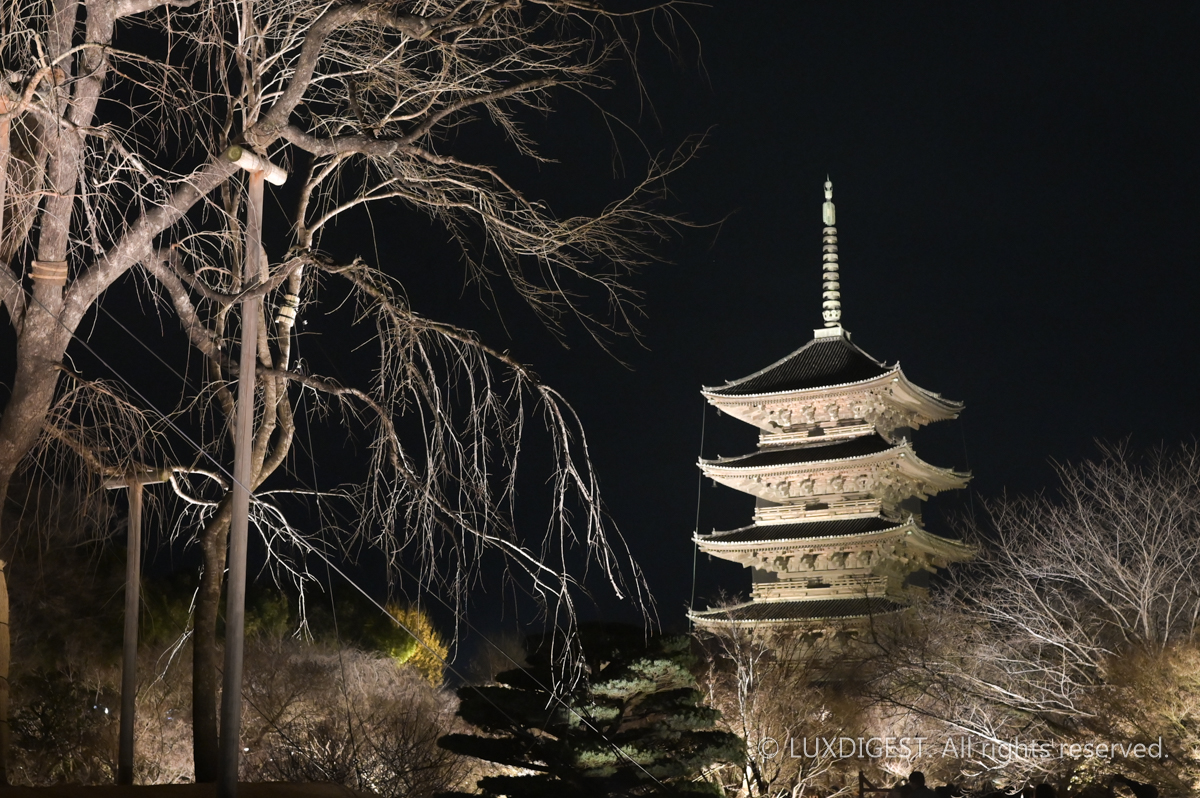
It belongs to Toji, home to Japan’s tallest wooden structure: a five-story pagoda.
Its official name is Kyo-o-gokoku-ji, meaning “the temple of the king of Buddhist teachings who protects the nation.”
For more than 1,200 years, this temple has quietly witnessed Kyoto’s turbulent history. More than an ancient religious site, it is a living cultural space that remains woven into the daily life of the city, as well as a museum showcasing the finest achievements of Japanese Buddhist culture and esoteric Buddhist art.
In 1994, its historical importance was recognized when it was designated as part of the UNESCO World Heritage Site “Historic Monuments of Ancient Kyoto.”
2. Toji’s History and Origins
The Birth of Heian-kyo and a Temple to Protect the Nation
Toji’s history dates back to shortly after Kyoto became Japan’s capital in 794.
Emperor Kanmu strictly prohibited the construction of temples within the new capital, Heian-kyo, hoping to prevent a repeat of the excessive political influence wielded by Buddhist institutions during the Nara period.
There were only two exceptions: temples were permitted on the east and west sides of Rajomon, the capital’s main southern entrance and gateway.
The temple built on the eastern side became Toji, while the one on the western side was known as Saiji.
The two temples were established as imperial temples dedicated to protecting the nation, praying for its peace and defending the new capital from foreign threats and evil spirits. Saiji was eventually destroyed and disappeared into history, leaving Toji as the only surviving site still standing in its original location from the founding of Heian-kyo.
Kukai, Kobo Daishi, and the Headquarters of Shingon Esoteric Buddhism
Toji’s first major transformation came in 823, when Emperor Saga granted the temple to the monk Kukai, also known as Kobo Daishi, who had returned from Tang China after studying esoteric Buddhism and went on to reshape Japanese Buddhism.
Kukai established Toji as the head temple of Japan’s Shingon school and its first major center for esoteric Buddhist practice.
He began filling the temple with the many esoteric Buddhist scriptures, mandalas, and Buddhist statues he had brought back from Tang China, while completely reorganizing the temple’s layout around esoteric Buddhist principles. Toji thus evolved beyond its role as a temple protecting the nation to become a center of the mysterious and profound art and philosophy of Shingon esoteric Buddhism.
A History of Reconstruction and the Legacy of the Toyotomi and Tokugawa Clans
Over the course of its long history, Toji has endured countless fires and wars.
During the Onin War, which began in 1467, much of the temple’s main complex was tragically destroyed by fire.
The buildings visible today are not the original structures from the Heian period. Most were rebuilt between the Momoyama period and the early Edo period.
Leading figures of the era—including the Toyotomi Hideyoshi family and Tokugawa shoguns Tokugawa Ieyasu and Tokugawa Iemitsu—provided substantial financial support for the temple’s restoration. Their patronage helped preserve its imposing and lavish architectural character to this day.
3. Key Buildings and Cultural Heritage
Toji’s grounds are extensive and follow the classic layout of an ancient Buddhist temple, with the South Gate, Kondo, Lecture Hall, and dining hall arranged in a straight line from south to north.
① Japan’s Tallest Wooden Tower: The Five-Story Pagoda (National Treasure)
- Highlights: Standing approximately 55 meters tall, it is the highest wooden tower still standing in Japan and a defining landmark of Kyoto.
- History: The pagoda has been destroyed by lightning and fire four times since the temple was founded. The current structure is the fifth pagoda, rebuilt in 1644 with a donation from Tokugawa Iemitsu, the third shogun of the Edo shogunate.
- Architectural secret: The immense tower was built using traditional interlocking timber techniques, without nails. Its massive central pillar, known as the shinbashira, was designed to move flexibly rather than being rigidly fixed to the surrounding structure, allowing it to withstand countless earthquakes over the centuries. This ancient seismic-isolation technique also inspired the earthquake-resistant design of modern skyscrapers, including the Tokyo Skytree.
- Interior: The interior is normally closed to visitors, but the first floor can be viewed during special openings in spring and autumn. The central pillar represents Dainichi Nyorai, or Mahavairocana, and is surrounded by seated statues of the Four Buddhas and vividly painted mandala murals—an extraordinary display of color and splendor.
② Toji’s Main Hall: Kondo (National Treasure)
- Highlights: As the temple’s central hall, Kondo houses the principal image of worship, a seated statue of Yakushi Nyorai, together with the attendant bodhisattvas Nikko and Gakko.
- Architectural style: The hall was rebuilt in 1603 with a donation from Toyotomi Hideyori. Its upper level follows the purely Japanese wayo style, while the lower level combines it with the daibutsuyo style introduced from Song China, creating grand yet distinctly foreign-looking proportions.
- Principal image: The base of the Yakushi Nyorai statue is carved with the figures of the twelve zodiac guardians. In keeping with the Buddha’s role as a healer and savior of sentient beings, they have been rendered with both intricate detail and a compassionate presence.
③ The Essence of Esoteric Buddhist Art: The Lecture Hall (Important Cultural Property)
- Highlights: Construction began in 835 so that Kukai could teach the principles of esoteric Buddhism to monks through visual representation. The present building was reconstructed in 1491.
- Three-dimensional mandala: Inside the Lecture Hall is Toji’s most powerful artistic experience: an ensemble of Buddhist statues arranged as a three-dimensional interpretation of the mandala, the symbolic image of the esoteric Buddhist cosmos. A total of 21 statues are arranged in a vast grid, including Dainichi Nyorai at the center, the Five Wisdom Buddhas, the Five Wisdom Kings representing the fierce aspect of Buddhist power, and bodhisattvas and heavenly guardians who protect the Buddhist law. Fifteen of these statues are National Treasures dating from the early Heian period.
④ Spaces for Monastic Practice: The Dining Hall and Mie-do
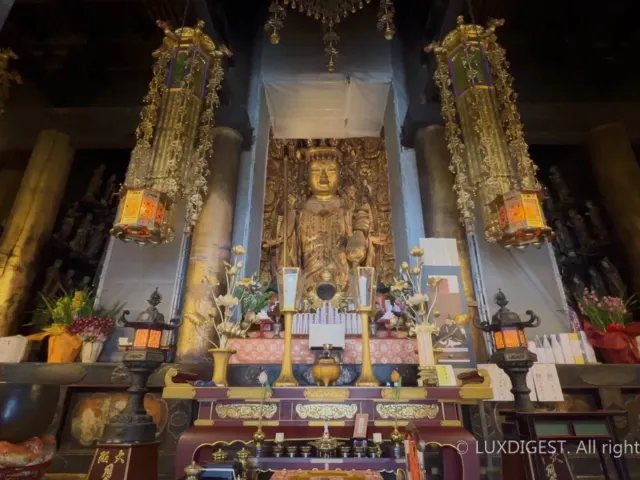
- Dining Hall (じきどう): Originally a place where monks ate, the hall was also used as a site of religious practice in ancient times. It was largely destroyed by fire in 1930 and later rebuilt. Today, it serves as the temple’s principal venue for shakyo, the practice of hand-copying Buddhist sutras, and as a goshuin stamp office. The enormous statue of Eleven-Headed Kannon, once the hall’s principal image, was damaged in the fire but preserved in its scorched state, creating a deeply moving sight.
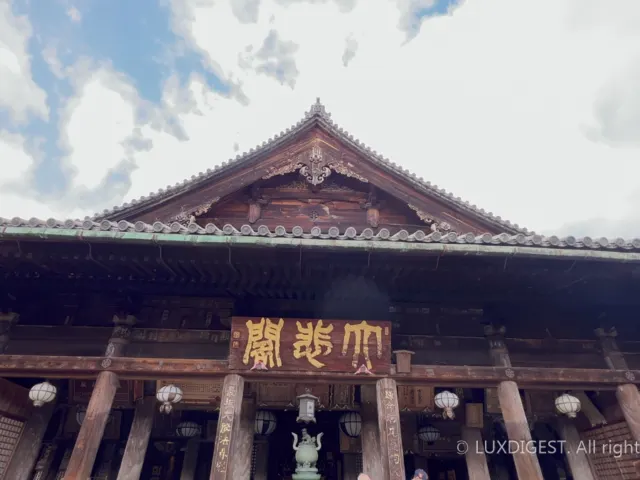
- Mie-do (御影堂, National Treasure): Also known as Daishi-do, this building stands on the site where Kukai lived and practiced. It remains a sacred place where the shojinku ritual—an offering of food to Kukai—is performed every morning.
4. Toji’s Living Culture: The Kobo-ichi Flea Market
One reason Toji remains deeply connected to local residents despite its status as a global tourist destination is Kobo-ichi, a huge flea market held on the 21st of every month.
The market grew out of a long-standing observance marking the anniversary of Kukai’s death on March 21. On the 21st of each month, more than 1,000 stalls fill the temple grounds and surrounding streets from early morning until dusk. Merchants and collectors arrive from across Japan, offering everything from antiques, vintage furniture, traditional kimono textiles, handicrafts, bonsai, and ceramics to an array of street food. For anyone hoping to experience Kyoto’s vibrant, down-to-earth local culture, visiting Toji on the 21st is an excellent choice.
5. Seasonal Highlights and Special Nighttime Openings
Toji takes on an entirely different appearance during Kyoto’s spring cherry-blossom and autumn foliage seasons.
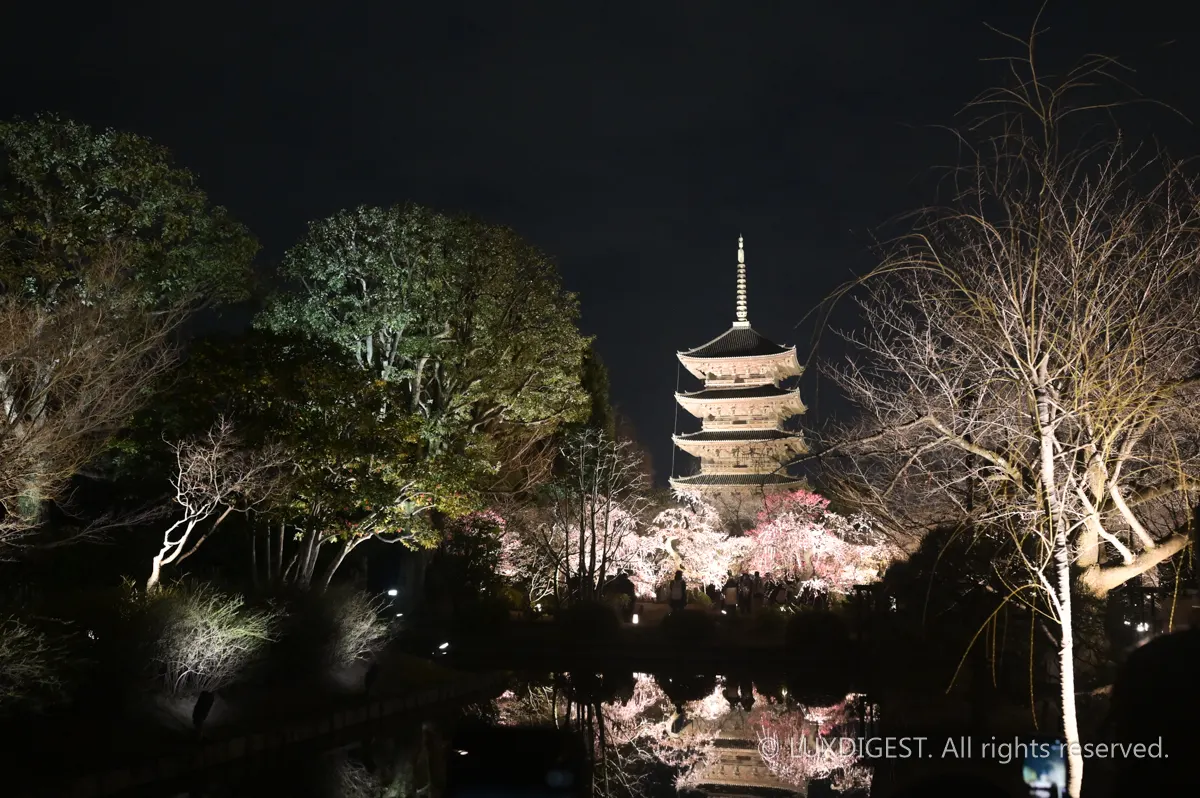
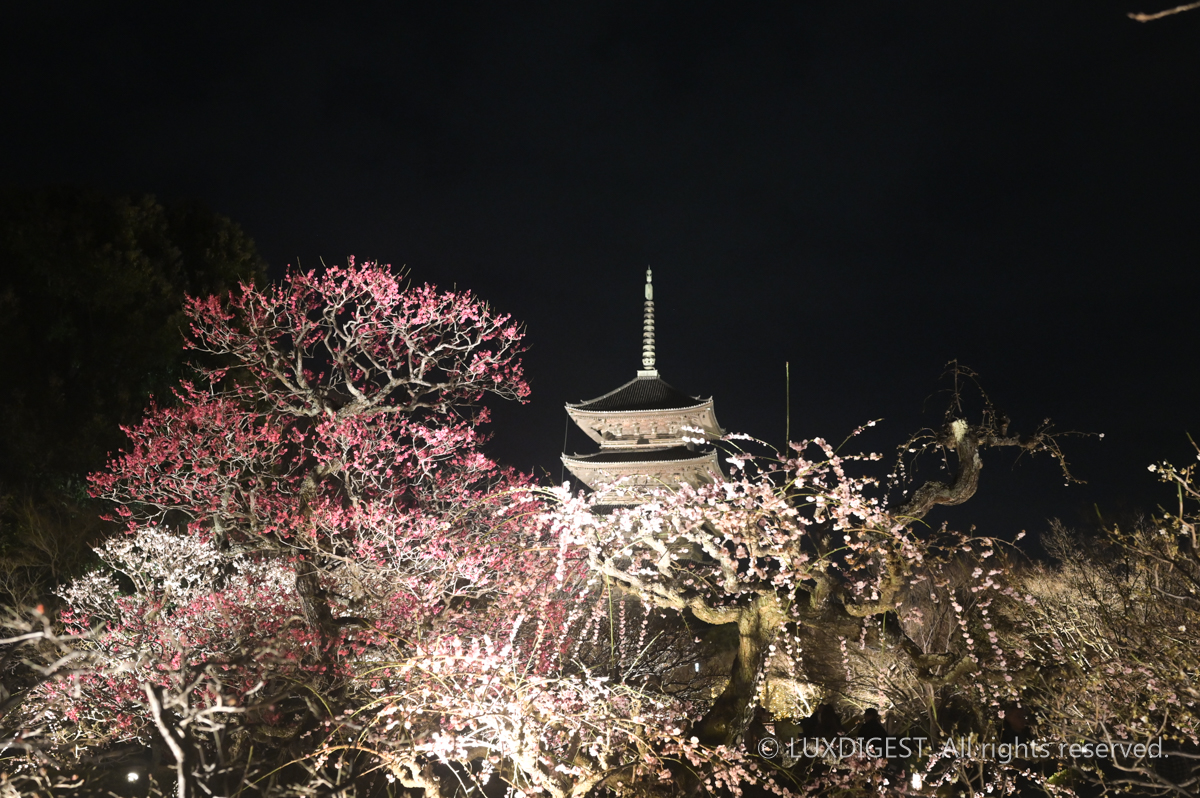
- Spring (late March to early April): The temple’s enormous weeping cherry tree, known as Fuji-zakura or “Fuji Cherry,” comes into full bloom. More than 120 years old, the tree’s cascading pink blossoms set against the magnificent five-story pagoda are considered one of Kyoto’s quintessential spring scenes.
- Autumn (mid-November to early December): The maple trees around the garden turn brilliant shades of red, creating a perfect harmony with the temple’s serene wooden buildings.
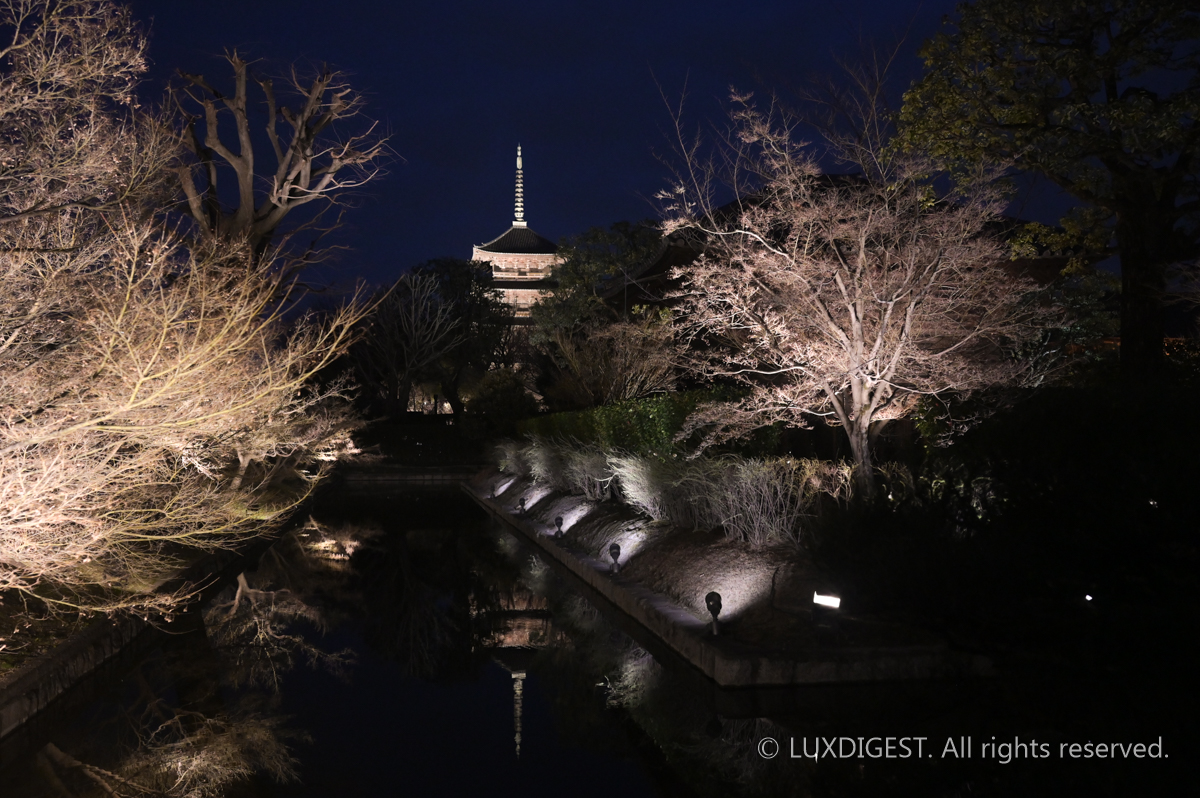
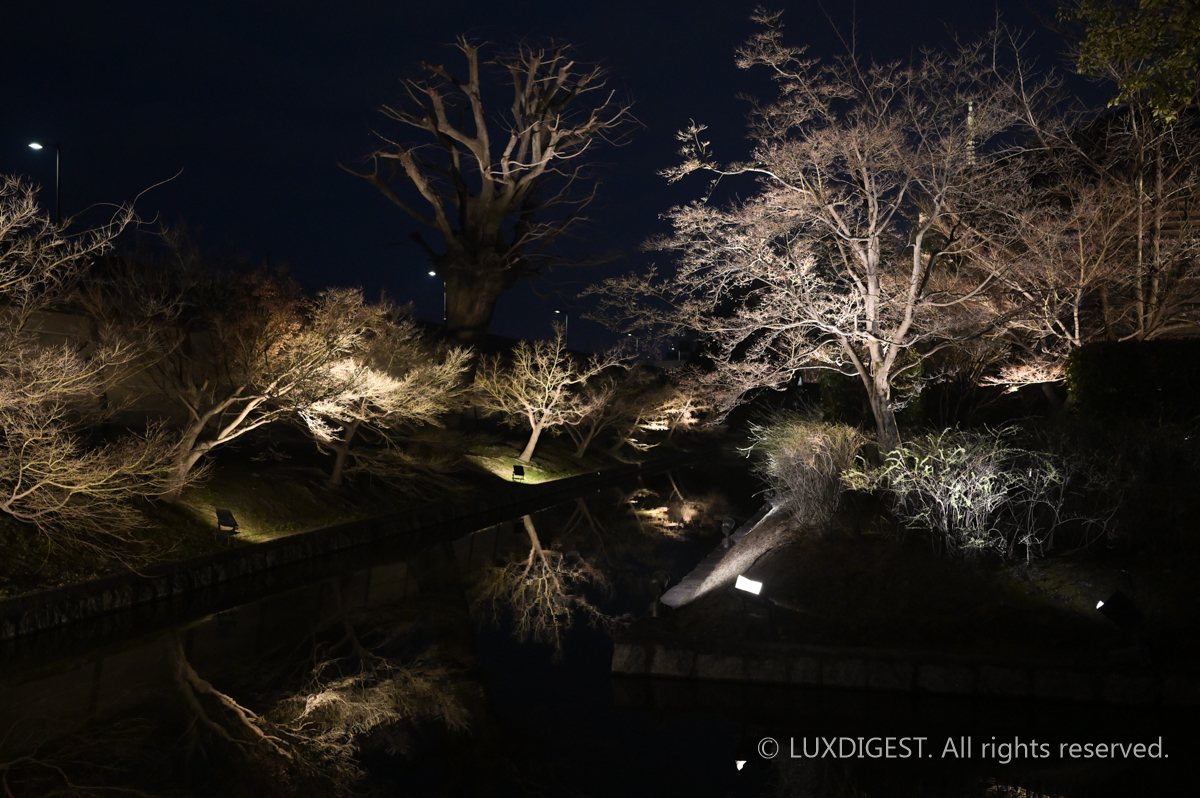
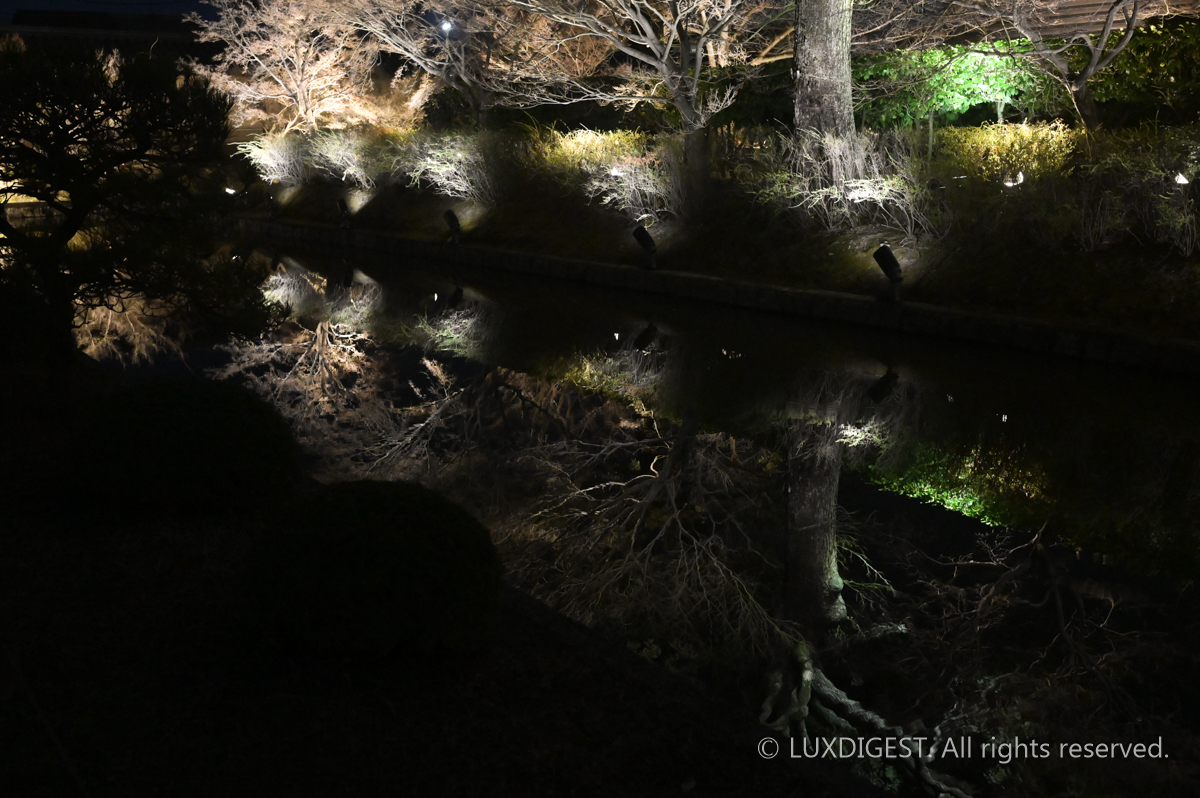
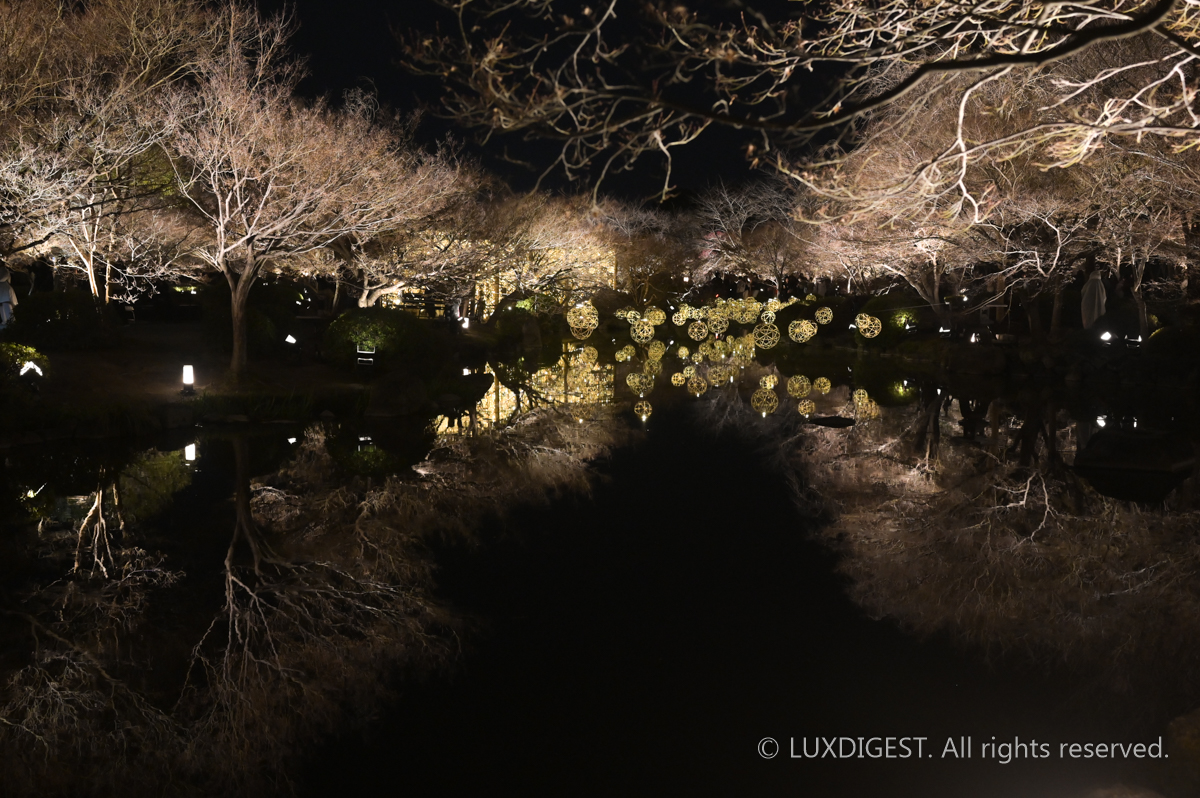
- Nighttime illumination: During these seasons, the temple—which normally closes at 5 p.m.—opens specially after dark. The illuminated five-story pagoda and autumn foliage, reflected like a mirror in the garden pond known as Hyotan-ike, create a dreamlike and enchanting nightscape.
6. Videos Related to Toji Temple
7. Final Thoughts—Practical Information for Travelers (as of 2026)
| Item | Details |
|---|---|
| Opening hours | Daily, 8:00 a.m.–5:00 p.m. (last admission 4:30 p.m.) * The outdoor temple grounds and market area are open at all times |
| Admission | Temple grounds and Kobo-ichi market: Free Admission to the Kondo and Lecture Hall interiors: ¥500 for adults * Admission varies from ¥800 to ¥1,200 during spring and autumn nighttime illuminations and special openings of the five-story pagoda interior |
| Location/address | 1 Kujocho, Minami Ward, Kyoto, 601-8473 Japan |
| Getting there | 1. JR Kyoto Station: Approximately a 15-minute walk from the Hachijo Exit. 2. Kintetsu Kyoto Line: Approximately a 5–10-minute walk from Toji Station. 3. Kyoto City Bus: Take routes 42, 78, or 19 and get off immediately at “Toji Higashimon-mae.” |
| Important note |
Photography and video recording are strictly prohibited inside all temple buildings, including Kondo, the Lecture Hall, and the five-story pagoda. As the grounds are extensive and include many gravel paths, comfortable walking shoes are recommended. |
대만 라오허제 야시장 방문후기 Review of the Night Market on Raohe Street in Taiwan