Overview
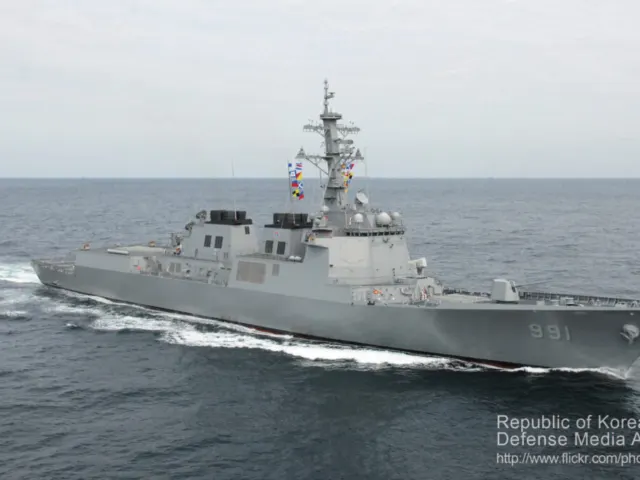
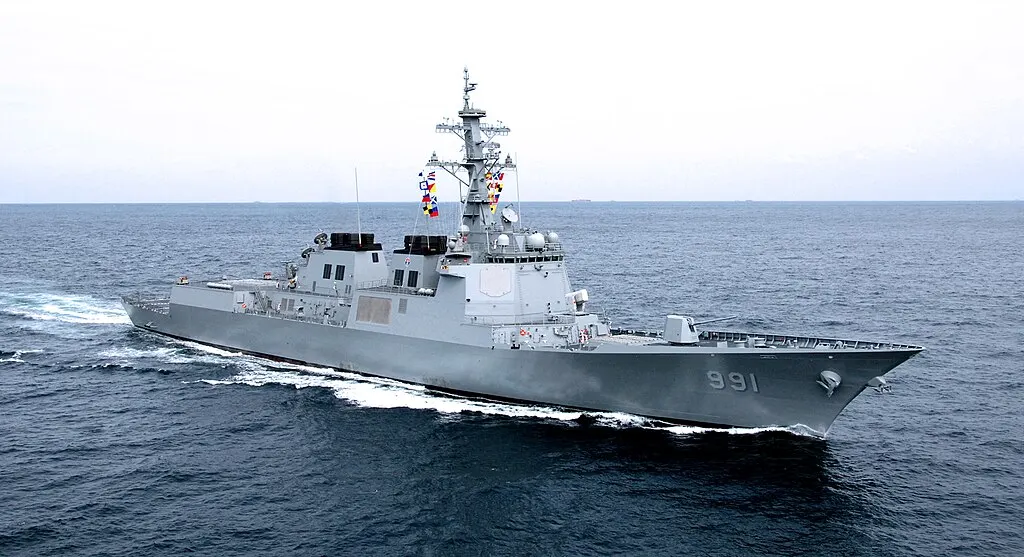
The Sejong the Great-class Aegis destroyer (KDX-III) is the Republic of Korea Navy’s first destroyer equipped with the Aegis combat system and a large surface combatant designed to perform a wide range of missions. It provides powerful air-defense, anti-ship, anti-submarine and ballistic-missile-defense (BMD) capabilities, making it a cornerstone of the Republic of Korea Navy.
- Key Features
- Aegis combat system: The SPY-1D(V) radar can track multiple targets simultaneously
- Powerful armament: Equipped with ballistic-missile-defense capabilities and able to operate SM-2 and SM-6 interceptor missiles
- Ocean-going capability: Long range and strong operational endurance
- Capable of conducting coordinated operations with U.S. Navy Aegis destroyers
Development Background
Beginning in the 1990s, the Republic of Korea Navy recognized the need for large surface combatants to counter North Korea’s ballistic-missile threat and the growing naval capabilities of neighboring countries. This led to the development of the KDX-III Aegis destroyer following the KDX-I and KDX-II destroyer programs.
- Development Timeline
- 2004: KDX-III design completed
- 2007: Lead ship ROKS Sejong the Great launched
- 2010: Full operational deployment completed
- 2020s: Development of KDX-III Batch II under way
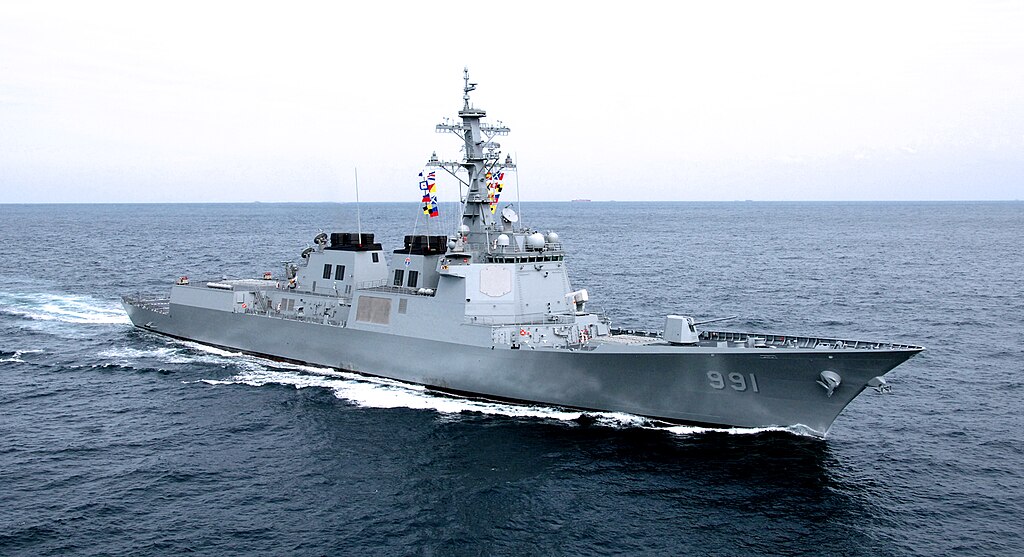
Image source: Republic of Korea Armed Forces / Wikimedia Commons
Strengths and Weaknesses
🔹 Strengths
✔ Powerful air-defense capability: The SPY-1D(V) Aegis radar can track multiple targets simultaneously ✔ Ballistic-missile-defense (BMD) support: The ship can operate SM-2 and SM-6 interceptor missiles ✔ Strong fleet-defense role: It can protect carrier strike groups and convoys ✔ Well suited to coordinated operations with the United States and allied countries
🔻 Weaknesses
❌ High construction and maintenance costs: The Aegis system and advanced sensors result in significant upkeep expenses ❌ Limited ballistic-missile-interception capability: Because it is not equipped with SM-3 missiles, it cannot provide a fully capable BMD function ❌ Relatively small fleet: Only three ships are currently in service, creating a need for additional force expansion
Comparison with Aegis Destroyers in Neighboring Countries (China, Japan and North Korea)
| Category | Sejong the Great class (South Korea) | Type 055 destroyer (China) | Atago-class destroyer (Japan) | North Korean destroyer (estimated) |
|---|---|---|---|---|
| Displacement | 11,000 tons | 13,000 tons | 10,000 tons | 4,000–5,000 tons (estimated) |
| Dimensions (beam × length × height) | 21m × 165m × 9.5m | 22m × 180m × 10m | 20m × 170m × 9m | 15m × 130m × 7m (estimated) |
| Top speed | 56 km/h | 55 km/h | 54 km/h | 45 km/h (estimated) |
| Primary radar | SPY-1D(V) | Type 346A AESA | SPY-1D(V) | Basic radar (estimated) |
| Missile-defense capability | SM-2, SM-6 | HQ-9, HHQ-16 | SM-2, SM-3 | Limited (estimated) |
| Anti-submarine capability | K-ASROC and Hong Sang Eo | Yu-8 and anti-submarine helicopters | Type 07 anti-submarine missile | Limited (estimated) |
| Key advantage | Powerful air-defense capability and multirole performance | Heavy firepower and strong anti-ship capability | Advanced ballistic-missile-defense capability | Limited force-employment capability |
Comparison with Aegis Destroyers of Advanced Naval Powers (the United States, United Kingdom, Russia and France)
| Category | Arleigh Burke class (United States) | Type 45 destroyer (United Kingdom) | Leader-class destroyer (Russia) | Horizon-class destroyer (France) |
|---|---|---|---|---|
| Displacement | 9,800 tons | 8,500 tons | 10,000 tons | 7,700 tons |
| Dimensions (beam × length × height) | 20m × 155m × 9m | 19m × 152m × 8.5m | 21m × 162m × 9.2m | 18m × 153m × 8.8m |
| Top speed | 56 km/h | 55 km/h | 54 km/h | 52 km/h |
| Primary radar | SPY-6 | SAMPSON AESA | Poliment-Redut AESA | EMPAR AESA |
| Missile-defense capability | SM-2, SM-6, SM-3 | Aster-30 | Naval variant of the S-400 | Aster-30 |
| Anti-submarine capability | K-ASROC and MH-60R | Type 2087 sonar | Paket-NK torpedoes | MU90 torpedoes |
| Key advantage | Strong multirole operational capability | World-class air-defense capability | Equipped with powerful anti-ship missiles | Optimized for air defense and European naval operations |
Future Development
- Introduction of KDX-III Batch II: Potential integration of a new radar and SM-3 missiles
- Enhanced ballistic-missile defense: Research into introducing SM-3 missiles and laser weapons
- Improved stealth performance: Application of technologies to reduce radar cross-section (RCS)
- Potential for overseas sales: Export opportunities being pursued in Southeast Asia and the Middle East