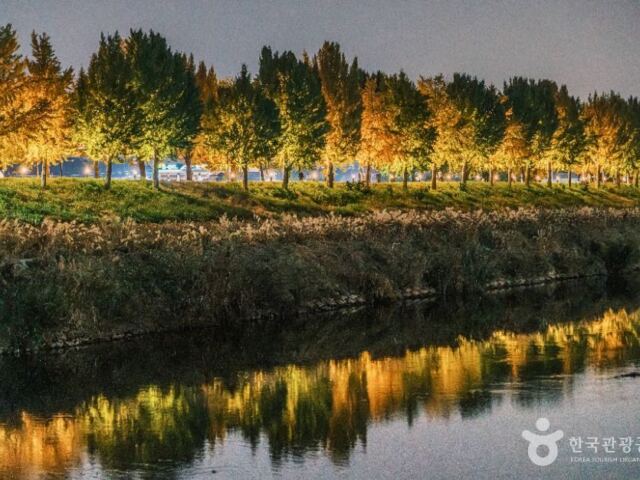
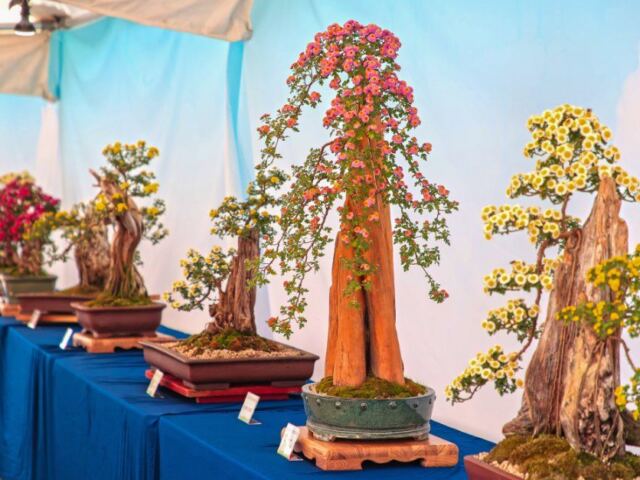
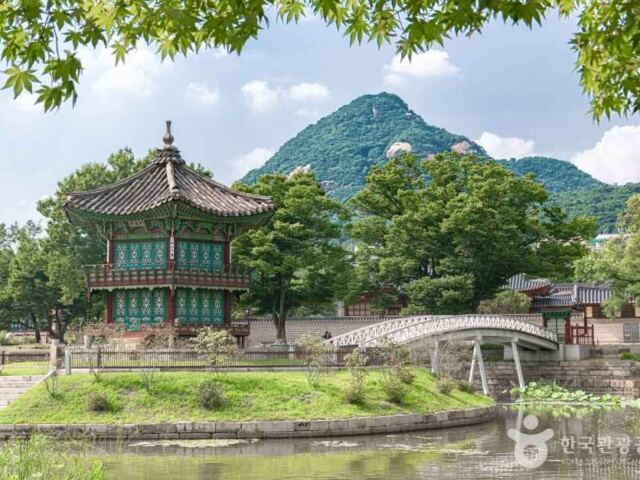
If you take a walk along the slopes of Kwang-i-oreum and encounter Jeju’s native plants and subtropical flora, don’t you wonder why the colors of late autumn arrive a little later?
According to the autumn foliage forecast for 2026, the peak viewing time for maple trees at Hallasan Arboretum is predicted to be November 19, which is the latest among major arboretums nationwide.
The ginkgo trees and oak trees are expected to turn color around November 16th, making it a good time to enjoy the autumn foliage in the middle to late November. However, this date is an estimate based on the point when the majority of tree species reach 50% color change, so the appeal of Hallasan Arboretum is not limited to just the dates of the autumn colors.
This is a public arboretum featuring plants native to Jeju Island.
Hallasan Arboretum, a public arboretum, opened on December 20, 1993, and is located on the slopes of Guangiao-reum, along road number 1100 in Yeondong, Jeju City. It is a good place to observe the characteristics of forests and plants near the center of Jeju City, as it allows visitors to see native Jeju species and subtropical plants in one location.
The garden preserves and displays a total of 1,321 species, including 530 species of woody plants and 791 species of herbaceous plants, with approximately 100,000 individual plants. The sheer number is quite large, so the plan to memorize the names of a few plants seemed a bit ambitious even before entering.
In 2000, it was designated by the Ministry of Environment as an ex situ conservation institution for endangered wildlife, and includes protected plants such as Sedirea japonica, Cymbidium kanran, Asplenium antiquum, and Paliurus ramosissimus, as well as rare plants. Themed exhibition gardens follow one another, including the Bamboo Garden, Herbaceous Plant Garden, Vine Garden, Rose of Sharon Exhibition Garden, Garden of Tree Species from Outside the Region, Rare and Endemic Tree Species Garden, Shrub Garden, Tree Garden, and Fern Garden, encouraging visitors not merely to see “many” plants but to examine “how they differ.”
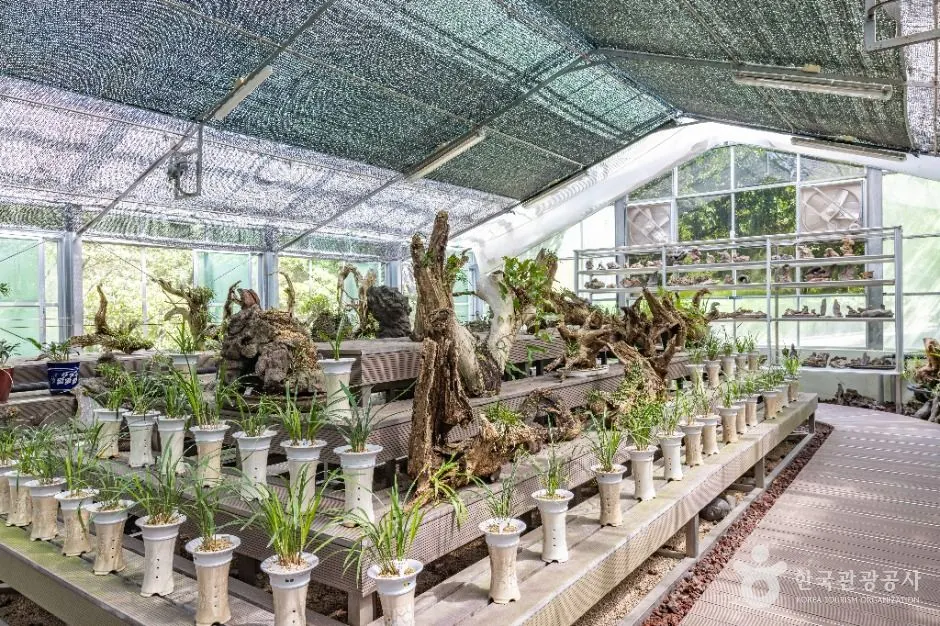
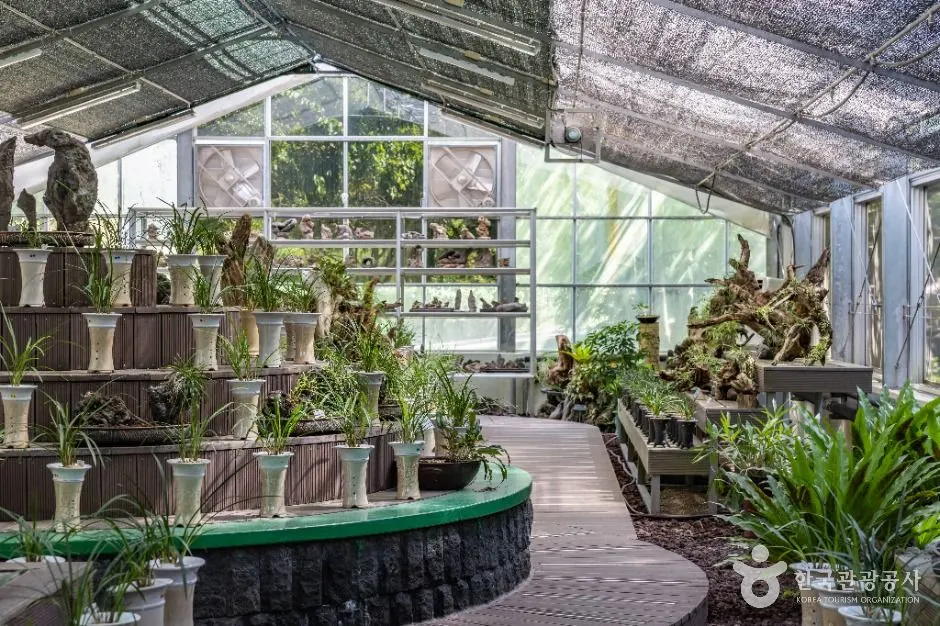
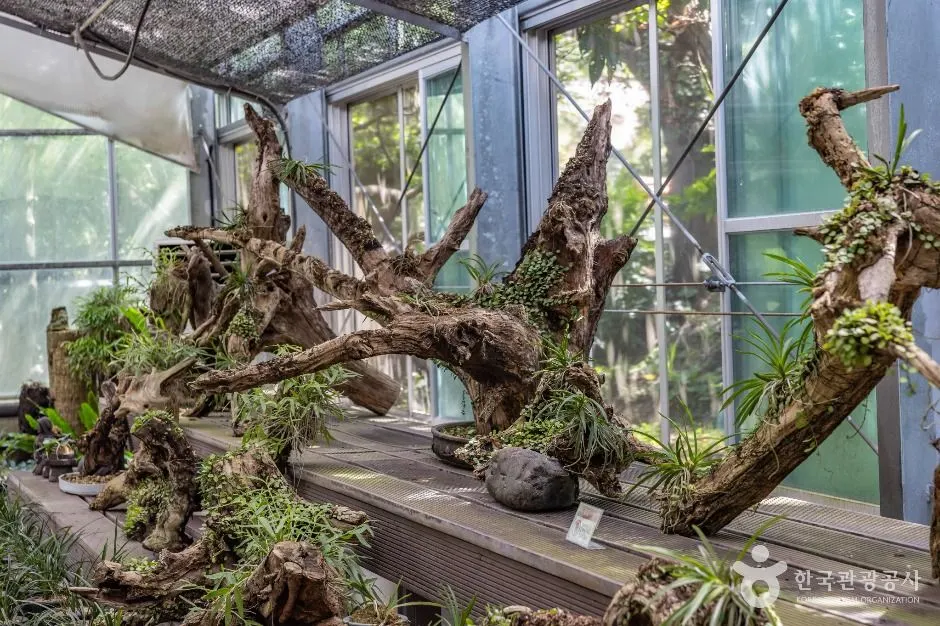
The outdoor area features a grove of trees, a bamboo forest, a wetland garden, a garden of rare and specialty tree species, a shrub garden, a flowering tree garden, and a wildflower garden. There is also a nature ecology learning center, a Jeju rare plant exhibition hall, and an orchid exhibition hall, which allows for a good flow between viewing the outdoor forest and the indoor exhibits.
It is different from the National Arboretum and also different from the Jeju Hallasan Ecological Forest.
The National Arboretum is located in Pocheon City, Gyeonggi Province, and focuses on the forest ecology of the metropolitan area and national forest research. The Hallasan Arboretum, on the other hand, focuses on native Jeju plants and subtropical flora. While the Wando Arboretum centers on island forests and temperate forest landscapes, the Hallasan Arboretum is distinguished by its location near the center of Jeju City, offering visitors the opportunity to experience Jeju’s flora.
When compared to the Jeju Hallasan Ecological Forest, the differences are more apparent. Hallasan Arboretum focuses on exhibition gardens for different species and indoor exhibition facilities, while the Jeju Hallasan Ecological Forest emphasizes its nature as an ecological forest and a natural exploration area.
Sanghyowon is a private arboretum, while Yeomiji Botanical Garden focuses on indoor greenhouses and themed gardens. Hallasan Arboretum is different in that it is a public arboretum that can be used free of charge, and while Jeju 4.3 Peace Park centers on historical and memorial exhibitions, the theme of this place is plants and forest ecology.
From children to parents, all you need to do is choose the walking style you prefer.
For travelers who find hiking challenging, Hallasan Arboretum offers a space where they can enjoy a leisurely experience, focusing on outdoor exhibition areas and walking paths rather than strenuous hiking trails. The walking path in the direction of Gwang-i Oreum has some uphill sections, so if you want to reduce the amount of walking, it is best to choose a shorter exhibition route.
If you are with children, start by looking through materials on the flora, fauna, and insects of the Jeju region at the Natural Ecology Experience Learning Center, then continue on to the aquatic plant garden and outdoor exhibition garden. Hands-on programs such as “Meeting the Underwater Friends of Halla Arboretum” are also available, helping ensure that plants and ecology do not remain merely information in books.
It is best to start with the outdoor exhibition area near the parking lot and then explore the garden in sections, such as the deciduous forest area, the evergreen forest area, and the aquatic plant area. It is also a good idea to take breaks at the forest bathing area. The entire viewing path has slopes and uneven surfaces, so visitors using wheelchairs should prepare for assistance and prioritize the accessible route.
Choose the type of plant you want and browse. Select the program you want to learn and begin.
If you are alone, you can observe Jeju’s native plant species, subtropical plants, and rare or endangered plants in the outdoor exhibition area and along the walking paths, taking notes on the names of the plants and their leaf, fruit, and bark characteristics. If you are with a friend, you can compare the leaf shapes and colors of maple trees, gingko trees, and oak trees, turning the walk into a fun plant quiz.
First, visit the natural ecology experience center with your child, and then go outside to connect the organisms you saw indoors with the scenery of the aquatic plant garden. The guided experience programs include “The Cherry Blossom Story that Welcomes Spring,” “The Many Greens of the World,” and “Meeting the Aquatic Friends of Halla Arboretum.”
If you are walking with a loved one, the outdoor walking paths in mid-to-late November are ideal for observing the seasonal changes in maple trees, gingko trees, and oak trees. If you prefer an evening stroll, the outdoor walking paths are open from 09:00 to 23:00, which challenges the common misconception that botanical gardens close early.
At first, keep it short, and on the uphill sections, maintain a sense of calm.
When visiting for the first time, it is best to plan your route using the entrance guide map and start with a short course connecting the flowering tree garden, tall-tree garden, aquatic plant garden, and wildflower garden. After adding the indoor exhibition facilities, you can choose a walk toward Gwang-i Oreum without having to increase the amount of walking all at once.
The route towards Gwang-i Oreum has an uphill section, so if you are with parents or children, be sure to include rest stops along the way. The trail has natural surfaces and sloping sections, so comfortable shoes are recommended. For wheelchair users, it is advisable to have assistance.
If you prefer a more peaceful visit, it is best to avoid the peak lunchtime hours when the number of visitors is highest. The viewing conditions in the outdoor areas can vary depending on the weather and the condition of the plants, so it is more worthwhile to enjoy the various exhibits, including the autumn foliage, rather than simply waiting for the leaves to change color.
In November, try adding “art” and “dinner” after “autumn leaves.”
In November, maple trees are predicted to reach their peak color on November 19th, while gingko and oak trees are predicted to reach their peak on November 16th, adding seasonal colors to walks in the middle to late part of the month. Halla Arboretum is listed as having the latest predicted peak color date for maple trees among major arboretums nationwide.
Visiting the Jeju Museum of Art, which is in the same Jeju City area, allows you to transition from nature viewing to art exhibitions. With children, you can connect the visit with the Jeju Kkumadang Children’s Library. In the evening, it is also possible to enjoy food and the nighttime atmosphere at the nearby Sumokwon-gil night market.
Here’s how to find information about addresses, public transportation, and parking:
The address is 72, Sumokwon-gil, Jeju-si, Jeju Special Self-Governing Province (Yeon-dong). If traveling by car, proceed to 72, Sumokwon-gil, Yeon-dong, Jeju-si, or to Halla Arboretum, located on the slopes of Gwang-i Oreum along 1100-ro.
Public transportation information for Jeju is available on the Jeju Bus Information System, listing routes 303, 311, 312, 325, 331, 332, 415, and 440, which either terminate at or pass through Halla Arboretum. A parking lot is available for those who wish to drive. Detailed parking fees are not provided in the official tourist information.
Admission is free, and the indoor facilities operate on seasonal hours.
Admission is free of charge. Detailed information regarding reservation methods for individual hands-on programs and the most up-to-date fees for certain indoor facilities is not available. Therefore, please remember the key point: admission is free.
The outdoor exhibition area and walking paths are open year-round. The outdoor walking path is open from 09:00 to 23:00. The indoor facilities are open from 09:00 to 18:00 from March to November, and from 09:00 to 17:00 from December to February.
The outdoor exhibition area and walking paths are open year-round, while the indoor facilities are closed on Lunar New Year and Chuseok. For inquiries, please call 064-710-7575, and the official website is the Jeju Special Self-Governing Province Halla Arboretum website.
In mid-to-late November, prepare comfortable shoes, taking into account the terrain and uneven surfaces, and if you are with parents or children, start with shorter exhibition routes.