In early November, when the forest paths turn red, take a leisurely stroll between the mountain garden, where bleeding-heart flowers bloom, and the tropical botanical garden.
In the 2026 Forest Service autumn foliage prediction, Dae-a Arboretum is a free public arboretum where November 1 is indicated as the expected peak viewing date for maple trees.
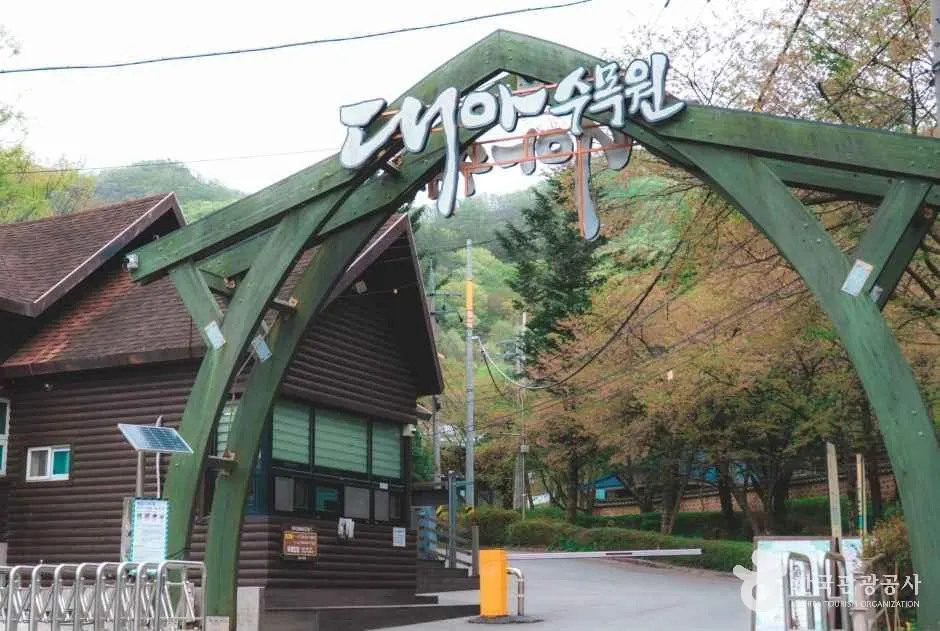
Located in the foothills of Dongsang-myeon, Wanju-gun, Jeonbuk Special Self-Governing Province, this place is a public forest recreation and cultural space dedicated to forest education, academic research, and the preservation and exhibition of forest resources and genetic resources. The list of plant species is quite extensive, so it’s more than just admiring the autumn foliage. It holds a total of 2,683 species, including native species, planted species, and ornamental species, so it’s not unusual to find yourself wondering, “What kind of tree is that?” while walking along the forest trails.
This is a place where a comprehensive collection of plant life is found within the mountains.
The biggest draw of Daea Arboretum is that the forest itself and the exhibition spaces are not separate from one another. The Forest Culture Exhibition Hall, Forest Ecology Experience Hall, bonsai garden, rose garden, aquatic plant garden, and children’s forest experience center are connected within the forest setting, while the Tropical Plant Garden includes nine gardens and ten rooms, ranging from the tropical fruit garden to the cactus and succulent garden and the carnivorous plant garden.
The tropical plant garden alone covers an area of 1,670 square meters. The aquatic plant garden features an artificial pond of approximately 0.15 hectares and a wooden deck, and contains about 4,000 plants of 14 species, including willow trees, large willow trees, lotus flowers, iris flowers, and reeds. The exterior is a mountain path, while the interior is a tropical and aquatic garden, creating a change in atmosphere within a single location.
This is a significant scene at Dae-a Arboretum, showcasing the largest natural colony of bleeding-heart flowers in the country. The natural colony of bleeding-heart flowers was discovered in 1999, and from 2013 to 2017, a *Campanula punctata* specialization project was carried out with support from the Korea Forest Service. Bleeding-heart flowers are a major attraction in spring, while in autumn, the autumn foliage takes center stage.
It is different from Gosan Natural Recreation Forest.
Gosan Natural Recreation Forest is primarily focused on accommodation and recreation, while Dae-a Arboretum centers on plant conservation, exhibition, and ecological education. Although both places offer opportunities to relax in the forest, Dae-a Arboretum provides a structured learning experience with its greenhouses, specialized gardens, and exhibition halls.
Compared to Jeonju Arboretum, Dae-a Arboretum is characterized by its 150-hectare forest area and the natural colony of bleeding-heart flowers. Jeonju Arboretum is more easily accessible from the city center, while Dae-a Arboretum is distinguished by its forest landscape that connects to Dae-a Lake and Dongsang Reservoir. Both Dae-a Arboretum and Geumgang Arboretum are public arboretums, but Dae-a Arboretum features a trail that connects the reservoir with the mountainside.
This is suitable for children, parents, and people who like plants.
When you are with a child, try incorporating plant observation into learning experiences by focusing on programs like “children’s forest experience center,” forest tours, and forest cultural experience classes. At the tropical plant garden, observe carnivorous plants, cacti, and succulents, and then proceed to the forest cultural exhibition hall. This will give the child time to discover plants that pique their interest.
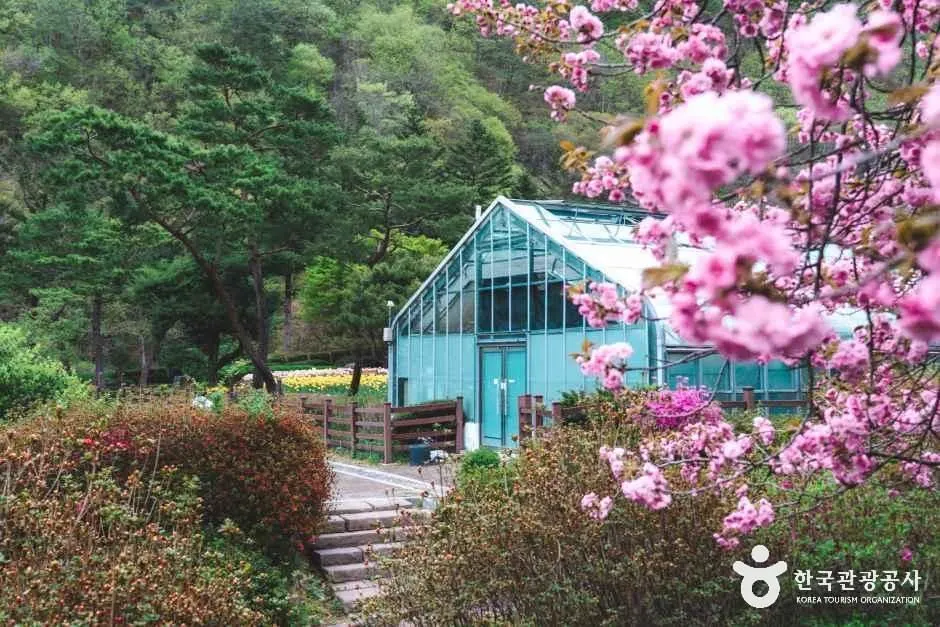
It is generally better to prioritize visiting the communal facilities area or the circular road course before the observation deck when visiting with parents. This allows for a leisurely viewing of the scenic courtyard and specialized garden, followed by walking approximately 3 kilometers of the circular road. Since the terrain is mountainous, the slope varies along each course, so the circular road is generally more comfortable for those seeking a light stroll.
For plant enthusiasts, there are 2,683 species of plants and 135 species of rare and specialty plants designated by the Korea Forest Service. Whether you are alone or with a partner, it is ideal to visit the tropical botanical garden and the forestry culture exhibition hall, and then proceed at your own pace through the specialized garden and forest trails.
The shape of a day changes depending on the person walking.
For a brief visit, the recommended route focuses on the Visitor Center and the Pureumi Rest Area, connecting to the scenic courtyard, the Forest Culture Exhibition Hall, the bonsai and sculpture garden, the rose garden, the tropical plant garden, and the aquatic plant garden. Each facility offers a wealth of attractions, making the free admission even more appreciated.
If you want to take a walk in the forest, choose the approximately 3 km circular forest road course. If you combine the forest walk with a visit to the forestry exhibition hall and the tropical botanical garden, the tour will take about 2 hours. Those who want views and uphill climbs can choose the 1 Observatory round trip course, which takes about 1 hour 30 minutes round trip, and about 3 hours including visits to related facilities.
For friends who enjoy hiking, the 6.3 km hiking trail connecting Wangjae and Jungsu-gol is also a good option. While the trail to the summit of Jungsu-gol offers views of Dae-a Reservoir, the observation deck and the *geumnanghwa* (a type of flower) cluster route are more suited for hiking than leisurely walks. If you are with children or the elderly, it is safer to start from the group facilities area or the circular access road.
If you enjoy photography, consider visiting the forest trails where autumn foliage is expected in early November, and viewpoints overlooking Lake Dae-a. You can capture these scenes with different themes, including a specialized garden where seasonal flowers bloom. Alternatively, you can enjoy a visit to the arboretum with your family or friends, followed by a drive along the lakeside road of Lake Dae-a and around Dongsang Reservoir.
During the autumn foliage season, it is advisable to make reservations in advance.
Based on data from the Korea Forest Service National Arboretum, the 2026 autumn foliage map indicates that the peak viewing time for maple trees at Dae-a Arboretum is November 1st, for Ginkgo trees it is November 2nd, and for oak trees it is November 4th. The related map shows November 1st to 4th as the peak viewing period, so if you are planning to see autumn foliage, the beginning of November is definitely a good option.
Starting in November, the operating hours will be from 09:00 to 17:00, and the last admission is at 16:00. To fully experience both the mountain trails and the greenhouse, it is best to arrive earlier in the morning rather than in the late afternoon. The autumn forest experience event in 2026 will be held from October 29th to November 1st, and will feature five types of hands-on activities: volcanic rock pot making, pet-rock terrarium making, low-carbon dishwashing bar making, wall calendar making, and dried-persimmon making.
The Forest Culture Experience Class will operate through October 31, 2026, and the experience fee is free of charge. Each session is limited to 20 people, and the forest interpretation program and Forest Experience Center for Children are available through the reservation menu on the website.
The scenery is even more beautiful when you have Daeah Lake and Dongsang Reservoir nearby.
Dae-a Arboretum is located near the Dae-a Reservoir. The area including Dae-a Lake and Dong-sang Reservoir is a tourist area in Wanju-gun where visitors can enjoy both the reservoir and the surrounding forest scenery. Dae-a Lake offers views of the sunset and scenic drives along the lakeside, while Dong-sang Reservoir provides a view connecting the waterside natural scenery with the surrounding mountains.
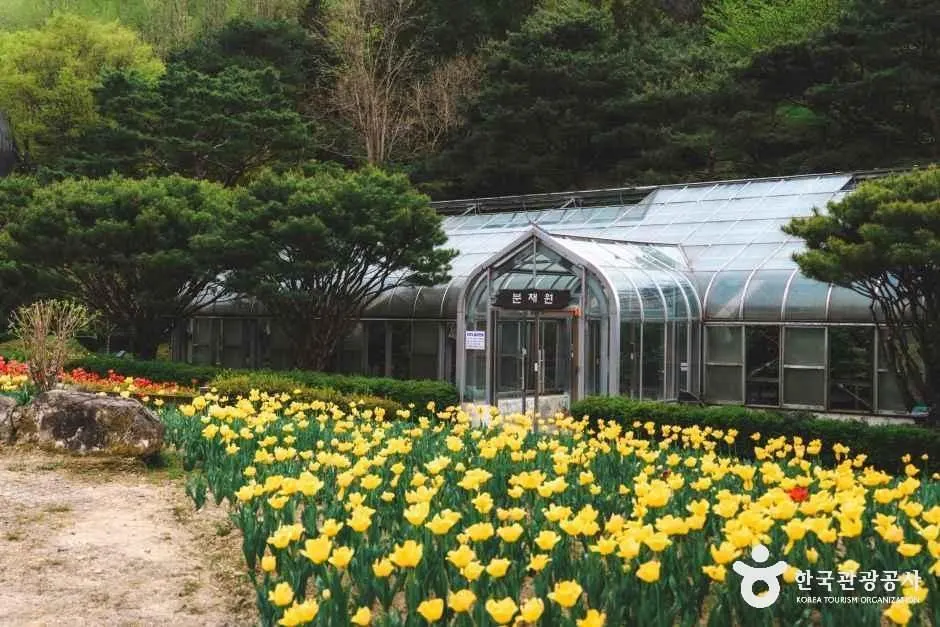
The Wibongsa Temple, Wibong Waterfall, and Wibong Fortress are historical and natural landmarks that can be visited together in the Dongsang-myeon area of Wanju-gun, Jeonbuk Special Self-Governing Province. Dae-a Arboretum, which opened on May 17, 1995, is a public arboretum operated by Jeonbuk Special Self-Governing Province. It is located in a forest area where various plants have been preserved because access was difficult after slash-and-burn cultivation was halted in the early 1970s.
You can set the address and transportation method as follows.
The address is 94-34, Dae-a Sumok-ro, Dongsang-myeon, Wanju-gun, Jeonbuk Special Self-Governing Province. For those driving, enter the address into the navigation system. From Jeonju and Iksan, it takes approximately 50 to 60 minutes and covers a distance of 30 to 40 kilometers, passing through Bongdong and Gosan. From the Iksan IC, it takes approximately 40 minutes and covers a distance of 25 kilometers, also passing through Bongdong and Gosan.
When using public transportation from Jeonju, take city bus number 300 to Gosan, which takes approximately 100 minutes. Then, transfer at Gosan to a bus bound for Dongsang Sancheon and travel for another 20 minutes to reach Daeasu Arboretum. Parking is available with a capacity for 145 vehicles, and parking fees are not specified.
Please check the free admission policy and seasonal operating hours.
Admission is free. Reservations for forest tours and the “hands-on” forest experience program for young children are made through the website. For group inquiries and reservations for the forest culture experience program, please contact 063-290-5438~9.
During the summer season, from March to October, the hours are 9:00 AM to 6:00 PM, with the last admission at 5:00 PM. During the winter season, from November to February, the hours are 9:00 AM to 5:00 PM, with the last admission at 4:00 PM. The facility is closed on January 1st, Lunar New Year, and Chuseok. For inquiries, please call 063-290-5438.
If you plan to visit to see the autumn foliage in early November, arrive in the morning to avoid the 16:00 last-admission deadline. When choosing a route, it is advisable to wear comfortable shoes, especially if you opt for the circular forest road course instead of the observation deck.