Starting from Ilwonsa Temple, the site was later renamed Seowon. Today, a three-bay ancestral shrine remains at the heart of the historical site. Explore the tranquil walking path.
Yongjangseowon originated from Ilwonsa Temple, which was established during the Goryeo Dynasty to honor Yang Neung-yang, and became Yongjangseowon. Although it was destroyed in 1868 due to the Seowon Cheolpyeollyeong (decree to abolish private academies) and later restored, a notable characteristic is that only a three-bay shrine remains.
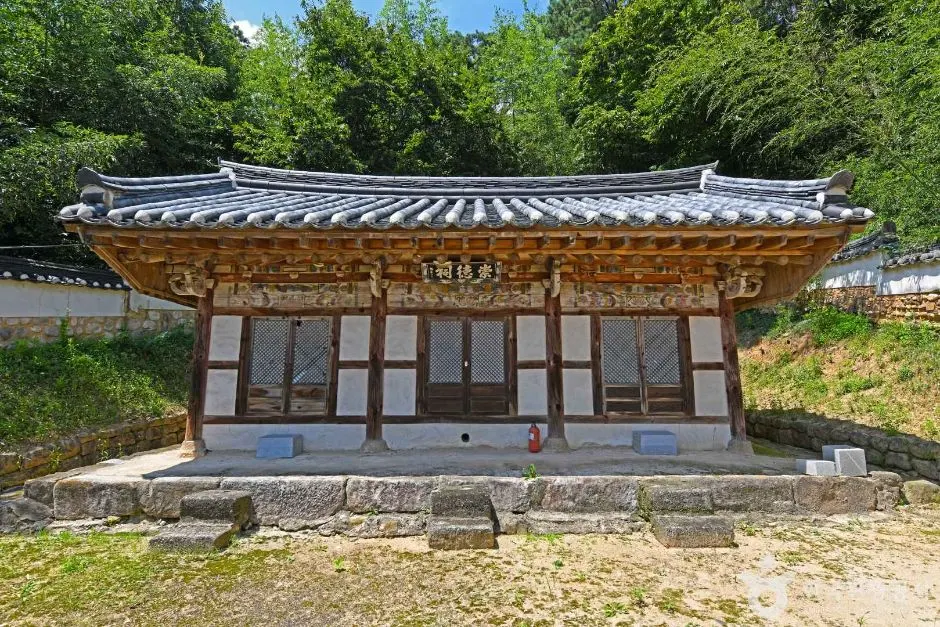
Located in Jusang-myeon, Namwon, this is a *seowon*, a private academy used to honor Confucian scholars and educate local scholars and residents. Although a place with many buildings might suggest a rich history, Yongjang *seowon* is represented by a single surviving hall, which compresses the eras of Goryeo and Joseon and the history of Namwon’s Confucian scholars into one surviving shrine.
This is a place where the histories of the Goryeo and Joseon dynasties overlap.
The origin of Yongjangseowon dates back to the Goryeo Dynasty, when it was established as Ilwonsa Temple by consensus among local scholars to honor the virtues and loyalty of Yang Neung-yang. When Ilwonsa Temple was relocated to its current location, it was renamed Yongjangseowon, and in 1302, Yang Ju-un was added to the list of those honored.
Following him, we also invited Kim Gu-yong, who served as the chief of the National Confucian Academy during the late Goryeo Dynasty, and Yang Dae-bak, who distinguished himself during the Imjin War. Yang Ju-un was the person who was granted the title of Yongseong-gun for his achievements in suppressing the Sambyeolcho rebellion during the reign of King Wonjong of Goryeo. Just reading their names, one can sense the passage of time through the ages.
In 1868, it was demolished under Heungseon Daewongun’s order to abolish the seowon academies, but local Confucian literati later rebuilt it. Today, what remains within the grounds is a three-bay shrine, or sau; this single building most clearly demonstrates the nature of Yongjang Seowon as a space for memorial rites.
Although it shares similarities with Yucheonsowon, the remaining scenery is different.
Yucheon Seowon and Changju Seowon are historical sites in Namwon that offer insights into Confucianism and the culture of seowons (private academies). While they share the common characteristic of honoring Confucian scholars and being responsible for regional education, they differ in the individuals they enshrine and their architectural structures.
The significance of Yongjangseowon lies in the fact that it houses the spirits of Yang Neung-yang, Yang Ju-un, Kim Gu-yong, and Yang Dae-bak. Rather than showcasing the typical layout of a *seowon*, which includes a lecture hall, east and west buildings, it focuses on the meaning of the ancestral rites through the remaining shrine.
Please compare it with Unbong Hyanggyo. While both share the traditions of Confucian education and ancestral rites, Yongjang Seowon is a private educational institution (seowon), whereas Unbong Hyanggyo is a hyanggyo. Although their names may seem similar, their roles and characteristics are quite different.
This is a good opportunity for parents and children to share stories about history.
If you are on a historical tour with parents, it is a good opportunity to examine figures from the Goryeo and Joseon dynasties in one place and have concise and informative discussions. By explaining the loyalty of Yang Neung-yang, the achievements of Yang Ju-un, and the backgrounds of Kim Gu-yong and Yang Dae-bak, even a single shrine will not seem like a simple building.
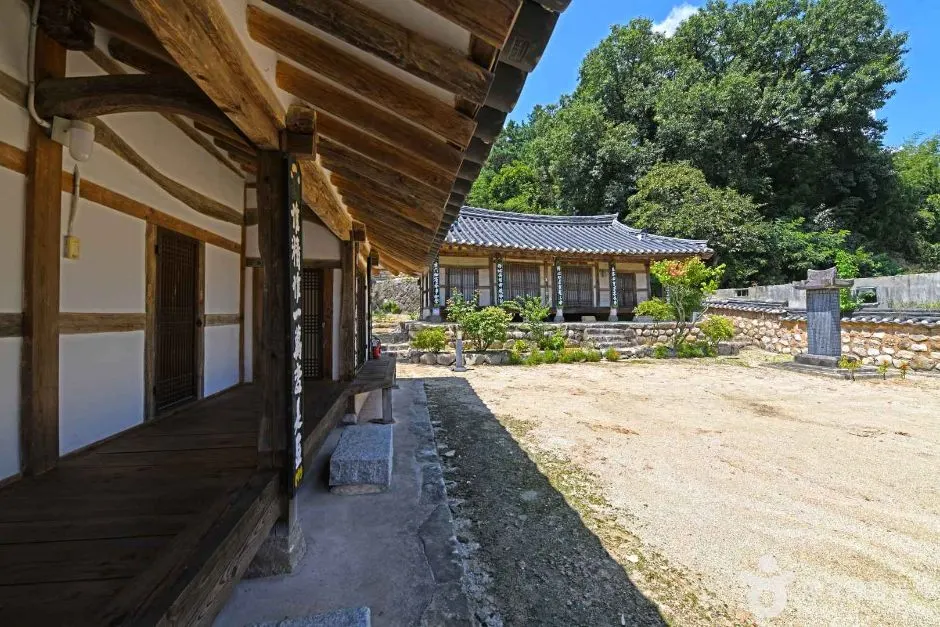
When visiting with children, please explain that Seowon was a private educational institution in the Joseon Dynasty, serving as a place to honor Confucian scholars and educate local residents. The moment a child asks about the differences between schools of the past and schools today, this small historical site becomes a classroom for history lessons.
This place is also suitable for travelers who enjoy walking alone and for those interested in Korean and regional history. Because the buildings are centered around the shrine, there are clear points of interest to observe. It also provides an opportunity to learn about the activities of the Namwon scholars and their stories.
Adjust your survey methods according to the individual.
If you are visiting alone, carefully examine the arrangement of the ancestral shrine and its relationship to the surrounding villages, focusing on the remaining three-bay shrine within the grounds. By taking notes on your observations without disrupting the flow of visitors, you can gain a clear understanding of the core significance of this sacred space, even during a short visit.
If you are visiting with your parents, it would be beneficial to briefly read about the lives of Yang Neung-yang, Yang Ju-un, Kim Gu-yong, and Yang Dae-bak before your visit. When discussing the stories of each individual in front of the memorial, the time and significance of the people enshrined within the building become more apparent than the building’s size itself.
When visiting with a friend, compare the Yongjangseowon and Yucheonseowon academies, focusing on the figures they commemorate, the remaining buildings, and their educational functions. If you enjoy photography, it is recommended to take separate photos of the front of the shrine and the surrounding village scenery, and to record the relationship between the building and the location.
Tell your child that Seowon served a role similar to that of schools in the past. If you are accompanied by someone interested in local cultural heritage, you can create a route that connects the Seokbul (stone Buddha) statue in Jidang-ri, Jusang-myeon, with the Yun Young-chae House, allowing for a comparison of religious, educational, and residential heritage.
The key to a successful quiet exploration is to start with the ancestral shrine.
Because Yongjang Seowon is centered on its surviving shrine building, it is best to first understand the character of the ritual space before entering. This is different in character from touring a Confucian academy by visiting its lecture hall and eastern and western dormitories in turn; focusing your attention on the one remaining building is the best way not to miss what makes this place distinctive.
According to congestion prediction data as of October 28, 2026, the average weekday congestion rate is 24, while the average weekend congestion rate is 66. Early November weekdays are relatively less crowded compared to October 31st and November 1st, so if you prefer a quieter visit, weekdays are a better choice.
The Seowon site connects to other historical sites in the Jusangmyeon area.
It is better to compare the differences between the *seowon* (private academies) in the Namwon area by grouping Yongjang *Seowon* with Yucheon *Seowon* rather than looking at Yongjang *Seowon* alone. The standing stone Buddha statue in Jidang-ri, Jusaeng-myeon, are Buddhist relics distinct from the *seowon*, and the Yun Young-chae residence is a place to examine traditional residential culture.
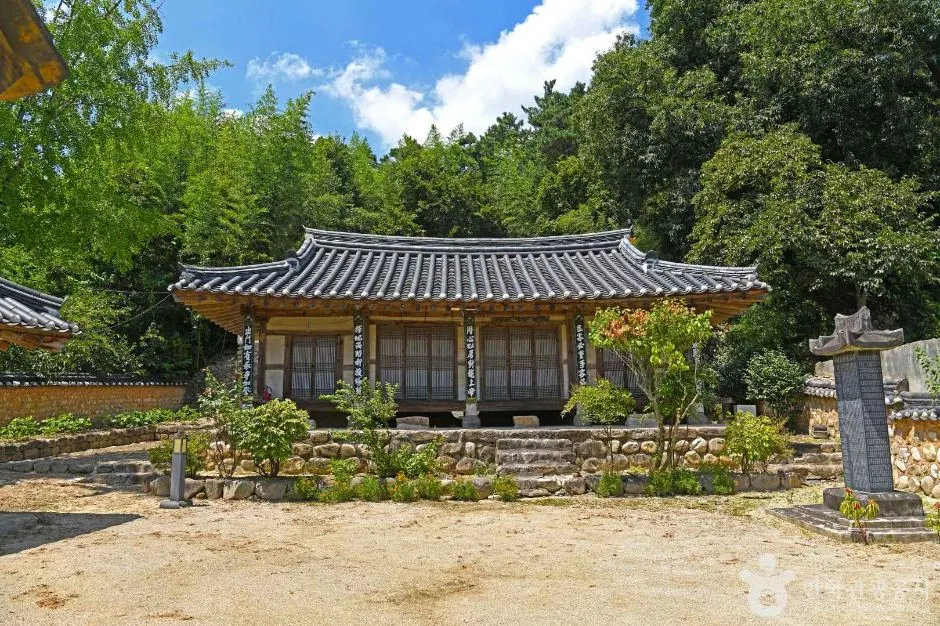
From the end of October to early winter, due to its characteristic of being open year-round, visitors can explore the site at any time without needing to adhere to specific event schedules. Rather than focusing on seasonal scenery, this site is better suited to highlighting the stories of the shrine and its figures, connecting them with the surrounding historical sites.
When you enter the address, it will navigate to Sangdong-gil Road.
The address is 7-1, Sangdong-gil, Sangdong-ri, Jusang-myeon, Namwon-si, Jeollabuk-do. To get there by car, enter the address into your navigation system.
Public transportation is available via Namwon regular city buses No. 3-170, 5-1-511, and 300-523, which stop at the Hanumul bus stop in Namwon. Parking is available, and if you are traveling with your parents, it would be best to plan a short itinerary so as not to overexert yourselves before and after the visit.
Seowon is always open and welcomes visitors year-round.
Yongjangseowon is open to the public and operates year-round without interruption. Its open-door policy, without requiring reservations or admission fees, makes it ideal for leisurely exploration and a leisurely examination of its figures and spaces.
It was designated as a cultural property of Jeollabuk-do Province on April 1, 1984, and its current designation is Cultural Heritage Material. For inquiries, please contact 063-620-6173. The website for Namwon City is www.namwon.go.kr.
If you visit on a weekday in early November, bring the address and comfortable shoes, and first remember that this is a ritual space centered on a three-bay shrine; that will keep your site visit on track.
