[Nagahama Mangetsu] 36 Hours of Waiting and Fleeting Beauty: A Review of “Nagahama Mangetsu,” Michelin-Selected Restaurant, Haeundae Branch
On a day when a gentle rain was falling, I suddenly felt a strong desire for a properly made Japanese-style tonkotsu ramen.
It is not the common, mass-produced flavor found in chain restaurants. Instead, it is a broth made by simmering pork bones for a long time, resulting in a rich, clean flavor without any unpleasant odors – a truly authentic and genuine broth.
That place is gaining popularity day by day. Naturally, I headed towards the most popular alley in Busan’s Haeundae, Harrydangi-gil.
This place is home to a famous spot that any ramen lover has likely heard of, and which has received rave reviews from countless travelers and locals.
This is Nagahama Mangecksu, the Korean branch, which has been consecutively selected for the Michelin Guide Bib Gourmand from 2024 to 2026, proving its consistent quality. Michelin Guide Bib Gourmand. Nagahama Mangecksu (Korean branch) .
Whether it is a popular restaurant known only through rumors, or a truly exceptional restaurant that is worth the wait, I will share my personal experience of visiting it.
1. First Impression: The exotic first impression created by the store’s location and exterior
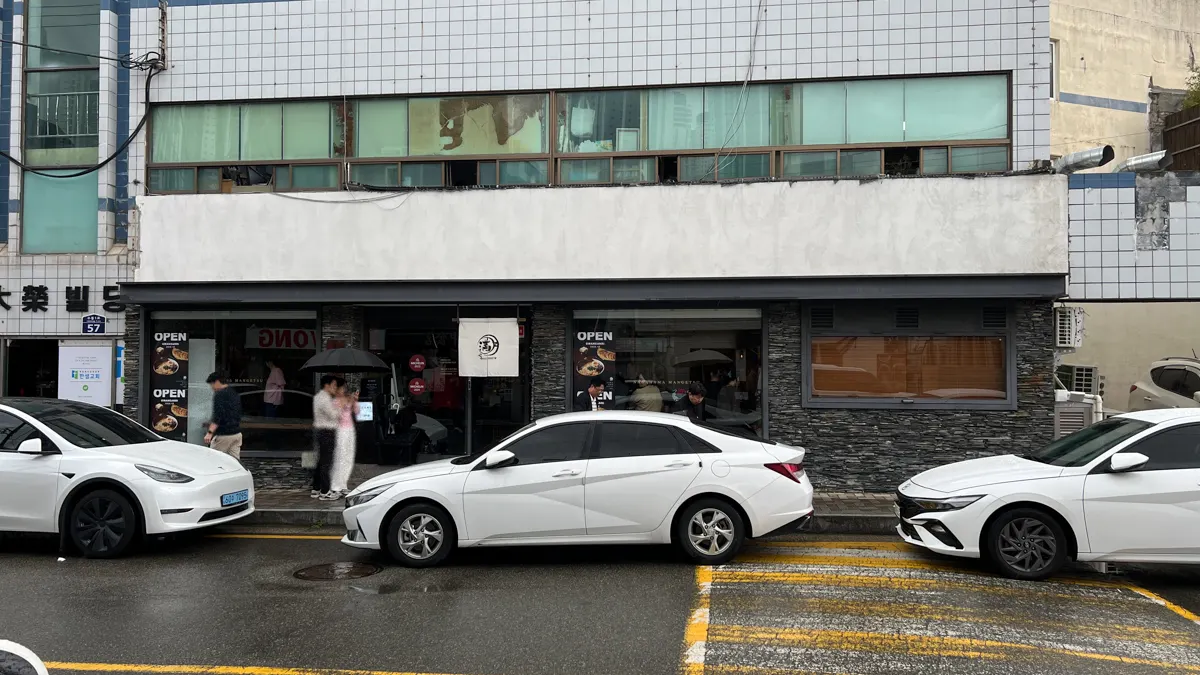
Nagahama Mangekyo Korea Branch is located at 57, Udong 1-ro, Haeundae-gu, Busan, on the 1st floor of the Daeyoung Building.
To find it, take exit number 4 from Haeundae Station on Busan Subway Line 2, cross the old Donghae Nam-bu Line railway tracks, and walk quietly along the narrow alleyways of Haeridan-gil for about 5 to 10 minutes.
Upon reaching the courtyard in front of the store, one might mistakenly believe they are in a quiet alleyway in either Korea or Japan, as the scenery is strikingly foreign. The clean, wood-toned exterior, the neatly written Japanese sign, and the subtly glowing lights combine to create a unique atmosphere that is both cozy and imbued with a sense of craftsmanship.
However, the pleasant experience is quickly interrupted when you see the large crowd of people waiting outside the store. Whether you visit for lunch or dinner, the area in front of the store is always crowded.
Around the entrance, Michelin Bib Gourmand emblems are proudly displayed, further fueling the anticipation of those waiting.
2. The Race Against Time: Everything About Business Hours and “Unavoidable Waiting Times”
Before visiting this place, the most important things to consider are efficient time management and a waiting strategy.
The official business hours of Nagahama Mange are from 11:00 AM to 8:30 PM every day.
During weekdays (Monday to Friday), a one-hour break is scheduled from 15:30 to 16:30. On weekends (Saturday and Sunday), the establishment operates continuously without a break.
The last order for lunch is 15:00 on weekdays. The last order for dinner, before closing time, is 20:00 on both weekdays and weekends.
However, the restaurant may close early, regardless of its posted hours, if it runs out of the fresh bone broth and ingredients prepared for that day. Therefore, visiting late in the evening could be risky.
The air conditioning system utilizes a sophisticated smart platform.
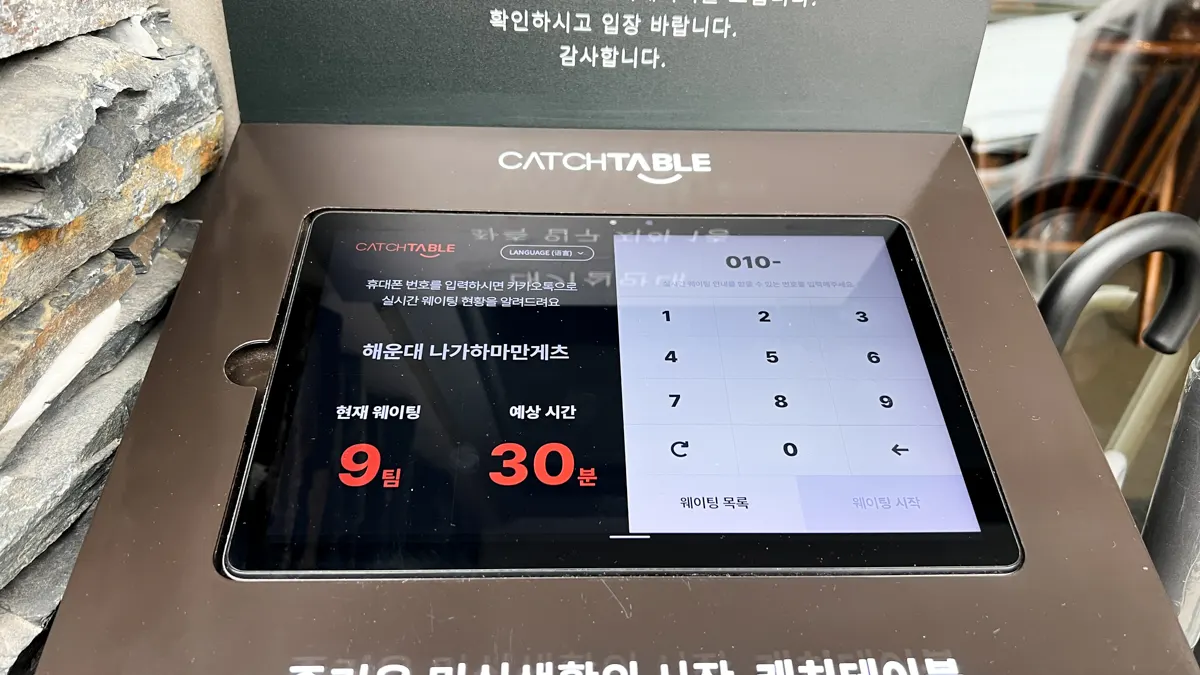
The CatchTable kiosk installed in front of the store begins accepting reservations in person starting at 10:00 AM.
If you have accommodations near Haeundae or can arrive early, I strongly recommend participating in the “early bird” event. Arrive at the store before 10:00 AM and register for the on-site waiting list.
After completing the registration, you can efficiently spend your time by checking your KakaoTalk notifications and then taking a walk around nearby Haeundae Beach or the charming cafes along Hae-ri-dan-gil street.
If you are starting from a distant location, you should aim to use the CatchTable app’s remote queuing system, which opens precisely at 11:00 AM.
The online queuing system is only activated when there are two or more on-site queuing teams. However, on weekends and holidays, as soon as 11:00 AM arrives, it is not uncommon for the waiting numbers to quickly exceed 100.
Occasionally, the waiting time can exceed 3 to 4 hours. Therefore, it is necessary to use the app’s “delay waiting” function effectively to coordinate your travel route and entry time.
Regarding parking, the store does not have its own dedicated parking lot. Therefore, if you are driving, it is recommended to use the “Busan Mechanical High School Rear Gate Public Parking Lot,” which is within walking distance.
The parking fees are very low, at 100 won per 10 minutes, which significantly reduces the parking cost even with long wait times.
3. Hidden Strength in Simplicity: Menu Composition and Reasonable Prices
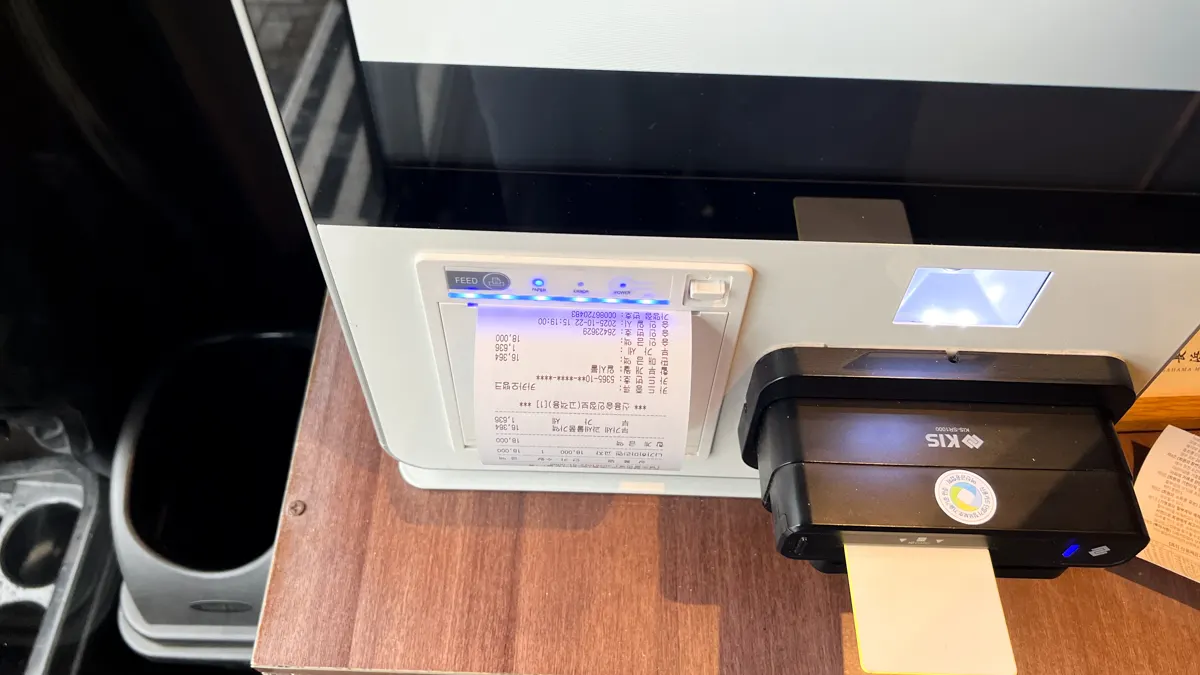
After a long wait, when my number is called, I enter the store and, guided by a friendly employee, I immediately head towards the self-service kiosk on the left.
The menu at Nagahama Mangetsu is surprisingly simple. It perfectly adheres to the unspoken rule that the better the restaurant, the fewer items on the menu.
- Nagahama Ramen: 11,000 won.
- Nagahama Ramen and Gyoza Set: 16,000 won (This set includes a bowl of ramen and 5 handmade gyoza).
- Yakitori Ramen: 12,000 won (a special menu item with a stir-fried noodle style).
- Additional toppings: Adding chashu (3,000 won), Adding ajitama (flavored egg) (1,500 won), Adding noodles (1,500 won).
- Side dishes and beverages: Steamed rice (1,000 won), Kirin draft beer.
Considering that the restaurant is listed in the Michelin Guide and given the recent trend of rising prices, the fact that you can enjoy a wonderful meal for just a little over 10,000 won is a significant advantage.
In fact, when compared to the prices of tourist attractions in the Haeundae area, it offers excellent value for money.
I ordered the “Nagahama Ramen and Gyoza Set” to fully experience the flavors of this place.
After completing the order, customers will be directed to a waiting area with chairs located in the back of the store, where they can take a moment to rest.
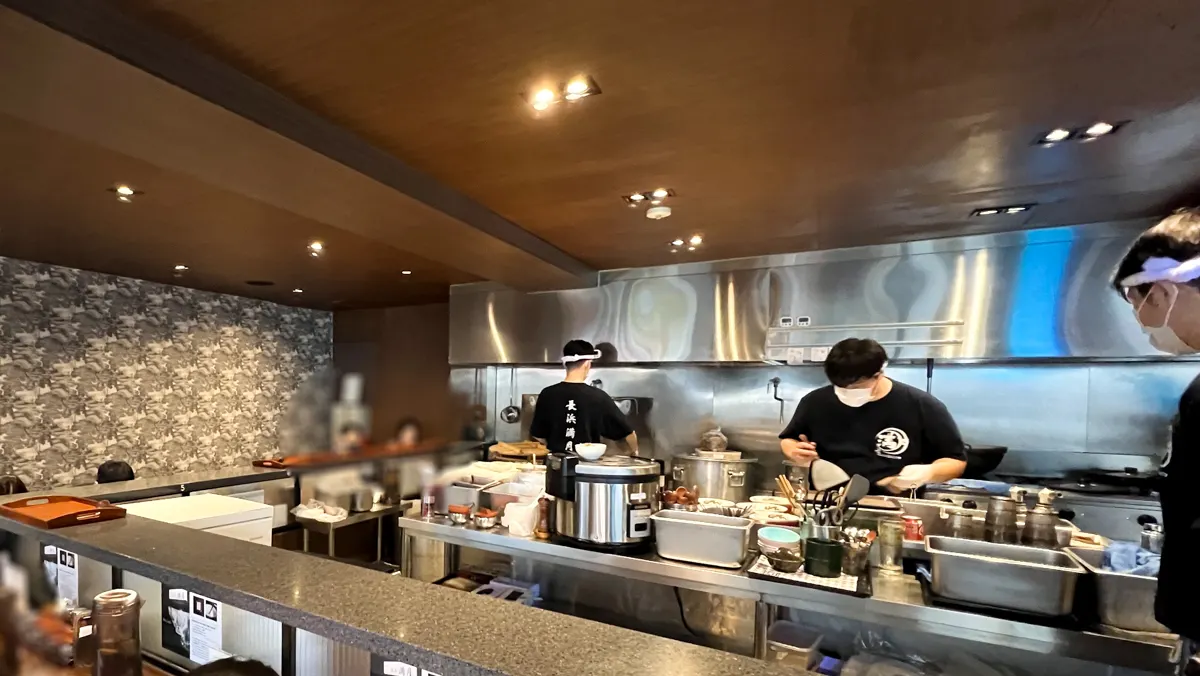
The interior consists of a long counter bar that wraps around the kitchen. The number of seats is limited, making it ideal for solo travelers who enjoy dining alone, or for couples, rather than for large groups.
The kitchen is completely open, allowing visitors to observe chefs who are meticulously wearing hairnets and aprons as they stir broth in large pots and vigorously toss noodles.
The entire space is filled with a dynamic and vibrant energy. Because you place your order in advance using a kiosk, when you finally sit at the counter, your food is almost immediately prepared and appears before you within 5 minutes.
4. The Craftsman’s Philosophy: The Inherent Uniqueness of Nagahama Mangeki
There is a clear reason why this small ramen shop has become a sacred place for ramen enthusiasts not only in Busan but throughout South Korea.
This is not just a Japanese-style ramen restaurant; it is the only branch in Korea of a traditional establishment that has been run by three generations of the same family in the Nagahama district of Fukuoka, Japan, since 1963.
For over 50 years, we have refined a secret recipe, and we use a soy sauce base that is directly sourced from Japan.
Above all, the key ingredient is the broth. Nagahama Mangeki extracts the essence by continuously boiling carefully selected pork bones for a full 36 hours.
In this process, highly skilled techniques are employed to continuously remove oil and impurities, perfectly blocking the characteristic pungent and heavy odor of tonkotsu ramen, while maximizing the deep, savory flavor and umami of the bone broth itself.
The product was designed to lower the barrier to entry for Korean consumers while preserving the authentic, deep flavors of the local cuisine.
Furthermore, the customization system that carefully caters to the customer’s preferences is also excellent.
When ordering through the kiosk, customers can select the desired level of doneness for the noodles. Options range from “Kata,” which offers a firm and chewy texture, to “Hutsu,” a more common and standard level of doneness, allowing customers to customize the dish to their preference.
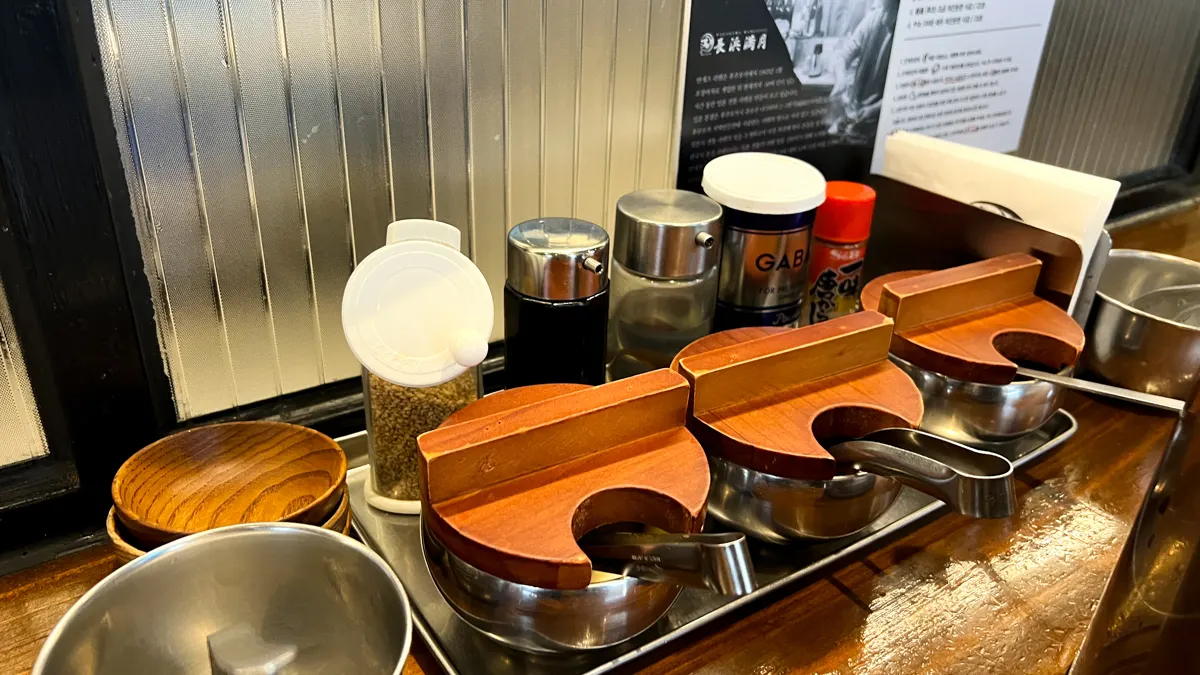
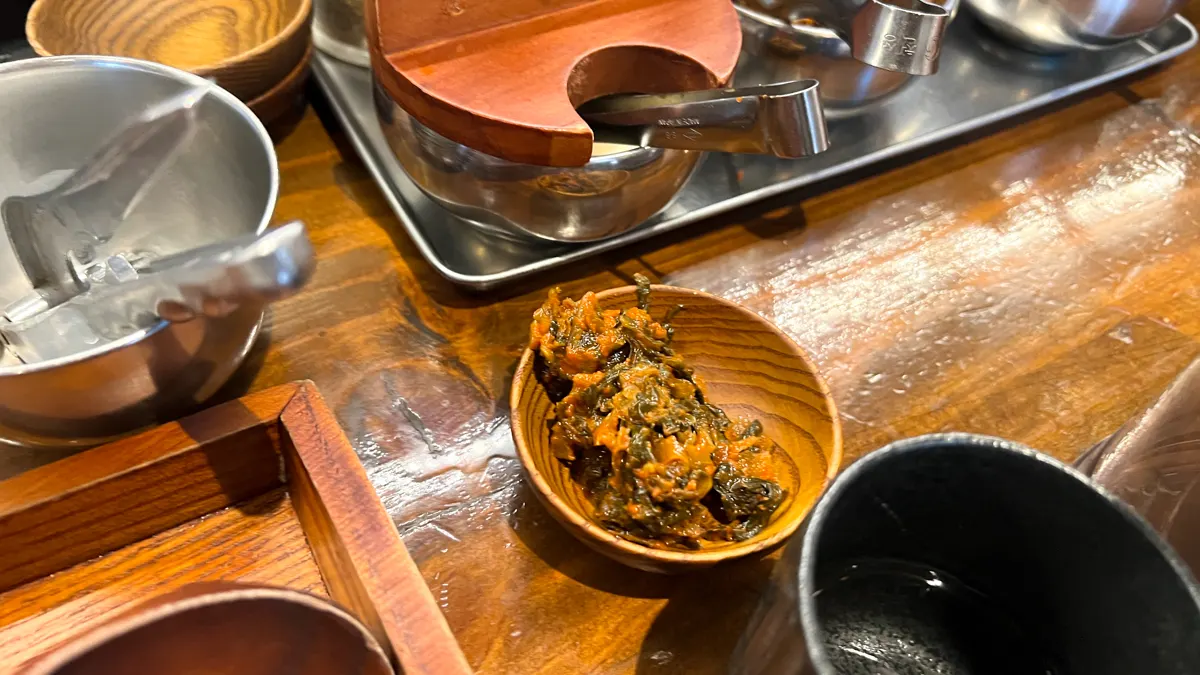
On the table, there are fresh garlic cloves that customers can crush themselves, a garlic press, “takana” (Japanese mustard cabbage), a spicy seasoning paste, pepper, and sesame seeds, all perfectly prepared. This allows diners to customize their ramen throughout the meal and create their own unique flavor combinations.
5. A Feast for the Senses: Vivid and Human Reviews
🪵 The first scene encountered upon taking a seat
Upon being seated at the designated table, I noticed the neatly cleaned wooden surface, where a refreshing glass of lemon water and a beautifully arranged selection of side dishes were placed.
The walls are adorned with paintings, and alongside them, a helpful guide explains “How to Enjoy Mangeki Ramen,” which is worth reading while you wait for your food.
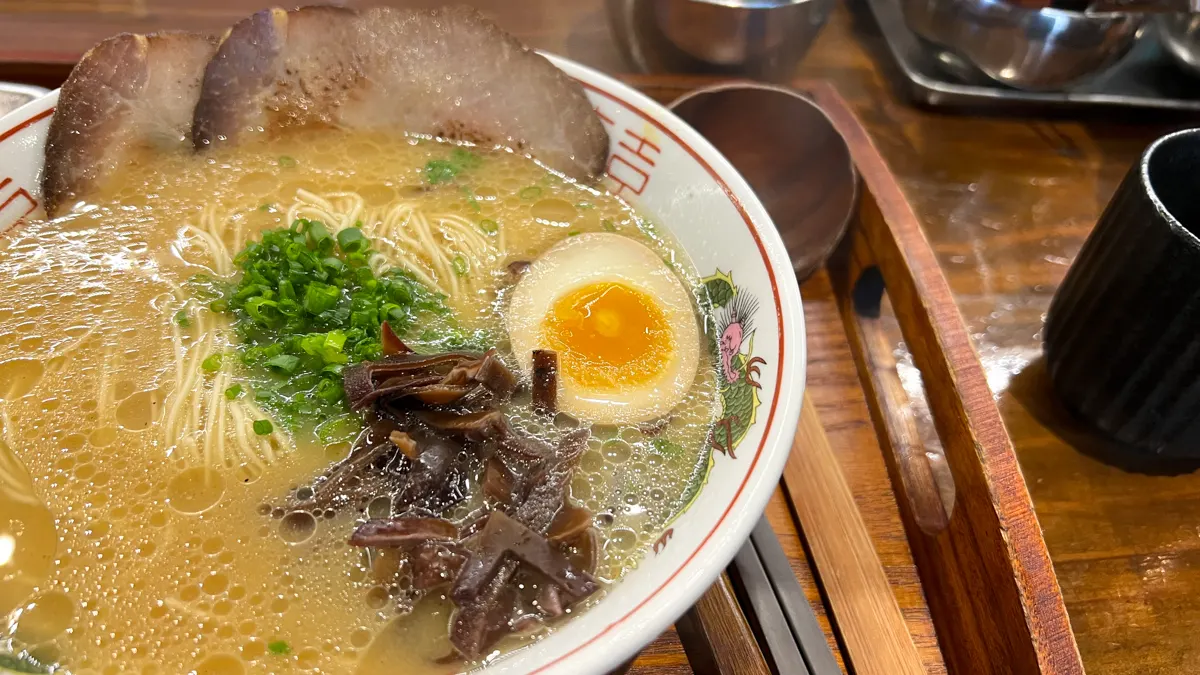
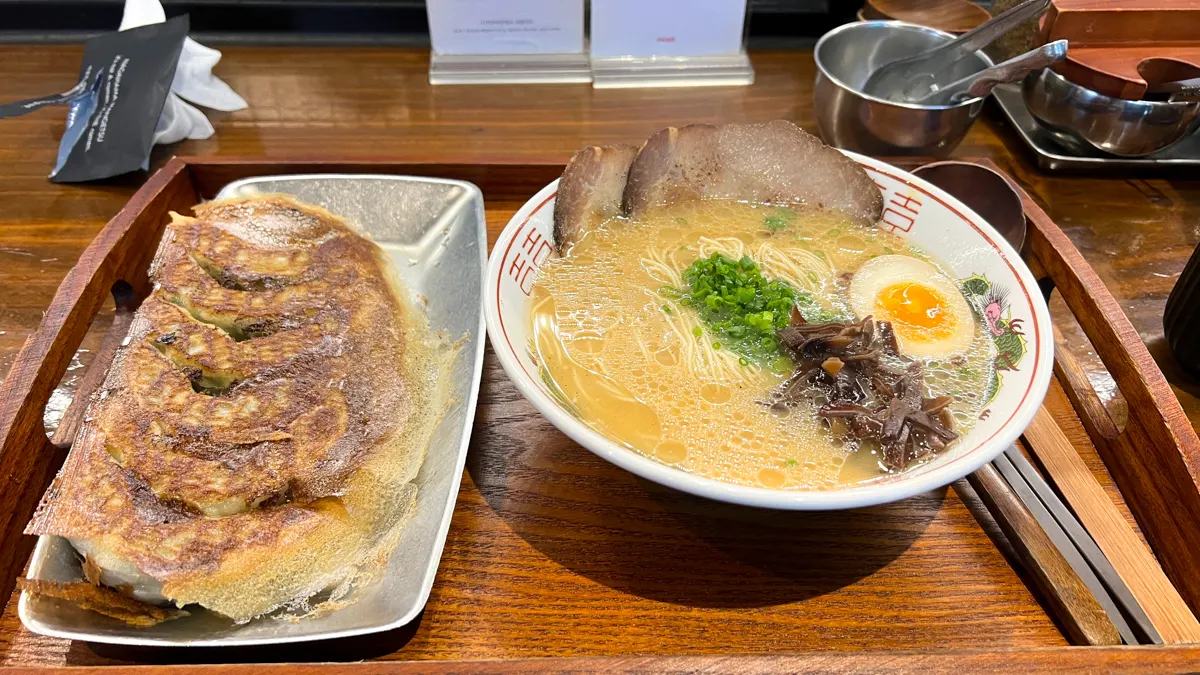
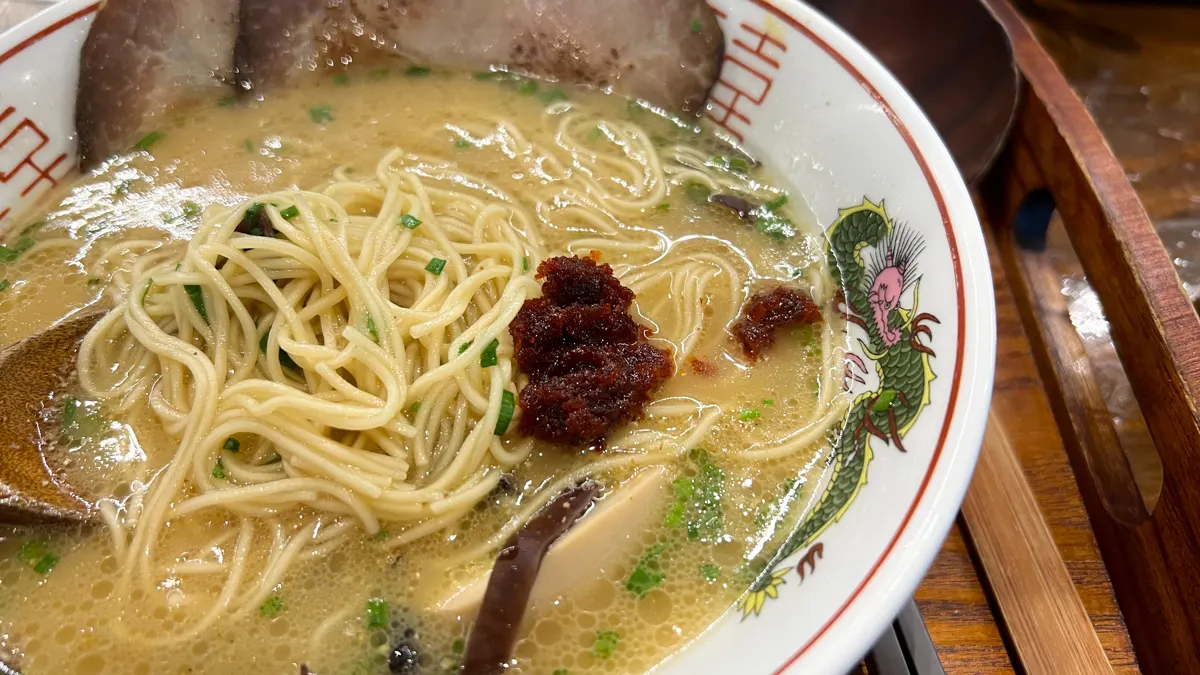
Soon, a bowl of Nagaham ramen, with a deep broth that was so white it was almost transparent, was placed before me. Two slices of chashu pork, a soft-boiled egg, wood ear mushrooms (kikurage), and finely chopped green onions were arranged as toppings on the broth.
The aroma of the broth, which was both spicy and subtly sweet, brushed against the tip of my nose and strongly stimulated my salivary glands.
🥄 The harmony of the initial broth and noodles
First, she picked up her spoon and carefully took a sip of the broth.
“Wow…” An involuntary exclamation escaped. The moment the broth touched my mouth, a rich and dense flavor, as if the soup had been filtered dozens of times, gently enveloped my tongue.
There was not even a trace of the characteristic odor of pork bone, and the broth was a genuine flavor with a rich concentration of collagen that made the lips feel slightly sticky. The subtle saltiness of the 50-year-old fermented soybean paste provided a solid foundation for the broth.
Because the dish is prepared to preserve its authentic local flavor, those who typically prefer less salty food may find the initial taste somewhat salty. However, you can request the staff to add unsalted, clear broth, so there is no need to worry.
Next, I used chopsticks to lift a large portion of the noodles and put them all in my mouth at once.
The fresh noodles I chose, described as having a “firm” texture, were thin like somyeon noodles, but possessed a unique characteristic: they broke apart with each bite, providing a delightful and satisfying eating experience.
The surface of the noodles was saturated with a rich broth, creating a perfect harmony between the noodles and the broth, with no separation. The chashu (braised pork belly) topping was thinly sliced, and its incredibly soft texture made it almost crumble when picked up with chopsticks.
The ratio of fat to meat is perfectly balanced, and when the noodles are wrapped in chashu (braised pork belly) and eaten in one bite, they melt in your mouth like cotton candy.
The added ajitama (marinated soft-boiled egg) was perfectly soft-boiled; when cut in half, the yolk flowed out like jelly, and the sweet and savory seasoning had permeated the entire egg, which was truly impressive.
The crunchy texture of the wood ear mushrooms, which are interspersed throughout the dish, adds a wonderful rhythm and complexity to the texture, which could otherwise be monotonous.
🥟 The epitome of crispy on the outside, soft on the inside: Yaki Gyoza
While savoring the ramen, handmade *yakigyoza* dumplings appeared at just the right moment, and their visual presentation was overwhelmingly impressive.
It was a traditional Japanese-style snowflake dumpling, where a starch-based batter was poured over the entire bottom and fried until crispy. When you took a bite, the crispy texture of the outer layer gave way to a thin and chewy dumpling wrapper, and a burst of hot meat juice filled your mouth.
The chives and minced meat filled the dumplings, creating a simple yet flavorful taste. The slightly oily broth of the ramen was perfectly complemented by a sip of draft beer and a bite of gyoza, bringing a moment of pure happiness that was truly unparalleled.
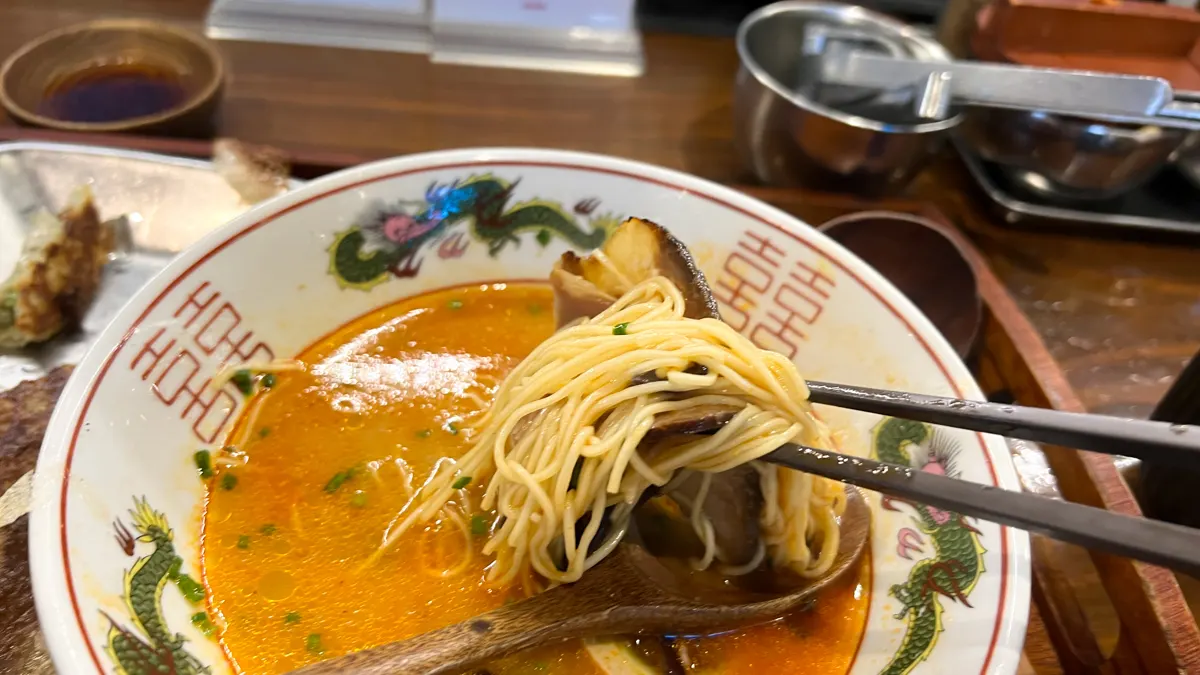
6. A Delightful Variation: The “Mangetsu Manual” that changes the flavor midway
When you have eaten about half of the ramen, that is when the true appeal of Nagahamamanketsu begins to emerge.
If you have fully enjoyed the initial pure flavor of the tonkotsu broth, place two cloves of raw garlic into the garlic press on the table, squeeze them firmly, and drop the minced garlic into the broth. The moment the garlic mixes with the broth, a remarkable transformation occurs.
The pungent flavor of garlic instantly balances the rich, meaty taste of the pork broth, making the soup cleaner and more flavorful. This is a moment where the broth is reborn with a deep umami that anyone familiar with Korean cuisine would instinctively appreciate.
If you prefer a spicy flavor, we recommend adding a teaspoon of the red “bibim” sauce to each serving.
The rich broth transforms into a spicy and refreshing “haejang” (soup for hangover relief) style, making you want to consume every last drop without pause or fatigue. As a side dish, spicy Japanese mustard greens (takana) are served on top of the noodles, adding a crunchy texture and acidity that creates a perfect synergy.
Many regular customers whisper about a hidden tip: ordering “extra rice.”
The steamed rice served here is not just plain white rice. It is served with chashu (braised pork belly) arranged on top, along with plenty of flavorful scraps of meat and green onions.
When you mix the minced garlic and chili paste into the remaining broth and pour it over the rice, you create a “tonkotsu gukbap” that is so delicious, it rivals even the best specialized pork rice soup restaurants. The hearty feeling is different from that of noodles, and the harmony of the broth permeating each grain of rice is amazing. Even if you are full, we highly recommend ordering an extra bowl of rice.
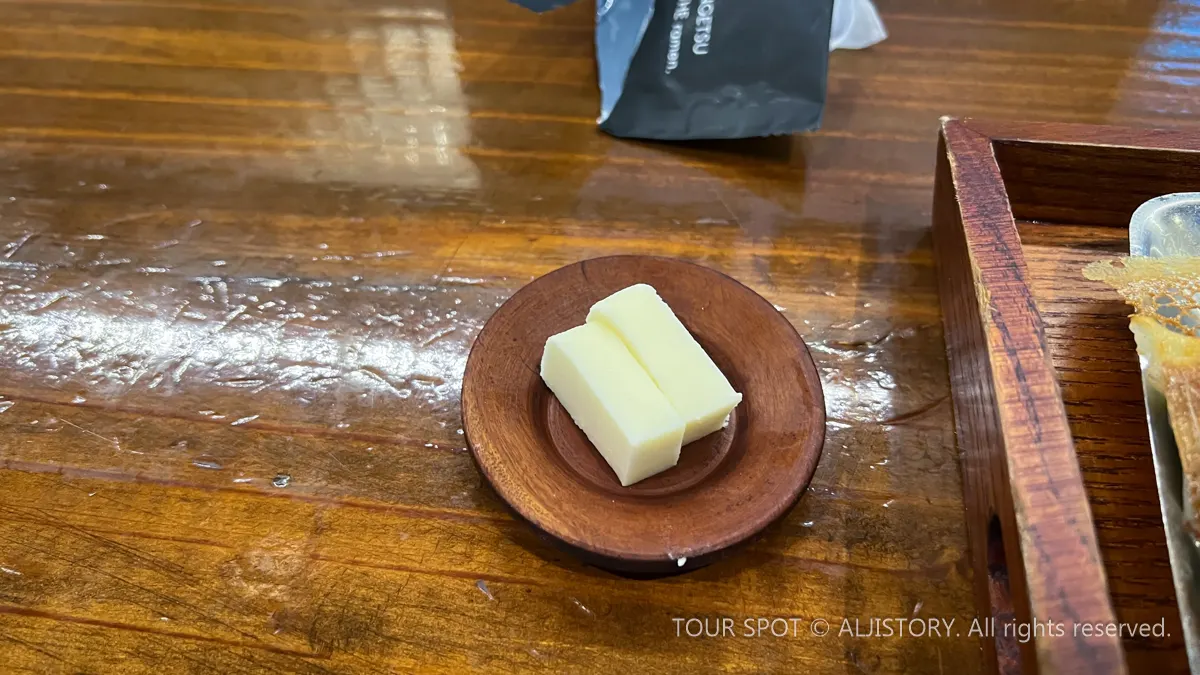
7. The Ultimate Finale: A surprising “homemade cream cheese” that cleanses the palate
Just when the bottom of the bowl becomes visible, a signature dish unique to this place and arguably the greatest dessert appears.
Right in front of you, an employee casually places two slices of cold, homemade cream cheese. These white, square-shaped cheeses are desserts meticulously crafted by the chefs in the store.
Initially, the idea of eating cream cheese after ramen seemed somewhat strange, and I was concerned that it might be too rich.
However, the moment the cheese touches your lips, all doubts vanish. It is chewy and sweet, like a pudding or mochi ice cream from a high-end restaurant, and the cool sensation lingers on the tip of your tongue.
While eating ramen and dumplings, the lingering salty and greasy flavors were magically erased by a single piece of this sweet and savory cream cheese, leaving the mouth incredibly clean and refreshed.
While the quality of the main dish, ramen, is outstanding, the impact of this final dessert is so strong that many visitors have said, “I want to come back just for this cheese.”
From the beginning to the end of the meal, it felt like experiencing a perfectly crafted work of art.
8. Final summary guide for visitors
- Name: Nagahama Mangetsu, Korean Branch.
- Address: 1st floor, Daeyoung Building, 57 Udong 1-ro, Haeundae-gu, Busan (located on Haeridan-gil street).
- Operating hours: Daily from 11:00 AM to 8:30 PM (weekday break time 3:30 PM to 4:30 PM / no break time on weekends / may close early if ingredients are depleted).
- Tips for securing a reservation: Reservations can be made in person at the restaurant starting at 10:00 AM. The online reservation system opens at 11:00 AM sharp, so be ready to click quickly.
- Recommended menu items: Nagahama Ramen with gyoza set, plus one extra soft-boiled egg, Kirin draft beer, and a bowl of plain rice to eat with the broth.
- Parking Information: There is no parking lot at the store. The most convenient option is to use the “Busan Mechanical High School Rear Gate Public Parking Lot,” which is a 3-minute walk away (100 won per 10 minutes).
9. Epilogue
As I stepped out of Nagahamamanketsu and felt the cool breeze of Haeridan-gil, I finally understood why so many people stood in the narrow alleyways for such a long time, enduring the pain in their legs, simply to wait their turn.
It was a dense and flavorful bowl that conveyed the master’s dedication and the depth of time spent meticulously stirring the large pot for 36 hours to extract the broth.
The experience was more than just a simple meal; it was an opportunity to enjoy variations in flavor, and the final touch of homemade cream cheese perfectly capped the culinary experience. This was more than enough to alleviate the fatigue from the long wait.
If you are planning a trip to Busan or want to experience truly delicious food near Haeundae, don’t hesitate to open the CatchTable app and head to Nagahamamangekuro. I can confidently say that this restaurant will be at the very top of your list of best ramen places.