GCAP’s Current Status and Next Steps at Farnborough 2026
At the Farnborough International Airshow, held from July 20 to 24, 2026, the Global Combat Air Programme (GCAP) emerged as a central topic in the development of next-generation fighter aircraft. Led by Japan, the United Kingdom and Italy, GCAP is targeting entry into service in 2035. The programme is envisioned as a next-generation combat air system combining a crewed fighter with uncrewed platforms, sensors and data networks.
Key issues at this year’s show included potential new participants, Canada’s observer status and progress on the UK’s flying demonstrator. According to Breaking Defense, GCAP is now focusing on keeping the 2035 schedule while advancing design work and technology validation in parallel.
GCAP Expansion and Canada’s Observer Status
The official GCAP members remain the United Kingdom, Italy and Japan. The three countries announced their joint development of a next-generation fighter in 2022 and began establishing the GIGO, an international governmental organisation intended to manage the programme, in 2023.
At Farnborough 2026, plans for Canada to participate as an observer were formalised, drawing attention to the programme’s potential international expansion. Canada is not yet joining the joint design and development effort, but its observer status provides a channel to explore cooperation on next-generation combat aircraft and related industries.
Germany and France were also mentioned as potential new participants. However, GCAP officials said that bringing additional countries and companies into the programme could affect the division of work and the schedule, stressing that the 2035 entry-into-service target must remain the priority. The prospects of Germany and France joining were considered relatively limited.
Industrial Cooperation and the Challenge of Workshare
The GCAP industrial consortium is led by BAE Systems of the UK, Italy’s Leonardo and industry partners from Japan. The three countries are dividing capabilities across design, production, electronics and propulsion while seeking to maintain a balanced distribution of industrial participation within the programme.
At Farnborough, the propulsion consortium announced that the design of the next-generation engine demonstrator had reached the final approval stage and that work on its components was progressing. The consortium includes Rolls-Royce of the UK, Italy’s Avio Aero and Japan’s IHI.
The “Bridge” Aircraft and GCAP Technology Demonstration
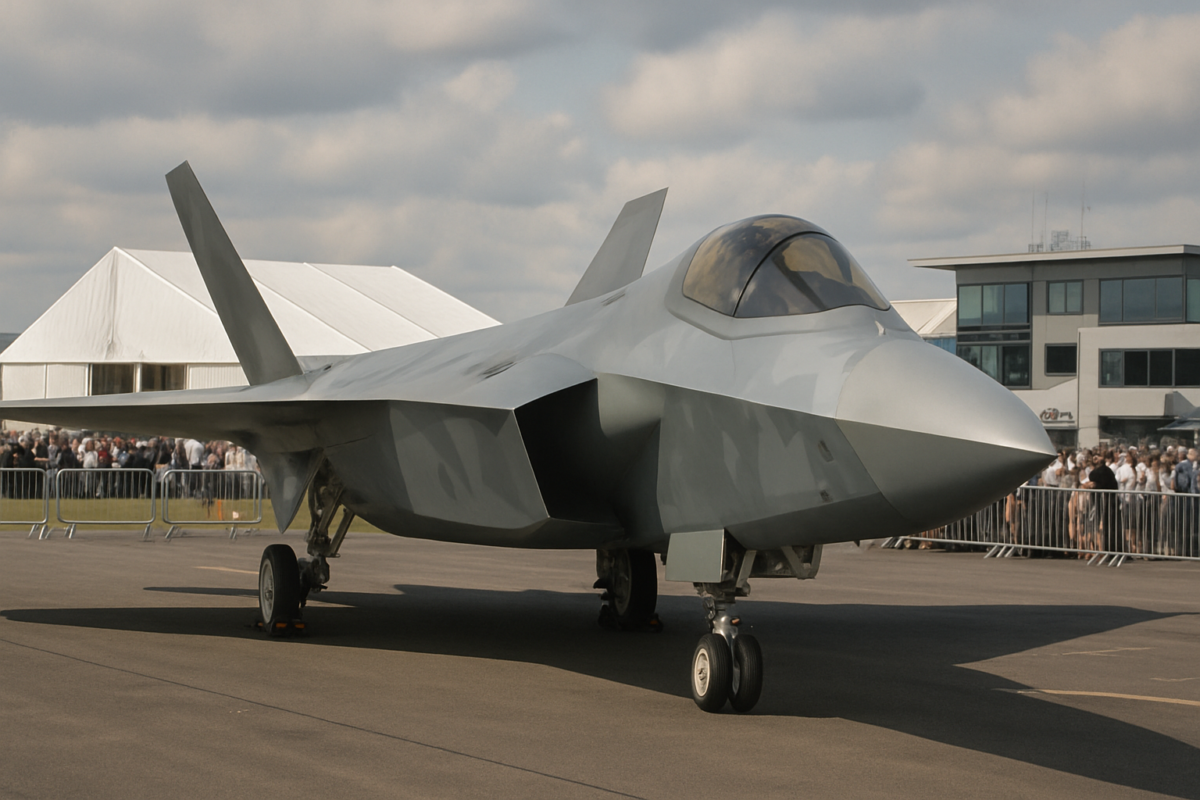
Ahead of GCAP’s entry into service, the UK is developing a Combat Air Flying Demonstrator. This crewed supersonic aircraft is not the final production version of GCAP itself, but a technology demonstrator intended to validate low-observable design as well as propulsion, flight-control and aerodynamic technologies.
A BAE Systems official said at Farnborough 2026 that the demonstrator’s first flight is planned for early 2028. Around 11,500 parts are in production, and approximately 90% of all components are reportedly already undergoing various manufacturing processes.
For that reason, the aircraft has been described as a technological “bridge” between the Eurofighter Typhoon and the next-generation fighter. Initial testing is expected to focus on validating the core technologies required for GCAP development, including low observability, handling, the propulsion system and airflow.
Uncrewed Wingmen and the Next-Generation Combat Air System
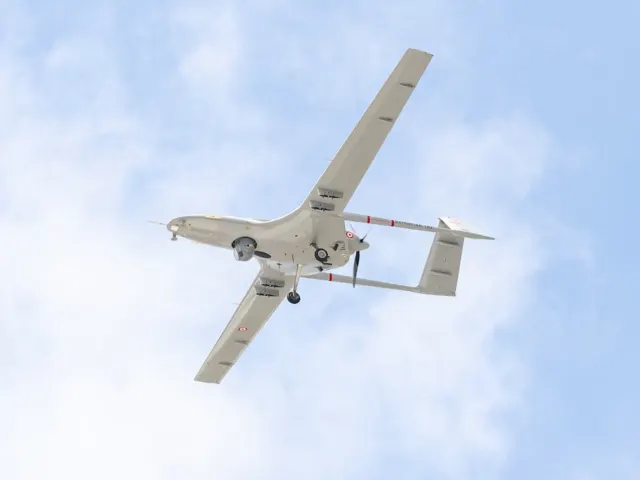
GCAP is not limited to developing a single fighter. It is based on a networked operational concept in which a crewed combat aircraft works alongside uncrewed combat systems. The BAE Systems Brontanax Combat Collaborative Aircraft demonstrator unveiled by the UK is one example of this uncrewed wingman concept.
Brontanax is initially being developed with cooperation alongside the Eurofighter Typhoon in mind, but it could eventually be linked to GCAP’s uncrewed collaborative systems. BAE Systems plans to fly the demonstrator in 2027.
Such uncrewed systems could take on a range of roles, including reconnaissance and surveillance, electronic warfare, sensor extension and weapons employment. GCAP’s competitiveness will depend not only on the performance of the aircraft itself, but also on how effectively it integrates the fighter, uncrewed systems, sensors and data networks into a coherent whole.
The 2035 Entry-Into-Service Target and What to Watch Next
The UK government and Japan’s Ministry of Defense have set 2035 as GCAP’s target entry-into-service date. GCAP is being developed as the next-generation fighter that will eventually replace the Eurofighter Typhoon fleets of the UK and Italy, as well as Japan’s F-2 fighters.
The central challenge ahead will be balancing the expansion of the membership with the need to preserve the schedule. Key variables include whether Canada’s observer status develops into full industrial and procurement cooperation, whether Germany joins the programme, and how negotiations over workshare affect the design timeline.
The technology demonstrator and uncrewed wingman developments highlighted at Farnborough 2026 show that GCAP is evolving beyond a conventional fighter programme into an integrated combat air system. To achieve entry into service in 2035, however, the partners will need to advance design finalisation, engine demonstration, flight testing and production preparations in parallel and without major disruption.
Frequently Asked Questions (FAQ)
Which countries are participating in GCAP?
The official participants are currently the United Kingdom, Italy and Japan. Canada’s observer participation was announced at Farnborough in 2026, while Germany and others have been mentioned as potential new participants.
When is GCAP expected to enter service?
The UK, Italy and Japan have set 2035 as the target entry-into-service date for GCAP.
What is the GCAP “bridge” aircraft?
The term refers to the UK’s Combat Air Flying Demonstrator. It is not the final production fighter, but a crewed supersonic technology demonstrator designed to validate key technologies including low-observable design, propulsion, aerodynamics and flight control.
When will the bridge aircraft make its first flight?
BAE Systems plans to conduct the Combat Air Flying Demonstrator’s first flight in early 2028.
Is GCAP developing only a fighter aircraft?
No. GCAP aims to create an integrated combat air system combining a crewed fighter, uncrewed wingmen, advanced sensors and data networks.
Is Canada directly participating in GCAP fighter development?
Canada’s confirmed status is currently that of an observer. It therefore cannot be considered a joint design and development partner on the same footing as the three founding countries, but rather a country exploring potential future industrial cooperation and procurement.