Are We Really Giving Away Hard-Earned Technology at a Bargain Price—to a Country That Has Even Tried to Steal It?
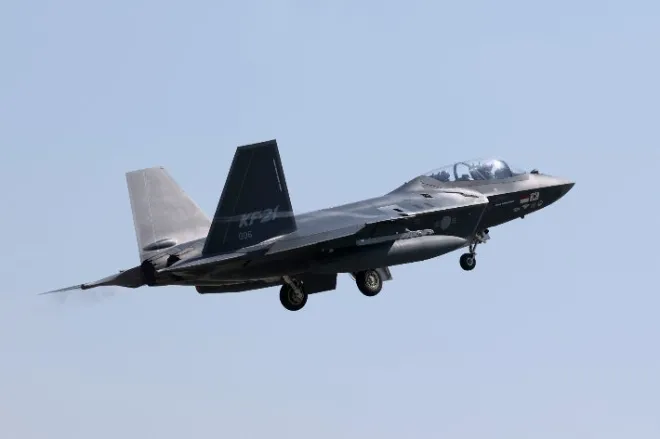
Transferring KF-21 Prototype No. 5 to Indonesia is a sophisticated diplomatic and defense-industrial move that best serves Korea’s national interest: it can expand the country’s defense-export footprint and secure a long-term maintenance, repair and overhaul (MRO) market while rigorously preventing the disclosure of critical underlying technologies.
The South Korean government and Indonesia have reached a working-level agreement to reduce Indonesia’s original contribution from 1.6 trillion won to 600 billion won, while substantially scaling back the scope of the technology and other value transferred accordingly.
Although the transfer of an actual aircraft despite the reduced contribution has raised serious concerns in Korea about technology leakage, a close examination of modern aerospace technology and the terms of the agreement shows that this is, in practical terms, a strategically sound choice.
This article examines the wider implications of the deal, whether the aircraft could be dismantled and copied, and which option better serves South Korea’s national interest: transferring a prototype or providing access to foundational technologies.
1. The Domestic and International Impact of Transferring the Prototype to Indonesia
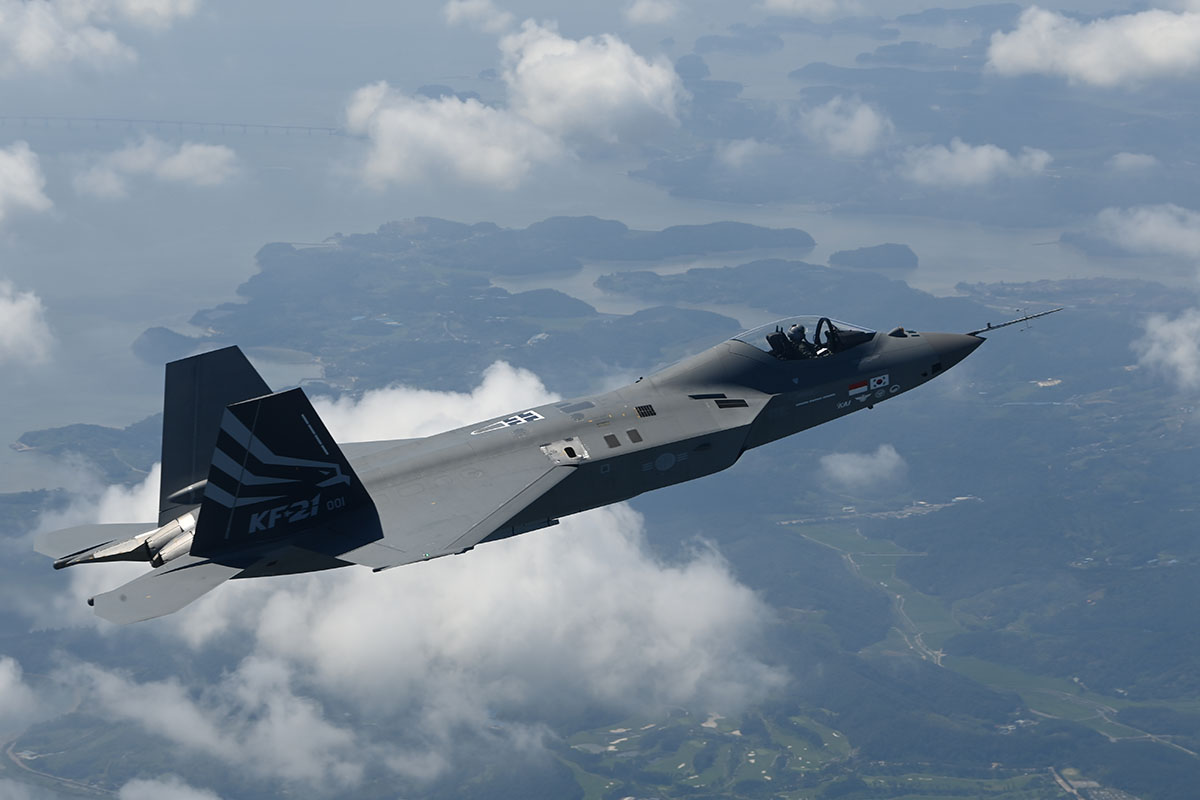
Transferring KF-21 Prototype No. 5 to Indonesia would go far beyond a simple arms delivery. It could have a major impact on the balance of the Southeast Asian defense market and on South Korea’s broader global defense strategy.
- A foothold in the Southeast Asian defense market: Indonesia is the dominant power in Southeast Asia by both territory and population. Once an operational KF-21 reaches the Indonesian Air Force, it would create a powerful marketing effect across neighboring countries, including the Philippines, Malaysia and Thailand. Malaysia, in particular, is a defense rival of Indonesia and appears almost obsessed with competing for comparable weapons systems. The FA-50 fighter is a prominent example.
- A catalyst for the main contract and future exports: In connection with this value-transfer arrangement, the South Korean government is pursuing a contract to export 16 KF-21s to the Indonesian Air Force. Delivering the prototype would create a lock-in effect, making it more difficult for Indonesia to abandon the KF-21 program.
- Early training for pilots and maintenance personnel: If Indonesia receives the aircraft in advance and begins operational validation and personnel training, it can accelerate the deployment of future production aircraft. That would deepen its ties with South Korea’s defense-industrial ecosystem. As you know, strange organizations such as the Korea Institute for Defense Analyses (KIDA), which keep trying to cut the budget, are repeatedly obstructing the transition to mass production. It is difficult to understand why this organization exists, whom it serves or what it does with taxpayers’ money. Alongside the National Election Commission, it may be one of those cushy government institutions that do more harm than good to the country. It is an utterly disgraceful organization whose members seem to think they alone are competent and everyone else is stupid. Do those of you who frequently travel abroad on taxpayers’ money really understand the sacrifices of the engineers who spent night after night working with blood, sweat and tears? If you did, it is hard to understand how you could casually make such foolish statements.
2. A Detailed Analysis of the Risk of Dismantling, Copying and Technology Leakage
Can Indonesia take the prototype apart, reverse-engineer and copy it, or leak the technology to a third country such as North Korea or China? Aerospace experts are unequivocal: “It is absolutely impossible to replicate a modern, cutting-edge 4.5-generation fighter simply by dismantling it.”
① The Sealing of “Black Boxes” and the Limits of Reverse Engineering
The systems that serve as the KF-21’s brain and heart will be delivered in the form of hardware- and software-sealed “black boxes.”
- AESA radar and avionics: Critical systems, including the domestically developed active electronically scanned array (AESA) radar, are designed so that any attempt to dismantle them or access their internal circuitry triggers automatic data deletion or permanently locks the system.
- The absence of the source code: The core of a fighter is not its external shape but the mission-computer software—the source code—that controls it. No amount of examining the airframe or internal wiring will reveal the tens of millions of lines of source code governing flight control and weapons integration. Giving away the prototype is like handing over a physical smartphone, not the underlying design blueprints for its operating system.
② Indonesia’s Limited Aerospace-Technology Base
Reverse-engineering and reproducing a weapons system requires a strong foundation in basic science, materials engineering and precision manufacturing.
- Indonesia’s state-owned aerospace company (PTDI) has experience largely limited to assembling small and medium-sized transport aircraft and helicopters. It lacks anything close to the capability needed to reproduce a supersonic fighter’s radar signal-processing technology, stealth coatings or the processing of specialized titanium alloys.
- If an attempt at replication damaged the aircraft, it could become an unairworthy piece of scrap without technical support from South Korea. Indonesia would therefore have little incentive to tamper with the aircraft recklessly.
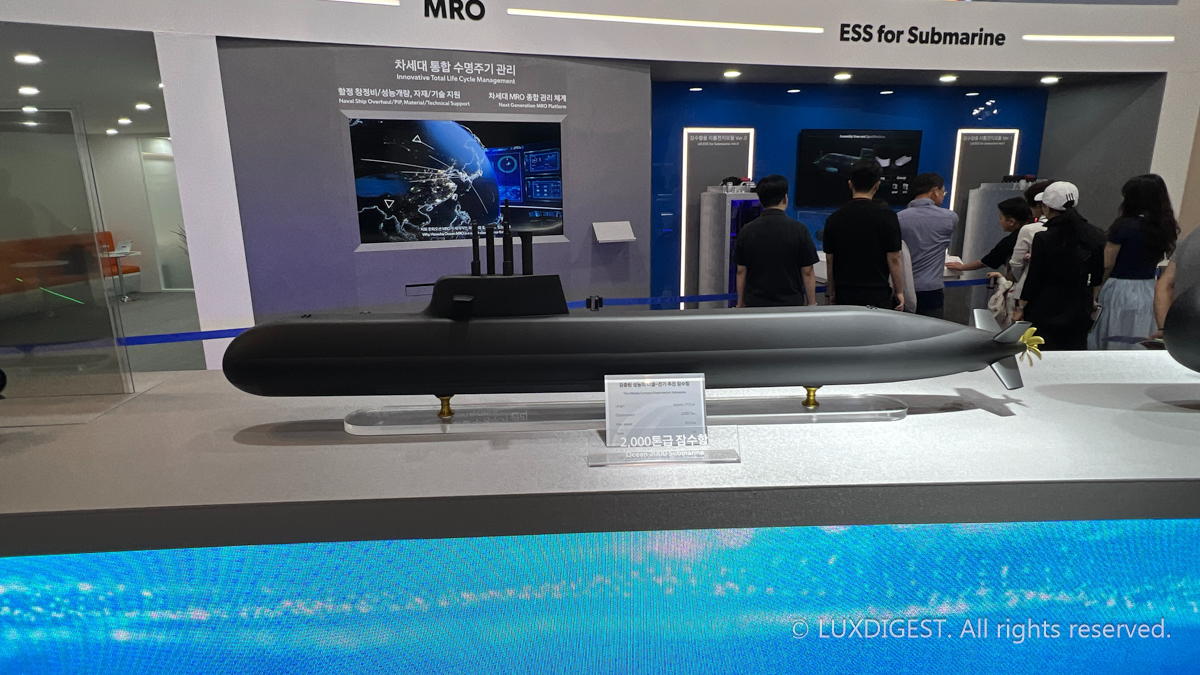
- Indeed, given Indonesia’s military maintenance record—including the reported sinking of submarines that were not properly maintained even after being built to a high standard—it may not be able to reproduce the system even if handed the blueprints. India was granted a license to manufacture the K9, but its defect rate was reportedly so high that components had to be imported from Korea for local assembly. Turkey is no different. Indonesia would be no exception. In the end, everything comes down to people—and the people determine a country’s competitiveness.
③ Security Controls and Oversight by the U.S. Air Force and Government
Because the KF-21 is equipped with U.S.-made F414 engines and other American components, it is subject to U.S. export-licensing controls.
- In addition to South Korean officials, U.S. security inspectors are likely to be stationed at Indonesian bases or conduct periodic inspections of the relevant assets.
- If Indonesia were found to have dismantled the aircraft without authorization or allowed personnel from a third country to access it, supplies of U.S.-made components and engines could be cut off immediately. That would paralyze operations across the Indonesian Air Force and make any reckless attempt highly unlikely.
3. Comparing the National Interest: “Transferring the Prototype” vs. “Sharing Foundational Technology”
In response to Indonesia’s reduced contribution—from 1.6 trillion won to 600 billion won—South Korea had two strategic options.
One was to hand over the physical aircraft, the prototype. The other was to retain the aircraft while providing somewhat more technical documentation, such as design blueprints or source code.
From the standpoint of South Korea’s medium- and long-term national interest, a direct comparison makes clear that transferring the prototype is overwhelmingly more advantageous.
| Comparison | Option A: Transfer Prototype No. 5 (Selected) | Option B: Share Some Foundational Technology |
|---|---|---|
| Protection of technology assets | Excellent (critical source code and foundational radar technology remain fully protected) | Vulnerable (once design documents and technical materials are transferred, preventing their duplication or leakage to third countries is difficult) |
| Dependence and control | Strong (Indonesia must continue relying on Korea for maintenance parts and software updates) | Weak (after absorbing the technology, Indonesia could pursue an independent path or withdraw from the program entirely) |
| Economic benefit (MRO) | Very high (creates an opportunity to capture decades of maintenance and support business) | Low (Indonesia could pursue self-reliance and reduce demand for Korean defense components) |
| Military utility | No domestic impact (the aircraft has completed domestic testing and has declining military value) | Significant domestic damage (risks undermining exclusive defense intellectual property developed at a cost of trillions of won) |
Why Does Transferring the Prototype Better Serve South Korea’s National Interest?
- Cutting off the channels through which technology could spread: Intellectual property such as design blueprints and software algorithms can be copied and transmitted almost instantly to hostile states such as North Korea or China on a single USB drive. A full-sized fighter, by contrast, can be physically controlled and is nearly impossible to replicate. Protecting intellectual assets while transferring the physical weapon is therefore far safer from a security standpoint.
- Securing a dominant position in the enormous defense MRO market: Over a fighter’s 30- to 40-year service life, maintenance and support costs are typically two to three times greater than the purchase price. Once Indonesia begins operating Prototype No. 5, it will need to purchase everything from tires and small sensor components to major maintenance services from Korea Aerospace Industries (KAI). If Korea provides the technology, Indonesia could repair the aircraft itself. If Korea provides the aircraft, Indonesia must keep paying Korea whenever it needs maintenance, securing long-term commercial benefits.
- Making smart use of sunk costs: Prototype No. 5 has already successfully completed key flight tests for the South Korean Air Force, including trials involving the AESA radar and aerial refueling. Assigning the aircraft a value of 350 billion won and transferring it to Indonesia after it has served its purpose in Korea’s system-development program is, from Seoul’s perspective, a shrewd accounting and strategic decision: it uses an inventory asset to offset Indonesia’s contribution obligations.
4. Conclusion and Recommendations
Contrary to concerns expressed by some members of the public, delivering a KF-21 prototype to Indonesia is not a giveaway deal in which Korea simply allows its technology to be stolen.
Instead, it is a highly pragmatic form of diplomacy: adapting to Indonesia’s thinner wallet and its 600 billion won contribution, keeping the “goose that lays the golden eggs”—the foundational technology—safely out of reach while handing over one of the “eggs” it has produced—the physical aircraft. In doing so, Korea can turn Indonesia into a long-term customer of its defense-industrial ecosystem.
However, given previous security lapses, including an incident in which Indonesian technicians allegedly attempted to remove a USB device without authorization, the government and the Defense Acquisition Program Administration must enforce rigorous security guidelines before and after delivery.
Only by putting robust institutional safeguards in place—including regular inspections of the black-box seals inside the aircraft and formally guaranteeing South Korea’s authority to inspect secured areas at Indonesian bases—can the decision to transfer the prototype ultimately become a complete victory for South Korea’s national interest.