Overview
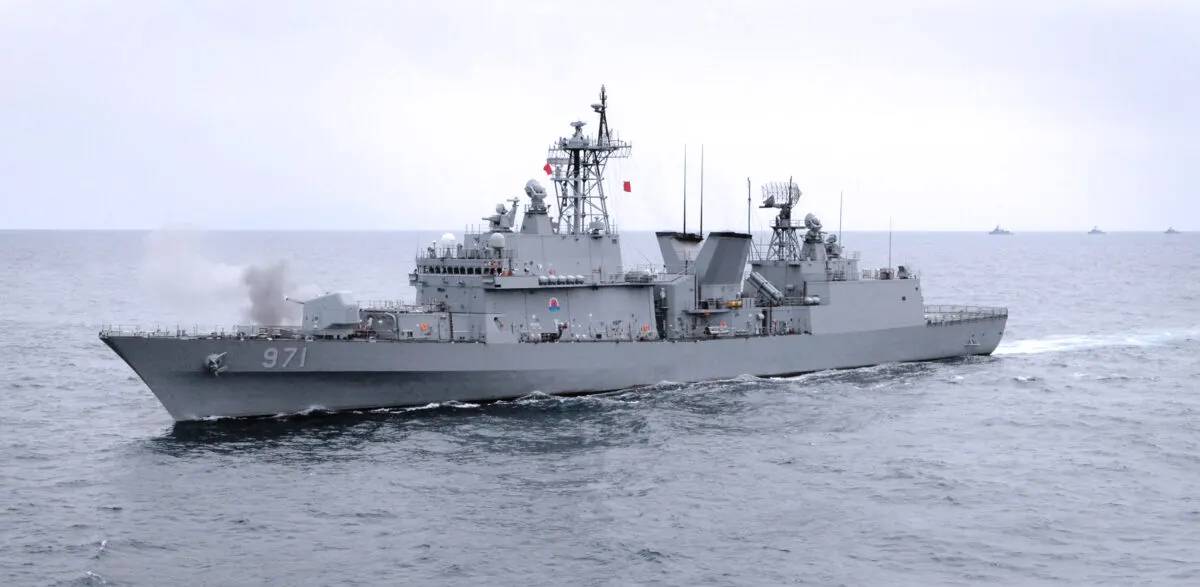
The Gwanggaeto the Great-class destroyer (KDX-I) is the first domestically developed and built destroyer operated by the Republic of Korea Navy and represents the first phase of the KDX program. As the first step in strengthening South Korea’s destroyer fleet, it is a versatile warship capable of conducting air-defense, anti-surface and anti-submarine operations.
- Key features
- South Korea’s first domestically developed destroyer: Established the Navy’s independent capability to develop destroyers
- Air-defense, anti-surface and anti-submarine capabilities: Equipped with surface-to-air missiles, anti-ship missiles and anti-submarine weapons
- Versatile mission profile as a medium-sized destroyer
- Provided the foundation for the development of the KDX-II and KDX-III
Development Background
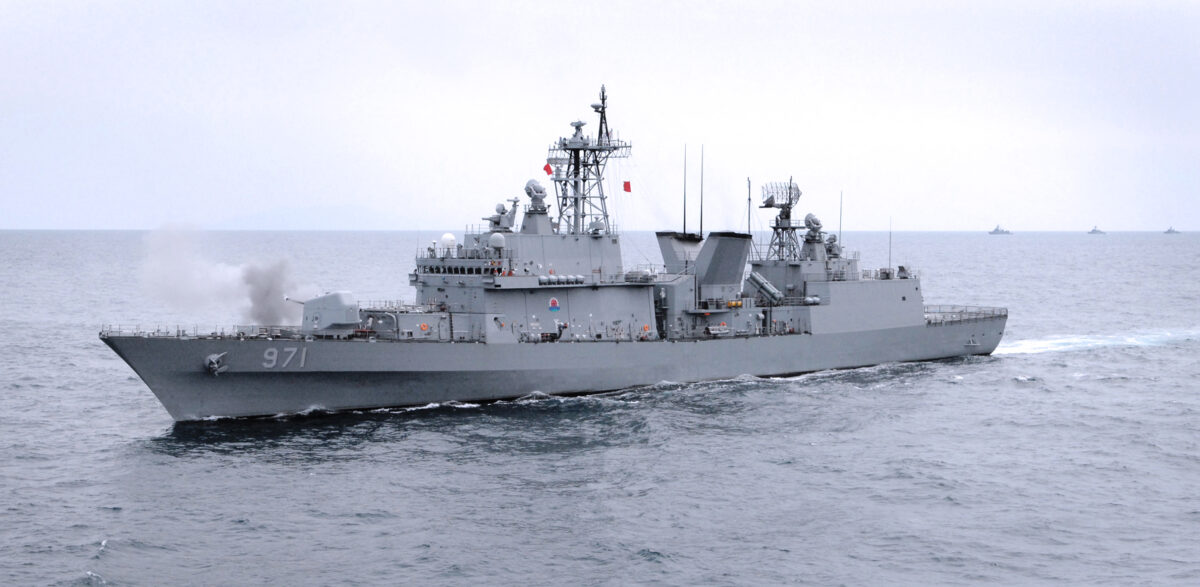
By the late 1980s, the Republic of Korea Navy had determined that it needed a new generation of destroyers, as its existing U.S.-supplied ships, including the Gearing and Fletcher classes, were reaching the end of their service lives. The Navy subsequently launched the KDX program to design and build destroyers domestically, with the Gwanggaeto the Great class serving as the first outcome of the initiative.
- Development timeline
- Early 1990s: Development of KDX-I began
- 1996: Lead ship Gwanggaeto the Great launched
- 1998: Entry into service began
- Today: Three ships in service, with some capability upgrades underway
Strengths and Weaknesses
🔹 Strengths
✔ The beginning of South Korea’s domestically built destroyer fleet: Established the Republic of Korea Navy’s independent destroyer-development capability ✔ Multirole operational capability: Can conduct air-defense, anti-surface and anti-submarine warfare ✔ Cost-effective operation: Lower maintenance costs than later classes such as the KDX-II and KDX-III ✔ Room for modernization: Its combat capability can be enhanced through the installation of updated equipment
🔻 Weaknesses
❌ Legacy systems: Its combat system and sensor performance lag behind current technologies ❌ Limitations in onboard weapon performance: Requires upgrades to newer missiles and combat systems ❌ Limited readiness for future warfare: Lacks a ballistic-missile defense (BMD) capability
Comparison with Destroyers in Neighboring Countries (China, Japan and North Korea)
| Category | Gwanggaeto the Great class (South Korea) | Type 053H3 destroyer (China) | Asagiri-class destroyer (Japan) | North Korean destroyer (estimated) |
|---|---|---|---|---|
| Displacement | 3,800 tons | 3,600 tons | 3,500 tons | 2,500–3,000 tons (estimated) |
| Dimensions (beam × length × height) | 17m × 135m × 7.5m | 15m × 130m × 7m | 16m × 137m × 7.2m | 14m × 120m × 6.5m (estimated) |
| Top speed | 55 km/h | 54 km/h | 53 km/h | 40–45 km/h (estimated) |
| Primary radar | SPS-49(V)5 | Type 360 | OPS-14 | Basic radar (estimated) |
| Surface-to-air missiles | RIM-66 SM-1 | HHQ-7 | RIM-66 SM-1 | Limited (estimated) |
| Anti-submarine capability | Hong Sang Eo and an anti-submarine helicopter | Yu-7 torpedoes | Type 07 anti-submarine missiles | Limited (estimated) |
| Key advantage | Balanced performance and domestic destroyer-development capability | Strong anti-ship missile capability | Optimized for anti-submarine operations | Capable of only limited force employment |
Comparison with Destroyers of Advanced Naval Powers (the United States, United Kingdom, Russia and France)
| Category | Oliver Hazard Perry class (United States) | Type 23 frigate (United Kingdom) | Neustrashimyy class (Russia) | La Fayette class (France) |
|---|---|---|---|---|
| Displacement | 4,100 tons | 4,900 tons | 4,400 tons | 3,800 tons |
| Dimensions (beam × length × height) | 15m × 136m × 8m | 16m × 146m × 8.5m | 17m × 135m × 8m | 16m × 133m × 8m |
| Top speed | 56 km/h | 55 km/h | 54 km/h | 52 km/h |
| Primary radar | AN/SPS-49 | Type 997 | MR-760 | DRBJ-11B |
| Surface-to-air missiles | RIM-162 ESSM | Sea Wolf | 9M317 Buk | Aster-15 |
| Anti-submarine capability | Hong Sang Eo and an anti-submarine helicopter | Type 2087 sonar | Paket-NK torpedoes | MU90 torpedoes |
| Key advantage | Potential for integration with the U.S. Navy | Strong anti-submarine warfare capability | Russian-style anti-ship missile capability | Stealth-oriented design |
Future Development
- Sensor and combat-system upgrades: Plans to introduce modern AESA radar and new surface-to-air missiles
- Improved air-defense capability: Upgrade to SM-2 or a newer air-defense missile
- Enhanced anti-submarine warfare performance: Addition of new sonar and anti-submarine weapon systems
- Export potential: Pursuing exports focused on emerging markets and Southeast Asia