Overview
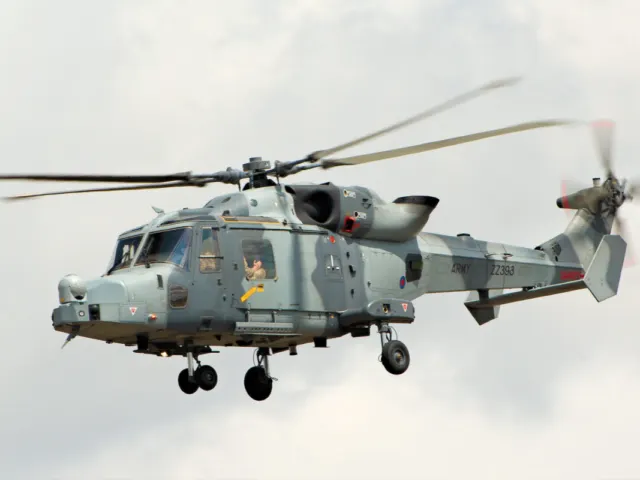
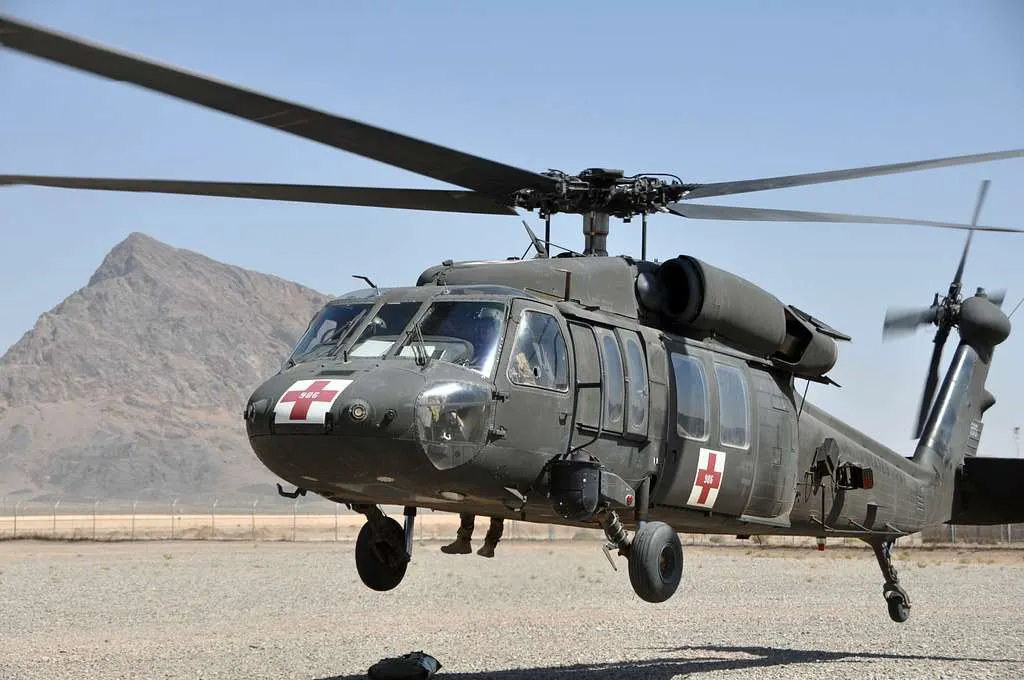
The UH-60 Black Hawk is a multirole medium-lift helicopter developed by Sikorsky. The Republic of Korea’s Army and Air Force operate the aircraft for a wide range of missions, including troop transport, medical evacuation, search and rescue, and special operations. As one of the most widely operated tactical helicopters in the world, it has demonstrated its capabilities in combat and across demanding operational environments.
- Key features
- Highly maneuverable and reliable: A stable airframe capable of operating in a wide range of mission environments
- Modular design: Can be adapted for medical evacuation, attack, VIP transport, and other roles
- Capacity for up to 11 personnel: An interior optimized for troop transport
- Capable of networked operations with other helicopters
Development Background
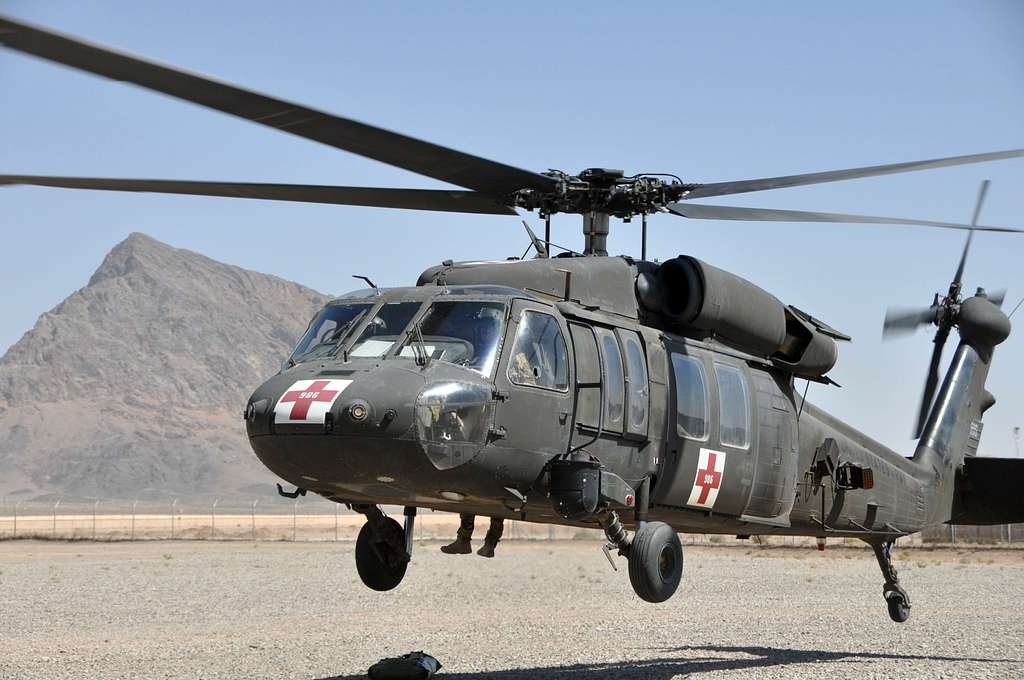
The UH-60 was developed in the late 1970s as the U.S. Army’s successor to the UH-1 Huey and has since been proven over decades of combat and operations in a wide range of environments. South Korea began acquiring the UH-60P in 1988 and is now also pursuing programs to extend the aircraft’s service life and improve its performance.
- Acquisition timeline
- 1988: South Korea’s initial acquisition of the UH-60P
- 1990s–2000s: Operated as a primary platform for transport and rescue missions
- 2020s: Upgrades and performance improvements underway for some aircraft
Strengths and Weaknesses
🔹 Strengths
✔ Multirole flexibility: Suitable for transport, evacuation, special operations, and a range of other missions ✔ High reliability and maneuverability: Combat-proven worldwide ✔ Strong survivability: Can be equipped with armored fuel tanks and self-defense systems ✔ Established maintenance infrastructure: Stable parts availability and support capabilities
🔻 Weaknesses
❌ Airframe aging: Some aircraft have been in service for more than 30 years, increasing maintenance demands ❌ Limited payload capacity: Offers less lift capacity than larger helicopters such as the CH-47 ❌ Limits in electronic-warfare protection: Some aircraft lack sufficient defensive systems against modern electronic-warfare threats
Comparing Utility Helicopters in Neighboring Countries (China, Japan, and North Korea)
| Category | UH-60P (South Korea) | Z-20 (China) | UH-60JA (Japan) | Mi-8 (North Korea) |
|---|---|---|---|---|
| Personnel capacity | 11 | 12–15 | 11 | 20 |
| Maximum speed | 294 km/h | 280 km/h | 294 km/h | 250 km/h |
| Range | Approximately 590 km | Approximately 600 km | Approximately 590 km | Approximately 450 km |
| Multirole capability | Very high | High | High | Moderate |
| Key advantage | Global combat record and reliability | Based on a U.S. design | Domestic production and sustainment | Large-scale transport capacity |
Comparing Utility Helicopters in Advanced Military Powers (the United States, the United Kingdom, Russia, and France)
| Category | HH-60M (United States) | AW101 (United Kingdom) | Mi-17V5 (Russia) | NH90 TTH (France) |
|---|---|---|---|---|
| Personnel capacity | 11 | 30 | 24 | 20 |
| Maximum speed | 294 km/h | 278 km/h | 250 km/h | 300 km/h |
| Range | Approximately 590 km | Approximately 930 km | Approximately 800 km | Approximately 800 km |
| Key advantage | All-weather medical evacuation capability | Large-scale multirole capability | High-volume transport capacity | Multinational operation to NATO standards |
Future Development
- Service-life extension programs: Including structural reinforcement and avionics upgrades
- Improved electronic-warfare protection: Adding survivability equipment such as DIRCM and RWR systems
- Evaluation of successor aircraft: Including the UH-60V, S-70i, or participation in the development of next-generation helicopters
- Greater use of domestically produced components: Reducing maintenance costs and improving independent maintenance capabilities