Overview
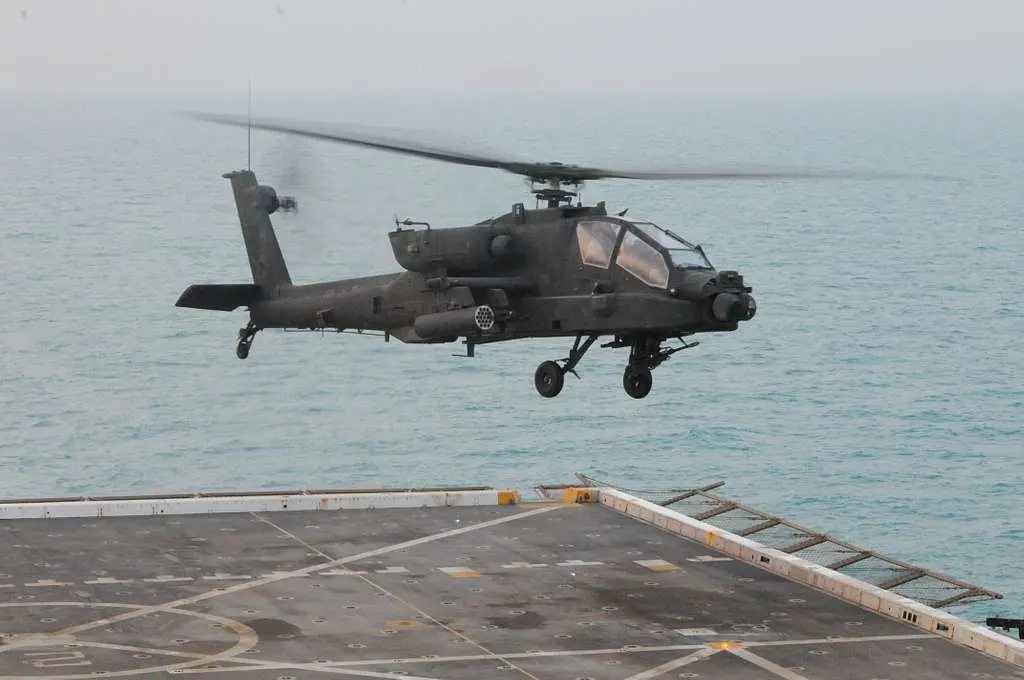
The AH-64E Apache Guardian is the latest attack helicopter developed by Boeing. The Republic of Korea Army introduced the aircraft to counter North Korea’s armored forces and strengthen its ground-attack capabilities. With formidable firepower, enhanced survivability, and networked battlefield capabilities, the AH-64E is widely regarded as one of the world’s most advanced attack helicopters.
- Key features
- Heavy firepower: Equipped with Hellfire missiles, Hydra rockets, and a 30mm cannon
- Upgraded sensors and avionics: Improved Longbow radar and TADS/PNVS systems
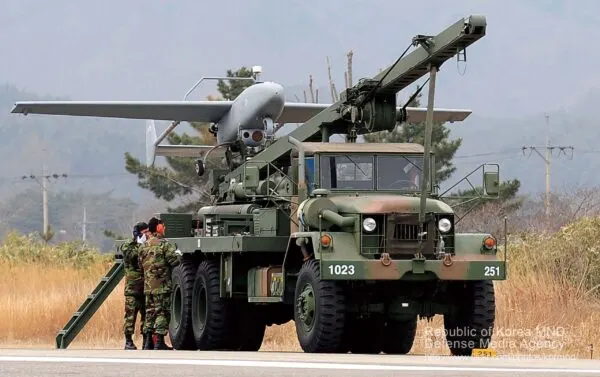
- Unmanned-aircraft control: Enables integrated battlefield operations in coordination with UAVs
- Reinforced airframe: Composite materials and survivability equipment provide a high level of protection
Development Background
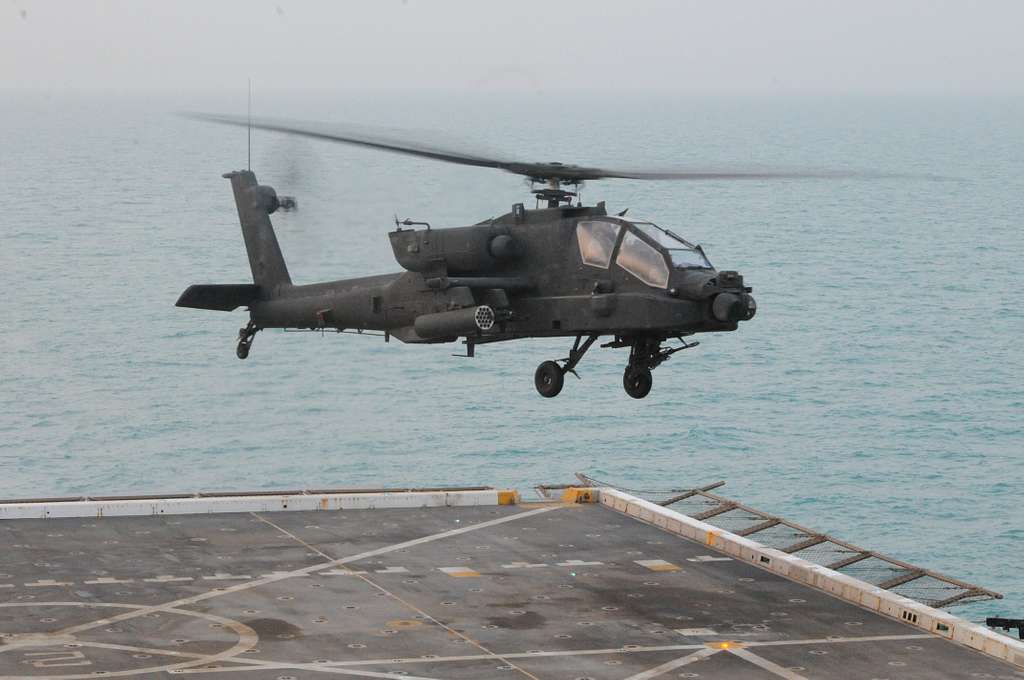
The Republic of Korea Army launched a next-generation attack helicopter program to replace its aging AH-1S Cobra fleet and respond to North Korea’s large-scale deployment of armored forces. In 2013, it selected the AH-64E Apache Guardian for acquisition. Full-scale deployment began in 2016, and the helicopter now serves as a core strike asset of the Republic of Korea Army Aviation.
- Acquisition timeline
- 2013: AH-64E selected under the next-generation attack helicopter program
- 2016: Initial deliveries received and helicopters deployed operationally
- Current: 36 aircraft in service, with the possibility of future expansion under consideration
Strengths and Weaknesses
🔹 Strengths
✔ Outstanding anti-armor and anti-infantry capability: Hellfire missiles and rocket pods ✔ Excellent battlefield awareness and engagement capability: Longbow radar, FLIR, and TADS/PNVS systems ✔ UAV control capability: Enables real-time information sharing across the battlefield network ✔ Capable of operating at night and in adverse weather ✔ High survivability: Twin engines and armored protection
🔻 Weaknesses
❌ High acquisition and operating costs: Advanced onboard systems drive up overall lifecycle costs ❌ Greater exposure risk due to its large airframe: Difficult to conceal in urban and mountainous environments ❌ Requires dedicated maintenance infrastructure: Specialized maintenance systems must be established
Comparison with Attack Helicopters in Neighboring Countries (China, Japan, and North Korea)
| Category | AH-64E (South Korea) | Z-10 (China) | AH-64DJP (Japan) | Mi-24 (North Korea) |
|---|---|---|---|---|
| Top speed | 300 km/h | 270 km/h | 293 km/h | 335 km/h |
| Combat radius | Approx. 480 km | Approx. 400 km | Approx. 500 km | Approx. 450 km |
| Armament | Hellfire, Hydra, and cannon | HJ-10 missiles and other weapons | Hellfire and cannon | AT-2 missiles and other weapons |
| Sensor suite | Longbow radar and TADS | TV/IR sensors | Longbow radar | Limited sensor systems |
| Key advantage | Network connectivity and precision strike capability | Cost-effective development | Highly refined overall performance | Older design but deployed in large numbers |
Comparison with Attack Helicopters Operated by Advanced Military Powers (the United States, the United Kingdom, Russia, and France)
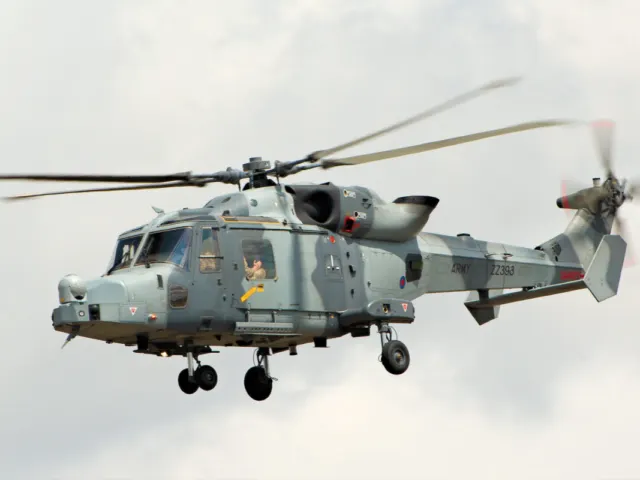
| Category | AH-64E (United States) | Wildcat AH1 (United Kingdom) | Ka-52 (Russia) | Tiger HAD (France) |
|---|---|---|---|---|
| Top speed | 300 km/h | 311 km/h | 315 km/h | 290 km/h |
| Combat radius | 480 km | 420 km | 460 km | 450 km |
| Armament | Hellfire and 30mm cannon | Stinger missiles and cannon | AT-9 missiles and other weapons | Mistral missiles, cannon, and other weapons |
| Sensor suite | Longbow and TADS/PNVS | Electro-optical and IR systems | EO/IR and radar | Observation and targeting systems |
| Key advantage | Comprehensive capabilities and network connectivity | Compact size and maneuverability | Strong mobility and protection | European-style multirole operation |
Future Development
- Closer UAV integration: Establishing operational systems that link unmanned aircraft with real-time strike missions
- Expanded electronic warfare capabilities: Adding equipment to disrupt enemy radar and communications
- Consideration of a next-generation attack helicopter: Research into unmanned or lightweight stealth attack helicopters
- Development of export variants: Pursuing export-oriented upgrades based on South Korean operational experience