Yasaka Shrine in Central Kyoto

Yasaka Shrine is dedicated primarily to Susanoo-no-Mikoto, a deity from Japanese mythology.
Susanoo is often described as the god of wind and the sea, but in Japan he is more widely revered as a protector against calamity.
In eras when epidemics and disasters repeatedly threatened communities, people turned to this deity for protection from unseen dangers. Yasaka Shrine became one of the central places where those prayers were offered.
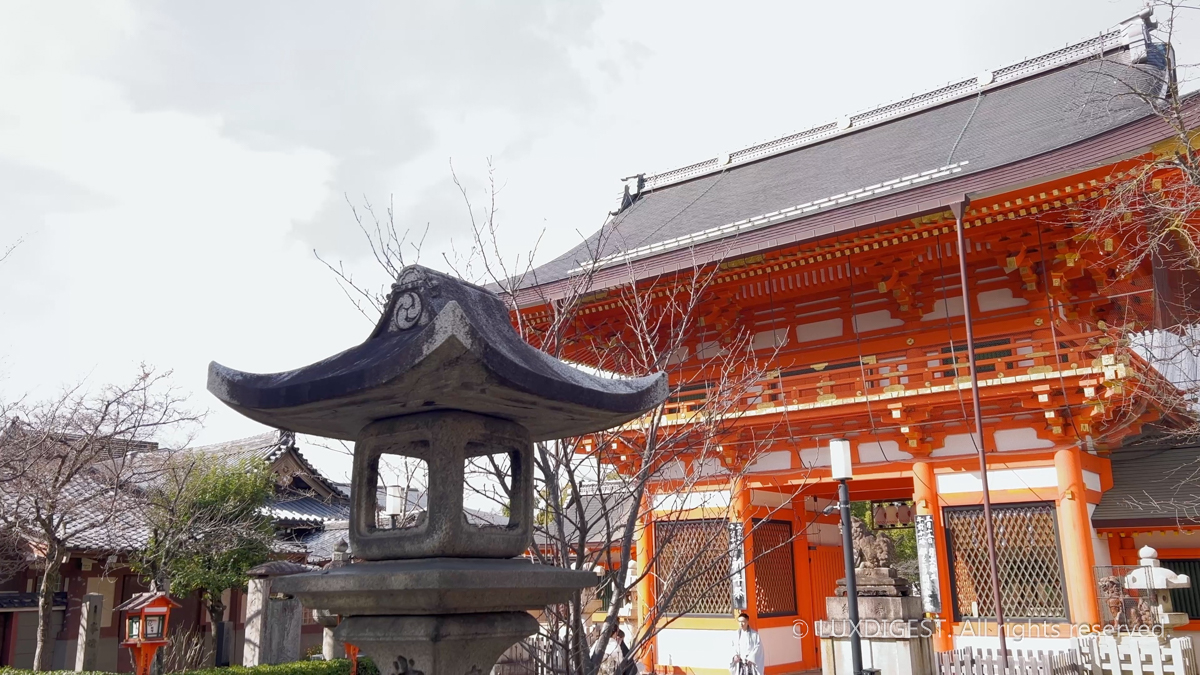
His wife, Kushinadahime, is also enshrined here.
Kushinadahime represents relationships and the family, which is why many visitors still come to pray for love and marriage. Their divine children are enshrined here as well, giving the shrine an overall role that can be understood as warding off misfortune while keeping positive forces in motion.
Yasaka Shrine is therefore more than a place devoted to a single purpose. It brings together three interconnected forms of faith: protection from misfortune, meaningful relationships and stability in daily life.
The shrine may appear quiet on the surface, but it carries a clear spiritual purpose shaped by centuries of accumulated belief.
A Simple Route and the Best Time to Photograph It
One of Yasaka Shrine’s greatest advantages is its location. It sits directly beside Kyoto’s lively Gion district, yet crossing the boundary into the shrine grounds brings an entirely different atmosphere.
A few steps away from streets crowded with shops and tourists, visitors find a space where the eye naturally settles and the surroundings feel more composed.
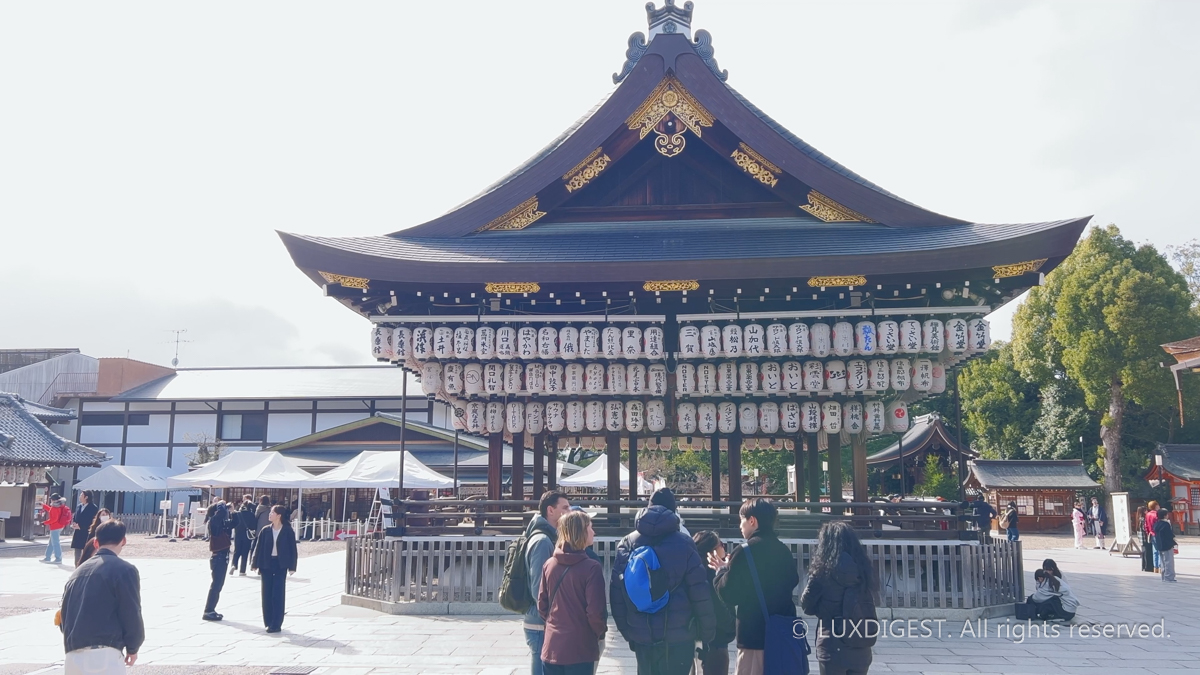
The shrine is striking not because it is extravagantly decorated, but because its layout is so well balanced.
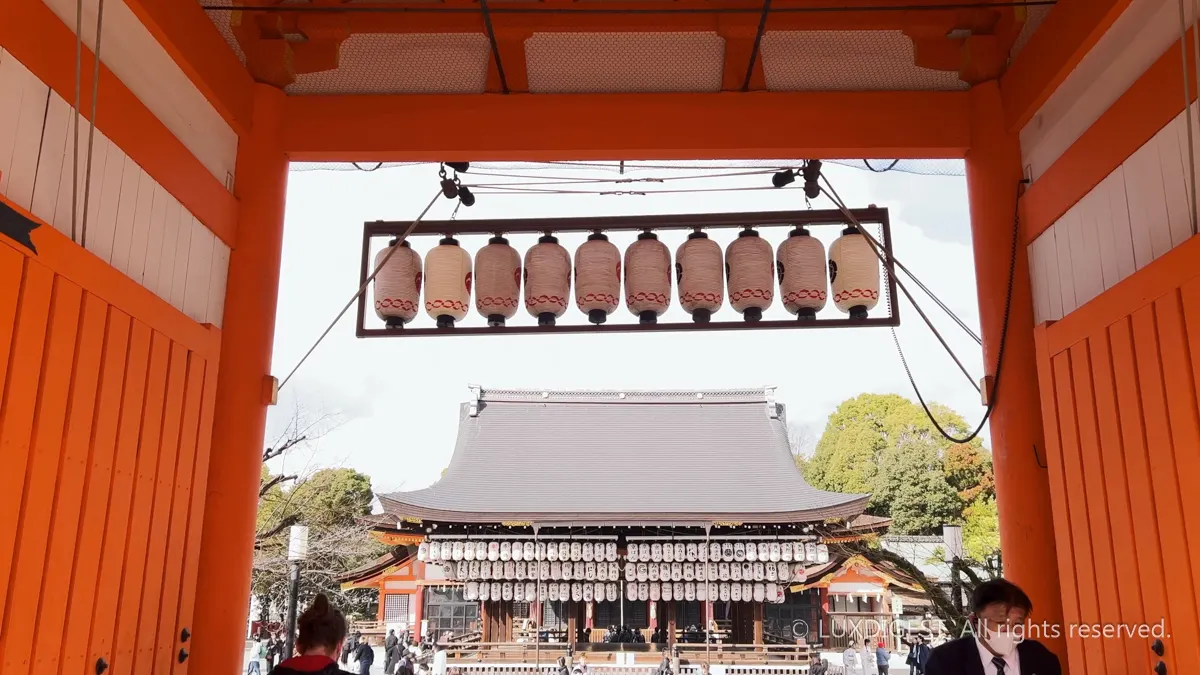
The route from the entrance to the main sanctuary follows a clear, largely straight line, while the buildings on either side frame rather than disrupt the view. Even when the grounds are busy, the dominant impression is one of order rather than congestion.
The atmosphere changes noticeably after sunset.
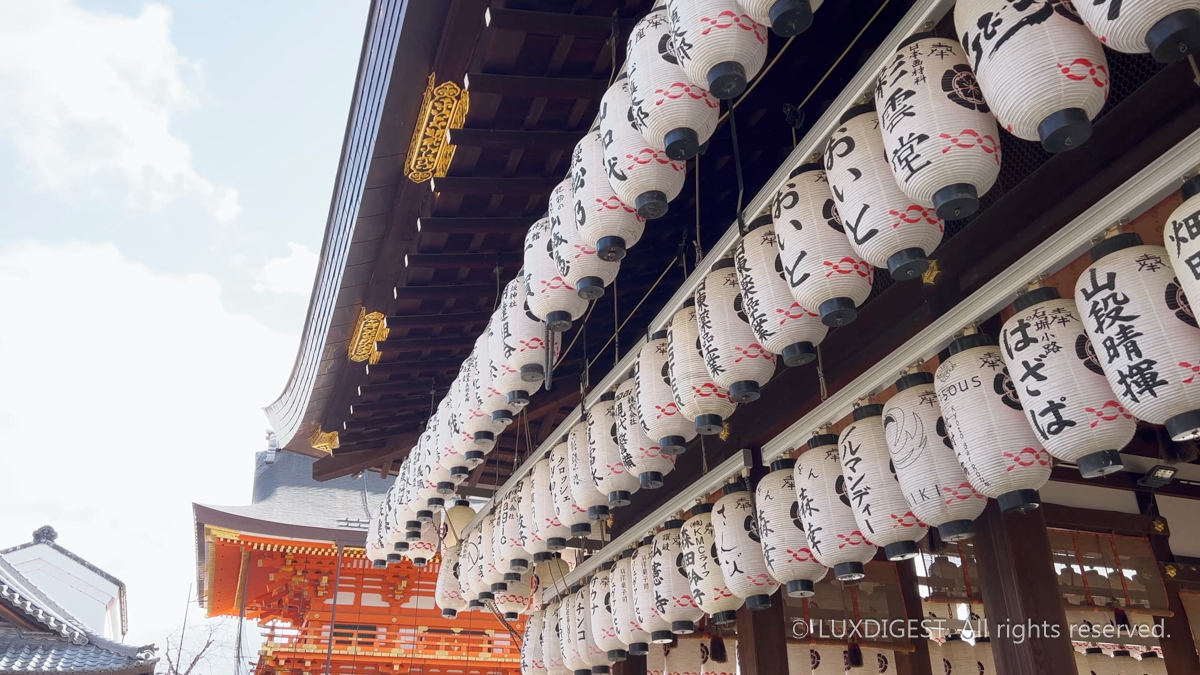
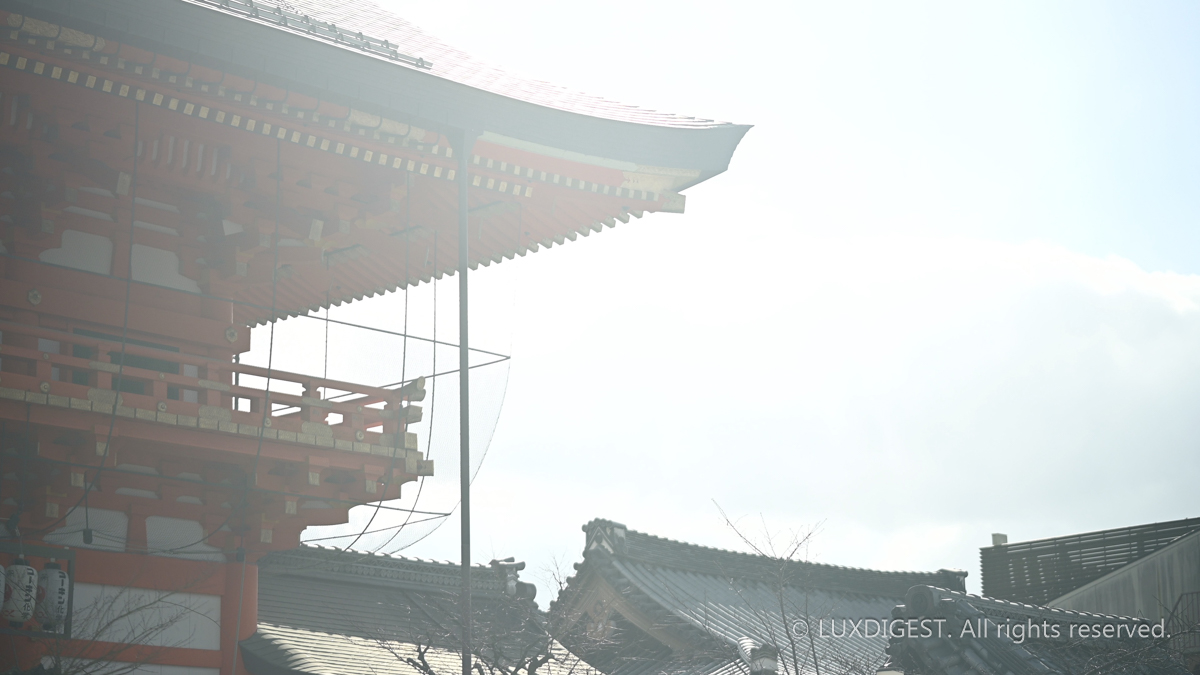
As the lanterns are lit one by one, the grounds fill with a soft glow. Against the vermilion pillars, the light adds depth and dimension. At that point, Yasaka Shrine becomes more than a place to look at—it becomes somewhere to pause and absorb the atmosphere.
That is why it leaves such a strong impression without the need for elaborate staging.
Another important detail is that Yasaka Shrine serves as the spiritual center of the Gion Matsuri.
Today, the festival is widely known as a major tourist attraction, but it began as a ritual intended to prevent epidemics.
That history has allowed Yasaka Shrine to retain its deeper meaning as a place for putting unseen threats in order, rather than merely functioning as a sightseeing destination.
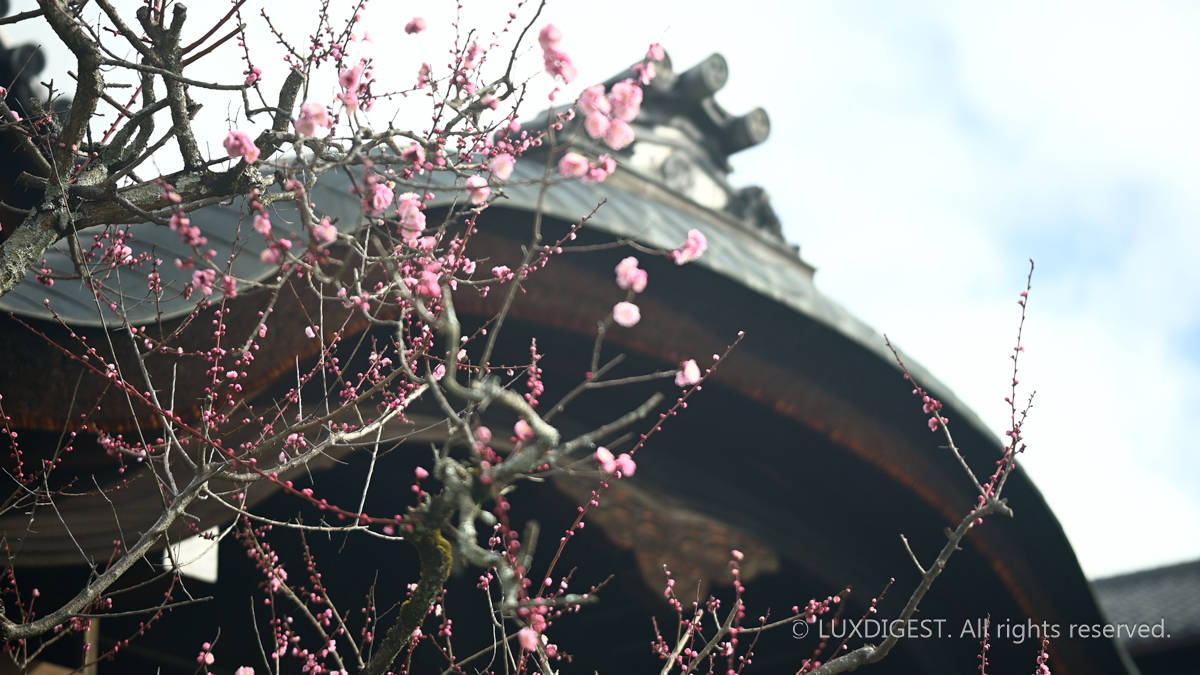
Excellent Access and Convenient Transport
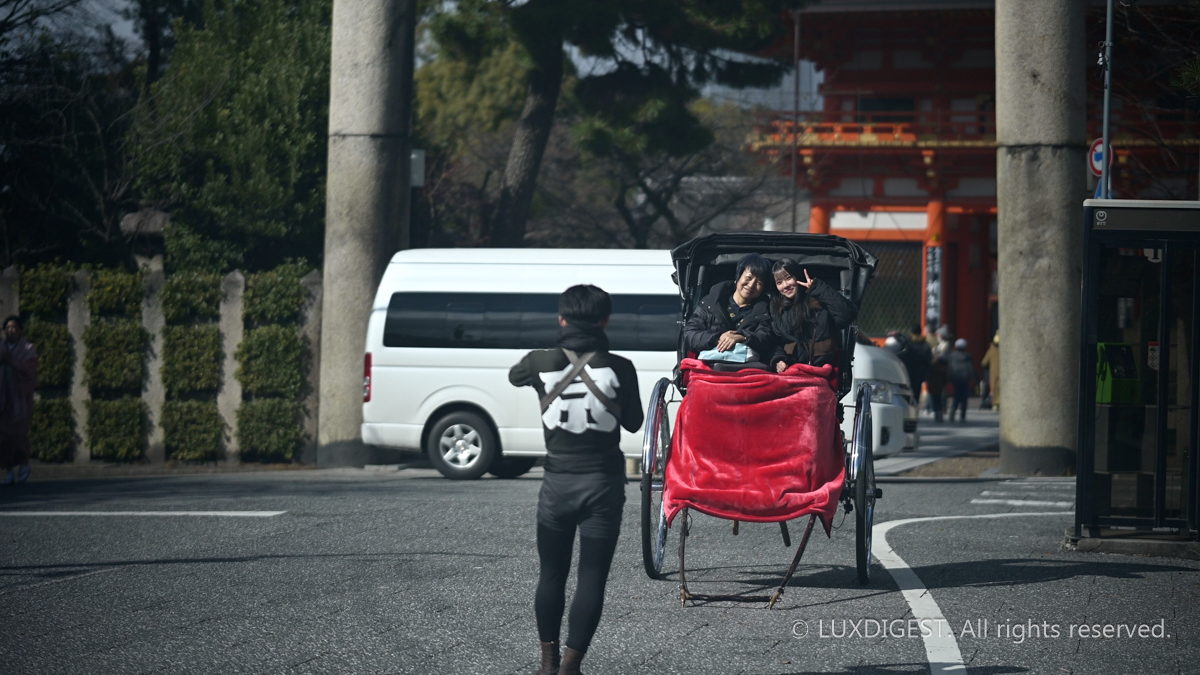
Yasaka Shrine is exceptionally easy to reach. From central Kyoto, visitors can take a bus to the Gion stop and walk directly to the shrine, without complicated transfers.
Whether you are coming from Kyoto Station, Kawaramachi or the Shijo area, the journey is straightforward.
The shrine’s advantages become even clearer when explored on foot. Because it connects directly with Gion, it is easy to visit without making a separate plan. From there, the route continues toward Sannenzaka, Ninenzaka and Hōkan-ji Temple. This stretch brings together some of Kyoto’s most iconic scenery, making it possible to experience several highlights in a single walk.
If you are visiting to take photographs or document the journey, it is worth planning the route around the evening rather than the daytime. The atmosphere of Gion, Yasaka Shrine’s illumination and the night views of the traditional streets beyond flow naturally into one another. The walk itself unfolds like a series of connected scenes.
Yasaka Shrine is less a destination that requires a long stay than a place that naturally becomes part of a wider travel itinerary. A brief visit is enough, and there is no need to take part in any particular ritual.
Still, taking a moment to stop and look around slowly can make the character of the shrine linger more vividly.
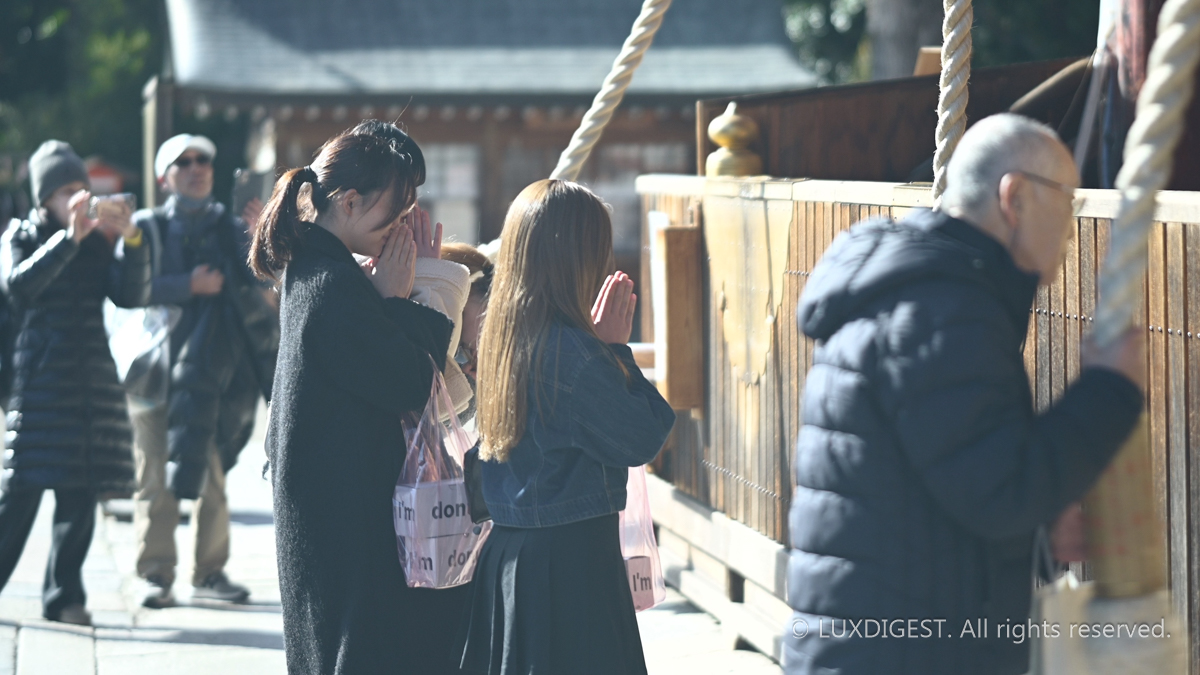
People come here for different reasons. Some take photographs, some quietly bring their hands together in prayer, and others simply pass through.
The shrine’s defining quality is the way all of these forms of visit coexist naturally. The freedom to spend time here without following a prescribed routine is precisely what makes the space feel so welcoming.
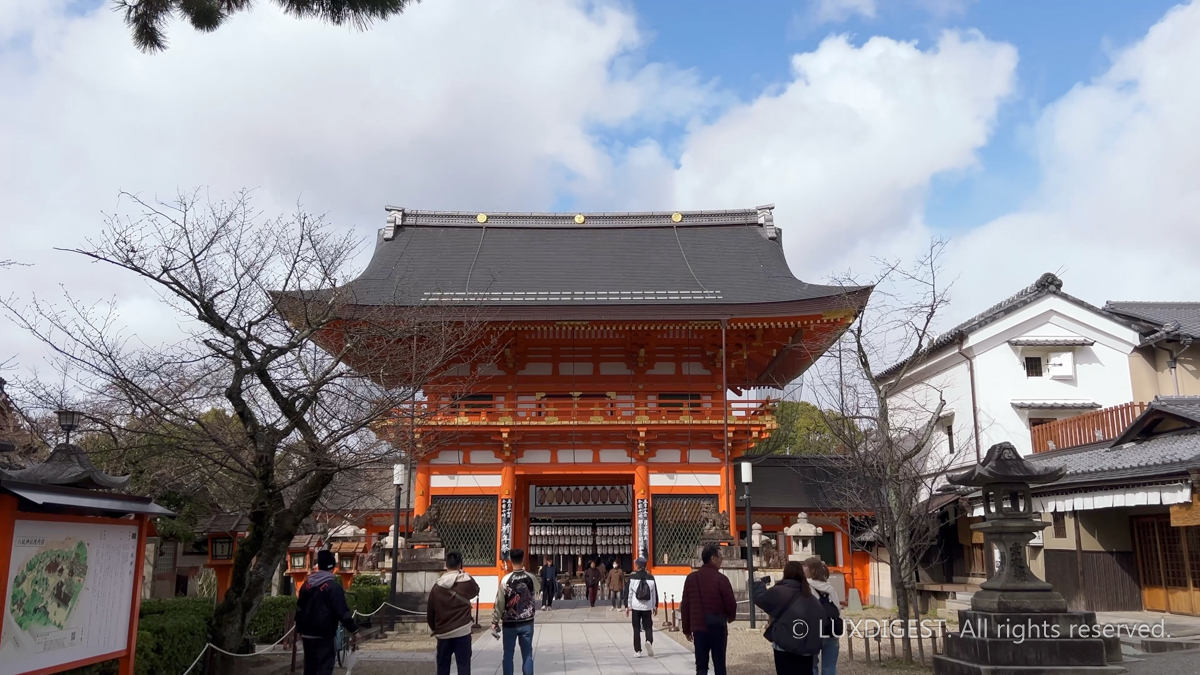
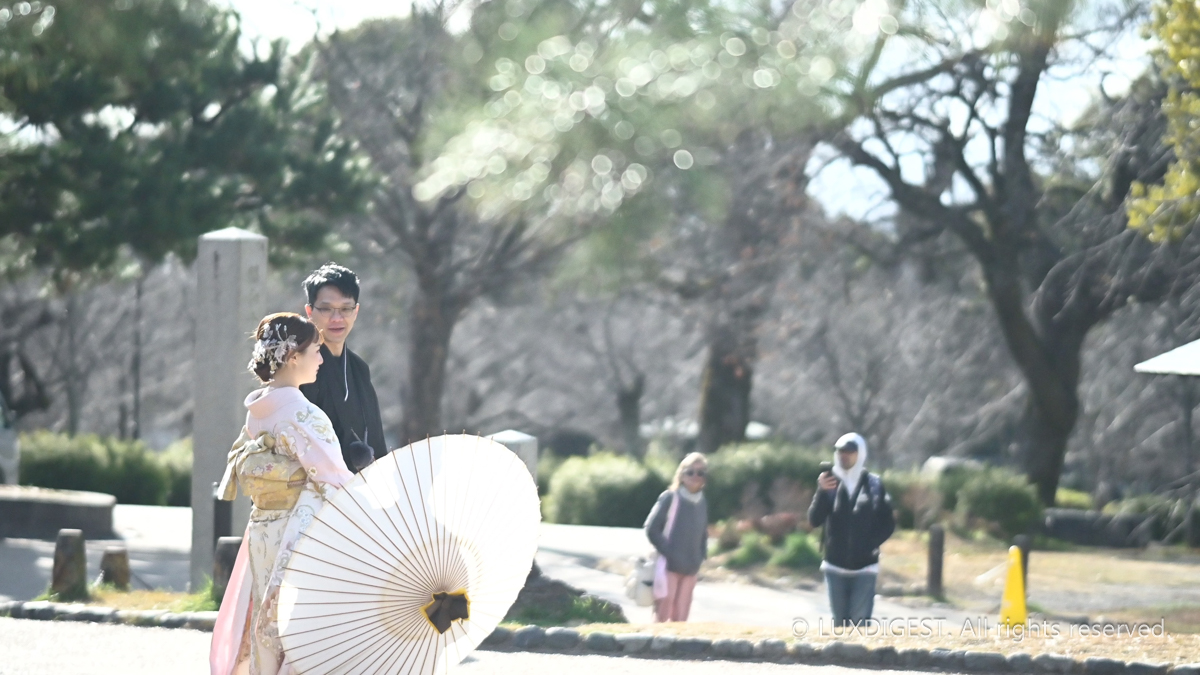
As you explore the shrine, it becomes clear why it is so beloved by newlyweds and couples. Visitors come to pray for peace and stability at home, as well as for the well-being of their children.
If you are visiting Japan—especially Kyoto—this spring, Yasaka Shrine is well worth adding to your itinerary.