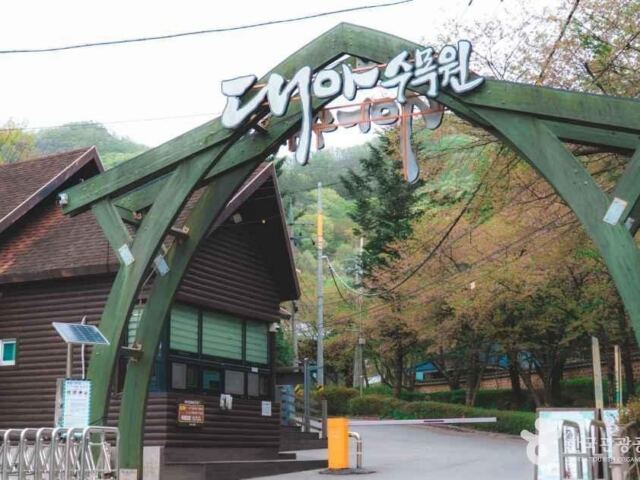
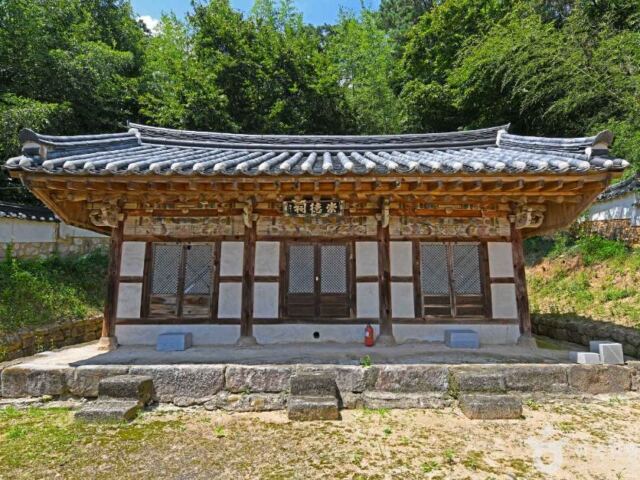
Beyond just visiting a single hall, the complex offers the Sangdeokmun Gate, the Pyeongyeongdang Hall, the Yongamsa Shrine, and the Jangseogak Library. Would you like to explore how a single scholar’s study room transformed into a small community of learning?
In addition to the Jeongsa building established in 1924 by Yu Young-sun, the complex includes the Pangyeongdang building (built in 1936), Yongamsa Shrine (built in 1956), and the Jangseokgak building, which houses Yu Young-sun’s collected works, books, and documents.
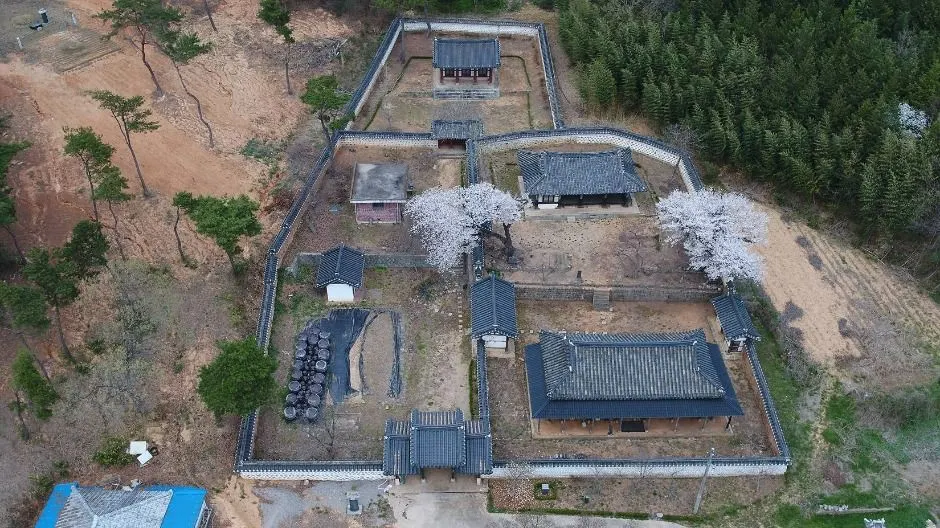
Hyeongok Jeongsa is located at 68-34 Jugok 1-gil, Gochang-eup, Gochang-gun, Jeonbuk Special Self-Governing Province. It is not a Joseon-era *seowon* (Confucian academy), but rather a space for Confucian education established in modern times. When you visit one *jeongsa* (hall), you encounter a structure that includes a *seodang* (private school), a *sadang* (shrine), and a *jangseogak* (book repository), so there are more facilities than the name suggests.
It is a place of learning that opened in 1924.
Hyeongok Jeongsa was established in 1924 by Hyeongok Yu Young-sun, a scholar from Gochang, for the purpose of studying and educating students. This site is said to have been where Yu Young-sun’s teacher, Ganjeon Jeonwoo, conducted lectures for approximately one year, and it represents a place where a teacher’s lectures led to the student’s learning and education.
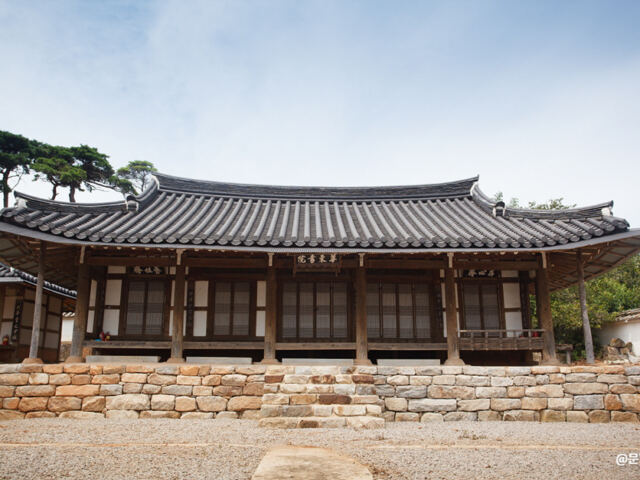
The building, built on a foundation of large stone blocks, has a front facade of three bays wide and two bays deep, and features a hip-and-gable roof. Square pillars stand on foundation stones laid atop the stone platform. The interior consists of a main hall, a room, a large open space, and an opposite room, with a small alcove located behind the detached room. Although not a large building, following the layout reveals the spaces for living and studying at a glance.
A village school and an ancestral shrine have been added in front of the study hall.
Within the grounds are the main gate, Sangdeokmun; the study hall, Pyeongyeongdang; the shrine, Yongam-sa; and the library, Jangseogak. Pyeongyeongdang was built in 1936, and Yongam-sa was built in 1956, so the construction dates of each building differ, allowing one to trace the expansion of the modern scholarship space in a single location.
Yongamsa houses the spirit tablets and portraits of Yu Yeong-seon and his teacher, Ganjae Jeon U. The Jangseogak building contains Yu Yeong-seon’s collected writings, along with books and documents preserved by his family, making it a different experience from simply viewing the architecture. The building brings together the person who studied, the person who taught, and the records they left behind, all in one place.
In 1955, Hwagang Seowon, enshrining Jeon U and Yu Yeong-seon, was established with its foundation in Hyeongok Jeongsa. The following year, Yongamsa was built. Hyeongok Jeongsa was designated as a tangible cultural heritage of Jeonbuk Special Self-Governing Province on September 27, 1974.
From the perspective of both the Doam Confucian academy and the Mujang hyanggyo, the distinction is clear.
Doam Confucian academy is a place that reveres figures from the Joseon Dynasty, and it was restored in 1946 after being abolished in 1868. Mujang Hyanggyo was established in 1420. Both places demonstrate Gochang’s Confucian educational tradition, but Hyeongok Jeongsa is different in that it is a modern academy established in 1924 for Yu Young-seon’s personal scholarly research and the training of his disciples.
Jeonbuk Province also boasts Confucian heritages such as Museong Seowon in Jeong-eup and Pilam Seowon in Jangseong, which offer insights into the traditions of Confucian scholars and education. Museong Seowon is a Joseon-era Confucian academy that is included in the UNESCO World Heritage list. Pilam Seowon is a Joseon-era Confucian academy dedicated to the veneration of Kim In-hu, also known as Haseo. The significance of Hyeongok Jeongsa lies not in its size or age, but in the fact that it preserves the study and records of a 20th-century Confucian scholar.
Goam Seowon in Gochang also reveals a difference. While Goam Seowon focuses on figures and traditions of the Joseon Dynasty, Hyeongok Jeongsa centers on the activities of Yu Yeong-seon and the modern space for learning. Despite the changes in era, they share the commonality of having created spaces for learning.
This is suitable for parents and children, as well as for those interested in the humanities.
When you go with your parents’ generation, it is a good opportunity to discuss the relationship between Yu Yeong-seon and Ganjae Jeon Woo, the circumstances behind its construction in 1924, and the portrait and memorial tablet enshrined at Yongamsa Temple. This is not a field trip focused merely on memorizing building names, but a way of following the story of the teacher-and-disciple relationship of a local Confucian scholar.
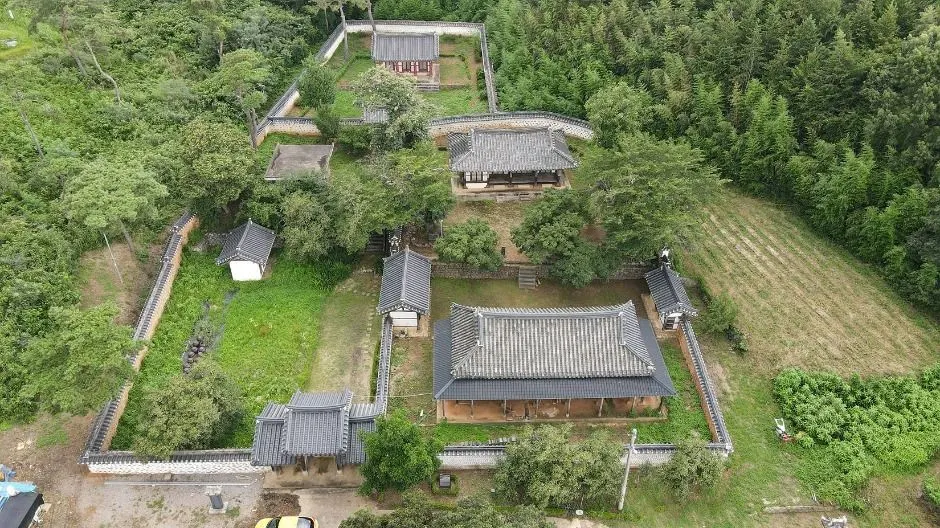
For teenagers and university students, the fact that this is a modern study hall dating from 1924, rather than a Joseon-era Confucian academy, offers a good point for discussion. Ask them to explain the function of each—study hall, village school, shrine, and library—in a single sentence, and even children can distinguish the roles of the different spaces as they look around. Even if a child runs ahead, starting in order from Sangdeokmun Gate turns the visit into a small history lesson.
This place is suitable for individuals or small groups seeking a quiet cultural experience, and for adult visitors interested in Korean history and architecture. It is not a large, interactive facility, but rather a place focused on the building itself, the stories of the people associated with it, and its collection of books and documents.
Start at the Sangdeokmun gate and read the four functions.
Consider the following order for your visit: Sangdeokmun Gate, Hyeongokjeongsa Pavilion, Pangyeongdang Hall, Yongamsa Temple, and Jangseogak Library. After passing through the main gate, observe the center of learning at Hyeongokjeongsa Pavilion, then recall the function of a village school at Pangyeongdang Hall. Next, examine the ritual space at Yongamsa Temple, and finally consider the significance of preserving records at Jangseogak Library. Following this sequence, the arrangement of the precincts comes together naturally.
If you enjoy photography, you might consider documenting the building’s architecture, noting its proportions of three bays in the front and two bays on the sides, its large stone foundation, and its hip-and-gable roof. The layout, with the wooden-floored room, main hall, and opposite room connected, is also worth observing. Here, a photograph that captures *why* the building looks the way it does is more fitting than a simple background shot.
When discussing academic lineages with your parents, you can talk about Yu Yeong-seon and Jeon Woo. When with friends, you can compare the differences between the “Hyeongok Jeongsa” and the “Gochang Eupseong,” linking them to Confucian educational spaces and the spaces within the town walls. Based on the fact that the “Jangseogak” preserves collected works, books, and documents, it is also a good idea to record the names and functions of the buildings in a travel journal.
Connect with other historical sites in Gochang.
Hyeongokjeongsa is best visited together with the Gochang Dolmen Site and Park, Gochang Fortress, and Seoktanjeong. The Dolmen Site and Park offer insights into prehistoric culture, the Gochang Fortress showcases the fortress walls and interior spaces of the Joseon Dynasty, and Seoktanjeong provides a glimpse into traditional pavilion culture. Visiting these sites together allows for a comprehensive understanding of the history of Gochang across different periods.
Hyeongokjeongsa is the teaching space of a modern Confucian scholar. When combined with the dolmen, the town walls, and the pavilion, it becomes clear that the history of Gochang does not stop at a single era. Each location has a different role, making it interesting to compare and observe them.
Simply enter the address near the Gochang IC.
Hyeongokjeongsa is located at 68-34 Jugok 1-gil, Gochang-eup, Gochang-gun, Jeonbuk Special Self-Governing Province. To get there by car, enter the address into your navigation system. It is located near Gochang IC, in the western part of Gochang city.
The specific bus routes that connect directly to Hyeongokjeongsa, the designated parking area, its size, and its availability are not included in the provided information. Those traveling by car should plan their route based on the address.
This is the information needed for admission and inquiries.
The admission fee, hours of operation, holidays, whether reservations are required, and the reservation method are not specified in the publicly available information. While the books and artifacts in Jangseogak are designated as items to be preserved, the space is not presented as a place where general visitors can freely browse the internal materials.
For inquiries, please contact the Culture and Arts Department of Gochang County at 063-560-2468, or visit the Gochang County Culture and Tourism website for more information about Hyeongokjeongsa. When visiting, it is sufficient to carefully observe the buildings and materials within the cultural heritage site.
To find Hyeongokjeongsa, enter the address into your navigation system. Then, explore the building by following a route that examines the functions and construction dates of each section, starting from Sangdeokmun and ending at Jangseogak.