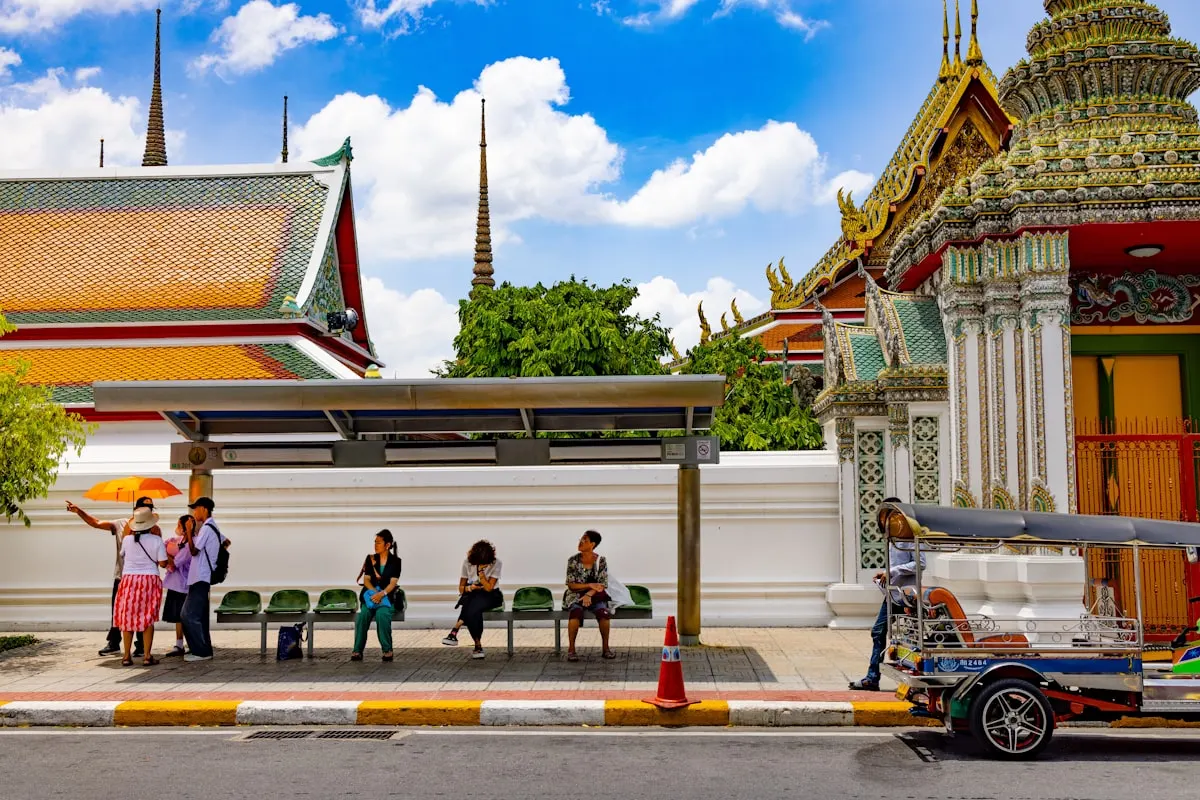
Thailand plans to implement a tourism tax of 450 baht in 2027, increasing the burden of travel costs
The Thai government has decided to significantly increase the tourism tax levied on foreign tourists. The National Tourism Policy Committee has approved the introduction of a tourism tax of 450 baht per person, and has entered the public hearing process. This represents a 50% increase compared to the previously proposed amount of 300 baht. The Thai government aims to begin collecting this tax from air travelers starting in the first quarter of 2027. This decision comes shortly after the Airports of Thailand (AOT) recently increased international passenger service fees at major airports, raising concerns that the cost burden on tourists will increase sharply.
Expansion and application of tourism taxes
Collection methods for tourism taxes
Thailand’s National Tourism Policy Committee approved on the 14th a plan to impose a tourism tax of 450 baht per foreign tourist, with the same amount to be charged regardless of whether they enter by air, land, or sea. The plan will first apply to those entering by air and then be expanded to those arriving by land and sea.
This tourism tax, unlike previous attempts that were repeatedly postponed, specifies more concrete uses. Most of the funds will be incorporated into the Thailand Tourism Promotion Fund and will be used for automatic medical accident insurance for tourists, improvement of local travel infrastructure, and restoration of the environment damaged by overtourism.
Duplication of charges with airport usage fees
Prior to the introduction of the tourism tax, the cost of air travel to Thailand had already increased significantly. From June 20th, Airports of Thailand (AOT) increased the passenger service charge levied on international passengers from 730 baht to 1120 baht, an increase of 390 baht, which represents a 53.4% increase. The increased fares apply to international passengers departing from six international airports, including Suvarnabhumi and Don Mueang in Bangkok, as well as Phuket, Hat Yai, Chiang Mai, and Chiang Rai.
The Tourism Authority of Thailand explained that this funding would be used to improve airport infrastructure and strengthen security systems . However, with two fee increases implemented in a short period, the total cost for tourists is likely to increase significantly.
Concerns in the tourism industry and market impact
The tourism industry has expressed concerns about this increase in tourism tax. This is because it could have a significant impact on short-distance markets that are sensitive to price, such as China, and the increase could have an even greater impact given the current trend of decreasing arrivals. If the price is too high, it could drive price-sensitive travelers to competing regions; conversely, if the price is too low, it could create a dilemma where the necessary funds for infrastructure improvements cannot be secured.
Thailand has considered introducing a tourism tax for several years, but has repeatedly failed to implement it due to issues such as establishing a collection system and the burden on the tourism industry. This time as well, several procedures remain, including public hearings, reconsideration, and cabinet approval, so the actual implementation has not been definitively confirmed.
Thailand’s government’s shift in tourism policy
The Thai government is shifting the focus of its tourism policy from simply increasing the number of foreign visitors to attracting high-value tourists and increasing per-capita spending by tourists. The Ministry of Tourism and Sports and the Tourism Authority of Thailand have announced that, in the 2027 tourism strategy, they will focus on high-value markets, year-round tourism, and regional diversification, rather than the number of tourists.
These policy changes signify a shift away from simply increasing the number of visitors and towards prioritizing the profitability and sustainability of tourism. A tourism tax is expected to be a key tool in implementing this strategy.
Frequently Asked Questions (FAQ)
- Q. When will the 450 baht tourism tax be implemented in Thailand?
- The Thai government plans to begin collecting the tax starting in the first quarter of 2027, possibly as early as April. The tax will be applied to those entering the country by land and sea routes approximately one year later.
- Q. Is the tourism tax applied equally to all modes of entry?
- A. Yes, the 450 baht fee applies equally to all foreign tourists, regardless of the mode of entry, whether by air, land, or sea. However, it appears that the actual collection will begin with air travel.
- Q. Has the tourism tax been finalized?
- A. It has not yet been finalized. Currently, a 30-day public hearing process is underway, after which it will be reviewed again by the National Tourism Policy Committee and require approval from the Cabinet.
- Q. Where is the tourism tax used?
- The funds collected will be incorporated into the Thailand Tourism Promotion Fund and will be used for medical accident insurance for tourists, improvement of tourism infrastructure, and environmental restoration due to overtourism.
- Q. What is the impact of this tourism tax increase on travel costs?
- A. The introduction of a 450 baht tourist tax will increase travel costs by approximately 20,000 won. Prior to this, airport passenger service fees have already been increased by 53%, significantly raising the cost of air travel.
- Q. Why did the Thai government increase the tourism tax?
- A. The government explained the price increase by citing factors such as inflation, changes in economic conditions, and rising insurance costs for tourists. Furthermore, this appears to be part of a strategy to shift the focus of tourism policy from the number of visitors to attracting high-value tourists.