Conditions for a Tourism Powerhouse: Finding Answers at the Airport
Tourism competitiveness is not determined solely by the number of famous tourist destinations. The key factor is the extent to which travelers experience convenience and reliability at every touchpoint, from entry to transportation, guidance, and payment.
The automated immigration system operating at Soekarno-Hatta International Airport in Jakarta, Indonesia, exemplifies how innovation in airport services can transform the tourist experience. The most important lesson this system provides is that tourism policy should always be grounded in real-world experience.
Soekarno-Hatta Airport’s automated immigration system
Simplified procedures using passport scanning and facial recognition
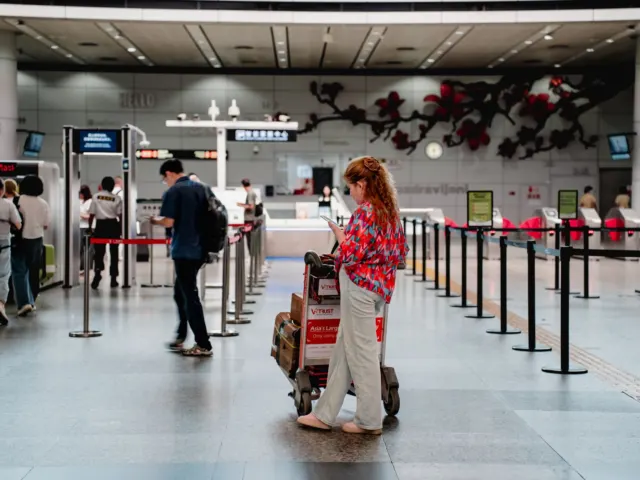
According to a statement from the Indonesian Immigration Service, the automated immigration gates at Soekarno-Hatta International Airport operate by scanning passport information and then linking it to facial recognition and immigration screening. Users who meet the requirements can proceed directly to the screening process without visiting a staff counter.
The Indonesian Immigration Agency began operating 78 new automated immigration gates at Soekarno-Hatta International Airport in early 2024. The processing time for each passenger is approximately 15 to 25 seconds. Foreign nationals must meet certain requirements, including possessing an electronic passport, a valid electronic visa, or an electronic arrival card.
Digital border control systems that consider both convenience and security
The automated immigration system is not simply a device for reducing queues. It is a digital-based service that integrates facial recognition technology with border management systems to simultaneously perform identity verification and immigration screening.
Starting in August 2024, the criteria have been expanded to allow both Indonesian citizens and foreigners aged 6 or older to use automated immigration gates, provided they meet certain requirements. This measure is intended to improve convenience for travelers, especially families, and to better manage large volumes of passenger traffic.
Key issues for the Korean tourism industry
Convenience for tourists must be improved
South Korea possesses strong tourism resources, including K-pop, cuisine, and historical and cultural heritage. However, the competitiveness that tourists actually evaluate is determined by everyday services such as guidance after arrival, transportation, payment, language support, and complaint resolution.
The Ministry of Culture, Sports and Tourism also presented a “Innovation Strategy for Tourism Exports in the Republic of Korea,” which focuses on improving travel convenience. This strategy emphasizes expanding the number of foreign visitors while simultaneously promoting regional tourism, digital innovation, and the development of high-value tourism.
Information provision is a fundamental infrastructure for tourism services
When information essential for tourists is scattered across various organizations and platforms, or when signage is insufficient, travel satisfaction can easily decrease. It is necessary to integrate guidance systems so that travelers can easily check transportation, fares, operating hours, and emergency contact information at airports, railway stations, tourist attractions, and accommodations.
In particular, multilingual information services for foreign tourists, real-time traffic information, and convenient payment support should be considered as essential tourism infrastructure, not optional services. It is also important to establish a system for collecting data on recurring inconveniences experienced by tourists and using that data to improve services.
Implementation strategies for becoming a tourism powerhouse
The voices of those on the ground must be reflected in policy
The problems faced by tourists, travel agencies, hotels, transportation companies, and local tourism organizations can be different. Therefore, when designing policies, it is essential to regularly incorporate the perspectives of those who actually provide and use the services, in addition to the viewpoint of the administrative agencies.
In 2024, approximately 16,370,000 foreign tourists visited South Korea. While the demand for travel to South Korea is recovering, an equally important task is to create a consistent service experience that can lead to repeat visits and recommendations.
Connecting airport experiences to local tourism
A tourist’s journey begins at the airport and extends to the region. Even if the immigration process is expedited, if it is difficult to find ways to travel from the airport to the city center and regional tourist destinations, the overall satisfaction level is likely to remain low.
The next step in Korean tourism is to integrate automated immigration procedures, multilingual guidance, regional transportation connections, and mobile reservations and payments into a single travel experience. Identifying and improving areas where tourists experience inconvenience is a realistic starting point for becoming a leading tourism nation.
Tourism competitiveness created together by the people and the industry
The quality of tourism services is not solely determined by government policies. Employees in accommodation, dining, transportation, and shopping establishments, as well as local residents and all citizens who welcome travelers, are all key players in shaping the tourism experience.
Small gestures of guidance, courteous service, and accurate information can build trust in Korea and lead to a desire for repeat visits. When a culture of listening to on-site feedback and rapidly implementing improvements becomes established, Korean tourism can move beyond quantitative recovery to achieve sustainable tourism competitiveness.
Frequently Asked Questions (FAQ)
Where can the Indonesian automated immigration system be used?
Specifically, these services are available at Soekarno-Hatta International Airport in Jakarta and Ngurah Rai International Airport in Bali. Availability and conditions may vary depending on nationality, passport type, visa, and residency status.
How much faster is the immigration process when using automated immigration gates?
The Indonesian Immigration Agency states that the automated immigration process takes approximately 15 to 25 seconds per passenger. The actual time required may vary depending on the number of passengers and whether additional verification is necessary.
Can foreigners also use the automated immigration gates in Indonesia?
Foreign nationals who meet certain requirements are eligible to use the service. Generally, a valid e-passport, a valid e-visa, an e-arrival visa, or the corresponding residency permit are required.
What are the key areas for improvement in Korean tourism?
The main tasks involve improving the convenience for tourists throughout the entire travel process, including arrival and transportation, multilingual information services, payment options, and providing information about tourist attractions.
What is the most important factor for becoming a leading tourism nation?
It is important to reflect the problems experienced by tourists and the industry in policy, and to provide a consistent service experience from the airport to local tourist destinations.