Why NATO Is Changing Its Air Defense Strategy
NATO is expanding its air defense strategy beyond fighter-led air policing to an integrated system capable of countering drones and missiles together. The war in Ukraine has dragged on, bringing a wide range of simultaneous threats—from small unmanned aircraft to cruise and ballistic missiles.
At a meeting of defense ministers on February 13, 2025, NATO unveiled a new integrated air and missile defense policy. The policy sets out a strategic framework for protecting allied territory, forces and critical infrastructure from air and missile threats approaching from any direction.
How Russia’s Drone and Missile Threat Is Driving Change
The threats drawing NATO’s attention are not limited to large missiles. The range of targets requiring detection and interception now extends from small, slow-moving drones flying at low altitude and large drone swarms to cruise missiles, ballistic missiles and hypersonic weapons.
NATO policy documents describe an increasingly complex air threat environment. An attacker could combine large numbers of inexpensive drones with sophisticated missiles to overwhelm air defenses, or disrupt radars and command-and-control systems at the same time.
In September 2025, Russian drones entered Polish airspace, while Russian fighter activity was reported in Estonian airspace. In response, NATO launched the ‘Eastern Sentry‘ activity to strengthen surveillance and air defense capabilities along the eastern flank.
The Core Elements of NATO’s Integrated Air and Missile Defense
24/7 Surveillance and Early Warning
NATO is moving toward round-the-clock surveillance by linking sensors across the land, maritime, air and space domains. Early-warning information will be shared among allies, enabling commanders to respond rapidly after a threat is detected.
Layered Defense Across Different Altitudes and Ranges
The new architecture will not rely on a single weapon system. It will combine fighter aircraft, airborne early-warning and control aircraft, ground-based air defenses, maritime platforms and electronic warfare capabilities to counter threats at different altitudes and ranges.
Short-range systems will handle small drones and low-altitude threats, while medium- and long-range air defenses will be tasked with countering cruise and ballistic missiles. NATO says this layered structure can improve the resilience of the overall defense network, even if a particular defensive capability is disabled.
Counter-Drone Technology and Low-Cost Interceptors
Using expensive interceptor missiles to engage small drones alone could rapidly deplete air defense munitions in a prolonged conflict. NATO is therefore pursuing a combination of capabilities, including electronic warfare, jamming, counter-drone systems and new detection sensors.
In February 2025, NATO also launched multinational initiatives focused on countering low-altitude air threats and strengthening passive air surveillance capabilities. The goal is to connect equipment developed separately by individual countries at the alliance level while improving procurement and operational efficiency.
From Air Policing to Integrated Air Defense
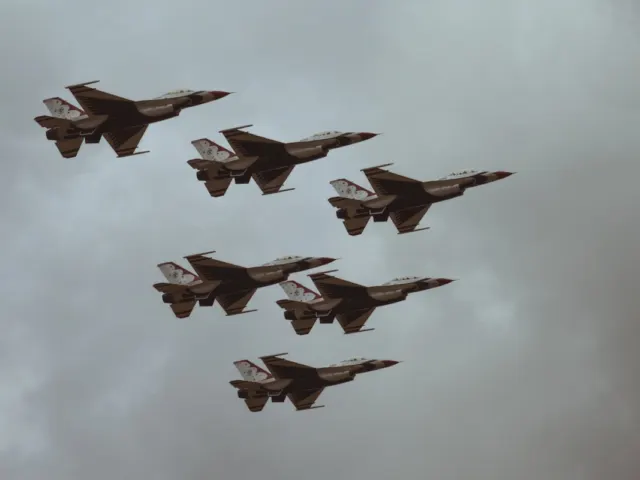
NATO’s shift in air defense is less about eliminating existing air-policing missions than about broadening their scope. Instead of relying on fighter patrols alone, the alliance is bringing ground-based air defenses, radars, intelligence, surveillance and reconnaissance assets, and command-and-control networks together as a single operational system.
NATO defines air and missile defense as a 24-hour mission that must remain operational in peacetime, during crises and in armed conflict. The key is to link national assets through NATO’s command-and-control structure, shortening the time from detection to decision and interception.
Along the eastern flank in particular, defensive deployments are being reinforced with not only fighter aircraft but also surveillance aircraft, aerial refueling tankers, helicopters, ground-based air defenses and maritime forces. The aim is to share air situational awareness across the alliance rather than defend the airspace of one country in isolation.
The Challenges Ahead: Detection, Integration and Sustainability
For NATO’s new air defense plan to succeed, simply increasing the number of systems will not be enough. Radars and command-and-control networks operated by different countries must exchange information in real time, while the appropriate response must be selected automatically or with minimal delay based on the type of threat.
The sustainability of the air defense network is another major challenge. Repeated large-scale drone attacks could quickly consume stocks of expensive missiles and reduce the personnel available to operate them. NATO is working to improve both the cost-effectiveness and production capacity of counter-drone systems through technology development, joint procurement and expanded training.
Ultimately, NATO’s air defense transformation is not about adding a single weapon system. It is an effort to redesign surveillance, command, interception and recovery capabilities as one network suited to a new battlefield in which Russian drones and missiles are combined with electronic warfare and cyberattacks.
Frequently Asked Questions (FAQ)
What is NATO’s new air defense plan?
NATO’s new plan is a strategy to integrate surveillance, command and control, fighter aircraft, and ground- and sea-based air defenses to counter the full range of air and missile threats, from small drones to cruise and ballistic missiles.
Why is traditional air policing no longer enough?
Recent threats range from large aircraft to large numbers of inexpensive drones, low-altitude cruise missiles and long-range ballistic missiles. A fighter-centered response therefore has limits when it comes to detection and interception.
What is NATO’s layered defense system?
It is an approach that combines short-, medium- and long-range air defenses with fighter aircraft, electronic warfare and early-warning assets to counter threats at different altitudes and ranges in multiple layers.
What is Eastern Sentry?
Eastern Sentry is an enhanced surveillance and defense activity NATO launched in September 2025 in response to airspace violations along the eastern flank. It focuses on coordinating assets from multiple allied countries, including fighter and surveillance aircraft and air defense systems.
How does NATO plan to counter drones?
NATO plans to use not only fighter aircraft and missiles but also radars, electronic warfare, jamming, counter-drone equipment and low-cost interceptors. The key is to select the right response based on the threat’s size and flight characteristics.
What is the biggest challenge facing the new air defense plan?
The main challenges are ensuring that allied equipment and command systems work together smoothly and securing enough interceptors and personnel to withstand large-scale attacks. The sustainability and cost-effectiveness of the defense network are also critical concerns.