LeoLabs Moves to Sell Scout-S Mobile Space Radar Directly to Allies
LeoLabs is exploring plans to sell its mobile space surveillance radar, Scout-S, directly to governments of U.S. allies. The move is aimed at complementing space surveillance architectures built around fixed radars and meeting growing demand for sovereign, country-level space domain awareness capabilities.
According to Breaking Defense, LeoLabs is considering offering Scout-S not only as a commercial service but also under contractor-owned, contractor-operated arrangements funded by governments, or in configurations directly owned and operated by governments.
Scout-S: A Containerized 3D Space Surveillance Radar
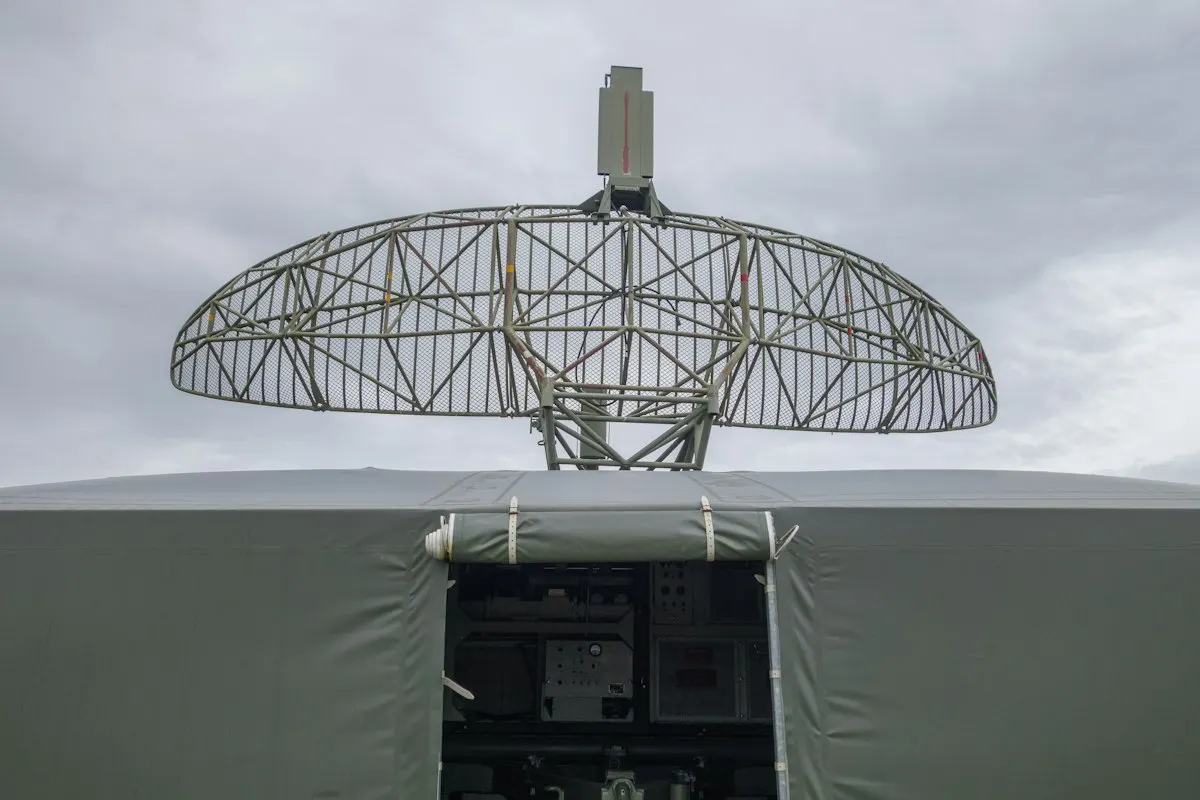
Scout-S is a mobile radar housed in a standard 20-foot International Organization for Standardization (ISO) container. It can be transported by land, sea or air and is designed for rapid deployment or relocation depending on mission requirements.
According to LeoLabs, the system combines three-dimensional scanning, direct radiating array (DRA) technology and a modular S-band electronic design. It can search for previously unlocated objects in space, maintain persistent tracks on high-interest objects and support tracking of targets showing signs of a launch.
According to the company’s product description, Scout-S has an optimal slant range of approximately 50 to 1,000 kilometers. Breaking Defense reported that the radar can monitor objects operating from very low Earth orbit, at an altitude of roughly 180 kilometers, up to 1,000 kilometers.
Deployed in the Indo-Pacific and Used in Multinational Exercises
LeoLabs deployed its first Scout-S in the Indo-Pacific in June 2026. The system began observing satellites within hours of becoming operational and is feeding data into the company’s global catalog of space objects.
The radar also took part in testing and operational evaluations during Valiant Shield 2026, a multinational exercise led by the U.S. Indo-Pacific Command. LeoLabs says Scout-S will add surveillance coverage in areas beyond the reach of fixed sensors and improve the resilience of the broader space surveillance network.
According to a LeoLabs announcement, the first deployed system continuously tracked Yaogan-series satellites, which are widely believed to be Chinese reconnaissance satellites, as well as Chinese spacecraft. It also detected an object at an altitude of approximately 230 kilometers.
Filling Gaps in a Network of 12 Large Radar Sites
LeoLabs provides space object tracking services through a network of 12 large radar facilities around the world. Critics have noted, however, that fixed sites alone cannot respond quickly to rapidly changing space operations or surveillance gaps in specific regions.
LeoLabs Chief Operating Officer Dan Ceperley told Breaking Defense that the company plans to integrate multiple Scout-S units into its existing network to fill those gaps. Linking mobile radars with established facilities could increase observation time over selected regions and improve the continuity of tracking for maneuvering satellites or newly discovered objects.
Direct Sales to Allies: Talks Underway With More Than 12 Countries
Until now, LeoLabs has focused on operating its own radars and providing the resulting data as a service. But as allied countries seek sovereign space surveillance capabilities tailored to their territories and security requirements, the company is expanding into a business model that supplies the equipment itself.
According to Breaking Defense, LeoLabs is in discussions with more than 12 allied countries about adopting Scout-S. One country is reportedly interested in purchasing multiple units, although LeoLabs has not disclosed the price per radar.
If direct sales go ahead, buyers would be able to determine how the radars are operated and how data is accessed in line with their military and civilian space policies. They would also face the challenge of building the necessary operating personnel, data-analysis systems, and security and communications infrastructure.
Could the Space Surveillance Market’s Competitive Landscape Change?
With the number of low Earth orbit satellites and space debris continuing to grow, and maneuverable satellites becoming more common, simply detecting space objects is no longer considered sufficient. Maintaining a track on the same object over time and analyzing changes in its behavior are emerging as central challenges for national security and space traffic management.
Rather than replacing large fixed radars, Scout-S is designed to reinforce surveillance networks through mobility and distributed deployment. If LeoLabs succeeds in supplying systems to allies and linking them into a network, it could reshape how commercial space surveillance companies and national governments work together.
Frequently Asked Questions (FAQ)
What is Scout-S?
Scout-S is a containerized, mobile 3D space surveillance radar developed by LeoLabs. It supports the detection of space objects, persistent tracking of high-interest targets, and surveillance related to launch vehicles and satellites.
Where has Scout-S been deployed?
The first Scout-S system was deployed in the Indo-Pacific in June 2026. It later took part in operations and testing during the Valiant Shield 2026 exercise.
What is Scout-S’s detection range?
LeoLabs lists Scout-S’s optimal slant range as approximately 50 to 1,000 kilometers. According to the company and related reports, it can be used to monitor objects from very low Earth orbit to altitudes of around 1,000 kilometers.
Is LeoLabs selling Scout-S to allied countries?
Yes. Alongside offering Scout-S as a service, LeoLabs is considering supplying systems that governments would own or operate directly. The company is reportedly in talks with more than 12 allied countries about adoption.
Does Scout-S replace existing large radars?
Scout-S is primarily intended to fill surveillance gaps rather than replace large fixed radars. Its focus is on improving observation over specific regions and strengthening the resilience of space surveillance networks through mobile, distributed deployment.