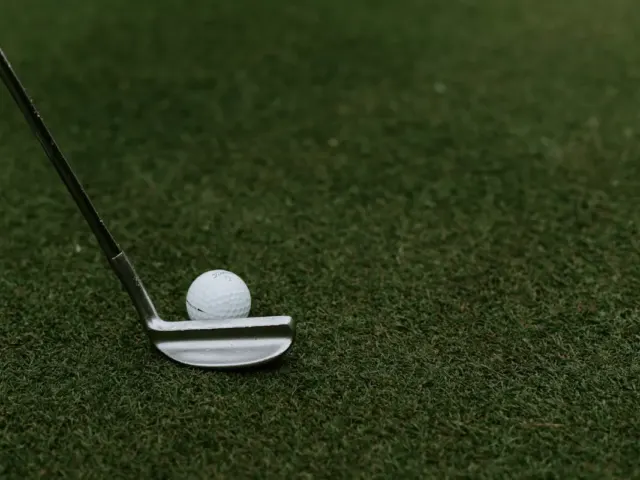
With a $250 budget, you’re better off choosing one wedge carefully
If a 12-handicap golfer already carries 52-, 56-, and 60-degree wedges, the first step should be to assess the performance and distance gaps of the clubs they use most—not automatically add two more. The short answer: if the grooves on the current 56-degree wedge are worn or it feels unreliable from bunkers and around the green, the Callaway Opus SP 56-degree wedge is the most practical choice on a $250 budget.
According to Callaway’s official sales page, Opus SP wedges start at $199.99. That leaves room in the budget for a grip replacement, a loft and lie check, or a basic fitting—another advantage of choosing a single wedge.
Check distance gaps before loft numbers
The most important number when choosing a wedge isn’t the loft stamped on the clubhead; it’s the actual distance gap between clubs. If full-swing distances overlap too much—or leave a large gap—between the pitching wedge and 52-degree wedge, or between the 52- and 56-degree wedges, adding another club may not improve performance on the course.
If you plan to keep a 52-56-60 setup, the sensible approach is to replace the wedge you use most often. The 56-degree wedge is frequently used for full swings, pitch shots, and bunker shots, so its condition and bounce selection can have a direct effect on scoring.
A practical starting point for a 12-handicap golfer
- 52 degrees: Check the distance gap to the pitching wedge, then choose based on how often you use it for approach shots and full swings.
- 56 degrees: The most versatile replacement candidate, with both standard turf and bunker play in mind.
- 60 degrees: Best for golfers who genuinely need a high trajectory and limited landing room, but it isn’t an automatic upgrade for everyone.
Top recommendation: Callaway Opus SP 56 degrees
The Callaway Opus SP is part of the brand’s 2025 wedge lineup and is available in several grinds at 56 degrees, including C, S, W, and X. According to the official specifications, the 56-degree S Grind has 10 degrees of bounce, while the W Grind has 14 degrees, allowing golfers to match the club to their swing and playing conditions.
For a typical 12-handicap golfer, the 56-degree S Grind is the best default choice. It offers a dependable middle ground for shots from the fairway, rough, and bunker. Golfers who play from soft sand or deep divots and tend to deliver the club steeply may find the 14-degree W Grind more forgiving.
By contrast, golfers who play on firm courses, sweep the ball with a shallow delivery, and frequently open the face for a variety of short-game shots can consider a lower-bounce option. Keep in mind, however, that the 8-degree C Grind may have more limited shaft and hand-orientation combinations, so check the available handedness and inventory before buying.
How the alternatives compare
If you want to spend as little as possible: Callaway JAWS Raw
Callaway’s official website has offered the JAWS Raw at a discounted price of $149.99. It comes in lofts from 48 to 62 degrees in two-degree increments, along with multiple grinds, giving golfers plenty of room to find a suitable setup. Despite being an older model, it should still deliver solid performance.
Availability can be limited, however, and some configurations may be listed as out of stock. It’s a strong option if price is the priority, but check the desired loft and hand orientation first.
If you prefer Titleist: Vokey SM10
Titleist’s Vokey SM10 offers six sole grinds—F, S, M, K, T, and D—along with a wide range of loft and bounce combinations. When it was announced, the official U.S. suggested retail price was $189 per wedge with a steel shaft.
The SM10 remains appealing for its price and fitting options, even after the arrival of newer models. With the same budget, though, compare any discounts on new stock as well as the available shaft configurations.
If you want the newest model: PING s259
PING unveiled the s259 wedge in January 2026, offering six grinds—S, H, B, T, W, and E—and combinations ranging from 46 to 62 degrees. The official specifications include 10-, 12-, and 14-degree bounce options at 56 degrees.
It’s an appealing choice for golfers who want the latest model, but confirm that the actual selling price stays within $250 and that the preferred shaft is available to order. With a fixed budget, a discounted Opus SP or SM10 may offer better value.
Three things to check before buying
1. The loft of your current pitching wedge
The distance gap to a 52-degree wedge will vary depending on whether your iron set’s pitching wedge is 44 or 46 degrees. If the gap between the pitching wedge and 52 degrees is too large, a 50- or 48-degree wedge may be worth considering. But if you already own a 52-degree wedge, measuring your actual carry distances should come first.
2. Bounce and swing path
Higher-bounce wedges are better at preventing the leading edge from digging too deeply through turf or sand. Golfers who play from firm ground with a shallow delivery or frequently open the face may feel more comfortable with lower or mid bounce.
3. Groove and shaft condition
Don’t compare only the new clubhead. Assess the groove wear, shaft weight, and grip condition of your current 56-degree wedge as well. If the new wedge’s shaft is significantly lighter or heavier than the shafts in your iron set, distance control and feel may change.
Bottom line: Put the budget toward an Opus SP 56-degree wedge
If you’re spending $250 on golf equipment, the most balanced choice is the Callaway Opus SP 56 degrees. The default recommendation is the 10-degree S Grind; if soft bunkers and a steep swing are your main concerns, choose the 14-degree W Grind.
If your current wedges are still in good condition, you may get more value from a loft and lie check and on-course distance testing than from adding another club. But if your 56-degree wedge is the one you use most and it is showing significant wear, replacing it properly is more likely to improve your scores than buying two inexpensive wedges.
Frequently asked questions (FAQ)
Q. Can I buy two wedges for $250?
A. It’s possible with discounted or previous-generation models, but $250 is a tight budget for two new premium wedges. For a 12-handicap golfer, choosing one wedge that fits your game is generally the more efficient approach.
Q. If I already have 52-, 56-, and 60-degree wedges, which one should I replace?
A. Start with the wedge you use most often and that shows the most wear. In many cases, the 56-degree wedge is the most practical first replacement, but the final decision should be based on actual distances and usage.
Q. What bounce is right for a 56-degree wedge?
A. Under typical conditions, around 10 degrees of mid bounce is a reliable starting point. If you regularly play from deep divots or soft sand, or have a steep swing, consider 12 to 14 degrees of bounce.
Q. Do I really need a 60-degree wedge?
A. Not necessarily. A high-lofted wedge can help with short approaches and high shots, but if you struggle with distance control or frequently hit fat shots, simplifying your short game around a 56-degree wedge may be more reliable.
Q. Do I need a fitting before buying a wedge?
A. It’s a good idea if possible. At a minimum, compare the loft, shaft weight, bounce, and actual distances of your current pitching wedge and the new wedge to greatly reduce the risk of buying the wrong club.