Ukraine’s Criticism of South Korea’s Drone Drills Is a Warning
1. Introduction: The Fantasy of ‘Showcase Drills’ Detached from Real Combat
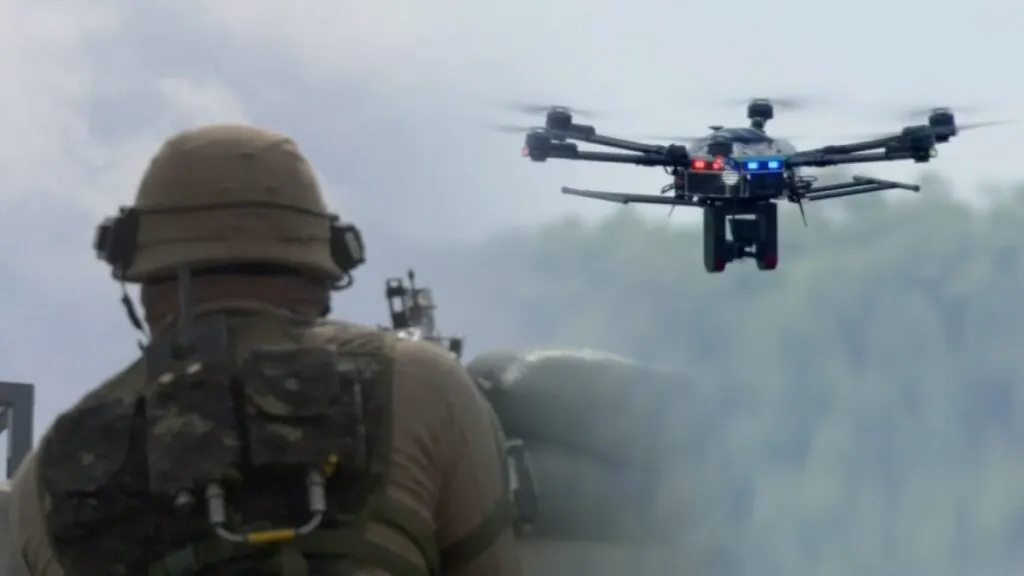
Recently, Ukraine’s prominent military publication Defense Express described a large-scale swarm-drone defense exercise conducted by the Republic of Korea Air Force in unusually blunt terms, calling it a “show” detached from real combat and exposing what it portrayed as tactical and economic shortcomings.
From Ukraine’s perspective—after more than four years of the most intense drone war in the world since Russia launched its full-scale invasion in 2022, and after accumulating vast amounts of battlefield data—South Korea’s approach to intercepting drones remains an expensive, inefficient, outdated tactic that fails to reflect the realities of modern warfare.
I share that assessment. South Korea’s drone units are largely a product of bureaucratic box-ticking, with little practical value. The country has yet to build a complete system for planning, producing, training with, educating personnel about, reassessing and redesigning drone capabilities. Instead, it simply launches a swarm and announces, “This is what we can do.” The broader weakness of South Korea’s drone ecosystem is being overlooked while a handful of expensive systems are used to project an image of technological sophistication.
South Korea faces a direct security threat from North Korean drone provocations.
Yet if the military leadership continues to repeat exercises focused on visible results and carefully staged displays, the problem goes beyond a tactical blunder. It represents a potentially fatal gap in national security.
This article examines Defense Express’s criticism in detail, based on the available facts, and considers the practical direction South Korea’s air-defense system should take.
2. The Core Facts Behind Defense Express’s Criticism
The Ukrainian publication’s criticism can be summarized in three points.
Unrealistic simulated-enemy flight patterns, inefficient interception methods and a dismal interception rate.
① Zero Combat Realism: The Fantasy of a “60-km/h Tight Formation”
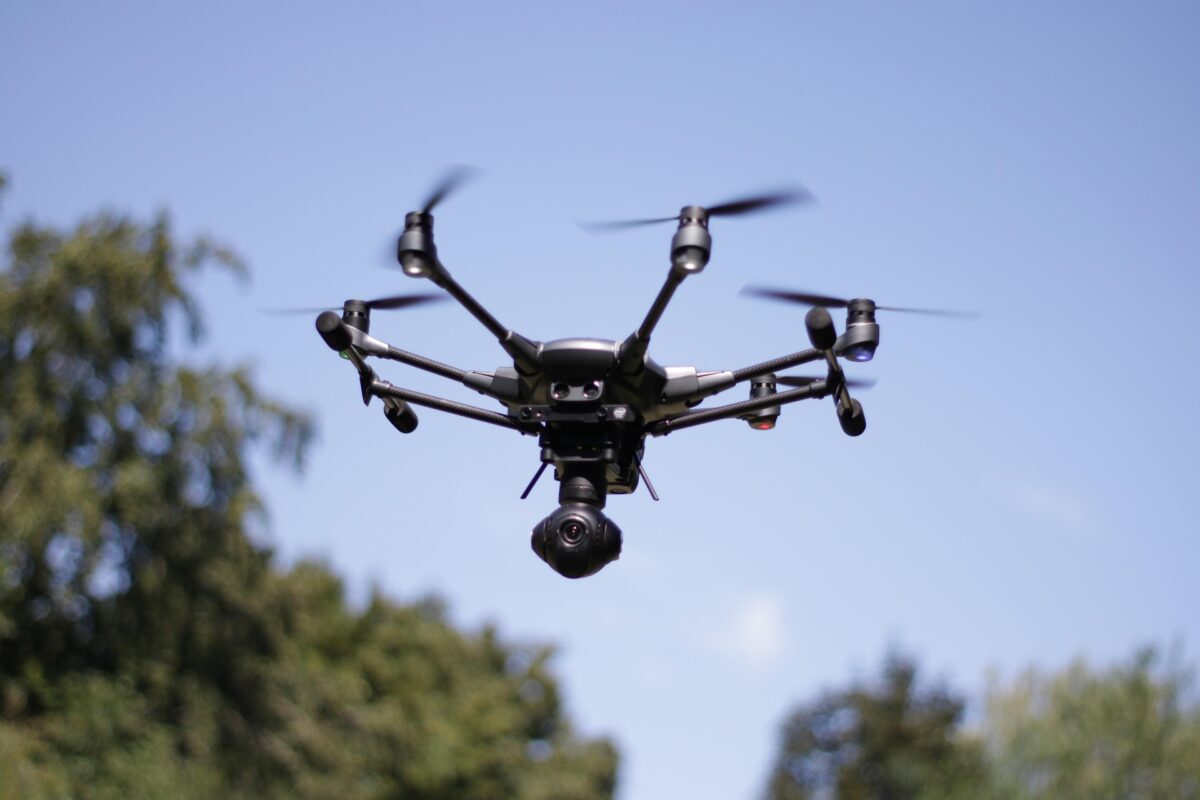
During the South Korean Air Force exercise, 50 simulated enemy drones flew slowly at 60 km/h while maintaining a tightly packed formation.
Defense Express delivered a blunt verdict: “No drone pilot in a modern war flies drones like this.”
Russia’s loitering munitions used on the Ukrainian battlefield, including the Shahed-136, operate at speeds of 150 to 185 km/h or more and use low-altitude terrain-following approaches to evade air defenses. The recently proliferating FPV suicide drones can exceed 100 km/h, maneuver unpredictably and conduct sweeping attacks against trenches and vehicles.
A tight formation is simply an easy target for antiaircraft guns. In real combat, drones spread out in all directions and approach simultaneously from multiple vectors.
Any exercise built around targets flying neatly together in a line is little more than a firing-range performance designed to satisfy range controllers and senior commanders.
② Economic Failure: Sustained Vulcan Fire as a “Wasteful Tactic”
The main interception asset deployed in the exercise was the 20mm Vulcan gun.
This was the point that most shocked Defense Express.
The central challenge in modern counter-drone warfare is overcoming the economic asymmetry between attacker and defender. Spending tens or hundreds of millions of won to destroy a low-cost drone that may be worth only a few million won is a recipe for defeat in a prolonged war of attrition.
The Vulcan creates a wall of fire by expending thousands of rounds per minute.
The cost of the 20mm ammunition consumed in a single engagement, along with barrel wear, is enormous. Ukraine, by contrast, conserves expensive Western air-defense missiles against suicide drones by operating mobile interception teams equipped with searchlights and machine guns, while also making extensive use of soft-kill systems such as jammers.
Pouring antiaircraft ammunition into the sky to destroy 50 drones places a crippling burden on both ammunition production and the defense budget.
③ A Damning Result: Six Drones Got Through Despite Ideal Conditions
The most painful criticism concerns the outcome.
Even though the drones were flying at the barely moving speed of 60 km/h—and were approaching in a densely packed formation—South Korea’s forces destroyed only 44 of the 50 targets, allowing six to get through.
Defense Express sharply concluded: “The fact that 12% of the drones penetrated the air defenses under such a simple and artificial set of conditions means that, in a real-world scenario, six command posts or critical facilities would have been completely destroyed.”
It is not difficult to imagine that, against North Korean drones flying three times faster and approaching from dispersed directions, the interception rate could have fallen into the single digits.
3. Structural Problems in South Korea’s Air-Defense Tactics
Ukraine’s criticism hurts because it goes straight to long-standing structural weaknesses in South Korea’s military.
First, the Delayed Fielding of Soft-Kill and Next-Generation Interception Assets
South Korea still relies too heavily on hard-kill systems that physically shoot down drones, treating them like visible shells or missiles.
Technologies such as jamming, which disrupts a drone’s radio signals and forces it to crash, and spoofing have been developed as soft-kill capabilities, but they have not been organically integrated into the field forces’ operational training.
Moreover, although laser air-defense weapons, including Block-I, are being deployed as a potential game changer in counter-drone warfare, unit-level training still revolves around outdated Vulcan guns and Shingung missiles.
This suggests that the adoption of new technology is being obstructed by a bureaucratic military administrative system.
Second, the Absence of a Concept for Asymmetric Attrition Warfare
When North Korea sent drones over Seoul in late 2022, South Korea’s response descended into confusion, including the crash of a KA-1 light attack aircraft that had been scrambled. Sending expensive fighter jets and helicopters into the air and firing costly guided missiles plays directly into the kind of low-cost provocation North Korea seeks.
On the Ukrainian battlefield, countless “anti-drone FPV drones” are used to ram and destroy hostile drones. The basic idea is to use a $1,000 drone to intercept a $2,000 enemy drone. South Korea, however, still relies on manuals for multimillion-dollar systems such as the Biho hybrid and air-defense missiles, without building a low-cost interception ecosystem capable of sustaining a war of attrition.
Third, a Rigid, Results-Driven Training Culture
The South Korean military’s chronic “zero tolerance for failure” culture is distorting drone training as well.
If drones were flown at 150 km/h and made to maneuver unpredictably, the exercise interception rate could fall to 20 or 30 percent, potentially harming a commander’s evaluation or a unit’s performance rating.
In the end, units create a “rigged environment”—slowing the targets and arranging them in neat formations—to manufacture the false achievement of a “100% interception rate.”
4. Five Practical Recommendations for South Korea’s Military
Defense Express’s criticism is not a malicious attempt to disparage South Korea’s military.
It should be treated as sincere advice—and a warning—based on an operational manual written in the blood of countless soldiers.
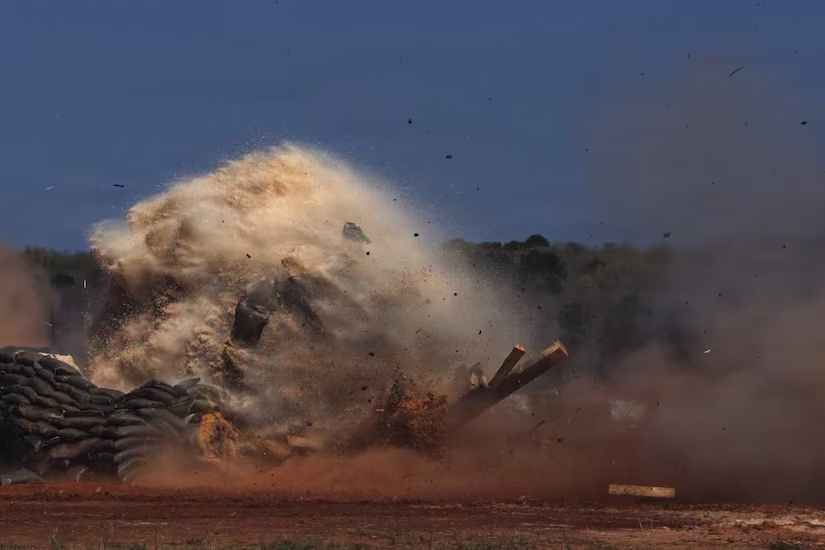
The South Korean military should take the following immediate steps to reform its counter-drone air defenses.
① Make Training Scenarios Fully Reflect Real Combat
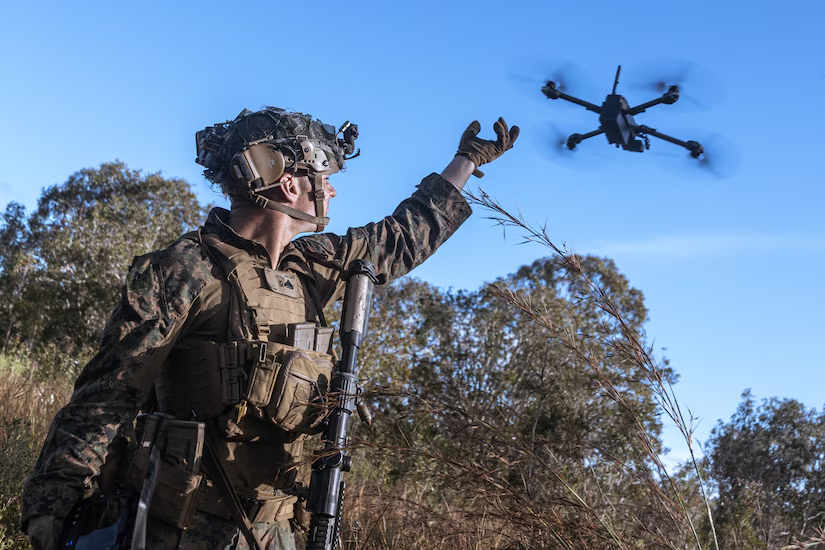
The speed of simulated enemy drones should be raised to at least 150 km/h. Training must include low-altitude approaches exploiting radar blind spots, as well as scenarios in which drones disperse and enter simultaneously from multiple directions.
The more senior commanders are watching, the more exercises should recreate extreme conditions with high interception-failure rates. Evaluation standards for commanders must be completely revised so that they reward the ability to overcome such conditions.
② Accelerate Mass Production of Laser Air-Defense Weapons and Cost-Effective Interceptors
South Korea’s laser air-defense weapon, officially known as Block-I, is considered a centerpiece of cost-effective counter-drone defense because each shot costs only about 2,000 won—roughly the price of a lightning strike.
This system should be deployed in large numbers as a top priority at frontline units and key national facilities. Aging conventional assets with huge ammunition costs, such as the 20mm Vulcan gun, should either be retired or relegated to a supporting role, while the military transitions to hybrid systems combining lasers with high-performance machine guns.
③ Issue Soft-Kill Jammers Down to the Squad Level
Electronic warfare should form the first line of defense in every counter-drone operation. Portable anti-drone guns, or jammers, should be issued in large numbers not only to frontline battalions and companies but also to platoons and squads. Soldiers must become as familiar with radio-frequency disruption equipment as they are with personal weapons. Field integration of spoofing technology, which disrupts an enemy drone’s satellite-navigation signals and sends it off course, is also urgent.
④ Build an Ecosystem of “Drones That Hunt Drones”
As the war in Ukraine has demonstrated, the most efficient way to stop a low-cost suicide drone is, paradoxically, another low-cost drone.
South Korea should establish large anti-drone FPV units capable of firing nets to capture hostile unmanned aircraft or colliding with them in midair and detonating.
To prevail in a prolonged war, these systems must be produced cheaply and stockpiled by the tens of thousands in coordination with the defense industry’s mass-production capabilities.
⑤ Change the Defense Leadership’s Mindset and Reform Training Evaluation
The most important step is to reform the mindset of the military leadership. Exercises designed to produce press releases claiming that “our air defenses are perfect and we shot down several drones” are no different from the regime-propaganda shooting contests staged by North Korean leader Kim Jong Un.
South Korea needs an open defense culture that encourages failure during training and directs resources and personnel toward fixing the vulnerabilities that failure exposes.
5. Wake Up and Prepare for a “Real War”
War is a harsh reality. On a real battlefield, the carefully staged displays that work during an exercise will not save anyone.
The war in Ukraine is showing the world, in real time and at an enormous human cost, how modern air-defense tactics must evolve.
Against that backdrop, the Ukrainian media’s criticism of South Korea’s military is a painful barb aimed at a force that has fallen into complacency and allowed its air defenses to stagnate.
Peace is a privilege enjoyed only by militaries that are fully prepared.
South Korea’s military should neither take Defense Express’s criticism personally nor dismiss it. It should treat it as free consulting informed by the bloody lessons of modern warfare. Stop staging drone-swarm firing shows for appearances, and build a practical, low-cost, high-efficiency counter-drone system capable of isolating and bringing down real enemy suicide drones flying at 150 km/h.
That is the only way to protect the lives of the public and the country’s airspace if a second drone provocation occurs.
Do not automatically give our military the same high marks as K-defense exports. Inefficiency and bureaucratic box-ticking still dominate our military, and it would not be unreasonable to say that, when it comes to the realities of drone warfare, South Korea may be less prepared than the North Korean troops deployed to Russia.
At a time when North Korean soldiers may be risking their lives to evade drones and develop countermeasures, we are practicing flying expensive imported drone systems in neat formations to please our superiors. That reality should be deeply shocking.
FAQ
FAQ 1. Why did the Ukrainian publication Defense Express criticize South Korea’s drone exercise?
The central issue was the exercise’s lack of combat realism. Defense Express said that the simulated enemy drones in the South Korean exercise flew slowly in a tight formation and did not replicate the evasive maneuvers or dispersed approaches used on real battlefields. It also criticized the use of relatively expensive interception methods against low-cost drones and pointed to the fact that some drones got through even under favorable conditions. On that basis, it concluded that the exercise did not reflect the demands of modern drone warfare.
FAQ 2. What is the most effective way to defend against drones on a modern battlefield?
The trend emerging from the war in Ukraine is toward layered defenses rather than reliance on a single weapon. Depending on the situation, forces combine radio-frequency jamming, GPS spoofing, machine guns and antiaircraft guns, laser weapons and interceptor drones. Because using excessively expensive weapons against low-cost drones can be economically unsustainable in a prolonged war, the cost-effectiveness of the overall defense architecture is crucial.
FAQ 3. Can South Korea’s drone-defense capabilities really be considered behind the curve?
It is difficult to make that judgment categorically. South Korea is developing laser air-defense weapons, acquiring electronic-warfare equipment and building a range of counter-drone systems, while increasing related investment. Some experts nevertheless note that, compared with Ukraine’s extensive battlefield experience, South Korea may have limited experience with combat-oriented training and operations. Rather than judging the entire force solely by publicly released exercise results, it is necessary to examine whether training is continuously improving and reflecting real operational conditions.
FAQ 4. What is the most urgent task in preparing for the North Korean drone threat?
The most important task is to build a training system that reflects real combat conditions as closely as possible. Experts have called for more scenarios involving different speeds and altitudes, irregular flight patterns and the integrated use of electronic-warfare equipment, interceptor drones and laser weapons. They also stress the importance of creating a culture that evaluates the process of identifying and correcting vulnerabilities, rather than focusing solely on exercise success rates.
FAQ 5. Does the success of K-defense exports not necessarily indicate that South Korea’s military is combat-ready?
Not necessarily. K-defense generally refers to the technological capabilities and export competitiveness of South Korean weapons systems. A military’s actual combat power depends not only on its equipment but also on training, operational doctrine, command structures, personnel proficiency, maintenance capabilities and wartime mobilization systems. The broad view among military experts is therefore that even strong defense-export performance must be accompanied by continuous, separate validation and improvement of the military’s operational system.