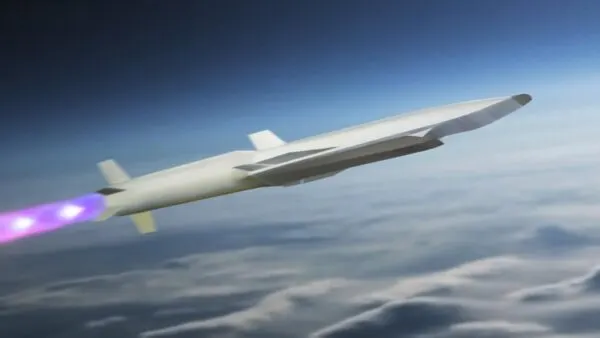
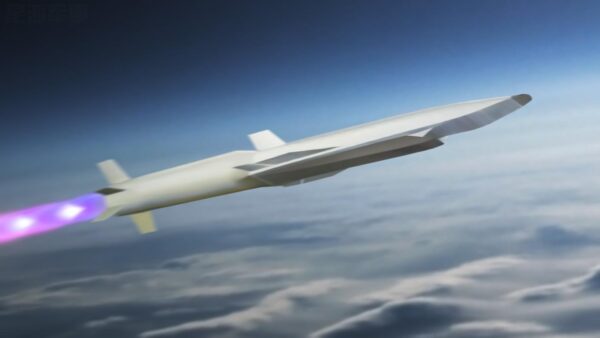
Hypersonic weapons are advanced weapon systems capable of flying at speeds above Mach 5. Their extreme speed and unpredictable flight paths make them difficult for existing defense systems to detect and intercept.
As a result, major military powers—including the United States, Russia, and China—are accelerating the development and deployment of hypersonic weapons.
Types of Hypersonic Weapons
Hypersonic weapons generally fall into two categories:
- Hypersonic glide vehicles (HGVs): They use the propulsion of a ballistic missile to climb to high altitudes before gliding toward their targets.
- Hypersonic cruise missiles (HCMs): Powered by scramjet engines, they take in oxygen from the atmosphere and fly at hypersonic speeds.
Development by Major Powers
- United States: The United States is developing a range of hypersonic weapons through programs such as the Air-Launched Rapid Response Weapon (ARRW) and the Long-Range Hypersonic Weapon (LRHW). It has recently achieved a successful test launch of an air-launched hypersonic weapon.
- Russia: Russia possesses hypersonic weapons including the Avangard, Zircon, and Kinzhal, some of which have already been deployed operationally. The Kinzhal missile, in particular, has been used in the war in Ukraine.
- China: China has developed and deployed hypersonic weapons such as the DF-ZF and continues to advance its related technologies.
Key Features and Challenges
Hypersonic weapons have several defining characteristics:
- High-speed flight: Traveling at speeds above Mach 5, they are difficult for conventional missile defense systems to intercept.
- Erratic maneuverability: Their unpredictable flight paths allow them to evade defensive systems.
- Low-altitude flight: Flying at lower altitudes makes them harder to detect.
These characteristics pose a major challenge to existing defense systems. Countries are therefore working to develop new capabilities to detect and intercept hypersonic weapons.
China’s Hypersonic Weapons Development
China is considered a leader in the development of hypersonic weapons. A prominent example is the DF-ZF (WU-14) hypersonic glide vehicle (HGV), which was deployed operationally in 2020.
The DF-ZF is reportedly capable of reaching a maximum range of 2,000 kilometers, while its range can extend to 2,500 kilometers when paired with the DF-17 booster. China is also developing the DF-41 intercontinental ballistic missile (ICBM), which is expected to be capable of carrying a hypersonic nuclear warhead.
More recently, China released footage of a test flight involving a hypersonic drone known as the “MD-19.” The drone is reportedly capable of carrying weapons and flying in the stratosphere at seven times the speed of sound.
Military experts say the drone could become a game changer capable of reshaping the nature of warfare. China’s rapid progress has also prompted speculation that advanced U.S. technology may have been used in some key areas.
Reports have said that, since 2019, more than 300 U.S. technologies have been sold to dozens of companies involved in China’s hypersonic and missile technology development.
South Korea’s Hypersonic Weapons Development
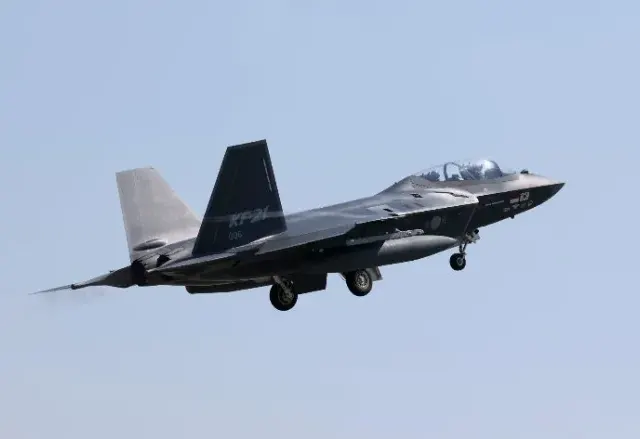
South Korea remains at a relatively early stage of hypersonic weapons development, but it has stepped up its efforts in recent years. The Agency for Defense Development is pursuing the development of a Mach 5-class hypersonic air-to-ground missile that could be carried by the KF-21 Boramae fighter jet.
The missile is expected to provide a rapid-strike capability, allowing South Korea to quickly neutralize key targets in North Korea. South Korea also plans to strengthen its ability to intercept hypersonic weapons by the mid-2030s through L-SAM-II, an upgraded version of the Korean-made THAAD-like L-SAM, which recently completed a successful test launch.
The initiative is viewed as a response to the growing threat posed by hypersonic weapons in neighboring countries.
Analysis and Outlook
China’s development of hypersonic weapons appears to be aimed at gaining an advantage in its strategic competition with the United States.
In particular, the speed and unpredictable flight paths of hypersonic weapons could undermine existing missile defense systems, strengthening China’s anti-access/area-denial (A2/AD) strategy.
South Korea, meanwhile, is seeking to enhance its ability to respond to North Korea’s nuclear and missile threats through the development of hypersonic weapons. The development of an air-to-ground hypersonic missile, in particular, could give South Korea the ability to rapidly strike North Korean command centers and critical facilities, helping to strengthen deterrence.
However, the development and deployment of hypersonic weapons could fuel an arms race in the region and create a resulting security dilemma.
South Korea should therefore work not only to develop hypersonic weapons but also to establish international norms and cooperative mechanisms for controlling and managing them.
In conclusion, China’s and South Korea’s hypersonic weapons programs are closely tied to their respective national security strategies, and advances in the technology are expected to have a significant impact on the security landscape of Northeast Asia. Continued monitoring and analysis will therefore be necessary.