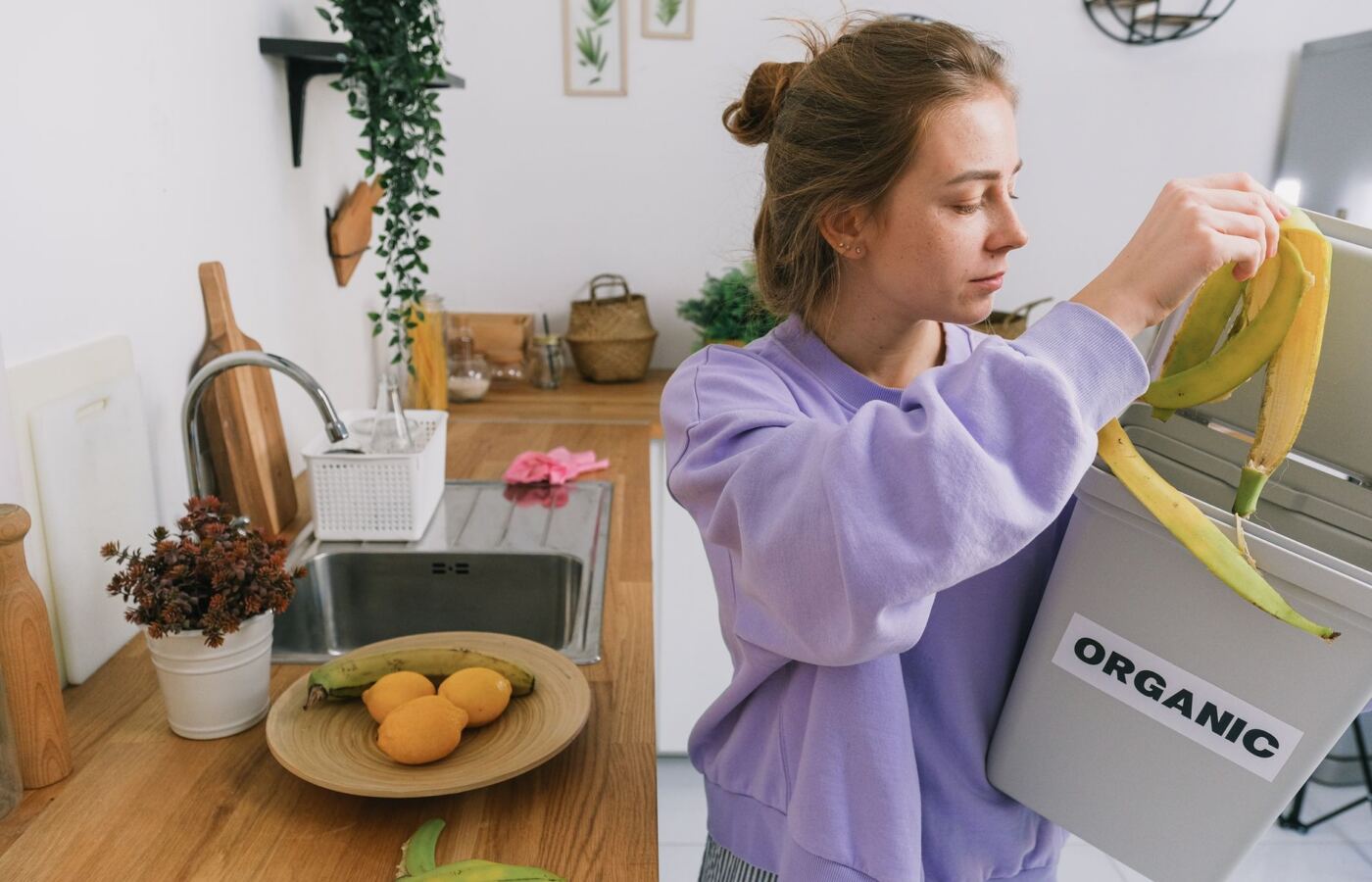
- The shells are all recycled, but their properties are different.
- “The reason people are curious, and the most realistic answer.”
- The oranges are being cleaned, and the apples are being used to make jam.
- If you are starting today, do the following.
- Orange peel cleaner.
- Apple peel jelly.
- Banana peel compost.
- Before considering the effects, there are certain traps that must be examined first.
- Ultimately, what should one choose?
- Frequently Asked Questions.
- Recommended WordPress Plugins
Apple peels, banana peels, and orange peels always go directly into the food-waste bin. However, if you try to use all three of them at once as a versatile household item, it often leads to failure.
The real question is: what should you actually use, and where should you use it, to be effective without wasting anything? The answer lies in choosing the task that best suits each individual component.
The shells are all recycled, but their properties are different.
Apple peels and orange peels contain pectin. Pectin is a component that helps jams and jellies to solidify, so these peels are particularly useful in cooking.
Banana peels, unlike apples or oranges, are organic matter that decomposes along with food waste and returns to the soil, rather than being an ingredient that solidifies jam. All three can be added to household compost, but using the same method to brew or rub them will not produce the same effect.
Before eating, cooking, or using the peels as cleaning agents, even if you intend to peel them, wash them first under running water. Do not wash fruits and vegetables with soap or dish detergent.
Each peel has a different job.
“The reason people are curious, and the most realistic answer.”
The appeal of utilizing fruit peels is simple: reusing what would otherwise be discarded can save money and benefit the environment.
In actuality, commercial pectin is produced from citrus peels or apple byproducts. Pectin in fruits is relatively abundant in the peel or in areas close to the peel.
However, not all internet tips about using peels are equally valid. In December 2023, the University of California, Agriculture and Natural Resources program introduced a method for using citrus peels as a cleaning agent when steeped in white vinegar, but the University of Maryland Extension Service stated that it could not find any scientific research supporting the use of banana peels as fertilizer in 2020.
If summarized in a single line, it is as follows:
Using oranges for cleaning, apples for jam, and bananas for compost are the most well-grounded choices, with the lowest risk of failure. For an article with multiple possible uses like this, DecoBlocks’ Auto Table of Contents can create a table of contents and links based on H2 and H3 headings.
The oranges are being cleaned, and the apples are being used to make jam.
When orange peels are soaked in vinegar, the components of the peel dissolve into the vinegar. The acidic properties of the vinegar combine with the aromatic compounds of the orange, making it an effective cleaning agent for removing water stains and grease.
However, it is not a magical detergent. In particular, the acidic components can damage delicate surfaces such as granite and marble.
Pectin in apple peels works in a slightly different way. It forms a network-like structure in heated fruit juice and sugar, which solidifies jams and jellies.
Therefore, instead of forcefully using apple peels to clean pots or leather, it is better to extract juice from the peels and seeds that would otherwise be discarded and turn it into jelly. In other words, even apple peels have a purpose.
It should be allocated to areas where it can be most effectively utilized.
If you are starting today, do the following.
Orange peel cleaner.
The materials needed are: thoroughly washed orange peels, white vinegar, a glass jar with a lid, a strainer, and water. Place the peels in the jar and completely cover them with white vinegar. Then, close the lid.
Store it in a dark and cool place for 2 to 3 weeks. Mix the strained liquid with an equal amount of water, and it is ready for use.
- Determine the surface to be used, such as glass, tile, or bathroom surfaces.
- First, apply a small amount to an inconspicuous area and observe the changes to the surface.
- If there is no problem, use a cloth to wipe away water stains and oil stains.
Do not use this product on granite, marble, or surfaces with a weak sealant. If you are concerned about the material or do not have a place to test the product, it is safer to choose a general-purpose detergent that is suitable for the material.
First, when using an acidic cleaning agent, it is important to consider the material being cleaned.
Apple peel jelly.
Add water to the apple peels and seeds and boil for approximately 15 minutes to extract the juice. The required amounts are: 4 to 4.5 cups of apple juice, one box of powdered pectin, and 5 cups of sugar.
Add powdered pectin and sugar to the juice and boil vigorously for 1 minute. Then, follow the recipe instructions for heat processing.
The key to this method lies not in simply chewing the peel, but in transferring the pectin located near the peel into the hot juice and utilizing its gelling power.
The peel is used for its gelling power.
Banana peel compost.
Banana peels are cut into small pieces and added to the compost bin along with food scraps. It is also necessary to include materials containing carbon, such as dry leaves or dry paper.
Compost is a process in which microorganisms decompose various organic materials in the presence of oxygen, transforming them into substances that benefit the soil. Using a mixture of several materials is more in line with the principle than simply soaking a single banana peel in water.
If you do not have a compost bin, send your food waste to the local food-waste compost collection service. This is a more practical option than burying it directly in a pot or making peel water.
Bananas are better used for compost than for making peel water.
Before considering the effects, there are certain traps that must be examined first.
The most common misconception is that banana peel water is inherently a good fertilizer. The University of Maryland Extension Service stated that it could not find any scientific studies that confirmed the effectiveness of banana peel tea.
If the soil already contains sufficient potassium, adding more may not have any effect. Therefore, it is better to use banana peels as compost material rather than as fertilizer.
Do not rely solely on the name “fertilizer.”
The second pitfall is using acidic cleaning agents on any surface. Citrus vinegar cleaners can weaken the sealants on granite, marble, and other delicate surfaces or corrode the surfaces themselves.
The third point concerns detergent mixtures. Vinegar should not be mixed with chlorine-based bleach, as this can produce irritating chlorine gas. Do not mix it with other detergents.
Utilizing the shells is a way to conserve materials, but it is not a magic solution that replaces all detergents and fertilizers.
Ultimately, what should one choose?
If the purpose is cleaning, wash the orange peel, soak it in vinegar for 2 to 3 weeks, and then dilute it with water in a 1:1 ratio. Use it only on glass and tiles, and on water scale and grease stains in the bathroom. Test it on a small area before use.
If your objective is cooking, do not discard apple peels; instead, use them to create a jelly that preserves the pectin. Maintaining the correct proportions of apple juice, pectin, and sugar will make the role of the peels clear.
Banana peels should not be used as fertilizer for potted plants; instead, they should be sent for composting. If you do not have a composting bin, the most appropriate method is to dispose of them according to local food waste disposal regulations.
To sum up, clean oranges, harden apples, and let bananas rot. Even if you remember only these three choices, you do not need to force peels into all-purpose household items.
You can select the shell based on your objective.
Frequently Asked Questions.
Q. Can I use the orange peel vinegar cleaning solution on any surface in the kitchen?
A. Use on glass and tile surfaces, specifically for removing water stains and grease in bathrooms. Do not use on granite or marble. Before use, test on a small, inconspicuous area of any surface.
Q. Shouldn’t I bury banana peels directly in a flower pot?
A. Scientific studies that confirm the effectiveness of banana peel tea or fertilizer have not been verified. Composting food waste along with dry leaves or paper is more scientifically sound.
Q. How should fruit peels be washed before use?
A. Even if you plan to peel the skin, wash it first under running water. Do not use soap or dish detergent.
