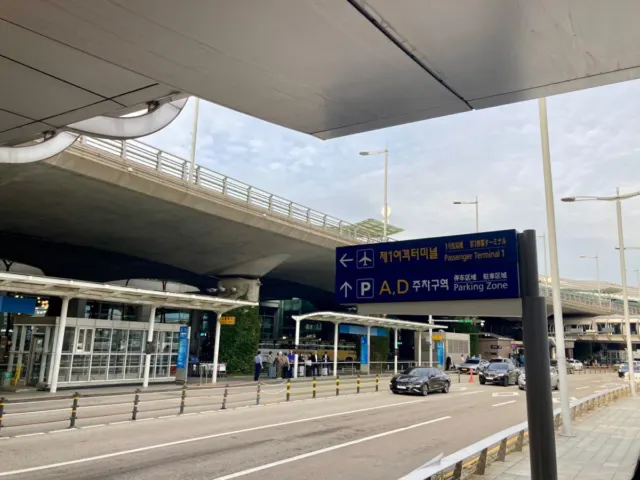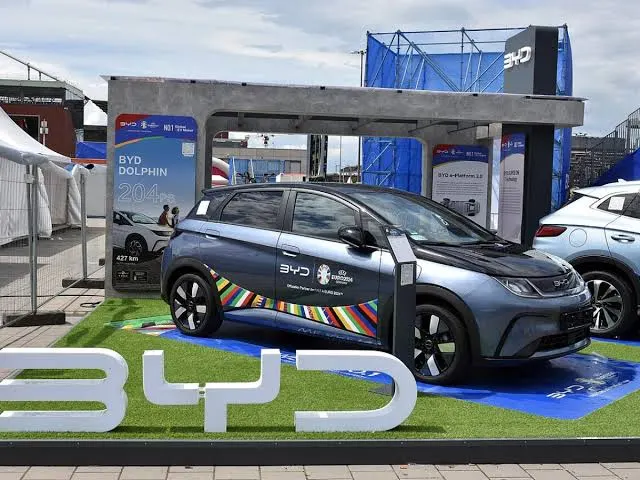
Chinese electric vehicle brand BYD is expanding at a startling pace in the South Korean market.
Since officially entering South Korea’s passenger-car market in January 2025, BYD has expanded its showroom network from 15 locations to 34, while its service centers have grown from 11 to more than 20. Sales have also climbed sharply.
Cumulative sales this year have surpassed 17,000 vehicles, putting BYD within striking distance of BMW and Mercedes-Benz.
But behind that impressive growth curve, a number of issues that consumers must contend with are beginning to emerge.
What BYD Buyers in South Korea Need to Consider
BYD’s biggest selling point is price. The company has made inroads with mid- to low-priced models in the 20-million-won range.
But the picture changes completely when an accident occurs. The core complaint spreading across automotive communities and social media is this:
Even minor fender-benders can reportedly result in repair estimates running into several million won—and in some cases close to 10 million won. One case even made headlines after repair costs reportedly reached 24% of the vehicle’s purchase price.
BYD Korea has responded that it simply used Audatex, a standardized estimating system.
The company says the estimates reflect actual work such as structural realignment and the removal and reinstallation of parts, even when the visible exterior damage appears minor.
That explanation may not be wrong. But from a consumer’s perspective, the important issue is not why the estimate is so high; it is that a low upfront purchase price can ultimately turn into far higher ownership costs.
A car is something that may need repairs at any time after even a single accident. If those repair costs are disproportionately high compared with the vehicle’s price, it is not truly an inexpensive car when viewed through the lens of total cost of ownership, or TCO.
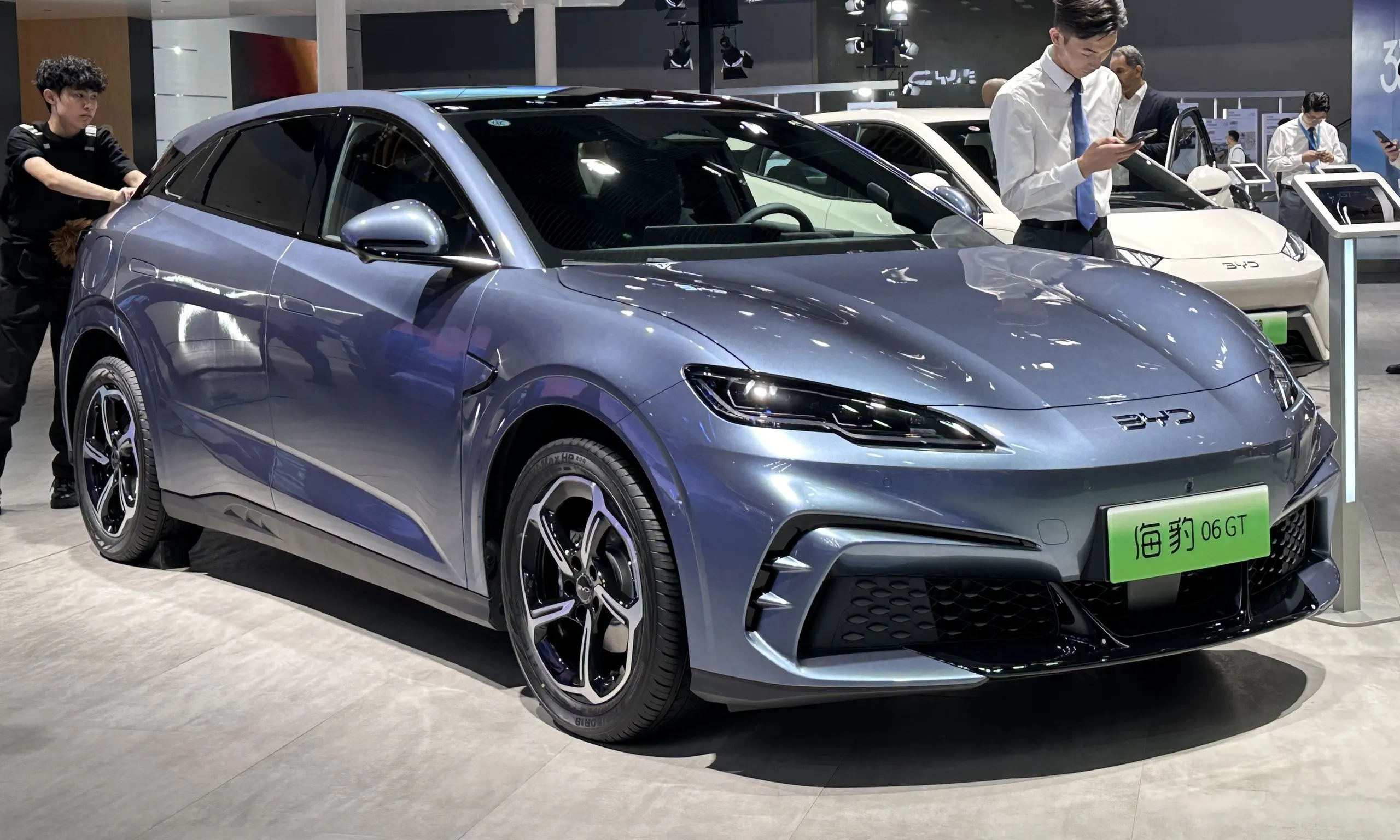
Sales Are Surging, but the Service Network Is Still Half-Built
The more fundamental problem is the service infrastructure.
As of September this year, BYD had 20 official service centers in South Korea. That is just one-quarter the number operated by BMW, with 82, and Mercedes-Benz, with 74, even though both brands had sold considerably more vehicles over the same period.
In other words, sales are accelerating like a sports car, but when a vehicle is damaged or breaks down, the places where owners can take it for service number fewer than half as many as those available to rival-brand customers.
BYD Korea says it plans to increase the number of service centers to 26 by the end of the year. Whether that expansion can keep pace with sales growth remains uncertain.
Parts availability presents a similar problem. The company says it will fly in parts when they are not in stock. In other words, however, domestic inventory is not yet deep enough to ensure adequate supplies under normal circumstances.
BYD says it provides replacement vehicles while repairs are underway, but a repair system that routinely leads to lengthy waits is itself an inconvenience for consumers.
The Government Is Already Sending a Warning Signal
This is not a concern limited to consumers.
The government’s policies already reflect similar concerns.
In its proposed 2026 overhaul of electric-vehicle subsidies, the Ministry of Climate, Energy and Environment strengthened differentiated standards based on battery energy density across all vehicle categories. That direction is structurally unfavorable to Chinese-made vehicles, which predominantly use lithium iron phosphate, or LFP, batteries.
LFP batteries are relatively safer against fires, but their lower energy density means they are disadvantaged under the revised subsidy calculation standards.
In addition, the electric commercial-vehicle sector has introduced an entirely new “provider evaluation” system.
Manufacturers and importers are assessed on their technological development capabilities, business sustainability, safety standards and after-sales service capabilities before being granted eligibility to participate in public-supply programs.
Reports have emerged that, after these standards were applied, Chinese-made electric commercial vehicles were almost wiped out of the program.
This signals that the government is no longer merely seeking to protect domestic manufacturers. It is now taking a hard look at whether taxpayer-funded subsidies should go to brands whose ability to provide after-sales support has not been proven.
Rules were also tightened in July this year to exclude vehicles made by manufacturers that have not enrolled in electric-vehicle fire insurance from receiving subsidies.
That underscores just how concerned the government has become about battery safety.
Consumers Need to Consider the Total Cost—not Just the Price Tag
Here is the bottom line: BYD’s upfront prices are undeniably attractive.
But a car is not a product whose costs end at the moment of purchase. Expenses continue for as long as it is driven.
▲ Repair costs after an accident can be excessive relative to the vehicle’s price
▲ The after-sales service network is only one-quarter the size of those operated by rival brands
▲ Domestic parts inventories remain limited enough that the company relies on air freight to replenish supplies
▲ Even the government is raising the bar for subsidies because of concerns about battery safety and after-sales service capabilities
—All four points are supported by actual media reports and government policy documents.
Before being swayed by a low sticker price, consumers should take a hard look at the true cost of owning the vehicle for five or 10 years—and whether a dependable service network is actually available in their area when something goes wrong.
Cheap does not automatically mean good value.